

Key Takeaways
- For Indian organizations with 50 to 500 staff members, the integrated HRMS solution that includes the ATS module – Zimyo, Keka, or HROne – generally ends up being cheaper than an ATS system paired with an HR solution.
- “Naukri integration” means something completely different for various vendors. In most cases, job listings are posted using one approach and applications imported manually. Make sure that a two-way synchronization is possible in the live demonstration.
- Recruitment solutions in India are mostly priced based on negotiation. Published prices – even the ones listed here – are just a basis for negotiations.
- Campus recruitment can only be performed by some ATS solutions. The bulk offer distribution, TPO management, and tracking of pipeline per college should be considered as a separate requirement.
- Freshteam is not offered to new clients anymore. The last renewal date in March 2026, and all the current clients will have to migrate until April 2027.
Most recruitment teams in India do not have a sourcing issue. Most recruitment teams in India suffer from a throughput issue. Resumes get sent in via Naukri, LinkedIn, career portal, employee referrals, three consultancies, and a WhatsApp group; and somewhere along the way from the inbox to the offer letter, the right candidates start getting cold feet. An average corporate job opening in India generates over a hundred resumes while the average recruiter manages between fifteen and twenty jobs at one time. At the same time, an average job seeker applies for more positions than ever before and bails out of the hiring process when the recruiters do not communicate. Hence, a slow hiring process leads to the loss of the best candidates first.
The tooling itself is mainstream – with almost 78% of HR professionals using applicant tracking systems, according to HR.com‘s Future of Recruitment Technologies 2025–26 study. The value of the India recruitment software market was estimated to be around USD 81.6 million in 2025, and the number is expected to rise to USD 122.9 million in 2034, per IMARC Group. But the question is not whether to use talent acquisition technology. It is which one to use and on what criteria.
This is where comparison articles tend to become useless. Comparison articles mention about twenty recruiting software solutions, list the same eight features, but ignore those which really matter when it comes to purchasing recruitment software in India: the depth of Naukri integration, candidate data integration with payroll management, the capability to manage a campus drive, and the actual cost of the license after negotiations. In this article, we look at the 12 best recruitment software platforms in India for 2026.
Which Recruitment Software is Best in India?
There is no single best platform, because the right answer depends on how many people you hire, how many people do the hiring, and whether recruitment has to connect to payroll. Zimyo, Keka, and HROne suit mid-sized companies that want hiring and HR in one system. Zoho Recruit and PyjamaHR suit startups. Darwinbox and TurboHire suit enterprises hiring at volume. CEIPAL and Oorwin suit staffing companies.
| Platform | Best for | Pricing model | HRMS built in | Entry price |
| Zimyo | Indian SMBs and mid-market wanting hiring, onboarding and payroll on one system | Per user/month + per recruiter add-on | Yes | ₹80/user/mo (min 50 users) + ₹4,000/recruiter/mo for Recruit |
| Keka | Mid-market teams wanting recruitment inside a familiar HRMS | Per employee/month | Yes | Connect with Vendor |
| HROne | Mid-market teams prioritising workflow automation across HR operations | Per employee/month | Yes | ₹4950/Month For 50 users |
| Zoho Recruit | Teams inside the Zoho ecosystem; corporate and agency editions | Per recruiter/month, free plan | No (separate Zoho People) | Free plan; paid from ~₹1,250/recruiter/mo |
| PyjamaHR | Startups wanting a free plan and same-week setup | Free tier + paid tiers | Limited | ₹1000 per user/month |
| Recooty | Small teams wanting a lightweight ATS live in a day | Flat monthly tiers | No | $79 /Month Billed annually (up to 20 Users) |
| Darwinbox | Large Indian enterprises needing campus hiring and complex approvals | Custom / quote | Yes (full HCM) | Custom quote |
| TurboHire | Enterprises running high-volume AI-assisted candidate screening | Custom / quote | No | Custom quote |
| TalentRecruit | Enterprises with structured campus and bulk fresher intakes | Custom / quote | No | Custom quote |
| CEIPAL | IT staffing companies and consulting firms with distributed teams | Per recruiter/month | No | Contact Vendor |
| Oorwin | Recruitment agencies managing multiple client requisitions | Per user/month, tiered | Partial | Free tier; paid tiers by user |
| iSmartRecruit | Staffing and RPO firms managing contract workers and vendors | Per user/month | No | Contact Vendor |
Pricing verified: August, 2026. Vendors change pricing frequently, and most Indian recruitment software is negotiated; treat these as starting points, not quotes.
How Did We Evaluate These Platforms?
Every platform was assessed against the same seven criteria, weighted for Indian hiring conditions rather than global ones.
- Indian job board depth. Whether integration with Naukri, Shine, Indeed India, and LinkedIn is genuinely two-way, or a one-way post that still needs manual resume imports.
- Volume handling. Whether the hiring process copes with bulk applications, walk-in drives and campus hiring, or assumes a low-volume Western pipeline, and whether the hiring funnel stays visible at that volume.
- Downstream continuity. Whether a hired candidate becomes an employee record automatically, or someone re-keys candidate data into a separate HR system.
- Pricing transparency. Published pricing scores higher than “contact sales”, because a hidden price usually signals an enterprise-length sales cycle.
- Administrative burden. How much configuration is needed before the platform produces value, and whether an HR generalist can run the hiring process without a dedicated admin.
- India support presence. Whether the implementation and customer success team sits in India and understands EPF compliance and Naukri’s API behavior.
- Data handling. Role-based access, candidate data retention controls, and readiness for the Digital Personal Data Protection Act, 2023.
Discloser: Zimyo hosts this comparative analysis and leads the mid-range market segment. Zimyo’s listing includes complete pricing information, including its recruitment fee, which allows us to compare it on an equal footing with all other listings. Information on all competitors’ listings comes from their own official documents and review platforms. If a claim is based on a vendor’s statement without independent verification, then it is stated accordingly.
What Are The Best Recruitment Software Platforms in India?
The 12 platforms below are grouped by the buyer they are built for, because a tool that is excellent for a 40-person startup is usually wrong for a 4,000-person enterprise and vice versa.
Best HRMS + ATS combinations for mid-sized companies
This is the largest segment of the Indian market and the one where platform choice matters most, because the same small HR team owns hiring, onboarding, and payroll. An integrated system removes an integration you would otherwise build and maintain.
1. Zimyo
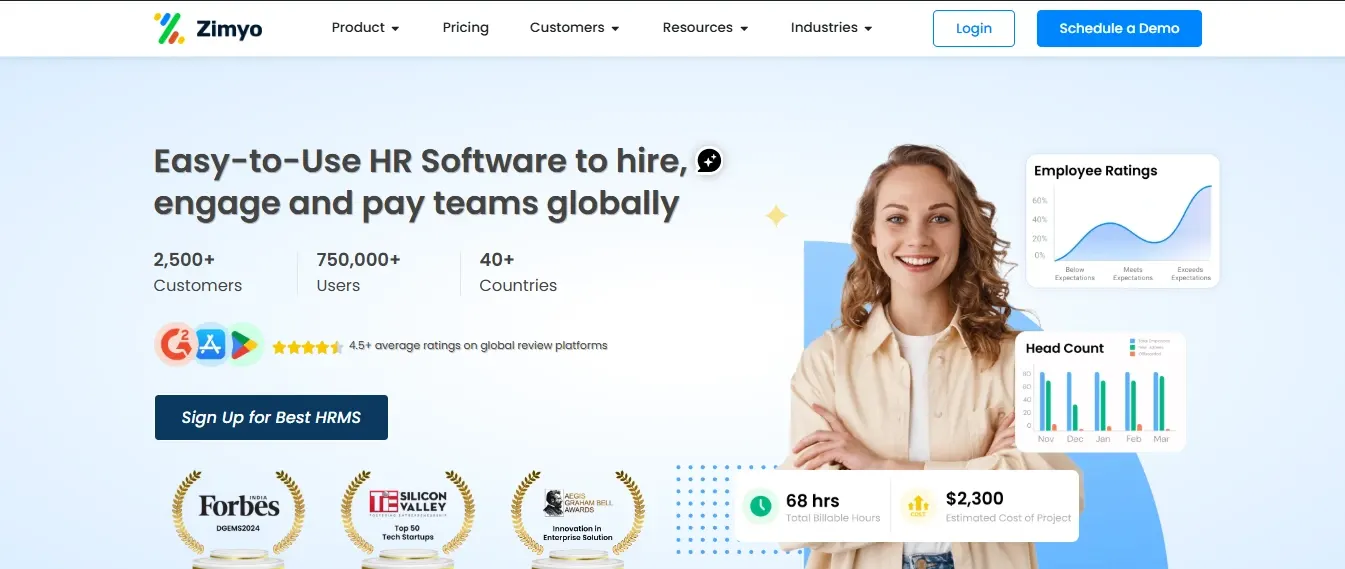
Zimyo is an Indian HR and payroll platform whose Recruit module runs the hiring process inside the same system that later handles employee onboarding, attendance, and payroll. A candidate who accepts an offer becomes an employee record without a data migration, an export, or a second tool. Founded in 2018, the platform serves 2,500+ organizations across 40+ countries.
Zimyo recruit covers requisition management with approval workflows, AI-powered resume screening, interview scheduling tools that connect to Google Calendar and Outlook, job board integration, a centralised candidate database with candidate tracking across stages, and offer management. For HR teams of two or three people running hiring alongside everything else, the fact that it is one login rather than three is usually the deciding factor.
Best for: Indian SMBs and mid-sized companies (roughly 50–500 employees) where the same team owns hiring, onboarding, and payroll.
Standout: Hiring-to-payroll continuity, including Indian statutory structure in offer letters. Zimyo is recognized as a High Performer for Applicant Tracking Systems in the Mid-Market, Asia Pacific category on G2 and holds a 4.5+ average rating across global review platforms.
Watch out for: Billing has a 50-user minimum, so teams under 50 employees pay for capacity they will not use. If you only need an ATS and already run a separate HR system, a standalone tool will cost less.
Pricing: HRMS from ₹80 per user per month (Basic), ₹160 (Standard), and ₹240 (Enterprise), each with a minimum billing for 50 users. Recruit, the applicant tracking add-on, is ₹4,000 per recruiter per month. A 14-day free trial is available with no card required.
2. Keka
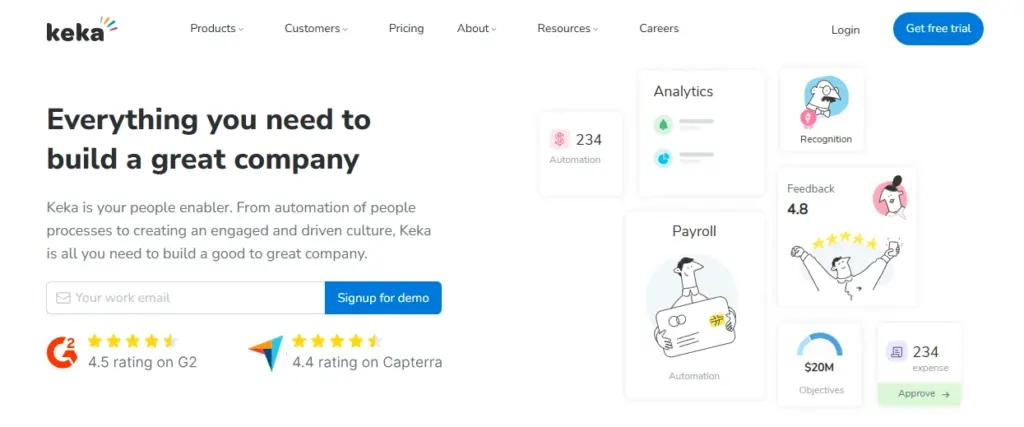
Keka is a widely used Indian HR platform whose hiring module sits alongside core HR, payroll, and performance management. Like Zimyo, the argument is continuity rather than standalone ATS depth – a hire does not have to be re-entered anywhere, and hiring data connects to post-hire outcomes.
Best for: Indian mid-market teams already running Keka for payroll who want recruitment on the same system.
Standout: Familiar interface for HR teams already inside the product; low internal training cost.
Watch out for: Weaker on staffing agency workflows. Confirm whether the recruitment module is included in your plan or licensed separately.
3. HROne
HROne is an Indian HR platform positioned around workflow automation across the employee lifecycle, with an applicant tracking system as one component. The vendor states it automates over 127 HR processes; that figure is vendor-reported and worth testing against your own workflows rather than taking at face value.
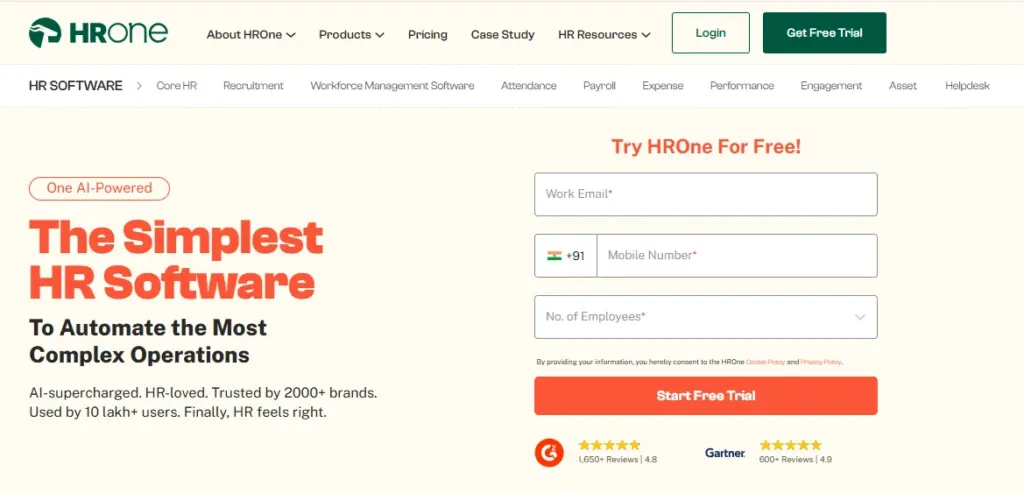
Best for: Mid-market Indian companies where HR operations automation matters as much as hiring specifically.
Standout: Breadth of automation of workflow coverage outside recruitment.
Watch out for: Breadth can mean the recruitment module is less deep than a dedicated hiring platform. Evaluate the ATS on its own merits.
Best recruitment software for startups and small businesses
Hiring in bursts, one or two job positions at a time, usually with a founder or an ops generalist running the recruiting process. Per-user pricing punishes this profile because the recruiter count is one, so cheap recruiting software with a usable free plan beats a feature-rich platform nobody has time to configure. Flat tiers win here.
4. Zoho Recruit
Zoho Recruit is one of the few India-built hiring platforms with global scale behind it, and it ships in two distinct editions – a corporate version and a staffing agency version that manages client requisitions and placements separately. If the organization already uses Zoho CRM, Zoho People, or Zoho Mail, integration work is effectively zero.
It covers resume parsing, multi-board posting, candidate matching, email automation, a career site builder, and a reasonably deep reporting layer. The free plan is genuinely usable for a single recruiter running a handful of roles, which makes it the lowest-risk way to test whether an ATS changes anything for your team.
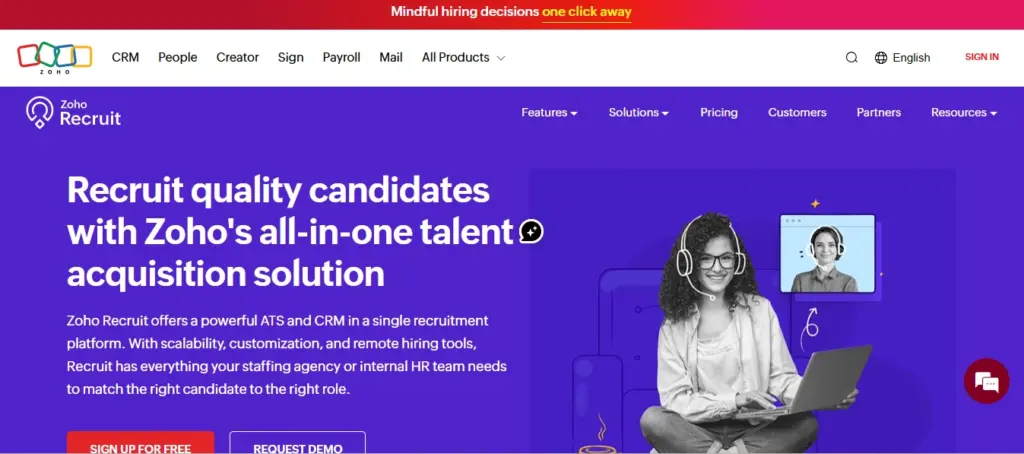
Best for: Teams already on Zoho, and recruitment agencies needing client-side pipeline separation.
Standout: The separate agency edition. Most platforms bolt agency features on; Zoho ships a distinct product.
Watch out for: Hiring and HR data live in different Zoho products, so onboarding continuity means adding Zoho People. Costs accumulate once you leave the free plan.
5. PyjamaHR
PyjamaHR is an India-based hiring platform aimed at startups, with a free tier that covers the core applicant tracking workflow – job postings, a candidate pipeline, scheduling interviews, and collaborative feedback. Setup is measured in days rather than weeks.
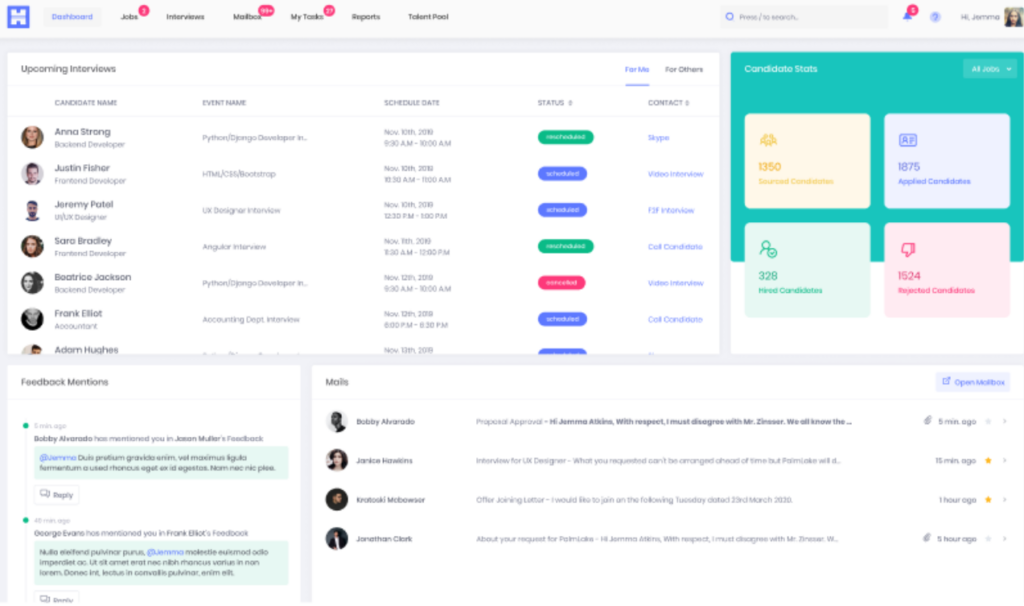
Best for: Startups making their first structured hires who need something running this week.
Standout: Usable free plan with an India-based support team.
Watch out for: Limited depth for complex approval chains, multi-entity hiring or high-volume screening. Confirm what the free tier excludes.
6. Recooty
Recooty is a deliberately lightweight cloud ATS: job posting, candidate screening, automated interview scheduling, and a single dashboard, with very little configuration required. It is the fastest platform here to get live, which matters when the thing you are replacing is a spreadsheet.
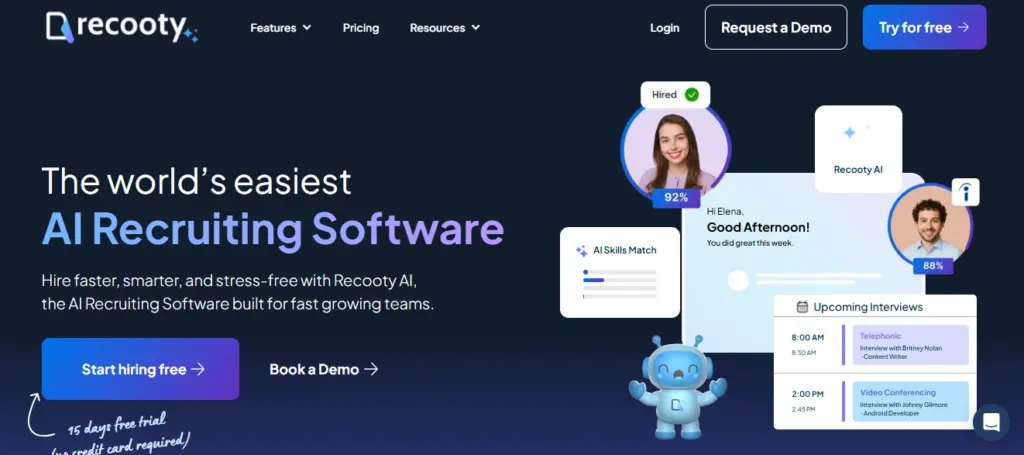
Best for: Small teams and first-time ATS buyers who want to be running within a day.
Standout: Minimal setup burden and a short learning curve.
Watch out for: Simplicity is the trade-off. Customizable hiring workflows and multi-entity structures will hit limits quickly
Best for large enterprises and high-volume hiring
Volume, multi-entity structures, campus programmes, approval hierarchies and compliance reporting. Expect quote-based pricing and a real implementation project rather than a self-serve signup.
7. Darwinbox
Darwinbox is an Indian enterprise HCM platform used by many of India’s largest employers, with recruitment sitting inside a full human capital suite covering core HR, payroll, performance management and engagement. It is the strongest option here for enterprises that need genuine campus recruitment capability and complex, multi-level approval workflows built for Indian compliance.
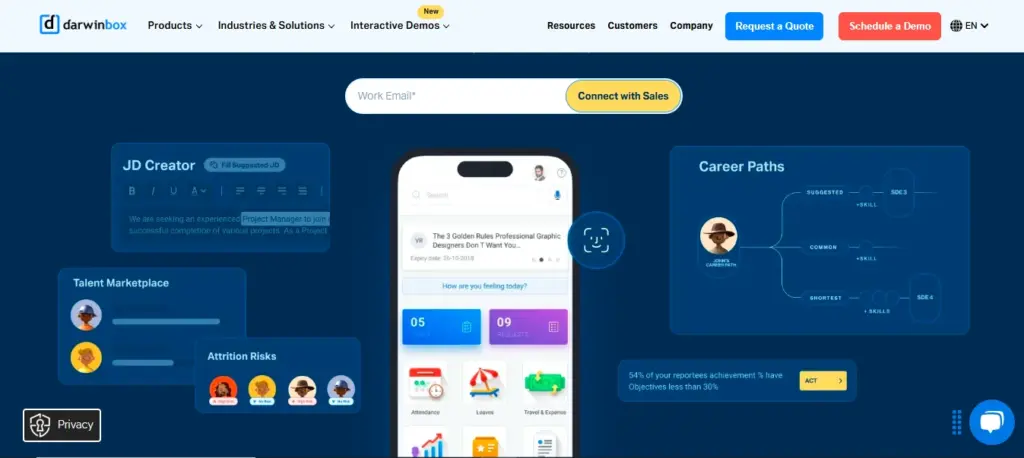
Best for: Enterprises above roughly 500 employees, particularly those running campus drives at scale.
Standout: Campus hiring depth and Indian compliance coverage across the full employee lifecycle.
Watch out for: Substantial overkill and cost if you want recruitment only. The value case depends on adopting the wider suite.
8. TurboHire
TurboHire is an India-based, AI-powered recruitment platform aimed at enterprise hiring volume. The core proposition is automated candidate ranking: rather than handing a recruiter 400 resumes, it scores and orders them against the requisition, which materially changes how a high-volume role is worked. It also covers one-click multi-board posting, structured hiring workflows, hiring team collaboration, and funnel analytics.
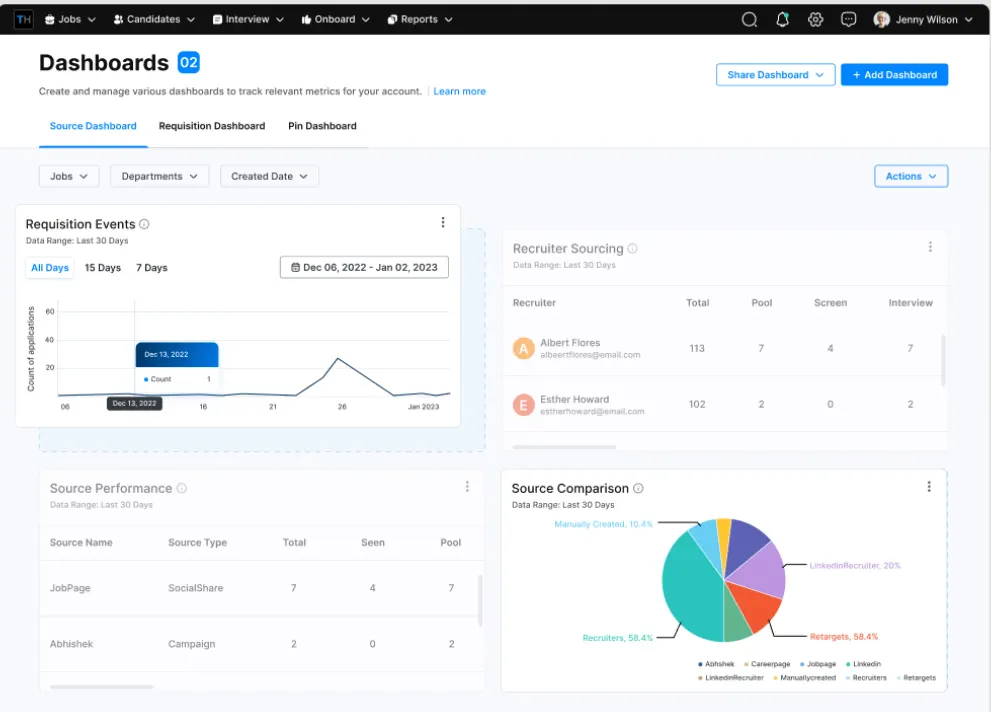
Best for: Enterprises and fast-scaling companies running continuous or high-volume recruitment.
Standout: Depth of AI-powered resume screening and candidate ranking.
Watch out for: Enterprise pricing and an enterprise implementation cycle. Small teams will find it heavier than the problem requires.
9. TalentRecruit
TalentRecruit is an Indian enterprise ATS built around machine-learning candidate ranking, with unusually strong campus hiring and multi-stage assessment support. For employers running structured graduate intakes – common across Indian IT services, BFSI, and manufacturing- that campus capability is genuinely hard to find elsewhere.
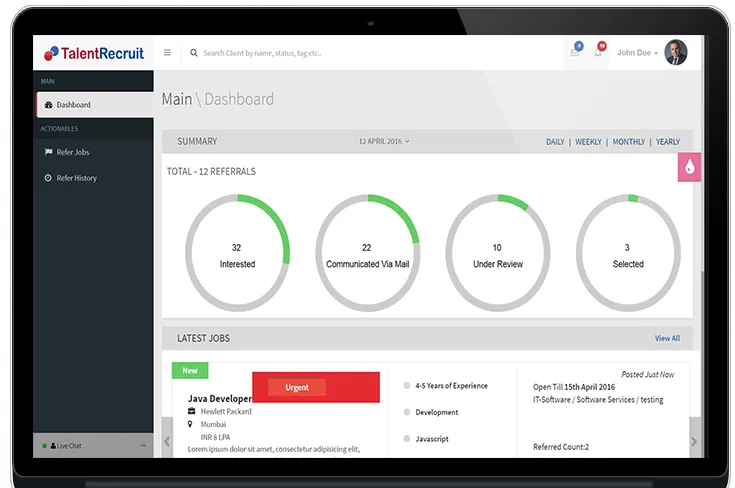
Best for: Large Indian enterprises with campus recruitment and structured bulk fresher hiring.
Standout: Campus and assessment workflows, including AI video interviews and cohort management.
Watch out for: No public pricing, and configuration depth means a longer implementation.
Best for staffing agencies and RPO firms
A staffing pipeline is organized by client, not by requisition. These platforms handle submissions, placements, multi-client billing, and contract worker lifecycles, concepts a corporate ATS will fight you on.
10. CEIPAL
CEIPAL is an ATS and workforce platform built for IT staffing companies and consulting firms, widely used by teams operating across US and India time zones. It handles client requisitions, submissions, placement tracking, and recruiter productivity reporting, and is designed for organizations where dozens of recruiters work the same client accounts.
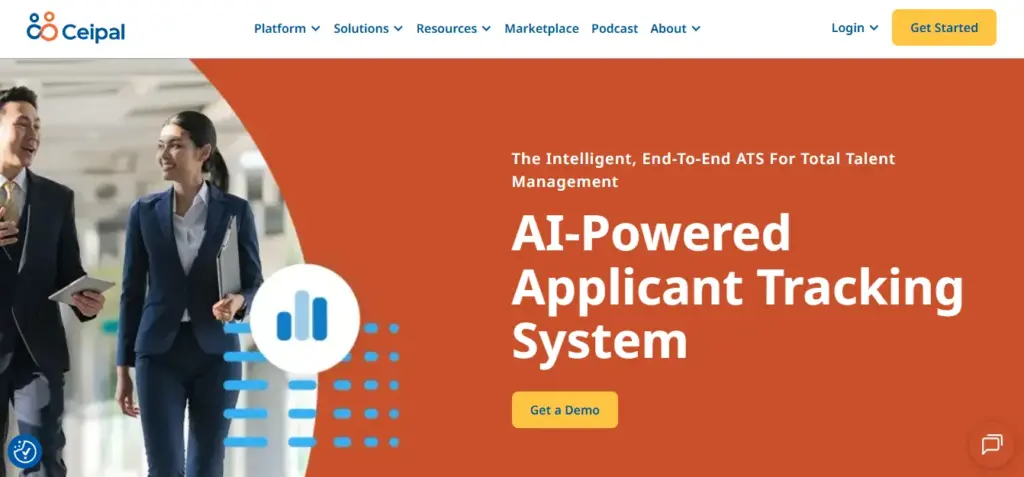
Best for: IT staffing firms, particularly those with distributed India-based delivery teams.
Standout: Submission speed and recruiter workload management at scale.
Watch out for: Built for external staffing. Poor fit for corporate campus hiring or employer branding.
11. Oorwin
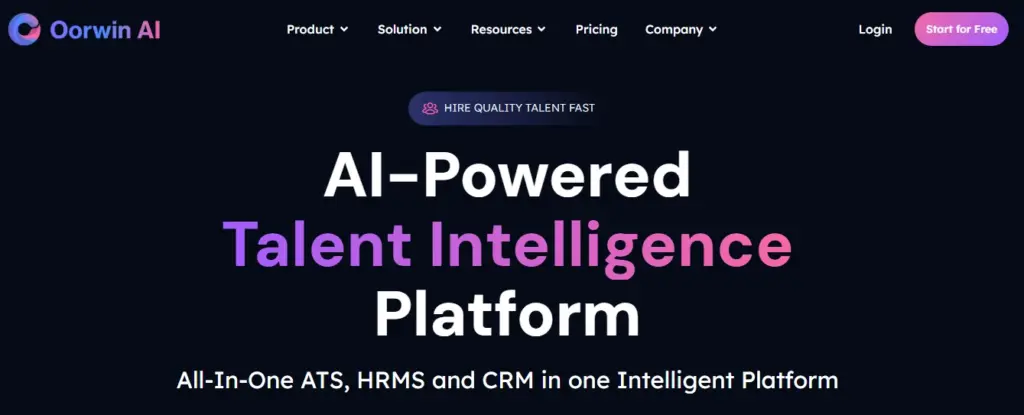
Oorwin combines an ATS with a client CRM and talent management, built for agencies and IT recruitment firms managing multiple client accounts simultaneously. The integrated CRM is the distinguishing feature: candidate pipeline and client relationship sit in the same system rather than in an ATS and a separate sales tool.
Best for: Recruitment agencies with concurrent client requisitions and a business development motion.
Standout: Client CRM alongside the candidate pipeline.
Watch out for: Agency concepts – client accounts, submissions, placements – add configuration overhead for in-house teams.
12. iSmartRecruit
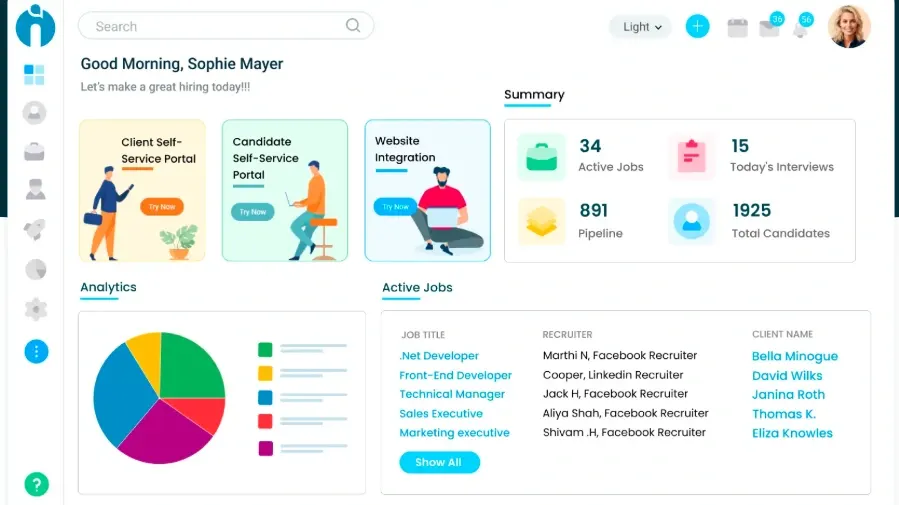
iSmartRecruit is an ATS and recruitment CRM used by staffing companies and RPO firms, with vendor management and contract worker features that most corporate platforms lack. The vendor states it supports 14 languages and operates in 70+ countries; verify the specific language coverage you need rather than relying on the headline figure.
Best for: Staffing and RPO firms managing contract and temporary workforces alongside permanent placements.
Standout: Vendor management and contract worker lifecycle handling.
Watch out for: Mobile experience is a common complaint in the staffing category generally; test it with your field recruiters before committing.
A note on Freshteam: it is being discontinued
Freshteam appeared on almost every “best recruitment software in India” list for years. It should no longer be on any of them.
On 7 January 2026, Freshworks announced it would end Freshteam and stop renewing subscriptions from 7 March 2026, consolidating HR functionality into Freshservice for Business Teams. New accounts are no longer being created, and Gartner Peer Insights now lists the product as “Freshteam (Legacy)”.
What Should Indian Companies Look for in Recruitment Software?
Eight questions separate platforms built for India from platforms localized afterward. None appear on a features page, and none will come up in a demo unless you raise them.
Is the system really synced with Naukri, or does it only post to it?
“Naukri integration” is found on almost all vendors’ websites. However, it mostly involves a single-way feed where the job posting reaches the portal, but application downloads have to be done manually. Proper two-way synchronization ensures that applications are automatically brought into the recruiting process, status update feeds are sent back, and duplicate applications are detected. Naukri, Shine, and LinkedIn are the main sources of applications in India for most corporate jobs, meaning that a one-way process ends up with the recruiter spending hours each week manually downloading resumes.
Request from the vendor to demonstrate the posting of an open position during a demonstration and an unaltered application coming through to the applicant tracking system.
Will AI resume parsing actually work on Indian resumes?
The parsers are familiar with the resume format that they come across most often, which is not going to work here. They always make mistakes in handling regional language names, unconventional career paths in contract staffing, and the qualifications from tier 2 and tier 3 colleges. The parser that has a 95% accuracy level in handling US resumes will fail miserably in dealing with Indian resumes, and a wrongly parsed resume is a resume that will never be found again.
Upload 50 resumes from your own database for a free trial and test what mistakes the parser makes in names, addresses, and qualifications. Your candidates’ accuracy is all that counts.
Does it connect to your payroll, EPF, and ESI?
Recruitment doesn’t stop after the offer letter. An employee must be registered with a payroll ID; an EPF number, ESI registration if required, professional tax structure set up and a full-fledged onboarding system that captures documents. If hiring and payroll are in separate modules, then data entry occurs, and each manual entry is both an hour wasted as well as a potential compliance violation.
Can it post jobs and screen candidates in regional languages?
Roles like manufacturing, retail, logistics, and BPO jobs often have candidates who are not comfortable reading English. This means having job descriptions in Hindi, Tamil, Telugu, Kannada, or Bengali, candidate communications in those languages, and the tricky bit: resume parsing, which can actually understand the resume in the regional language instead of just showing it.
While most platforms have multilingual career pages up to a point, when you are hiring across multiple states, check whether it supports parsing and messaging as well.
Can it run campus recruitment and TPO coordination?
Campus hiring drives a large share of entry-level intake for Indian IT services, consulting, and BFSI employers, and most applicant tracking systems cannot do it. They assume experienced-hire workflows: one requisition, a few candidates, sequential interviews. A campus drive is hundreds of students from one college, a multi-stage assessment compressed into a single day, bulk offer rollout, and a Training and Placement Officer relationship tracked across years.
How does it handle the same candidate arriving from four sources?
For any in-demand role, the same person reaches you via Naukri, LinkedIn, a referral, and a consultancy, often in one week. Whether the platform merges those into one record or creates four is the difference between a searchable talent database and an unusable one six months later. It also decides whether two recruiters unknowingly work the same person, and whether a consultancy can claim a fee for someone who came through employee referrals first.
Ask what duplicate detection matches on – email, phone, resume fingerprint – and whether recruiters can merge records manually.
Are job board credits included, or billed on top?
Some platforms bundle a monthly allocation of Naukri or LinkedIn postings. Others charge per post on top of the licence, which can quietly double effective cost. This sits in the contract, not the pricing page. Get it in writing: how many postings are included, what happens past the allocation, and whether unused ones roll over.
Cloud or on-premises- which suits Indian companies?
Cloud is right for most teams. Two exceptions: banking, insurance, and government-adjacent suppliers with data residency obligations, and field recruiters in tier 2 and tier 3 cities on patchy connections, who will abandon a cloud-only platform with no offline mode, which is how hiring quietly returns to WhatsApp. If either applies, ask where candidate data is stored and whether the mobile app works offline.
Which Recruitment Software Fits Your Industry?
Company size is the usual way these comparisons are organized, and it is only half the picture. A 400-person IT services firm and a 400-person retail chain have almost nothing in common in how they hire.
IT and ITES
Two distinct motions running in parallel: lateral hiring for niche technical skills, and campus recruitment for entry level at scale. Lateral hiring needs technical assessment integration and fast candidate engagement, because good engineers hold multiple offers. Campus needs bulk assessment, TPO coordination, and cohort offer rollout. Darwinbox and TalentRecruit cover campus properly; TurboHire is stronger on lateral volume; CEIPAL and Oorwin serve IT staffing firms rather than IT employers.
Manufacturing and blue-collar hiring
High volume, low documentation, walk-in drives, and candidates who may not have email addresses. Prioritize bulk actions, same-day evaluation, WhatsApp or SMS candidate communication, regional language job postings, and offer letters that carry Indian statutory structure. Most global platforms fail this profile badly. An integrated HR system helps here because shift rostering and attendance follow immediately after the hire.
Retail and hospitality
Distributed hiring across many locations, high attrition, and store or outlet managers acting as hiring managers rather than HR professionals. Hospitality adds seasonality on top – property teams staff up for wedding and festival seasons and shed headcount after, so the platform has to handle repeat hiring for the same roles without rebuilding the requisition each time.
The critical requirement in both is that a non-specialist can raise a requisition, review suitable candidates, and move someone forward on a phone without training. Mobile quality and role-based access matter more than screening sophistication, and candidate experience lives or dies on how fast a store or property manager responds. Zimyo, Keka and Recooty are the practical shortlist; the enterprise platforms are more configuration than a store manager will tolerate.
BFSI
Compliance-heavy, with background verification, credential checks, and often data residency requirements. Look for BGV provider integration with an Indian vendor, an auditable approval trail on every hiring decision, and clear answers on where candidate data is stored. Darwinbox is the usual enterprise choice; Zimyo, Keka, and HROne cover the mid-market end where the audit trail matters as much as the screening.
Healthcare
Credential and registration verification is the differentiator – nursing council registration, medical council numbers, specialization certificates. Hiring is also frequently urgent. Look for document collection workflows that handle credential expiry tracking, and a hiring process that can compress from weeks to days when a ward is short-staffed. Zimyo and Keka suit hospital groups that need the credential record to carry into the employee file; Darwinbox suits large multi-site providers; iSmartRecruit and CEIPAL suit agencies placing locum and contract clinical staff.
Staffing and recruitment agencies
Contract staffing is a large part of the Indian market and is structurally different from permanent hiring: vendor management, shift scheduling, compliance tracking for temporary workers, multi-client billing, and contractor-to-permanent conversion. CEIPAL, Oorwin, and iSmartRecruit handle this. A corporate ATS does not.
How Much Does Recruitment Software Cost in India?
Published prices are hard to compare because vendors charge on three different bases. The model matters more than the number.
| Model | How it is charged | Cheapest when | Used by |
| Per employee / month | Total headcount × rate, often with a minimum billing floor | Few employees, several recruiters | Zimyo (HRMS), Keka, HROne |
| Per recruiter / month | Number of people with recruiter access | Many employees, few recruiters | Zimyo Recruit add-on, Zoho Recruit, CEIPAL |
| Flat monthly tier | Fixed fee by feature tier or job slots | Hiring in bursts, few concurrent job openings | Recooty, PyjamaHR |
| Custom quote | Negotiated on headcount, volume and modules | Never obviously – model it yourself | Darwinbox, TurboHire, TalentRecruit |
What Does a Real Annual Bill Look Like?
Take a 300-employee company with two recruiters. Zimyo charges on both bases: ₹80 × 300 users is ₹24,000 a month for the HRMS, plus ₹4,000 × 2 recruiters is ₹8,000 for the Recruit add-on – ₹32,000 a month, or ₹3.84 lakh a year, covering payroll, attendance, employee onboarding and performance management as well as hiring.
If an HR system was going into the budget anyway, the marginal cost of adding recruitment is ₹8,000 a month. If you already run a separate HRMS and want an ATS on its own, a standalone platform priced per recruiter will come in lower. Budgets in this bracket vary widely with headcount, recruiter count, and how much of the HR suite you adopt, so model your own numbers rather than working from a benchmark. The sticker price on its own tells you almost nothing.
What costs are usually left out?
- Minimum billing floors. A 30-person company on a plan with a 50-user minimum pays for 50.
- Implementation and data migration fees, common on enterprise quotes and rarely on the pricing page.
- Job board credits. Naukri and LinkedIn postings are frequently billed separately from the software license.
- Integration development, where connecting to your existing payroll or HR system needs custom work.
- Training and change management for recruiters with varying levels of comfort with new systems.
- Annual versus monthly billing. Most Indian vendors discount annual contracts materially; ask.
Are there free recruitment software options in India?
Yes, and they are a reasonable starting point for very small teams. Zoho Recruit and PyjamaHR both offer free plans covering the core applicant tracking workflow. Free plans typically cap active job positions, users, or candidate volume, so read the limits before building a process around one.
Straight Answers to The Questions Buyers Ask
Which recruitment software scales best as headcount grows?
For teams up to 50 employees, Recooty, PyjamaHR and Zoho Recruit’s free plan are sufficient. Between 50 and 500, Zimyo, Keka and HROne scale without a platform change because recruitment sits inside the wider HR system. Above 500 employees, or at roughly 50 concurrent requisitions, Darwinbox, TurboHire and TalentRecruit are built for that volume. The expensive mistake is outgrowing a tool at 200 employees and migrating candidate history mid-year.
Which recruitment software has the best features?
Judge on the features that differ, not the twenty every platform shares. All of these handle job postings, resume storage, and interview scheduling. What varies is AI-powered candidate ranking (strongest in TurboHire and TalentRecruit), campus hiring (Darwinbox, TalentRecruit), requisition approval chains (Zimyo, Keka, Darwinbox), client account management (CEIPAL, Oorwin, iSmartRecruit), video interviews and assessments (TalentRecruit, Darwinbox), and native onboarding handoff (Zimyo, Keka, HROne, Darwinbox).
Which recruitment software is easiest to use?
Measure ease of use as time-to-first-hire, not interface appearance. The question is how quickly the hiring process runs on the new system, not how the dashboard looks. Recooty and PyjamaHR can be live in under a day with almost no configuration. Zimyo, Keka, and HROne need one to two weeks because they configure an HR system rather than a job-posting tool. Darwinbox, TurboHire and TalentRecruit are implementation projects measured in weeks. Ask every vendor for a named go-live date in writing.
One dimension that rarely gets evaluated: mobile quality for field recruiters. Staffing firms, blue-collar hiring teams, and multi-location retail operations run substantially on phones. If a field recruiter finds the app slow, they revert to WhatsApp, and half the value of the purchase disappears. Test the mobile app with the people who will actually use it, not with the HR manager who signs the contract.
Which recruitment software has the best integrations?
For Indian hiring, the integrations that matter are Naukri, LinkedIn Talent Solutions, Indeed India, Shine, Google Calendar or Microsoft 365 for scheduling interviews, an Indian background verification provider, and your payroll or HR system. Ask whether each is a native two-way integration or a one-way feed needing manual upload; the difference is several hours a week. Platforms with a built-in HRMS remove the payroll integration entirely.
Which recruitment software is most secure?
Assess controls rather than badges. Ask four questions: is access role-based so a hiring manager sees only their own requisitions; where is candidate data physically stored; what is the retention and deletion policy for rejected candidates; and how does the platform support obligations under the Digital Personal Data Protection Act, 2023. Request current certification documents directly from the vendor and check the validity dates yourself.
Worth knowing: DPDP compliance is still settling, and several vendors are making forward-looking readiness claims they cannot fully substantiate yet. Treat consent capture, retention limits, and deletion-on-request as functional requirements you test in a trial, not as a certification you take on trust.
Which recruitment software has the best reporting and analytics?
Useful recruitment reporting answers four questions: time-to-hire by role, source-of-hire effectiveness, where the hiring leaks by stage, and offer-acceptance rate. TurboHire, TalentRecruit and Darwinbox provide the deepest dedicated recruitment analytics. Zimyo, Keka and HROne connect hiring data to post-hire outcomes such as retention and performance, which supports a different and often more valuable set of data-driven hiring decisions. Ask for a live dashboard during the demo, not a screenshot.
Which recruitment software offers the best value for money?
Value depends on your recruiter-to-headcount ratio. Per-recruiter pricing favors large companies with few recruiters. Per-employee pricing favors small companies with dedicated recruiters, and only makes sense if you want the whole HR system. Flat tiers favor anyone with few concurrent job openings. Calculate twelve months at your actual numbers for three shortlisted vendors before comparing sticker prices; the ranking usually reverses.
Which recruitment software has the strongest reputation in India?
Zoho Recruit, Darwinbox, Keka and Zimyo have the broadest independent review coverage among India-focused platforms. Zimyo is recognized as a High Performer for Applicant Tracking Systems in the Mid-Market, Asia Pacific category on G2 and averages 4.5+ across global review platforms. When reading reviews, filter to companies of your size and sector; an enterprise complaint about configuration limits is irrelevant to a 40-person startup, and the reverse is equally true.
How Long Does Implementation Actually Take?
Vendors quote go-live dates. Buyers experience something longer, because the timeline that matters includes data migration, job board API setup, recruiter training, and the point at which people stop using the old spreadsheet.
| Platform type | Vendor go-live | Realistic full adoption | What drives the gap |
| Lightweight ATS (Recooty, PyjamaHR) | 1 day | 2–3 weeks | Recruiter habit change, not configuration |
| HRMS + ATS (Zimyo, Keka, HROne) | 1–2 weeks | 4–6 weeks | Employee data migration, approval workflow setup, payroll mapping |
| Standalone enterprise ATS (TurboHire, TalentRecruit) | 4–6 weeks | 2–3 months | Integrations, historic candidate data, recruiter training |
| Full enterprise HCM (Darwinbox) | 8–12 weeks | 4–6 months | Multi-entity setup, compliance configuration, change management |
Three things compress the timeline more than anything the vendor does. Clean your existing candidate data before migration rather than after. Name one internal owner with authority to make configuration decisions instead of routing everything through a committee. And run the first month with a single hiring team before rolling out to everyone.
One question worth asking every vendor: where is the implementation team based? A Bengaluru or Gurugram team that understands EPF compliance and how Naukri’s API behaves will get you live materially faster than an offshore team working across time zones.
How Should You Run a Two-Week Evaluation?
Most ATS purchases are decided by whoever gave the best demo. Demos are theatre. A short structured evaluation produces a better answer and costs far less than a bad year on the wrong platform.
Before you start: get a baseline
For 30 days before you demo anything, track three numbers: average time-to-hire by role type, recruiter hours spent on administration versus candidate engagement, and cost-per-hire including job board spend. Without these, you cannot build an ROI case for leadership afterward, and leadership will ask within six months.
Days 1–3: define the problem, then shortlist
Write down how many job openings you have right now, how many people touch a requisition, and the three points in the hiring process where candidates most often go cold. Shortlist a maximum of three or four platforms against those facts. Everything else is a distraction, including feature lists.
Days 4–8: demand sandbox access, not a demo
Ask each finalist for two weeks of sandbox access rather than a guided walkthrough. Load your actual job descriptions. Have a recruiter, not the person who will sign the contract, run one live requisition end to end and time how long it takes to post to three job boards and schedule an interview.
Days 9–12: test the three things demos hide
Bulk upload 500 real resumes from your own database and audit what the parser gets wrong on Indian names, addresses, and education formats. Connect the platform to your payroll system’s staging environment and confirm the integration is a real sync rather than a CSV round trip. Then request a full data export in a standard format, which tells you how hard it will be to leave- the question nobody asks until they need to.
Days 13–14: model total cost and call references
Calculate twelve months at your real numbers for each finalist, including minimum billing floors, implementation fees, job board credits, and the annual-versus-monthly difference. Ask each vendor for two reference customers of similar size in your sector, and actually call them. Ask the references one specific question: what did you discover after go-live that you wish you had asked about?
If you would rather start from a working system than a spreadsheet, book a demo of Zimyo Recruit and run one of your own live requisitions through it during the free trial.
When Do You Not Need Recruitment Software?
Three situations where buying an ATS will not solve the problem, and may create a new one.
- You hire fewer than three people a quarter, all senior. If your roles are sourced through LinkedIn and personal networks and involve long, relationship-led conversations, a shared sheet and a dedicated hiring inbox will serve you better than software you will underuse. Revisit at ten hires a year or when more than two people are evaluating candidates.
- Your real problem is candidate engagement, not tracking. If candidates ghost interviews and drop off after offers, an applicant tracking system will document the problem in more detail without fixing it. That is an employer brand, compensation or communication-speed issue. Recruitment marketing and candidate engagement tools address it; a talent acquisition system that only records what happened will not.
- Your recruiters work in low-connectivity areas on basic devices. Cloud-only platforms with no offline mode frustrate field teams into abandoning them. Either choose a platform with genuine offline capability, or fix the infrastructure question before the software question.
Conclusion
The hiring landscape has changed dramatically over the years, and businesses can no longer rely on slow, manual recruitment methods. Today, the best recruitment software in India is helping organizations automate hiring, improve candidate experiences, and make smarter recruitment decisions with ease.
From AI-powered screening to recruitment automation and candidate tracking, modern hiring platforms are transforming the way companies attract and hire talent. Whether you are a startup or a growing enterprise, choosing the top recruitment software in India can help streamline your hiring process and build stronger teams faster.
Platforms like Zimyo are leading this transformation by offering smart, scalable, and user-friendly hiring solutions for modern businesses. With advanced ATS capabilities, automation tools, and cloud-based accessibility, it continues to stand out as one of the best ATS software in India for organizations looking to simplify recruitment in 2026.
As hiring continues to evolve, investing in the right HR recruitment software in India will not only save time and reduce manual effort but also help businesses stay competitive in the fast-changing world of talent acquisition.
Frequently Asked Questions (FAQs)
What is the best software for recruitment?
Zimyo is one of the best recruitment software in India, offering an all-in-one hiring platform with advanced applicant tracking, candidate management, and onboarding tools. It helps businesses streamline hiring, improve collaboration, and make data-driven decisions.
Which ATS is best for recruiting?
For corporate recruiting in India: Zimyo or Keka if hiring feeds into payroll; TurboHire if you screen high volumes; Darwinbox if you run campus programs. For agency recruiting: CEIPAL, Oorwin or Zoho Recruit’s staffing edition, because those handle client accounts, submissions and placements. Corporate and agency applicant tracking systems solve genuinely different problems and are rarely interchangeable.
Difference between an ATS vs CRM?
An ATS (Applicant Tracking System) manages the hiring pipeline, tracking candidates through application to onboarding. A CRM (Candidate Relationship Management) system, on the other hand, focuses on building and nurturing long-term relationships with potential candidates for future roles.
What is ATS recruitment software?
ATS recruitment software is a hiring tool that automates the recruitment process, tracking, screening, and managing candidates efficiently. Platforms likeZimyo combine ATS and CRM features to offer a complete hiring solution for growing businesses.
Also Read:
Advantages of Using an Applicant Tracking System (ATS)
5 Ways How An ATS Can Streamline Your Hiring Process
Applicant Tracking Software (ATS)
The Future of Recruitment Management: How to hire the right people for the right job
Best Recruiting Software for Small Business: Hire Smarter Faster in 2025