
Finding the right candidate is not enough; what takes place in the following few weeks determines how quickly the new hire gets up to speed – or spends their first month asking for login credentials from HR.
That is where employee onboarding software comes in. The software eliminates the chaos of multiple emails, PDFs, and Excel-based checklists and consolidates everything into one smooth flow, starting from offer acceptance to the 90-day mark. For businesses in India, however, it needs to do a little bit more: complete Aadhaar eKYC, enroll in PF and ESI, and create a UAN within the first day without any involvement of HR in Excel.
This blog will cover the 10 best employee onboarding software for Indian companies in 2026, detailing the strengths and weaknesses of each platform and providing a framework for choosing the right software for your company.
What Is Employee Onboarding Software?
Employee onboarding software is a platform that automates the process of bringing a new hire from “offer accepted” to “fully productive.” Instead of HR managing forms, emails, and checklists by hand, everything runs from a single dashboard.
A good onboarding platform lets you:
- Send digital offers and appointments with e-signatures.
- Get and verify all the documents - PAN, Aadhaar, educational certificates, relieving letters from previous employment - without using even a single paper form.
- Assign onboarding activities to managers, buddies, and IT.
- Create an onboarding journey based on your roles and not a generic checklist.
- Maintain compliance with your policies and labor laws at each step.
The best platforms also connect onboarding to payroll, attendance, and learning management, so a new hire's data flows through the system once instead of being re-typed at every stage.
Why Does Onboarding Software Need to Be Built for India?
Generic onboarding software built for the US or European market often misses what Indian HR teams actually need on day one. Before you shortlist anything, check it handles these:
Aadhaar-Based eKYC
OTP-based Aadhaar verification, alongside PAN checks, should run natively, not through a bolt-on background-verification vendor.
Statutory Enrolment, Automatically
New hires need to be enrolled in EPF and ESI (where applicable) the moment they join, not three weeks later when payroll catches up with statutory compliance. As of 2026:
- EPF: 12% of Basic + DA from the employee, matched by 12% from the employer, mandatory up to a wage ceiling of ₹15,000/month (₹1,800 cap on each side). The employer's 12% splits into 3.67% EPF and 8.33% EPS. The ceiling as per a directive from the Supreme Court in January 2026 can be revisited. It could either come down to ₹21,000 or ₹25,000, but there is no official notification on this front yet, and therefore, we take ₹15,000 as current.
- ESI: 4% total (3.25% employer, 0.75% employee) on gross wages up to ₹21,000/month (₹25,000 for employees with disabilities). This rate has held steady since July 2019.
- New Labour Codes (in force since November 21, 2025): require Basic + DA to be at least 50% of total remuneration. This doesn't change the 12%/4% rates, but it can raise the actual wage base your PF and gratuity are calculated on, worth checking with your payroll team if your salary structures lean heavily on allowances.
One Employee Code, Generated on Day One
Not a temporary placeholder that IT has to reconcile later.
Multi-Location, Multi-Entity Support
If you're hiring across states or legal entities, the software should handle that without a separate setup for each one.
Language and Mobile Access
Not all field, retail, and manufacturing positions start out sitting behind a desk; therefore, onboarding must be able to happen over the phone, even in multiple languages.
Have this list available as you review the comparisons below because this is what will actually separate the term “onboarding software” from “onboarding software for India’s workers.”
How We Built This List
We ranked the 10 platforms below on five factors that actually matter for an Indian buyer, not a generic global feature checklist:
- India-specific statutory automation - PF, ESI, PT, and Aadhaar eKYC. The single biggest gap between a generic onboarding tool and one built for India.
- Depth of workflow automation, how much manual re-entry and follow-up the platform actually removes, not how many features it lists.
- Integration with the rest of HR - payroll, attendance, ATS - so onboarding data isn't a dead end.
- Ease of setup and day-to-day use - can an HR generalist run it without a dedicated training program.
- Mobile and multi-location support - relevant the moment you hire field, retail, or manufacturing staff.
We ordered the list by how well each platform covers these five factors for an Indian buyer specifically, not a single “best overall” score. A 20-person startup and a 3,000-person manufacturer should draw different conclusions from the same comparison, and the “best for / consider a different platform if” line under each vendor is there to help you do that.
The 10 Best Employee Onboarding Software Platforms in India (2026)
- Zimyo
- Keka
- Darwinbox
- HROne
- greytHR
- ZingHR
- PeopleStrong
- Zoho People
- BambooHR
- Rippling
Comparison of the Best Employee Onboarding Software
Software | Best For | PF/ESI Auto-Enrolment | Limitations |
Zimyo | SMEs & mid-market Indian companies | Yes | Advanced enterprise features may need add-ons |
Keka | Indian SMEs | Yes | Lighter reporting and preboarding depth |
Darwinbox | Large enterprises | Yes | Longer setup, enterprise-level pricing |
HROne | Indian mid-market & multi-entity | Yes | Best suited beyond early-startup stage |
greytHR | Indian SMEs | Yes | Dated interface, limited advanced automation |
ZingHR | High-volume, multi-location hiring | Yes | More depth than most SMEs need |
PeopleStrong | Enterprises | Yes | Requires admin training, priced for scale |
Zoho People | Startups & SMEs (Zoho users) | Partial | Limited customization outside Zoho |
BambooHR | Global SMBs, light India compliance | Limited | Not built for Indian statutory workflows |
Rippling | Growing tech companies | Limited | Pricing not transparent, not India-compliance-first |
The Best Employee Onboarding Software: In Detail
Here is a more detailed of the best employee onboarding software platforms in the market today. Each one has its own advantages, so you can choose the one that best fits your company requirements.
1. Zimyo
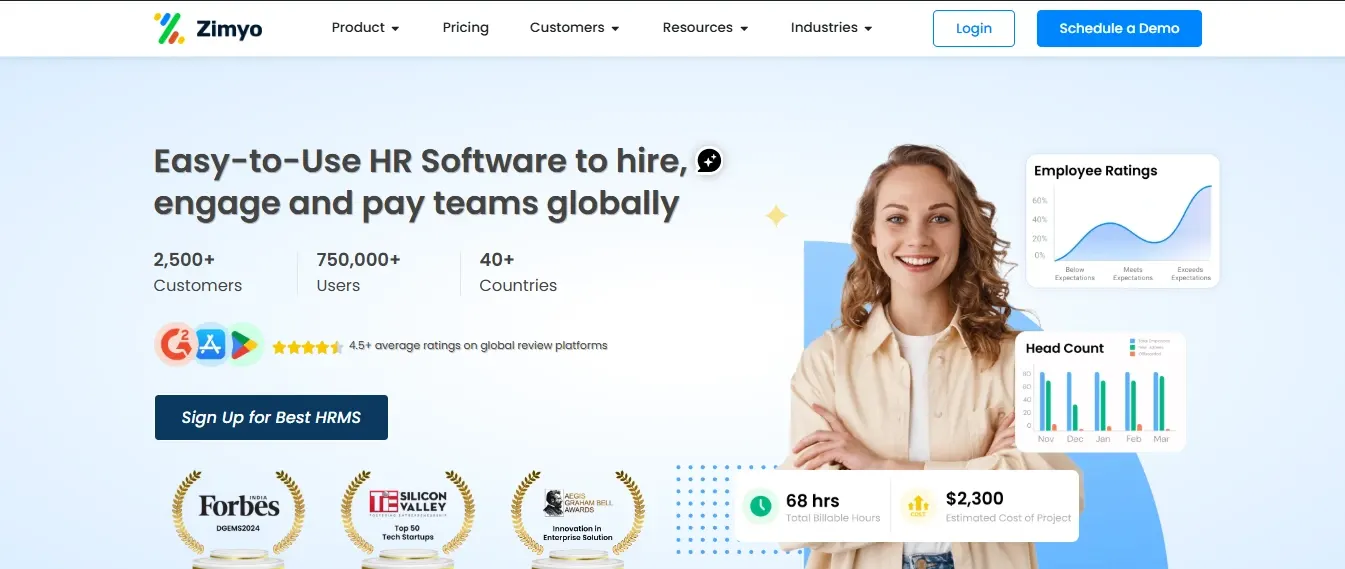
Zimyo is among the most reliable HR onboarding software in India, providing end-to-end onboarding solutions. It automates formalities joining, paperwork, and employee induction, ensuring the experience is hassle-free for both employees and HR.
Key Features
- Digital offer letters and e-signature-based document collection.
- Aadhaar and PAN verification built into the pre-boarding flow.
- Onboarding data flows directly into payroll, PF/ESI, and attendance no re-entry.
- Self-service onboarding portal for new hires
- Customizable, role-based onboarding checklists
India compliance at a glance: PF/ESI/PT auto-enrolment: Yes · Multi-entity & multi-state support: Yes · Mobile-first onboarding: Yes
Best for: SMEs and mid-market Indian companies that want onboarding native to a full HRMS rather than a bolt-on tool.
Consider a different platform if: you need very deep, enterprise-scale customization out of the box, or some advanced features are add-ons.
2. Keka
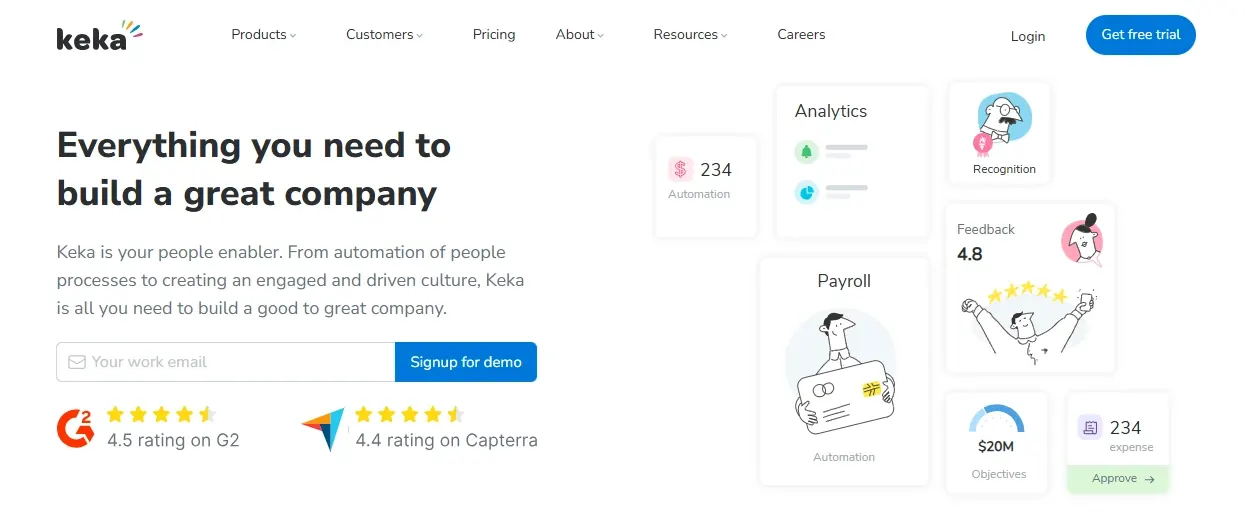
Keka is a widely used HR platform among Indian SMEs, and its onboarding module connects directly to payroll and statutory compliance. corporations. It streamlines onboarding with automation and integrates easily with the broader HR suite.
Key Features
- Automated joining formalities
- Customizable onboarding workflows
- Employee self-service portal
- Seamless payroll integration
- Cloud storage for employee data
India compliance at a glance: PF/ESI/PT auto-enrolment: Yes · Multi-entity & multi-state support: Partial · Mobile-first onboarding: Yes
Best for: Indian SMEs that want an intuitive interface and transparent pricing tiers.
Consider a different platform if: you need heavier preboarding automation or deep, granular reporting; both are lighter here than on enterprise-grade platforms.
3. Darwinbox
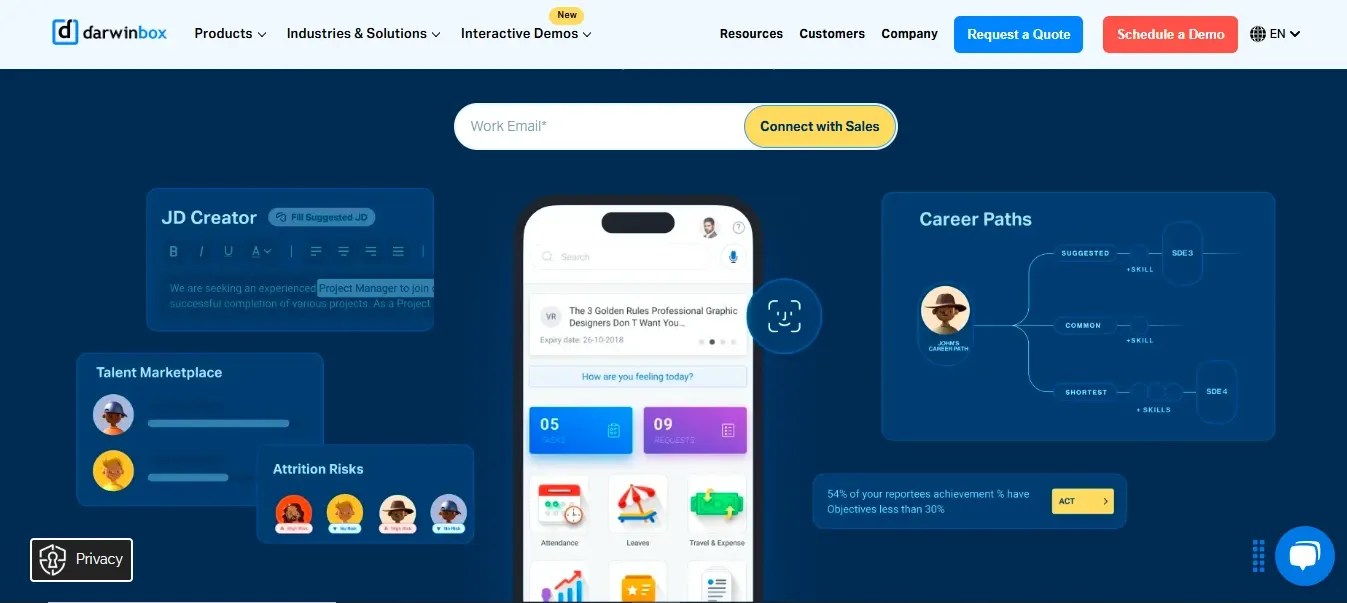
Darwinbox is built for large enterprises running complex, multi-department onboarding - think bulk hiring, campus drives, or onboarding across dozens of locations at once.
Key Features:
- Automated task allocation across HR, IT, and facilities
- Centralized document management with role-based access
- Deep compliance and payroll integration
India compliance at a glance: PF/ESI/PT auto-enrolment: Yes · Multi-entity & multi-state support: Yes · Mobile-first onboarding: Yes
Best for: large enterprises that need configurable, multi-department workflows and strong analytics.
Consider a different platform if: you're an SME - setup takes longer, and pricing is built for enterprise budgets.
4. HROne
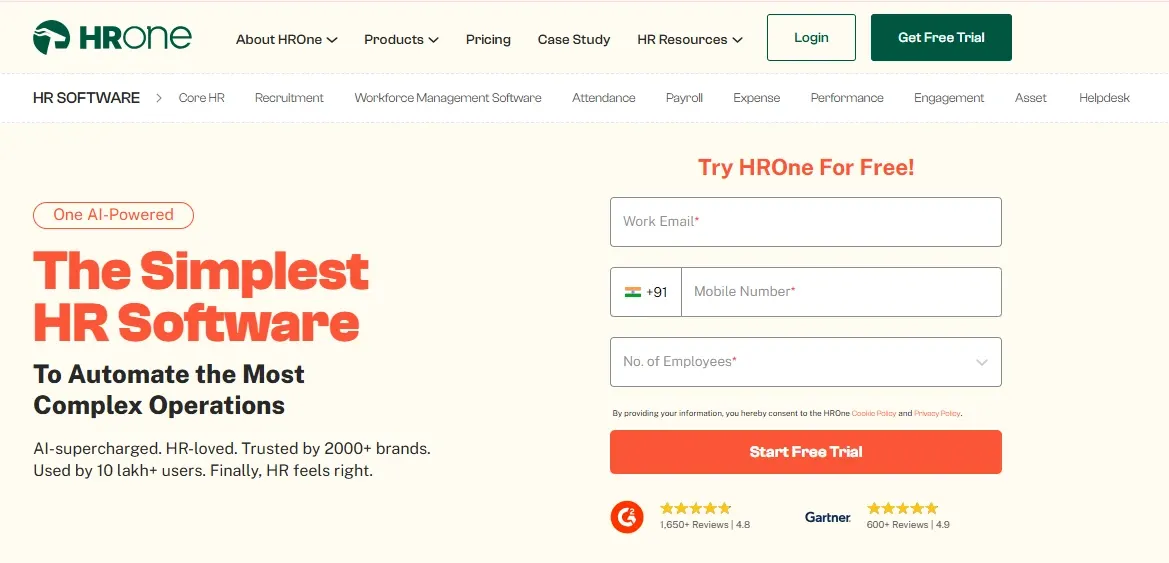
HROne targets Indian mid-market and enterprise teams that want preboarding, background verification, and payroll/compliance handled before day one, including multi-legal-entity operations.
Key Features:
- Mobile-based onboarding for branch and field hires
- Conversational document-submission flow
- Statutory PF/ESI/PT auto-enrolment
India compliance at a glance: PF/ESI/PT auto-enrolment: Yes · Multi-entity & multi-state support: Yes · Mobile-first onboarding: Yes
Best for: Indian mid-market and enterprise teams managing onboarding across multiple legal entities.
Consider a different platform if: you're a very early-stage startup; it's built for organizations past that first scaling stage.
5. greytHR
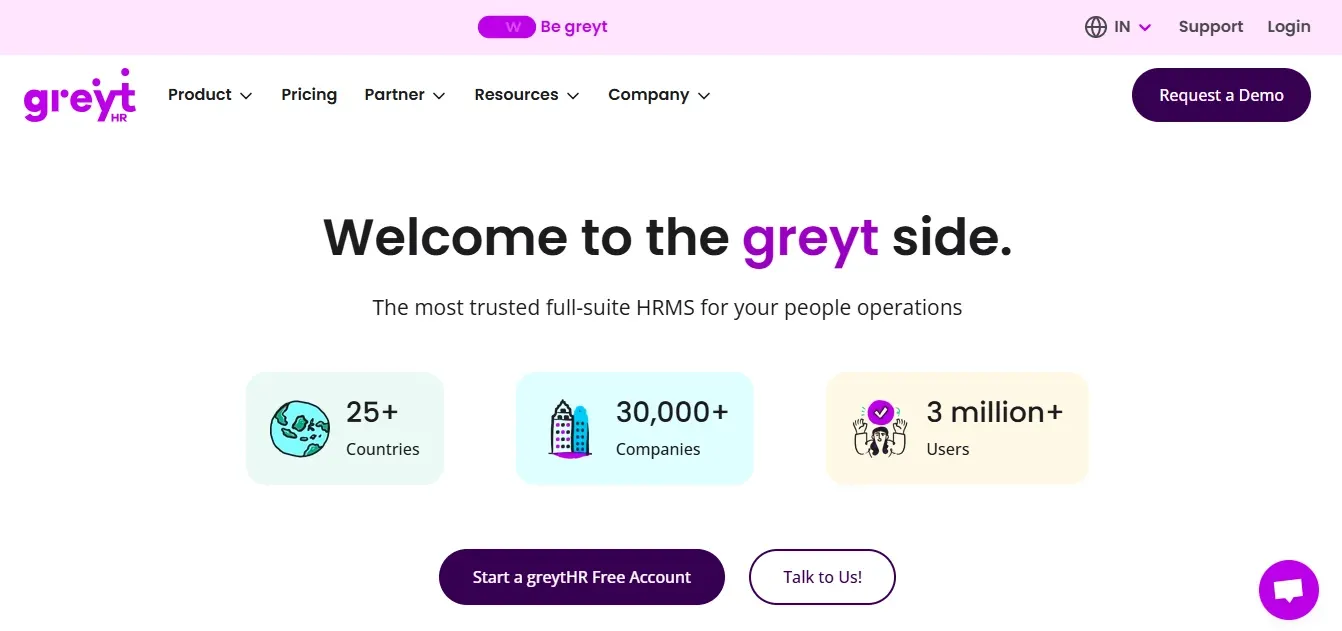
greytHR is a long-standing name in Indian payroll and HR software, with onboarding designed to plug directly into its own compliance engine.
Key Features:
- Statutory compliance checks built in (EPF, ESI, PT, TDS)
- Customizable onboarding workflows by role or department
- Self-service access for new hires
India compliance at a glance: PF/ESI/PT auto-enrolment: Yes · Multi-entity & multi-state support: Partial · Mobile-first onboarding: Partial
Best for: Indian SMEs that want deep familiarity with statutory requirements from a widely adopted platform.
Consider a different platform if: you want a modern interface and heavier workflow automation; both feel dated next to newer platforms.
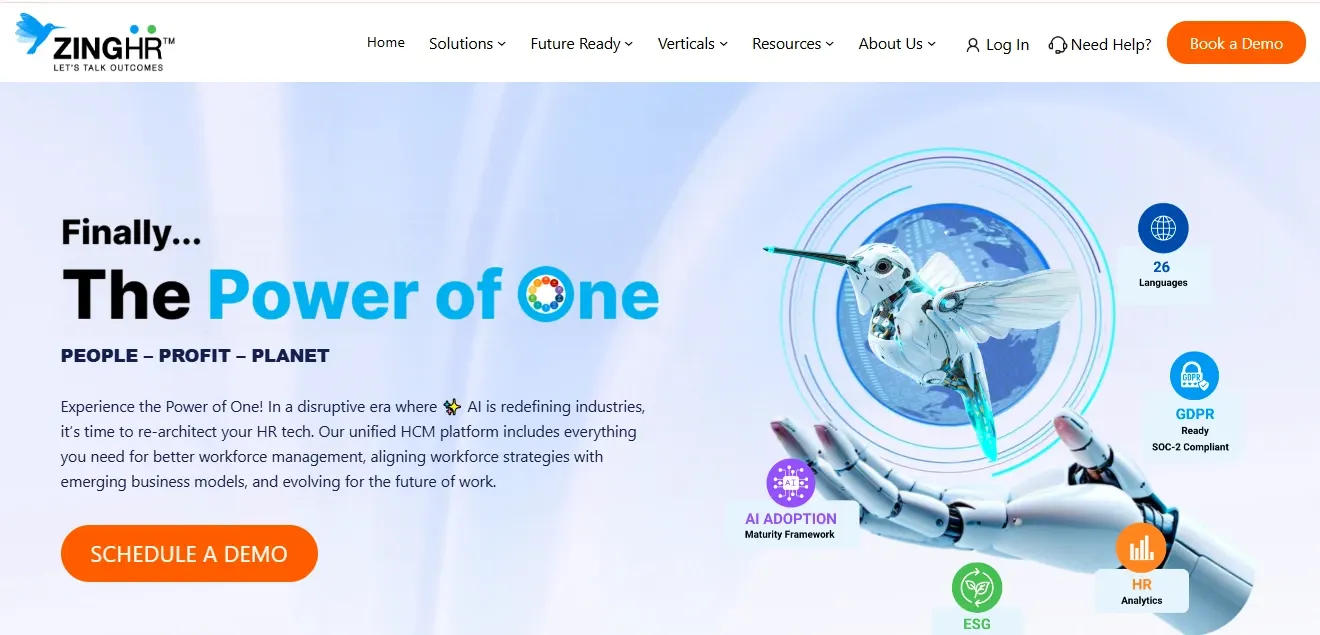
6. ZingHR
ZingHR is built for high-volume, multi-location onboarding, a strong pick for enterprises hiring at scale across India.
Key Features:
- Aadhaar OTP-based eKYC
- Digital offer letters and joining kits with e-signatures
- PF/ESI enrolment triggers fired directly from onboarding completion.
- Pre-boarding engagement tools to cut offer drop-outs
India compliance at a glance: PF/ESI/PT auto-enrolment: Yes · Multi-entity & multi-state support: Yes · Mobile-first onboarding: Yes
Best for: enterprises running high-volume, multi-location hiring across India.
Consider a different platform if: you're an SME; there's more onboarding depth here than most smaller teams will use.
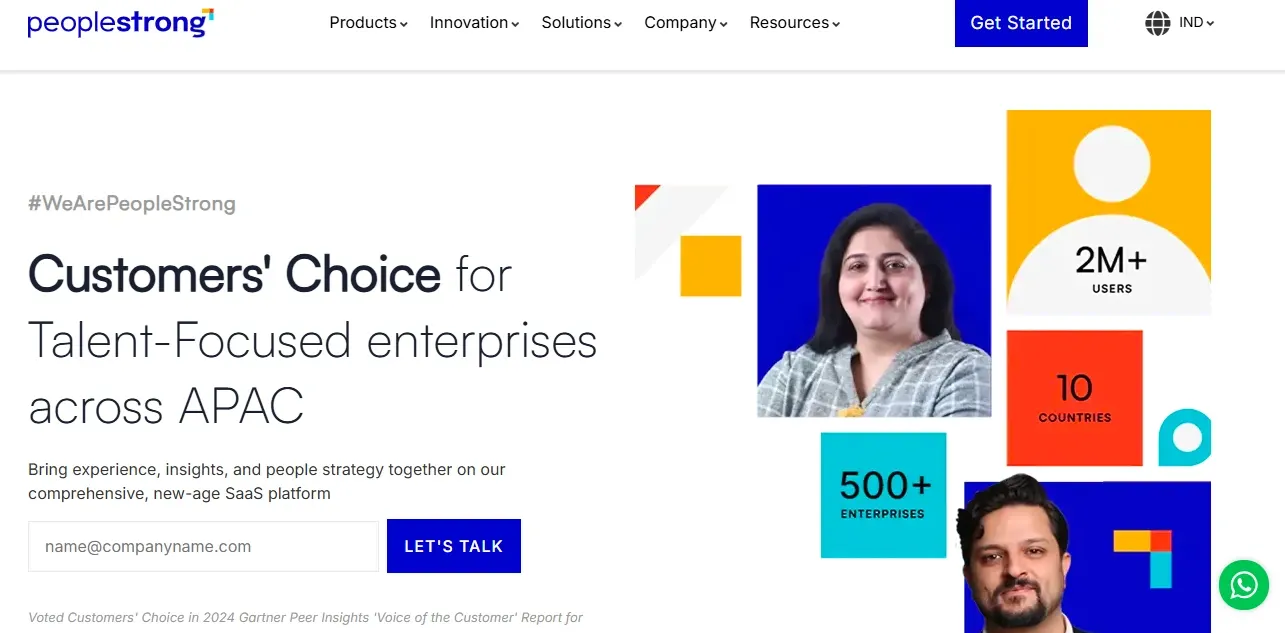
7. PeopleStrong
PeopleStrong is an enterprise HRMS platform. Its employee onboarding system is reputed to be intuitive and compliance-driven.
Key Features
- AI-powered onboarding flows
- Automated verification of documents
- Integration with learning and payroll software.
- Personalized onboarding experiences
- Preboarding communication modules
India compliance at a glance: PF/ESI/PT auto-enrolment: Yes · Multi-entity & multi-state support: Yes · Mobile-first onboarding: Yes
Best for: enterprises with complex onboarding needs that want strong compliance and security posture.
Consider a different platform if: you don't have admin capacity for setup, it can take real training to configure well.
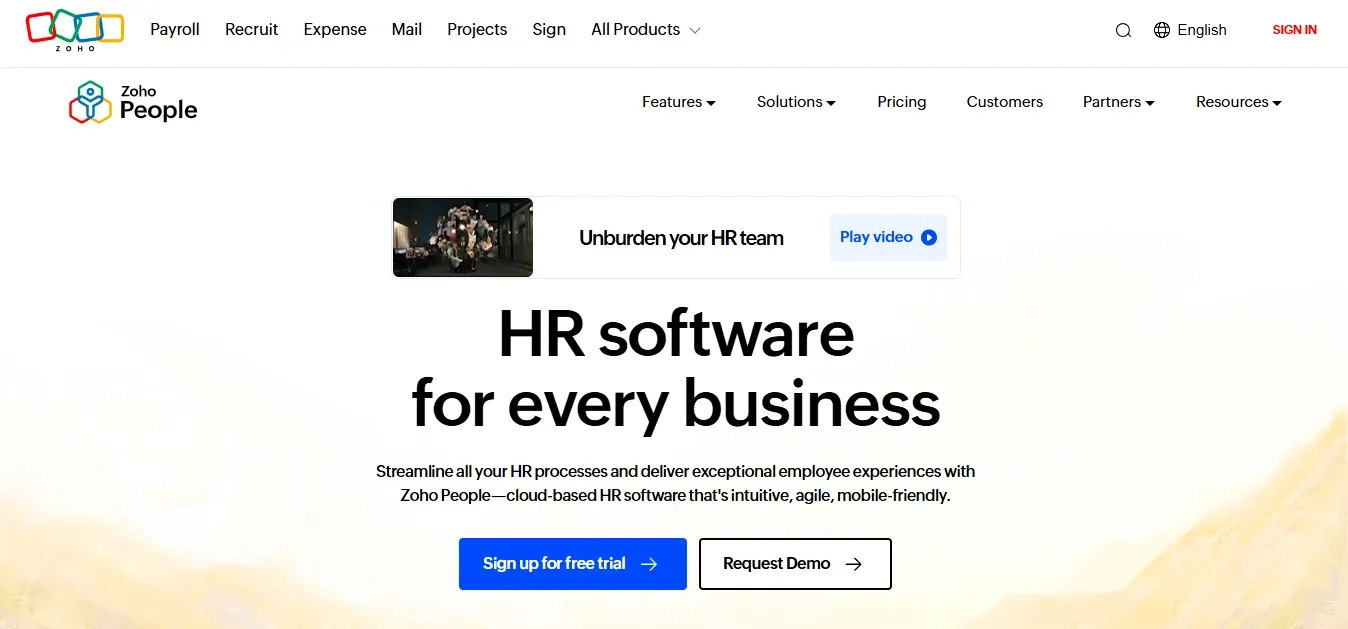
8. Zoho People
Zoho People is a flexible, affordable HR platform, particularly popular with startups and SMEs already using other Zoho products.
Key Features:
- Checklists and templates for onboarding
- E-signature integration
- Cloud document storage
- Native integration with the wider Zoho suite
India compliance at a glance: PF/ESI/PT auto-enrolment: Partial (via integrations) · Multi-entity & multi-state support: Partial · Mobile-first onboarding: Yes
Best for: budget-conscious startups and SMEs already inside the Zoho ecosystem.
Consider a different platform if: you need deep customization outside Zoho's own apps; that's where it thins out.
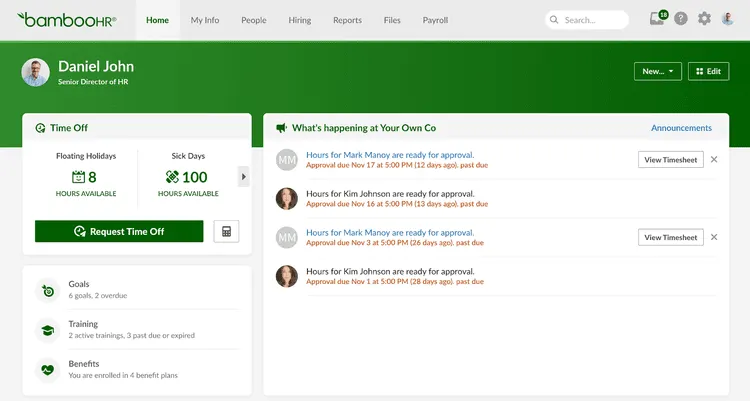
9. BambooHR
BambooHR is a widely used HR onboarding software that is popular for being easy to use and having a seamless user experience.
Key Features
- Electronic signatures on forms
- Customizable onboarding processes
- New hire packets of company policies
- Integration with ATS and payroll
- Mobile accessibility for remote onboarding
India compliance at a glance: PF/ESI/PT auto-enrolment: Limited · Multi-entity & multi-state support: Limited · Mobile-first onboarding: Yes
Best for: India-based teams with light or international-only compliance needs who prioritize ease of use.
Consider a different platform if: PF, ESI, and Aadhaar eKYC are core requirements, it isn't built around Indian statutory workflows.
10. Rippling
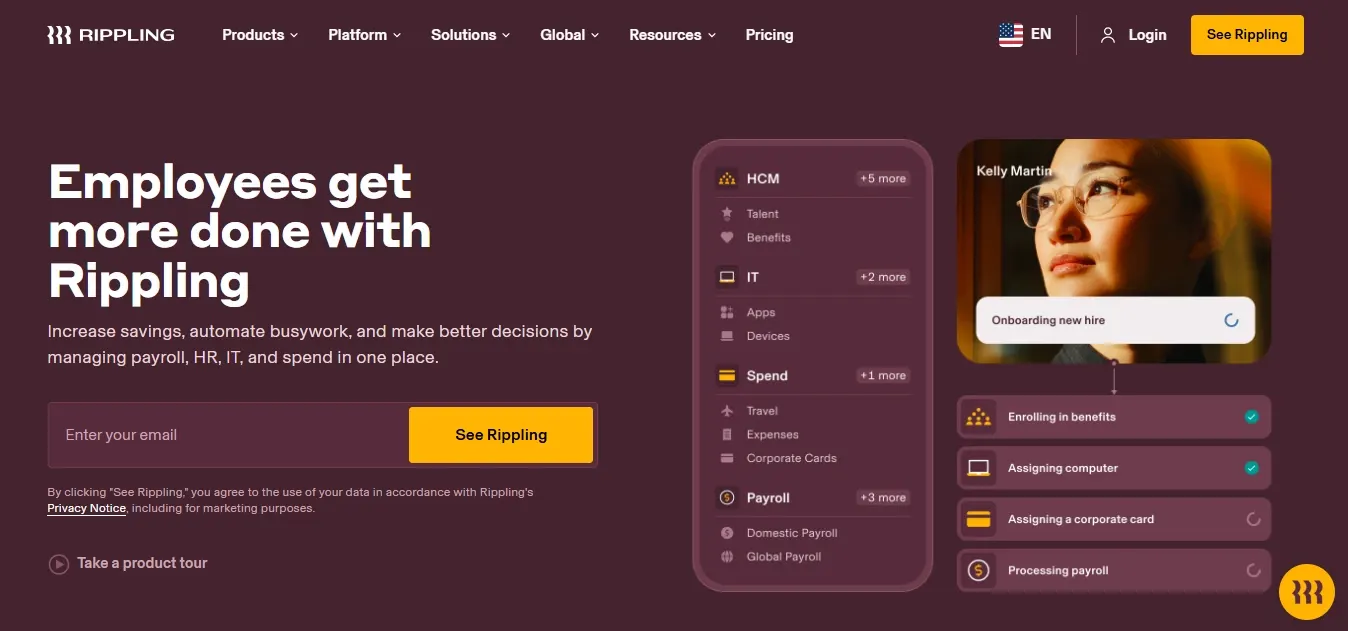
Rippling integrates HR onboarding software with IT automation, which sets it apart for businesses that require provisioning devices and apps in addition to onboarding.
Key Features
- Automatic device and app provisioning
- E-signature and digital documents
- Payroll and compliance integration
- Employee self-service onboarding
- One-click access to HR and IT systems
India compliance at a glance: PF/ESI/PT auto-enrolment: Limited · Multi-entity & multi-state support: Partial · Mobile-first onboarding: Yes
Best for: growing tech companies that want HR and IT provisioning handled in one place.
Consider a different platform if: Indian statutory automation is a top priority, and pricing also isn't transparent up front.
What Should You Actually Look For in Onboarding Software?
Run every demo against what's actually slowing your team down today, not a generic feature list:
What slows you down today | What to look for | Why it matters |
Re-keying PF/ESI details into payroll after onboarding | Automatic PF/ESI/PT enrolment triggered from onboarding completion | Removes a manual, error-prone step on every single hire |
Manual ID checks and paperwork before day one | Aadhaar eKYC and digital document collection | Cuts pre-boarding time from days to hours |
Building workflows via vendor support tickets | Self-serve, role-based workflow builder | You shouldn't need an implementation call to change a checklist |
Onboarding data trapped in a separate portal | Native integration with HRMS, payroll, and ATS | One source of truth instead of three re-entries |
No visibility into where onboarding stalls | Analytics on completion rate and bottlenecks | You can't fix what you can't see |
Field or retail hires stuck on desktop-only flows | Mobile-first access | Completion rates drop hard if the flow doesn't work on a phone |
Vendor go-live estimates that don't hold | Actual India customer go-live timelines, not the demo estimate | Best-case demo timelines rarely match implementation reality |
How to Choose the Right Onboarding Software in India: A Step-by-Step Guide
Step 1 - Define what you're actually solving. Faster completion? Fewer compliance gaps? A better first impression? Pick one or two measurable outcomes before you start demos.
Step 2 - Map your current process. Offer → pre-boarding → day one → first week → first 90 days. Mark where it actually breaks down today.
Step 3 - Build a Must-have / Nice-to-have list. Use the table above as your starting point.
Step 4 - Shortlist and demo with your own scenarios. Don't let a vendor run their canned demo, ask them to process an actual offer letter, a document upload, and a bulk-hire scenario if that applies to you.
Step 5 - Pilot with one department or hiring batch before rolling out company-wide.
Step 6 - Check implementation and support, specifically support hours aligned to Indian business hours, and whether templates and training are included.
Step 7 - Negotiate pricing with eyes open. Ask about per-module fees, API access charges, and data-export terms if you ever need to leave.
Step 8 - Roll out in phases and track the KPIs you defined in Step 1.
India-specific checks before you sign:
- Confirm the platform's PF/ESI workflow reflects current 2026 rates and the wage ceilings above.
- Ask how the new Labor Code changes to wage definitions are being handled in their payroll integration.
- Confirm data residency: is employee data stored in India, and what does the vendor's compliance documentation say?
- Check for local-language support if you're hiring outside metro cities.
Why a Smooth Onboarding Process Actually Matters
Good onboarding isn't a nice-to-have; it shows up in numbers HR leadership cares about.
Faster time-to-productivity
A new recruit with the appropriate access and context from day one is much more productive. Set out what "productive" means for each role - be it first task accomplished, first feature developed independently, or first billable hour.
Better early retention
Most attrition risk clusters in the first 90 days. A confusing or slow onboarding process is one of the easiest reasons to lose someone you just spent weeks hiring.
Fewer compliance gaps
A consistent process means every hire completes the same statutory steps; no one slips through without PF/ESI enrolment or a signed policy acknowledgment.
Lower manager overhead
Automated onboarding frees managers to spend their first weeks with a new hire on actual coaching instead of paperwork.
Track these KPIs:
onboarding completion rate, new-hire satisfaction (a short pulse survey works fine), time-to-first-contribution, 90-day retention, and HR hours saved per hire.
Implementation Checklist (No Jargon)
Before day one: Send the welcome pack, finish document collection and e-signatures, complete Aadhaar/PAN verification, and trigger IT provisioning through the onboarding tool.
Day one: Run a welcome orientation, hand over a clear first-week checklist, introduce the immediate team and a buddy.
First week: Assign a real first task, schedule role-specific training and compliance briefings, check in with the manager and HR.
First 30–90 days: Run regular check-ins, track training completion, and capture feedback on the onboarding experience itself.
All onboarding software isn't created equal. The top ones balance usefulness, simplicity, and integration. Here are features to prioritize and why they're important:
What Zimyo Brings to Onboarding and the Rest of HR
Zimyo brings onboarding under the ambit of the entire HR process rather than treating it as a stand-alone process:
- End-to-end integration of HRMS - a new hire's information is transferred to payroll, attendance, and performance without any duplication effort.
- Payroll processing and compliance - automatic calculations and reporting without any manual re-entry effort.
- Recruitment and ATS - candidate data carries straight through from hiring into onboarding.
- Attendance, leave, and shift management synced with payroll and onboarding records.
- Employee self-service and mobile access for document status, forms, and resources.
- 60+ modules across HR, payroll, engagement, and performance, used by 2,500+ organizations across 40+ countries.
Quick vendor-evaluation checklist (questions to ask during demos)
- Can I map custom workflows and conditional tasks?
- What mobile capabilities exist for new hires?
- How does the system handle bulk hiring and campus drives?
- What integrations are native (payroll, ATS, LMS, SSO)?
- How is data protected and where is it stored?
- What are implementation costs and ongoing fees?
- Do you provide onboarding templates for our industry?
- What reporting and export options are available?
Benefits of a Smooth Employee Onboarding Process
Streamlined onboarding brings business value, not just niceties. Here's how to present the benefits in operational and financial terms, along with tangible ways to quantify them.
For the employee
- Less anxiety, more clarity: clear role expectations, simple access to forms, and brief first tasks.
- More rapid inclusion: formal welcomes, buddy systems, and check-ins during the first week make them feel part of the team.
For HR
- Less drudgery: automating repetitive tasks and follow-ups.
- Improved compliance: standard checklists guarantee required forms and regulatory steps are taken.
- Simplified reporting: integrated dashboards eliminate agonizing spreadsheets.
For managers
- Less admin, more coaching: managers have time for role clarity and feedback.
- Increased team productivity: new hires transition from observe to contribute more quickly.
For the company
- Lower cost of hiring per employee: lower turnover and quicker productivity decrease the effective cost of hiring.
- Improved employer brand: a smooth process invites referrals and positive public feedback.
- Less errors and complaints: tidy documentation minimizes confusion on offers and conditions.
How to measure benefits (KPIs you should track)
Onboarding completion rate: percentage of new employees who complete mandatory steps within the onboarding process.
- New hire satisfaction / NPS: brief pulse survey upon completion of onboarding.
- Time-to-first-contribution: when new hire finishes first substantial task.
- 90-day retention rate: percentage retained after typical probation/early phase.
- Manager satisfaction: brief manager survey about readiness of new hires.
- HR time saved: hours HR no longer wasting on paperwork and tracking tasks.
Straightforward ROI framing (how to demonstrate value to leadership)
- Current costs: time HR invests, cost of early turnover, lost productivity.
- Estimate turnover savings (reduced HR hours × hourly cost) and decreased turnover.
- Make a case: small investments in onboarding software tend to pay off in accelerated productivity and reduced attrition.
Implementation best practices (practical checklist — no jargon)
Pre-boarding (prior to first day)
- Send welcome pack and role summary.
- Finish document collection and e-signatures.
- Provide login details and day-one schedule (if relevant).
- Ask for IT provisioning (laptop, accounts) through the onboarding tool.
Day one
- Host a welcome orientation or welcome meeting.
- Offer a transparent "first week" checklist.
- Introduce immediate team and buddy/mentor.
First week
- Assign initial meaningful tasks.
- Plan role-specific training and compliance briefings.
- Touch base with manager and HR.
First 30–90 days
- Operate regular check-ins and feedback loops.
- Monitor training completion and early performance milestones.
- Capture feedback on the onboarding experience to drive continuous improvement.
Change management
- Make it easy to communicate with managers regarding their onboarding role.
- Leave simple manager checklists within the onboarding software.
- Refine templates using pilot feedback.
Conclusion
Excellent onboarding is one of the most impactful things that HR can invest in. It cuts friction, accelerates productivity, enhances retention, and makes your organization a place where people are willing to remain. The best onboarding software integrates automation, a touch of humanity, and integrations that eliminate manual labor.
Quick next steps you can use on the page or to advise stakeholders
- Determine the three onboarding results your business needs to attain (e.g., 100% paperwork completion, lower manager admin, improved 90-day retention).
- Develop a pilot plan: select a single department, pilot the onboarding tool, solicit feedback, and track the selected KPIs.
- Utilize the scoring matrix below to narrow down vendors, then conduct a side-by-side demo with your actual hire scenarios.
- If you prefer an all-in-one HRMS that connects onboarding to payroll and performance, consider Zimyo as a candidate in your shortlist.
Frequently Asked Questions (FAQs)
What is the best employee onboarding software in India?
Zimyo is an excellent choice of an onboarding tool for small- to medium-sized Indian firms that need an HRMS with integrated onboarding functionality. Keka and Darwinbox are other options that many firms use, depending on their requirements.
Which onboarding software handles PF and ESI compliance automatically?
Platforms with India-specific statutory automation, including Zimyo, Keka, HROne, greytHR, and ZingHR, can trigger PF and ESI enrolment directly from onboarding completion, avoiding manual re-entry into payroll.
What are the 5 C's of employee onboarding?
Compliance, Clarification, Culture, Connection, and Check-back - completing legal requirements, explaining the role, introducing company values, building relationships, and following up to confirm the transition went smoothly.
Which is the best small business onboarding software?
For small businesses, Zimyo is the best option due to its affordability, simplicity, and scalability.