
- Am I valued here?
- Does this company invest in my growth?
- Do my contributions actually matter?
- Is this a place where I can truly belong?
Check Out Our Blog on How To Enhance Employee Experience .
What Is Employee Experience Software?
- Belonging and inclusion
- Recognition and appreciation
- Fair growth opportunities
- Transparent communication
- Psychological safety
- Employee happiness and well-being
| Feedback & Pulse Surveys | Listen and understand employee sentiment in real time |
| Recognition & Rewards | Reinforce positive behavior and boost morale |
| Performance & Growth Tools | Support alignment, coaching, and career mapping |
| Digital Employee Experience Tools | Simplify employee services and workplace interaction |
| People Analytics | Help HR make data-backed culture and workforce decisions |
| Internal Communication Hub | Keep distributed teams connected and informed |
| Employee Wellbeing Features | Support mental health, balance, and overall wellness |
In simple terms: Employee experience software helps companies understand their people better and support them in ways that drive engagement, culture, and retention at scale.
Top Employee Experience Software Solutions in 2026
- Zimyo
- Motivosity Inc.
- Culture Amp
- WorkTango
- 15Five
- CultureMonkey
- Lattice
- Bonusly
- Workvivo
- Kudos
- Qualtrics
- Awardco, Inc.
- BambooHR
13 Best Employee Experience Software Solutions for 2026
1. Zimyo
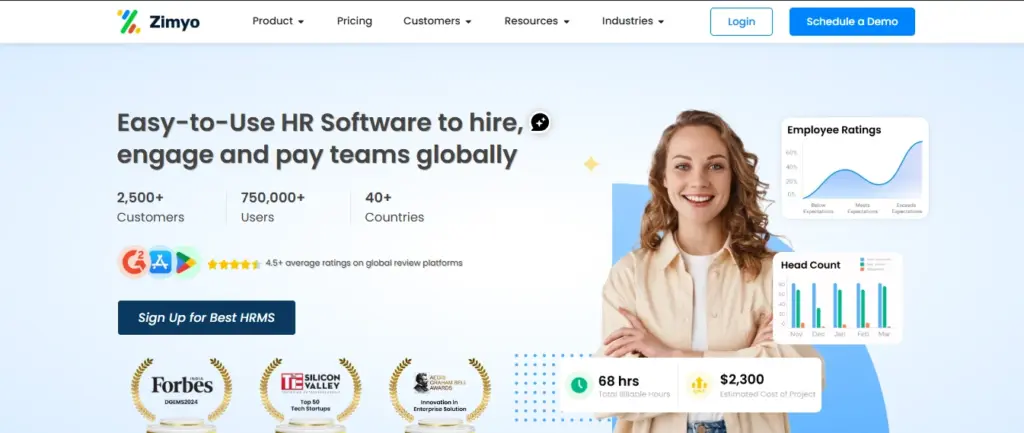
Key Features:
- Automated onboarding workflows and digital documentation
- Pulse surveys and real-time employee sentiment tracking
- Employee recognition wall and peer-to-peer rewards program
- Performance management with OKRs, continuous feedback, and reviews
- Employee self-service mobile app with 24/7 access
- HRIS, payroll, attendance, and leave management
- AI-powered insights and workforce dashboards
Pros | Cons |
All-in-one HR + employee experience ecosystem | Advanced analytics may require initial configuration |
Intuitive for both employees and HR teams | Some advanced features may require onboarding support |
Excellent onboarding and engagement tools |
2. Motivosity
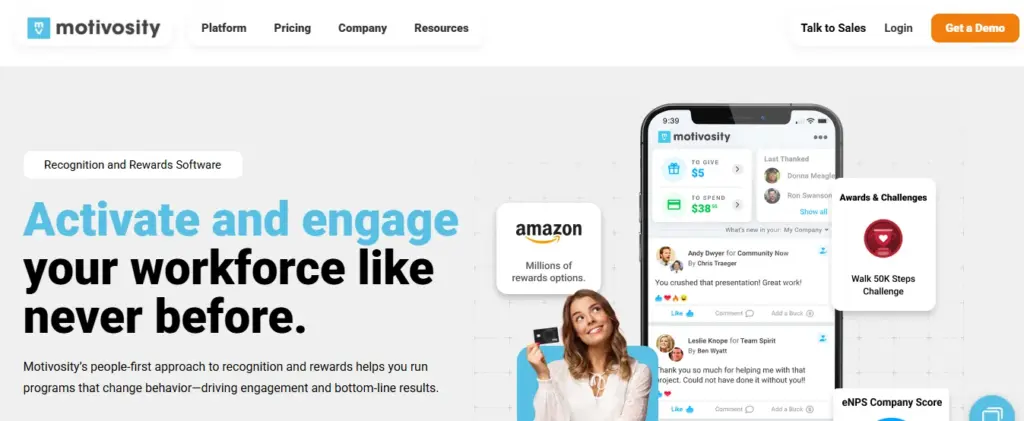
Key Features:
- Peer-to-peer recognition feed with social visibility.
- Reward points marketplace with real redemption options.
- Manager feedback and coaching tools
- Community profiles and culture-building features
- Employee happiness scoring
Pros | Cons |
Highly engaging and simple for employees | Limited surveys and analytics capabilities |
Great for culture building and rewards | Not a full HR suite |
Friendly pricing for small to mid-sized teams | May require pairing with other HR tools |
3. Culture Amp
Key Features:
- Engagement and lifecycle surveys with research-backed templates
- Benchmarking against industry and global standards
- Performance management and development frameworks
- AI-driven predictive analytics and attrition signals
- Coaching and growth planning tools
Pros | Cons |
Excellent analytics and insights | Higher learning curve |
Trusted by HR teams in growth-focused companies | Premium pricing |
Research-backed templates and reports | Best for teams with HR maturity |
4. WorkTango
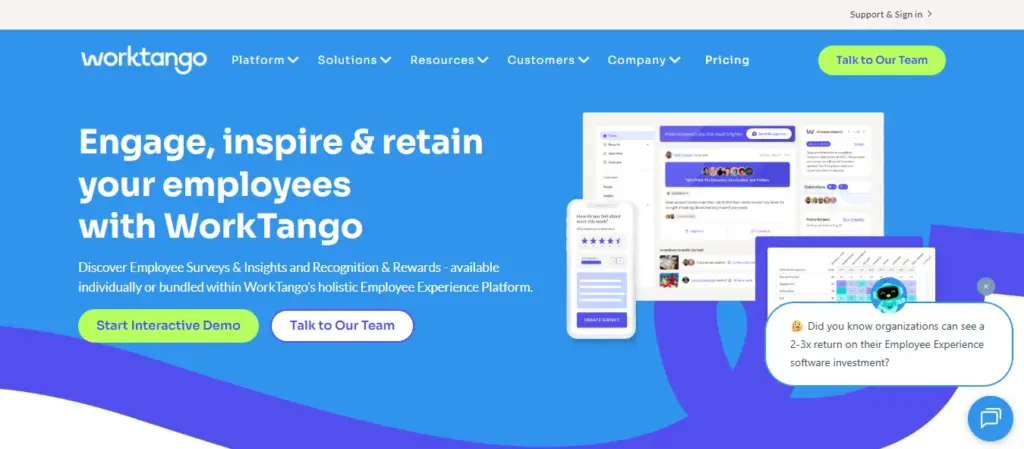
Key Features:
- Real-time recognition and rewards
- Surveys and continuous feedback cycles
- Goals and performance alignment tools
- Engagement dashboards and trend reporting
Pros | Cons |
Balanced focus across engagement + recognition | May require complementary HR tools |
Strong analytics and reporting | Pricing not always transparent |
Good for distributed and hybrid teams | Setup can take time |
5. 15Five
Key Features:
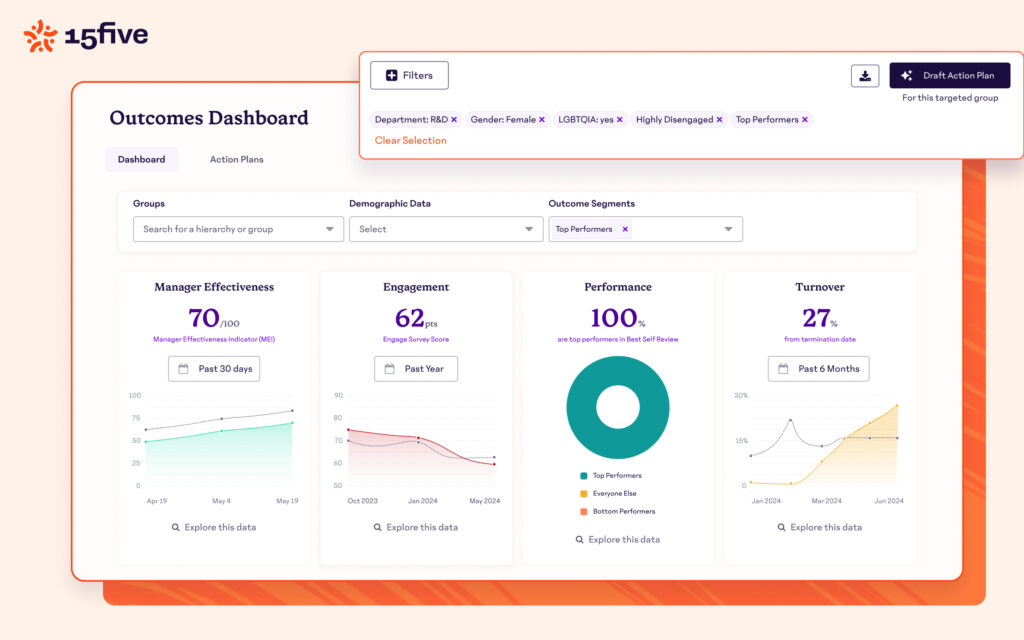
- Manager check-ins and structured review templates
- Continuous feedback workflows and performance reviews
- OKR tracking and goal alignment
- Engagement surveys with actionable insights
- AI-powered manager coaching recommendations
Pros | Cons |
Great for leadership alignment and coaching | Recognition features lighter |
Strong OKR and feedback structure | Add-ons increase total cost |
Ideal for hybrid/remote manager teams | Not an all-in-one HR suite |
6. CultureMonkey
CultureMonkey is a dedicated employee listening platform built around continuous feedback rather than annual surveys. It focuses on measuring sentiment across the full employee lifecycle and turning that data into benchmarked, comparable insight for people teams.
Its strength lies in reach, multi-channel survey delivery and multilingual support make it particularly effective for frontline and deskless workforces that email-only tools struggle to reach.
Key Features:
- Pulse surveys and eNPS tracking with automated cadence
- Lifecycle surveys covering onboarding, tenure, and exit stages
- AI-driven sentiment analysis and predictive engagement insights
- Industry benchmarking to compare scores against external norms
- Multi-channel, multilingual delivery for distributed and frontline teams
Best For: Organizations that want dedicated engagement listening and benchmarking alongside their existing HR system.
Pros | Cons |
Strong pulse survey and eNPS capabilities | Not a full HR suite |
Excellent reach for frontline and multilingual teams | No payroll, attendance, or core HR modules |
Anonymous feedback encourages honest responses | Requires pairing with an HRIS for lifecycle data |
7. Lattice
Key Features:
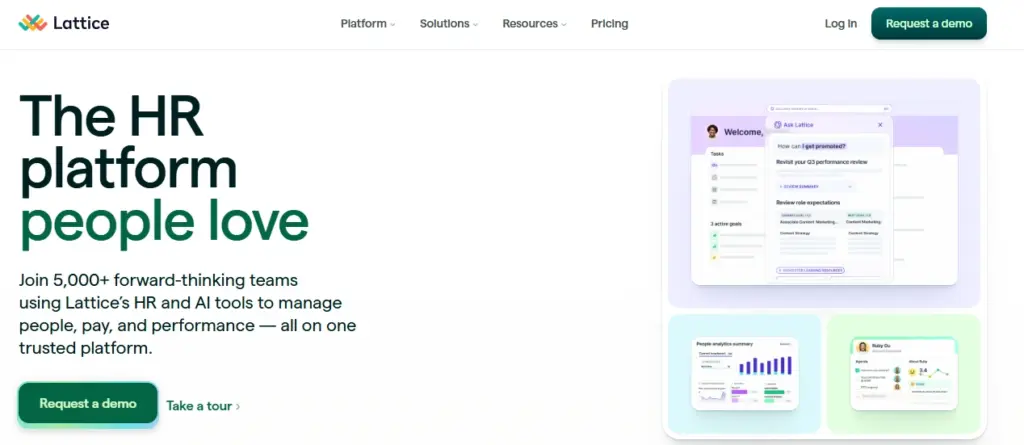
- Performance reviews and continuous feedback loops
- OKRs and goals management
- Engagement surveys and insights dashboards
- Career growth plans and development frameworks
- Compensation management tools
Pros | Cons |
Comprehensive for performance culture | Requires setup and change management |
Ideal for scaling and mature orgs | Pricing increases with modules |
Strong analytics and dashboards | May overwhelm small teams |
8. Bonusly
Key Features:
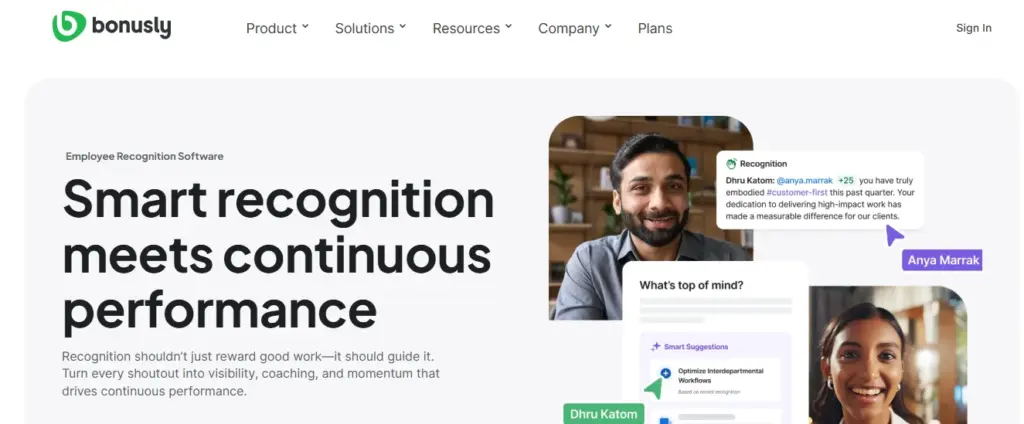
- Peer-to-peer recognition portal with social feed
- Automated celebrations and milestone reminders
- Rewards catalog with digital gift and charity options
- Integrations with Slack, Microsoft Teams, and major HRIS platforms
Pros | Cons |
Very easy, fun, and social to use | Not ideal for deeper EX measurement |
Quick adoption across teams | Limited performance or engagement modules |
Affordable pricing | Recognition may feel transactional if not guided |
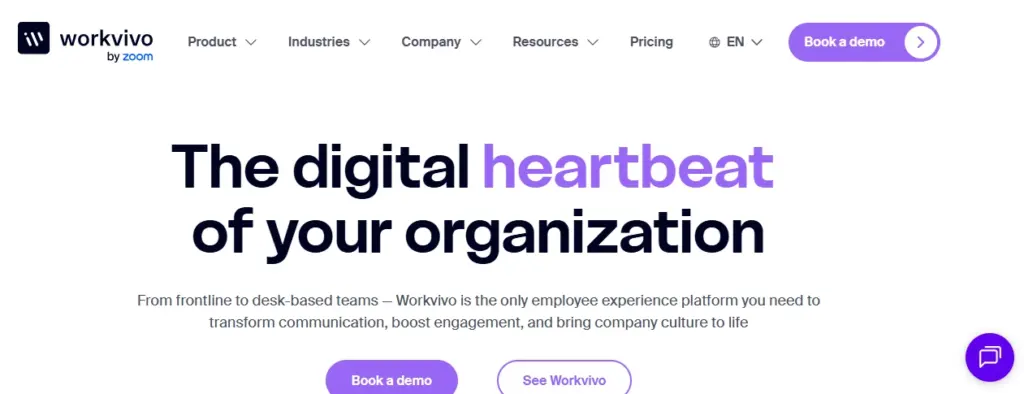
9. Workvivo
Key Features:
- Employee communication feed and company news updates
- Community spaces and interest groups
- Recognition, shoutouts, and milestone celebrations
- Analytics and engagement tracking
- Mobile-first experience for frontline workers
Pros | Cons |
Excellent for remote or shift-based teams | Not a full HR suite |
Strong internal communication focus | Setup requires content and adoption effort |
Highly engaging mobile app experience | Best suited for larger organizations |
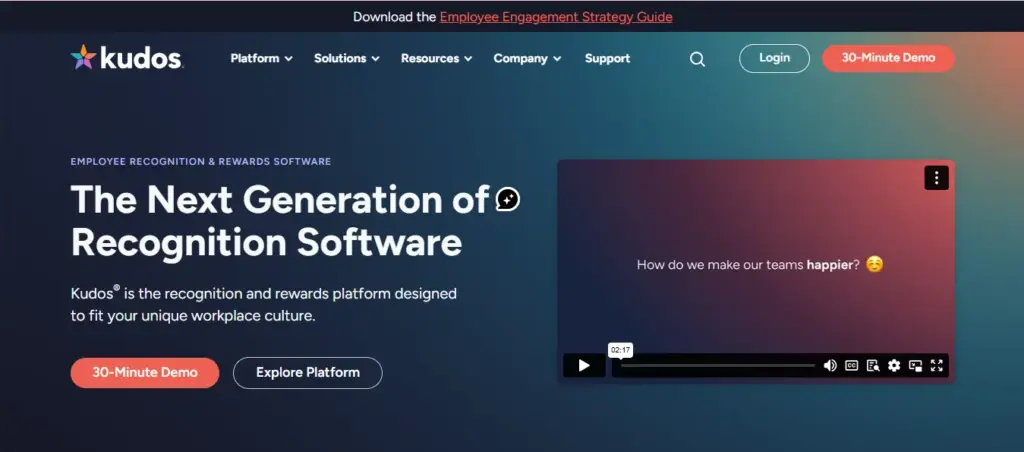
10. Kudos
Key Features:
- Values-based recognition messages tied to company culture
- Award programs and incentive options
- Culture score dashboards and recognition analytics
- Reporting on recognition trends by team and department
Pros | Cons |
Great for reinforcing company values | Requires cultural readiness |
Deep reporting on recognition trends | Limited feedback and performance tools |
Easy to adopt and scale | May require pairing with HRIS or performance tools |
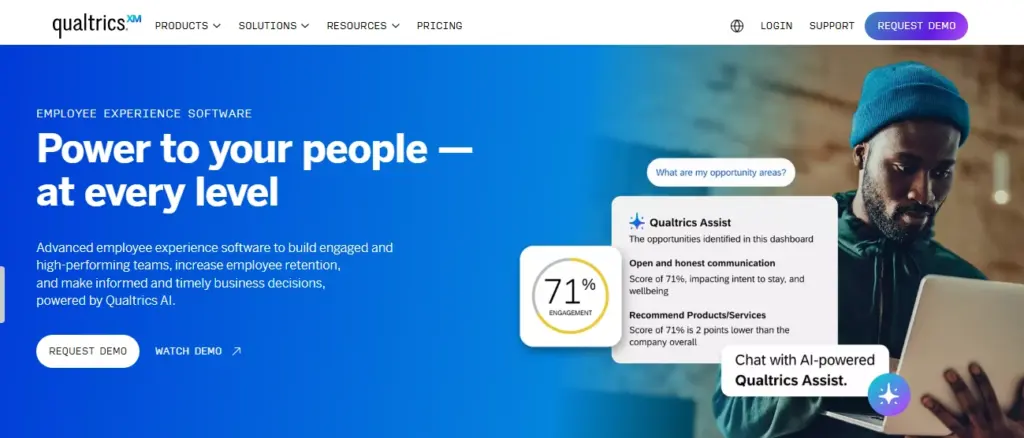
11. Qualtrics EmployeeXM
Key Features:
- Lifecycle and engagement surveys with advanced customization
- AI-driven analytics, predictive insights, and sentiment modeling
- Text and sentiment analysis across open-ended responses
- Benchmarking and workforce decision support tools
- Integration with SAP and other enterprise systems
Pros | Cons |
Extremely powerful analytics engine | Expensive and complex implementation |
Ideal for large-scale strategic programs | Requires well-defined strategy |
Customizable to any organization | Best suited for enterprises |
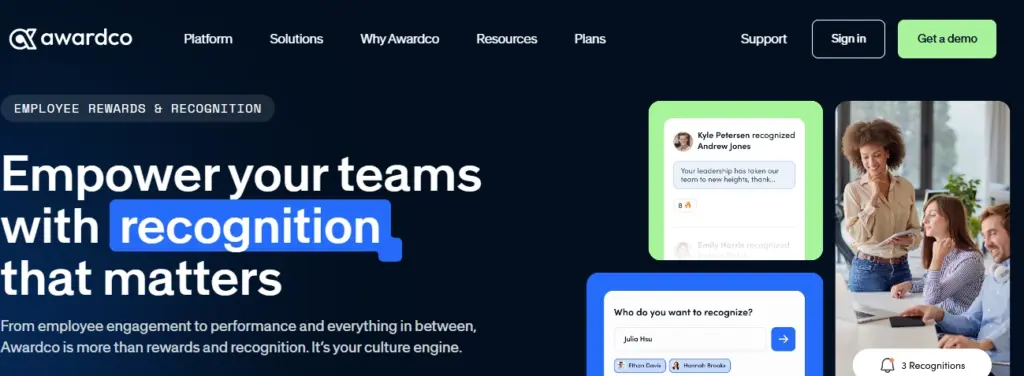
12. Awardco
Key Features:
- Global rewards catalog with Amazon Business integration
- Recognition programs and milestone automation
- Service anniversary and life event celebrations
- HR system integrations and SSO support
Pros | Cons |
Strong reward marketplace | Limited surveys and analytics |
Good for global teams | Pricing varies by configuration |
Simple user experience | Less focus on performance or growth |
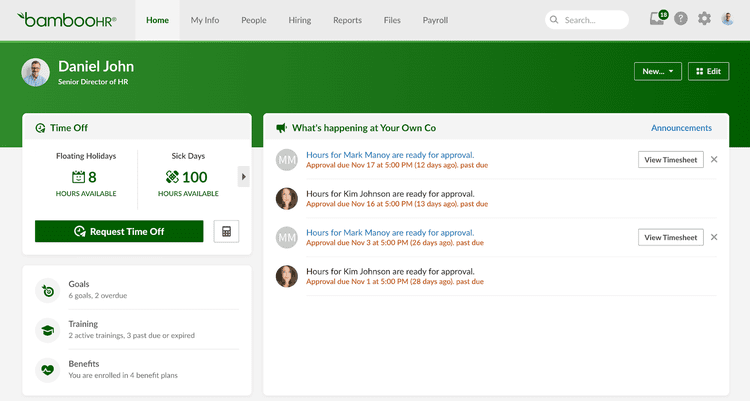
13. BambooHR
Key Features:
- Employee records, HR automation, and document management
- Basic surveys, eNPS tracking, and pulse check-ins
- Performance review module with self-assessments
- Employee self-service portal and mobile app
- Onboarding checklists and new hire workflows
Pros | Cons |
Great HR + lightweight EX stack | Not built for deep engagement analytics |
User-friendly and clean interface | Limited recognition features |
Works well for SMBs | May require add-on tools for scaling |
Check Out the List of Best Rated Employee Engagement software for Startups
Key Features to Look for in an Employee Experience Platform in 2026
1. Real-Time Pulse Surveys and Feedback Tools
- Send short, targeted pulse surveys automatically.
- Collect feedback anonymously to ensure honest responses.
- Surface emerging issues before they become retention risks.
- Track sentiment trends over time with intuitive dashboards
2. Employee Recognition and Rewards
- Peer-to-peer and manager-to-employee recognition
- Points, badges, or reward-based systems
- Automated milestone and work anniversary reminders
- Values-aligned recognition messages
3. Onboarding and Lifecycle Automation
- Automated, role-specific onboarding workflows
- Personalized welcome journeys and resource libraries
- Digital document signing and task completion tracking
- Check-in surveys during the onboarding period
4. Performance and Growth Tools
- OKRs and goal tracking with progress visibility
- Coaching templates and structured one-on-ones
- Continuous performance reviews and self-reflection tools
- Development plans tied to career frameworks
5. Internal Communication and Engagement Hub
- Company announcements and leadership updates
- Social feeds, communities, and interest groups
- Chat or collaboration integrations (Slack, Teams)
- Mobile-accessible for deskless or frontline workers
6. Sentiment Analytics and Dashboards
- Engagement measurement and trend tracking
- Predictive attrition signals and risk indicators
- Department-level breakdowns and benchmarking
- Actionable recommendations from insights
7. Mobile-First Design
- Mental health resources and wellness check-ins
- Workload and burnout indicators
- Work-life balance tracking and manager alerts
- EAP (Employee Assistance Program) integrations
8. Integrations With Existing Systems
- HRIS and payroll systems
- Attendance, scheduling, and leave management
- Applicant tracking systems (ATS)
- SSO and identity management platforms
Benefits of Employee Experience Software in 2026
1. Higher Employee Engagement
2. Lower Turnover and Hiring Costs
3. Stronger Workplace Culture
4. Better Communication and Organizational Clarity
5. Improved Performance and Productivity
6. Data-Driven Workforce Strategy
7. Better Support for Remote Employees
8. Enhanced Digital Employee Experience
Real-World Success Stories: Employee Experience in Action
- Benesch — Reducing Attrition Through Continuous Feedback
- Cardinal Health — Empowering Frontline Workers
- LG Electronics & ABN AMRO — Strategic People Analytics
How to Choose the Right HR Software for Employee Experience
Step 1 — Define Your Primary Goal
- Do we need better engagement measurement?
- Are we focused on recognition and culture?
- Do we need full HR management software capabilities?
- Are we solving a communication gap for remote teams?
- Do we need advanced people analytics software for strategic decisions?
Step 2 — Match the Platform to Your Team Size
- Small business (under 200 employees): Tools like BambooHR or Bonusly offer simplicity and value ideal HR software for small business options
- Mid-size (200–2,000): Platforms like Zimyo, WorkTango, or Motivosity offer depth without overwhelming complexity
- Enterprise (2,000+): Qualtrics, Lattice, or Workvivo provide the scalability and analytics enterprise HR demands.
Step 3 — Evaluate Integration Compatibility
- Your existing HRIS or payroll system
- Slack or Microsoft Teams
- ATS and recruitment platforms
- SSO and identity management tools
Step 4 — Prioritize Employee-Facing UX
Step 5 — Test Analytics and Reporting Depth
Step 6 — Pilot Before You Commit
Step 7 — Evaluate Total Cost of Ownership
- Licensing cost per employee
- Implementation and onboarding fees
- Training requirements
- Cost of integrations or add-on modules
- Expected ROI from reduced turnover and improved engagement
Conclusion
As workplaces continue to evolve, organizations can no longer rely on compensation alone to attract and retain talent. Employees increasingly expect meaningful work, opportunities for growth, recognition, and a positive workplace experience. This is where the best employee experience software solutions in 2026 play a critical role. By combining employee feedback software, employee survey software, employee recognition software, employee performance management software, internal communication software, remote employee engagement tools, people analytics software, and HR management software, businesses can create a more connected, engaged, and productive workforce.
Whether you are a startup, a growing business, or a large enterprise, investing in the right HR software for employee experience helps build a workplace where employees feel valued, supported, and empowered to succeed. Platforms like Zimyo are enabling organizations to streamline HR operations while enhancing employee engagement and workplace culture. Ultimately, companies that prioritize employee experience create stronger teams, improve retention, and build environments where top talent chooses to stay and thrive.
Frequently Asked Question (FAQ)
What is the best employee management software?
Zimyo is considered one of the best employee management software solutions because it offers a complete HR suite including attendance, payroll, onboarding, performance reviews, and employee engagement tools. Other commonly used alternatives include BambooHR and Zoho People.
Which is the best employee monitoring software?
If monitoring is needed as part of a wider HR system, Zimyo offers attendance tracking, productivity insights, and work logs to support compliance and transparency. For standalone tracking, tools like Time Doctor, Hubstaff, and ActivTrak are also popular choices.
What is employee experience software?
Employee experience software is a platform designed to improve how employees feel at work by streamlining communication, recognition, surveys, engagement, and performance feedback. For example, Zimyo helps companies measure satisfaction, automate surveys, and support continuous improvement through data-driven insights.
Which company has the best employee experience?
Organizations like Google, Microsoft, Salesforce, and HubSpot are often recognised for great employee experiences. Many growing companies across industries are also improving employee experience with platforms like Zimyo that help them build stronger engagement and feedback programs.