
The Complete Employee Onboarding Checklist (Free Template Included)
The initial impression lasts for a lifetime. In the first couple of weeks, your company decides whether a recruit integrates into the team and sticks around or goes back to looking for new opportunities. This fact is supported by numerous studies that indicate that one in three new hires leaves within 90 days, mostly due to poor or confusing onboarding processes.
That's when a good onboarding checklist comes into play. Instead of being confused and overwhelmed in the first week, your employees will receive a clear step-by-step procedure that allows them to feel more confident and productive much sooner.
In this guide, we'll explain what an onboarding checklist is and why it is crucial for your organization. Moreover, you'll find an example template, a description of remote onboarding, and the most common onboarding mistakes to avoid.
What Is an Employee Onboarding Checklist?
An employee onboarding checklist is a list of tasks that must be completed by HR, managers, and the new employee to ensure they are fully integrated into the company. This checklist can include tasks such as paperwork, IT setup, introductions, training, and more, usually organized by timeline from pre-boarding to the first 90 days of the new employee’s tenure with the company.
This list is more than just a to-do list for each participant in the onboarding process. It is also a shared script that ensures everyone knows what to do and when to do it. This consistency ensures that every new employee has a smooth start to their career with the company.
A good employee onboarding checklist will standardize the process for all new employees while still allowing for the personalization of the onboarding experience to each individual position within the company. This ensures that whether you are onboarding one new employee or an entire department, everyone has the same opportunity to succeed from the start.
Check out our Top employee onboarding software.
Why Is an Onboarding Checklist Important?
Here's the uncomfortable truth: only around 12% of employees feel that their company does a good job of onboarding new employees. Most companies treat onboarding as a necessary process of signing forms and sending out a handbook for the new employee to read.
A checklist will help close the gap between what most companies currently do and what is needed for an effective onboarding process. A checklist will ensure that no important details are forgotten during the onboarding process.
It will also make sure that the company is compliant with all necessary requirements for new employees. Items like tax forms and signed agreements will be captured in one place rather than being scattered throughout the company’s inboxes.
Most importantly, however, is that an onboarding checklist will help set the tone for the new employee. By showing that the company is prepared for their arrival, it will indicate to the new employee that the company has its act together and that they are pleased to have the new employee in the company.
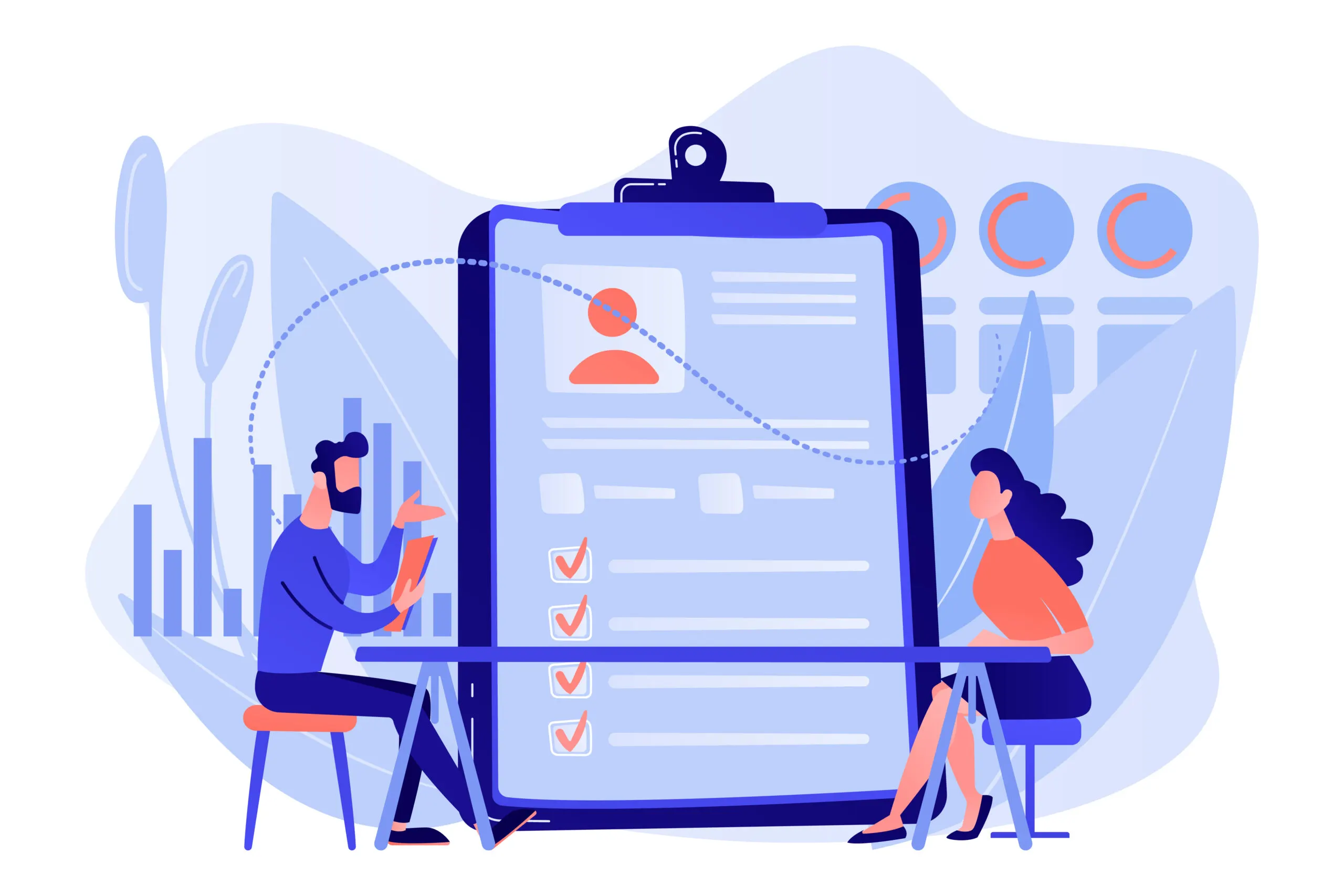
Benefits of a Structured Onboarding Process
The payoff of getting the employee onboarding process right shows up across nearly every metric that matters.
Stronger retention
Companies with strong, structured onboarding report up to 82% higher new-hire retention. Given that replacing an employee can cost anywhere from 50% to 200% of their annual salary, that retention lift translates directly into saved budget.
Faster time to productivity
Structured programs are linked to productivity gains of over 70%. New hires ramp up faster because they're not spending week one guessing which tool does what.
Higher engagement and commitment
Employees who go through effective onboarding report feeling dramatically more committed to their employer than those who don't. That early sense of belonging compounds into loyalty over the years that follow.
A better employee onboarding experience
Beyond the metrics, a structured process simply feels better. It reduces first-day anxiety, builds early relationships, and gives people a clear sense of what success looks like in their role.
Tips for Creating an Effective Onboarding Checklist
A checklist is only as good as how it's built and used. A few principles keep your efforts effective:
Assign an owner to every task -The most common reason items slip is ambiguity over who's responsible. Tag each task to HR, IT, the manager, or the buddy.
Personalize by role-A developer and a sales rep need different tools and training. Keep a universal core, then branch out.
Lean on a buddy system- New hires who interact with a buddy frequently in their first 90 days become productive noticeably faster. It's one of the highest-ROI, lowest-cost moves you can make.
Gather feedback and iterate- Ask every new hire what confused them. Your checklist should get sharper with each person who goes through it.
Don't rush it- The data consistently shows that companies that slow onboarding down, spreading it across 90 days and beyond, see better retention than those who cram it into a single week.
Remote Employee Onboarding Checklist
Remote and hybrid work are now permanent fixtures, which means a remote employee onboarding checklist is no longer optional. The principles carry over, but the execution shifts toward intentional digital connection.
- Ship equipment early and confirm it arrives before day one.
- Send clear, step-by-step setup guides for tools and logins.
- Schedule virtual team introductions and a welcome video call.
- Assign a remote buddy for informal, drop-in questions.
- Over-communicate schedules, expectations, and where to find help
- Book more frequent check-ins to offset the lack of hallway conversations.
- Create space for casual, non-work interaction to build belonging.
The biggest remote onboarding trap is assuming silence means everything's fine. Proactive, scheduled touchpoints are what keep remote hires from feeling isolated.
Common Onboarding Mistakes to Avoid
Even well-meaning teams stumble in predictable ways. Watch for these:
Treating onboarding as paperwork- Sending the handbook and calling it done ignores whether the person understands and can apply what they've read.
Ending onboarding after week one-Frontloading everything overwhelms people and leaves them unsupported exactly when doubts creep in.
Leaving managers out- Manager involvement is one of the strongest predictors of onboarding success. A hands-off manager undercuts the whole effort.
No clear ownership- When "someone" is supposed to set up the laptop, it doesn't get set up.
Skipping feedback- Without asking new hires how it went, you'll repeat the same mistakes with the next person.
How HR Software Can Simplify Employee Onboarding
Running all this manually - chasing documents, coordinating IT, tracking who's done what gets unwieldy fast, especially as you scale. This is where an HR platform pays for itself.
Zimyo's onboarding software automates the repetitive parts, so your team can focus on the human ones. New hires complete documentation and verification digitally before day one; asset requisition and system access can be triggered through workflows, and policy acknowledgments are captured and stored in one place.
Because it connects with Zimyo's wider suite, document management, asset management, and performance reviews, the handoff from onboarding into goal setting and 30-60-90-day reviews stays seamless. Nothing falls through the gaps between tools.
The result is a consistent, trackable onboarding experience that scales from your first hire to your thousandth, without the spreadsheet chaos.
Need help developing a scalable onboarding experience? Download our customizable templates now!
Start Smooth Onboarding Today
Download Our Freemium Template
Conclusion
It's not magic; it's a method. A good onboarding checklist for new hires creates order from chaos, securing compliance, increasing productivity, and most crucially, making new hires feel truly welcomed.
Our various stages, from pre-boarding to 90 days, provide a proven blueprint that you can tailor to your organization. Add the appropriate software and keep iterating based on feedback, and you'll transform onboarding from a last-minute task into a powerful retention technique.