
TL;DR – HR document management software stores employee records, automates the chasing and expiry tracking around them, and produces an audit trail. For Indian teams in 2026, three things decide it: statutory document handling under the new Labour Codes, whether employee data stands up under the DPDP Act, and whether it sits inside your HRMS or bolts onto it. Pick based on where your employee data already lives.
Quick comparison: HR document management software and systems in India
All ten store and control HR documents. What separates them is whether document management is native to an HR system or a layer you connect to it.
Tool | Best for | Type | India statutory | Document management available from |
Zimyo | Indian SMEs and mid-market | HRMS-native | Yes | Basic plan – ₹80 per user/month, minimum 50 users |
Keka | Tech-forward mid-market | HRMS-native | Yes | Connect to Vendor |
greytHR | Compliance-heavy payroll teams | HRMS-native | Yes | Essential plan – ₹2,495/month covering 50 employees, then ₹45 per employee |
Darwinbox | Large Indian and APAC enterprises | HRMS-native | Yes | Quote only |
Zoho People | Teams already on Zoho | HRMS-native | Partial, statutory needs Zoho Payroll | Essential HR plan – from about ₹48 per user/month annual; not in the free tier |
HROne | Indian SMBs on a tighter budget | HRMS-native | Yes | Per employee, per month; confirm current tier rate |
BambooHR | Global SMBs | HRIS | No | Quote only, priced in USD |
Rippling | Distributed teams, HR + IT | HRIS + IT | Limited | Quote; modular, so cost rises per module |
SharePoint | Microsoft-native enterprises | Document platform | No, you build it | Included in an existing Microsoft 365 licence; the build is the real cost |
DocuWare | Cross-department workflow | Document platform | No, configured manually | Quote only |
What is HR Document Management Software, and How It Works?
A Human Resources Document Management System tracks the storage and lifecycle of employee records through a proper management system, including documents such as offer letters, contracts, identification documents, pay slips, policy acknowledgments, and exit-procedure documents.
While most users assume that the task is scanning and storing paper documents, in reality this is just the start of the process. The real value comes from the next steps, including chasing a missing PAN copy, alerting on a contract that expires within 30 days, tracking the opening of a salary slip, and assembling a complete record in case of an inspection.
How Does It Differ From Cloud Storage and From a General DMS?
Shared storage is used for storing files. It provides no field-level access control, which means a manager sees the joining date but not the salary in the same file, nor a tamper-proof audit trail, automatic deletion, or electronic signature with a traceable evidence trail. These omissions in the DPDP paradigm are a concern for security safeguards.
The general-purpose DMS is structured around documents; HR DMS is structured around employees, meaning records will track the individual from hiring through termination rather than being stored in a folder structure. This is a company-wide problem – invoices, vendor contracts, drawings- so a general DMS will be purchased. Employee records, then HR native requirements need much less configuration. The Zimyo document management module is housed within the HRMS for this very reason.
10 Best HR Document Management Solutions for Indian Businesses
India-native HR platforms first, then global HRIS options, then pure document platforms.
India-native HR platforms
1. Zimyo
Best for: Indian SMEs and mid-market companies wanting document management inside a full HRMS. Zimyo provides HR document management as a native HRMS module, so documents attach to the employee record and inherit the same permissions, lifecycle events, and reporting as payroll and performance. Onboarding paperwork lands in the file automatically, offboarding closes it, and policy management tracks acknowledgments. Access runs to the field level, a manager sees tenure, not compensation, and employees pull documents through self-service instead of emailing HR. Expiry alerts chase lapsed documents before an audit does, and e-signature routes through workflow management, with statutory handling built for Indian requirements and connected to payroll. Zimyo serves 2,500+ organizations across 40+ countries.
Trade-off: scoped to employee and HR documents, and the value assumes you adopt the wider HRMS, not a standalone repository for invoices or vendor contracts.
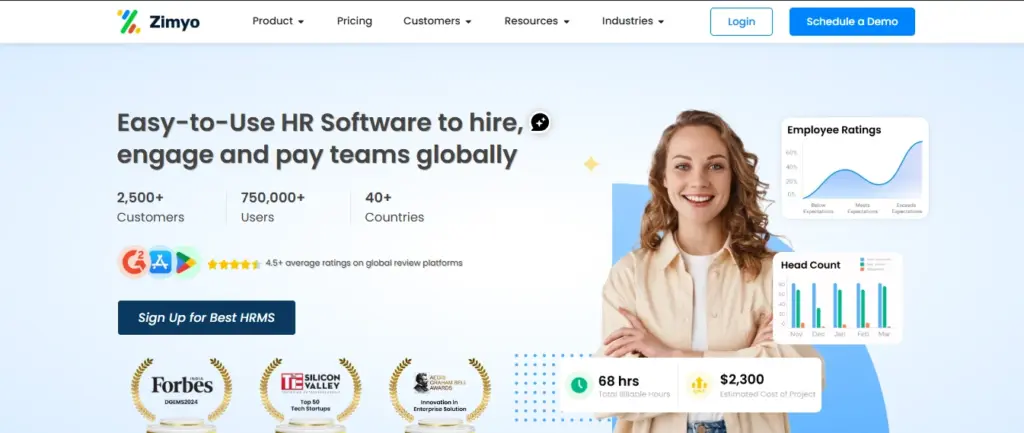
Key Features:
- Centralized employee document management system for secure and organized employee record storage
- Automated uploads and version tracking through advanced document control software
- Built-in e-signature and digital approval capabilities for faster document processing
- Role-based secure access controls within the document management system for HR teams, managers, and employees
- Seamless integration with payroll, attendance, and performance modules in a unified business document management software platform
- Compliance tracking and policy management tools for secure and efficient document governance
2. Keka
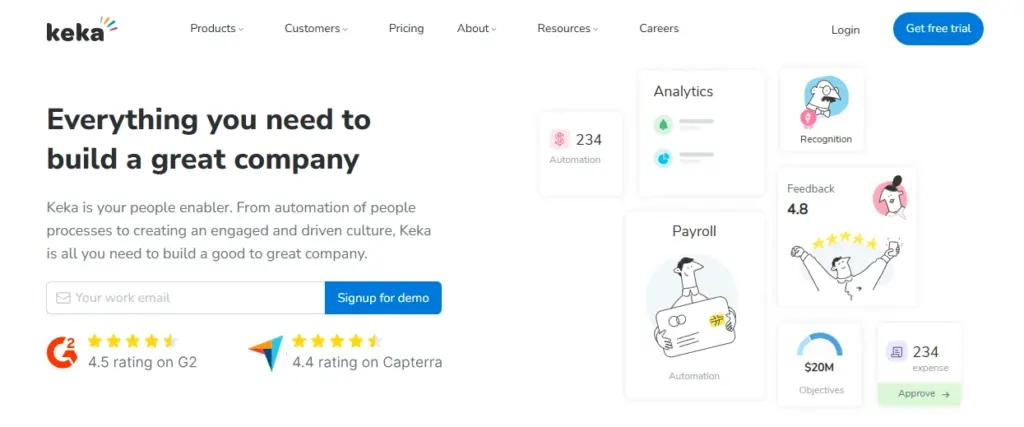
Best for: Tech-forward Indian mid-market companies that prioritize user experience. An India-first HR and payroll platform covering onboarding collection, verification, secure storage, and role-based retrieval. Its real strength is interface quality; document systems fail on adoption, and a system people use beats a better one they avoid.
Trade-off: lighter workflow automation than dedicated platforms, and priced above the budget end.
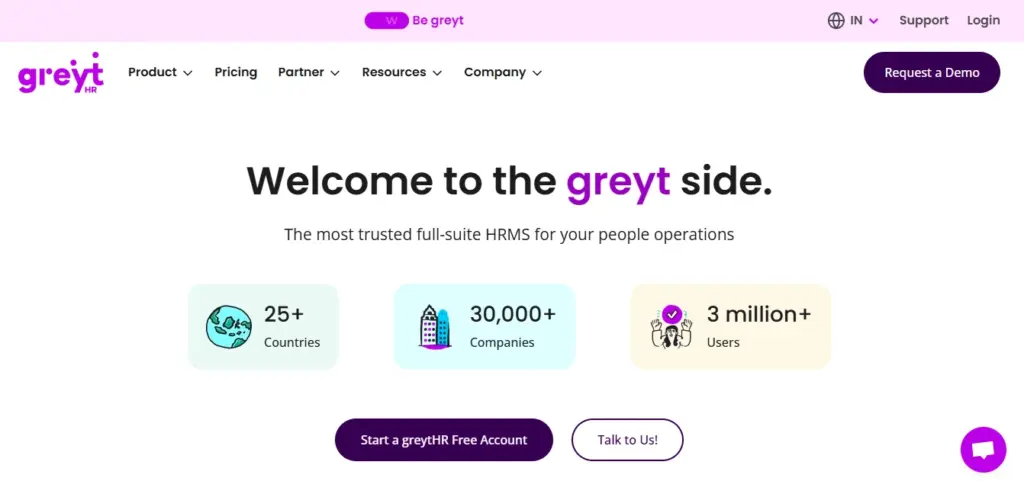
3. greytHR
Best for: Compliance-heavy Indian payroll operations. A long history in Indian payroll and statutory compliance shows in the document handling, plus a self-service portal that takes routine retrieval off HR.
Trade-off: a dated interface that affects adoption, and limited workflow automation outside payroll.
4. Darwinbox
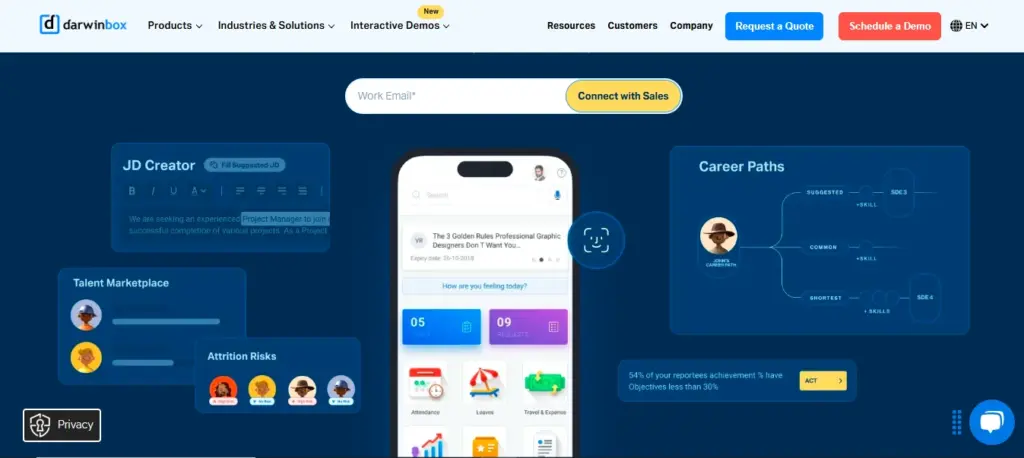
Best for: Large Indian and APAC enterprises. Built for enterprise scale, with digital onboarding, policy acknowledgment tracking, and document categorization inside the employee lifecycle. Copes with multiple entities and multi-country operations.
Trade-off: overbuilt below a few hundred employees, and implementation is a project, not a setup.
5. Zoho People
Best for: Teams already running on the Zoho stack. Employee document storage and access control with native connections across the Zoho suite, plus customization of folders, forms, and approval flows. Affordable for small teams.
Trade-off: the case weakens sharply outside the Zoho stack, and retention automation is thin.
6. HROne
Best for: Indian SMBs working to a tighter budget. An India-focused HRMS covering document upload, verification, expiry alerts, and role-based access, deployable with no dedicated IT function.
Trade-off: limited customization, and it works best as part of the full suite rather than standalone.
Its intelligent archiving and workflow capabilities make it a reliable secure document management software for industries such as healthcare, banking, and manufacturing where document security and compliance are critical.
Global HRIS options
7. BambooHR
Best for: Global SMBs, primarily in English-speaking markets. The reference-point SMB HRIS worldwide – mature and well-supported, with solid document storage, e-signature, and self-service. The caveat for Indian buyers is jurisdictional, not qualitative.
Trade-off: no India statutory logic, so PF, ESI, professional tax, and Labour Code documentation sit outside the system. USD pricing, US-weighted support.
8. Rippling
Best for: Distributed teams that need HR and IT provisioning together. Combines HR, payroll, and device management, so documents sit alongside access provisioning in one lifecycle, useful where onboarding means paperwork plus laptop setup. Strong workflow automation and a wide integration library.
Trade-off: limited India statutory depth, and modular pricing accumulates well past the entry price.
Pure Document Platforms
9. Microsoft SharePoint
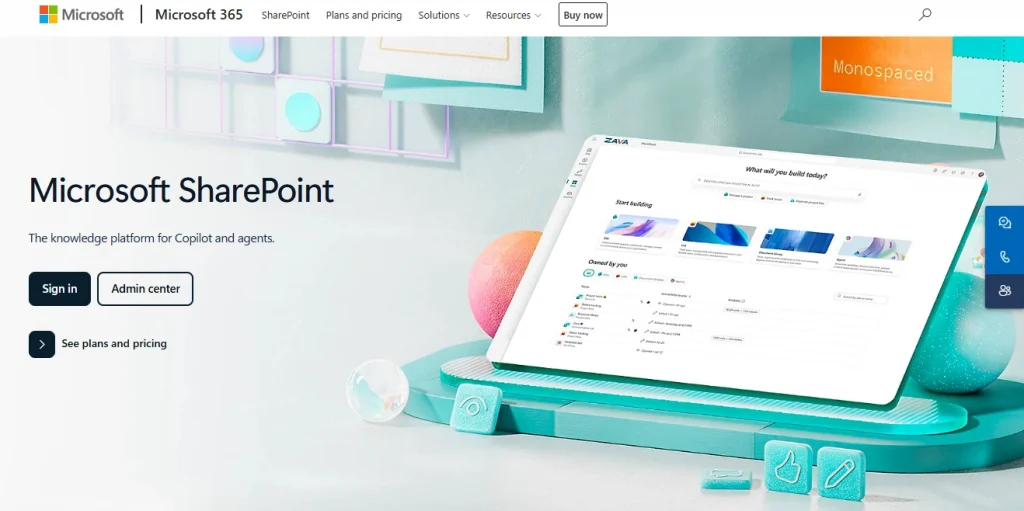
Best for: Microsoft-native enterprises with IT capacity to build. Not HR software – a document platform that becomes one only if someone builds the metadata schema, permission model, retention labels, and approval flows. Already licensed in most Microsoft 365 organizations, with capable retention and versioning.
Trade-off: everything HR-specific is built and then maintained, with no lifecycle awareness. Badly configured SharePoint is the shared-drive chaos people buy HR software to escape.
10. DocuWare
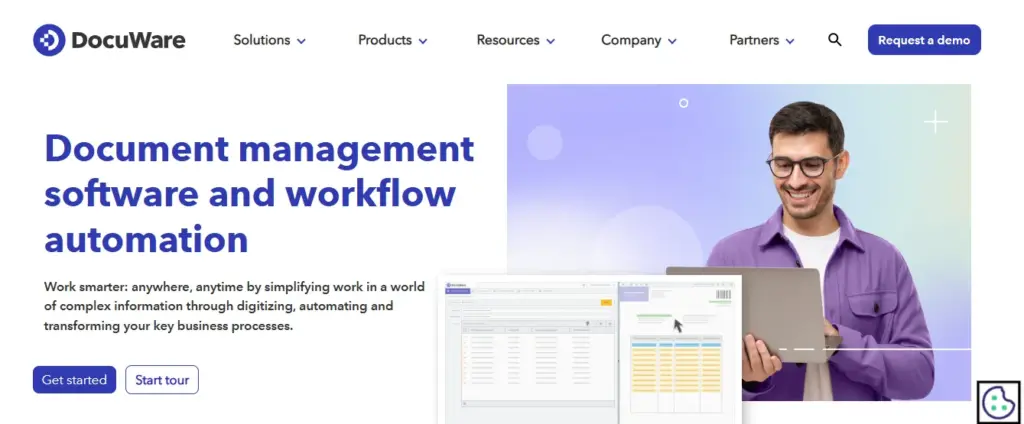
Best for: Organizations needing heavy document workflow automation across departments. Enterprise document management used in finance, healthcare, and manufacturing, with strong capture and retrieval at volume, mature approval workflows, and cloud or on-premises deployment.
Trade-off: not HR-native, so lifecycle logic and India-specific handling are configuration work, and scoped above what most Indian SMEs need.
Why 2026 Change the Rules for Indian HR Teams?
Most content on this topic is written for US and EU buyers. Two Indian shifts in the last year make it misleading here.
The Labour Codes changed what you have to keep
The four labour codes were notified into force on 21 November 2025, repealing 29 central labour laws, with Central Rules and Model Standing Orders notified in full on 8 May 2026. Implementation is uneven: labour is a Concurrent List subject, and states range from final rules to draft.
For documents, that means consolidated registers in formats set by state rules; Model Standing Orders you must prove employees acknowledged; a revised wage definition putting historical and current payroll documents on different computation bases; and fixed-term employees qualifying for gratuity after one year, not five. Across states, your requirements are not uniform. Zimyo’s statutory compliance module tracks state-level variation.
The DPDP Act put a price on careless employee data
DPDP Rules 2025 came out on 13 November 2025, rolling out the Act in stages, such that the Data Protection Board is established immediately, the penalty mechanism kicks in on 13 November 2026, while all obligations, including security measures, breach reporting, retention, and deletion, kick in on 13 May 2027.
The cap for failure to take reasonable security measures is ₹250 crore per incident; for non-reporting of a breach, ₹200 crore. If you have an employer who holds Aadhaar, PAN, bank, and health data, then he will be a data fiduciary. Employment processing is a lawful purpose; therefore, payroll need not get any special consent – only consent, and not security, breach reporting, and retention.
Thus, you need to know which employee data you hold, where it resides, who has access to it, and how long you hold it. In most cases, it’s stored in inboxes, a common drive, and a filing cabinet. It is the mapping challenge that the software solves.
Key Features in a Document Management System
Vendor feature lists converge, which makes them useless for comparison. The key features to assess include access controls, version control, and audit trails, sorted by whether they change the outcome.
Non-negotiable
Field-level access control: can a manager see joining date but not salary in the same record? A complete audit trail of who viewed, edited, or downloaded what, and when, with clear access controls for only authorized users and document history. Expiry automation for contracts and certifications. Self-service retrieval. Retention rules configurable by document type.
Worth paying for
Look for automated document management and automated workflows where they remove repetitive manual processes. E-signature with an evidence trail, bulk document generation from templates, integration with your payroll and ATS, and mobile upload so a new joiner can photograph a PAN card before day one. Ignore unlimited-storage claims; employee documents are small, and retrieval is the real constraint.
Document Retention, Records Management, and Compliance in India
Retention is where most HR teams are exposed, because two obligations pull in opposite directions.
Statutory rules require you to keep records. Registers, wage records, PF and ESI documentation, and tax records carry minimum periods that differ by statute and state, several of which are being reset as the Labour Codes take effect. There is no single national retention period for HR documents in India; any source giving one number is oversimplifying.
Data protection requires you to stop once the purpose ends. Holding personal data longer than needed is a liability, not caution, which makes data retention an important part of records management. So “keep everything forever” is no longer the safe default: you need a documented retention schedule by document type, with disposal actually executed. Almost no global platform ships with Indian defaults.
Before you build one: periods vary by statute, state, and establishment type, and several are in transition under the Labour Codes. Have your schedule reviewed by counsel for the states you operate in rather than adopting a generic matrix.
What HR Document Management Systems Cost in India?
There are three pricing options that lead the pack: per employee per month (for most of the Indian HRMS systems), tiers based on employee headcount band (cheaper within a headcount band, a sudden jump when you cross one), and enterprise licensing using a quote.
The billable unit is not the total bill. Consider the costs involved with implementation, data migration (this is the most important cost hidden from you when you’re moving from paper), storage capacity, e-signature capacity, training, and exit cost. Think about the amount of effort that it will take for business document extraction before document insertion.
Estimate the total cost of ownership two years from now at your expected headcount then, not the current headcount. The business case here is monthly HR staff time required for document retrieval and annual audit preparation time divided by software cost and implementation cost. If those aren’t burning any actual HR staff time, then the business case is weak compared to the pitch made by the vendor. Zimyo’s pricing runs per employee per month with module-based tiers.
How to Choose the Best Document Management Software for HR
Six checks, ordered to eliminate options fastest.
- Is this an HR problem or a company-wide one? Employee records means buy HR-native; company-wide means HR software is the wrong answer.
- Check where employee data already lives. An HRMS’s native module is usually cheaper and better integrated, even if individually less capable.
- Test India statutory handling. Ask for a demo of a statutory workflow in your state, not a generic compliance screen.
- Verify integrations by name. Not “we integrate with payroll” – with yours, and whether it is native, API, or a weekly CSV someone uploads.
- Evaluate the employee experience, not the HR one. Have three non-HR colleagues upload a document and fetch a payslip during the trial.
- Confirm data ownership and exit terms in the contract before signing.
Our guide on how to choose HRMS software in India covers the wider evaluation.
Six questions to ask every vendor
- Where is our data stored, and do backups leave India?
- Show me field-level permissions – salary hidden, joining date visible, same record.
- What does the audit log capture, and can we export it?
- Can retention rules be set by document type and by state, and what happens when one is met?
- When state labour rules change, do you update the system or do we?
- If we leave after a year, how do we get everything out, in what format, at what cost?
Implementation: what actually goes wrong
The failure mode is not selection. It is a system bought, half-populated, and abandoned while everyone goes back to email. Three things prevent it.
Map the workflow first
If leave approval today involves three signatures and a WhatsApp message, the software will encode that, not improve it. Document what happens, decide what it should be, then configure.
Migrate in priority order
Start with current employees and the documents you retrieve most – contracts, ID proofs, payroll – then work backward. Teams that digitize everything before going live stall in month three. Expect gaps: unsigned contracts, certificates never collected.
Drive adoption deliberately
For the first two to three months, redirect email and chat requests to the platform instead of answering them. That, not the software, changes behavior, and it is why a realistic rollout takes two to three months to reach daily use.
Choosing the Best Document Management System for Your Stack
The decision is less about which product is best than where your employee data already sits, how you manage files today, and which workflows need to be automated. Running an Indian HRMS? Use its document module; the integration is free, and the compliance context is there. Running a global HRIS? Handle Indian statutory documentation separately. No HR system at all? Buying document management tools alone leaves you with two systems instead of one.
Zimyo brings document management, payroll, attendance, and performance into one platform built for Indian statutory requirements, used by 2,500+ organizations across 40+ countries.
Conclusion
In today’s digital-first business environment, investing in the Best Document Management System for Businesses is no longer optional it has become essential for improving productivity, security, and operational efficiency. A modern document management system helps organizations securely store, organize, track, and manage documents while reducing manual paperwork and workflow delays.
From HR and finance to legal and compliance teams, businesses can benefit from advanced cloud document management software, automated workflows, and secure file-sharing capabilities. An efficient business document management software solution not only improves collaboration and compliance but also ensures quick access to important files whenever needed.
FAQs
How long do HR documents need to be retained in India?
It depends on the law that governs the documents. Holding periods depend on the document, may differ for each state, are currently undergoing changes due to the Labour Codes, and the DPDP requires that retaining records beyond what is necessary exposes one to liability.
Which is the best document management system?
Zimyo is one of the best document management systems for businesses in 2026. It offers secure storage, easy access, and efficient employee record management for HR teams.
What is the most popular DMS?
Zimyo, Zoho Docs, and DocuWare are among the most popular DMS software used by modern businesses to streamline document storage, retrieval, and compliance.
How much does HR document management software cost in India?
Indian HRMS solutions charge on a per-employee-per-month basis; some of them charge on a per-head basis, while others offer their enterprise solutions. This charge may not necessarily be the actual cost since other factors come into play.