
Recruitment in the healthcare sector is no less different from recruitment anywhere else. The next vacancy may demand a specialist physician or a staff nurse, a laboratory technician or paramedic, or any other type of staff member, each having their own set of requirements and certifications. Along with the already tough challenge of finding talent amid acute shortages and high attrition, this is one of the hardest tasks for the HR function in any healthcare organisation.
In this review, we compare the features of five applicant tracking systems for healthcare and hospital recruiters. For each, we provide a brief overview of advantages and disadvantages, typical applications, and pricing information to help you choose the right solution for a single hospital, a multi-location hospital chain, clinics, or diagnostics businesses.
What Makes Healthcare and Hospital Hiring Different?
However, an all-purpose ATS is not always enough to meet hospital requirements. Here are some issues:
- Specialized positions: Doctors, nurses, paramedics, technicians, and even support staff have specific skills and qualifications.
- Credential verification and compliance: Employers must verify licenses and professional registrations and document management for the hiring process.
- Staff shortage: Hospitals can struggle to find candidates with the right qualifications. Therefore, quick, easy application screening can help solve the problem.
- High-volume hiring and niche recruiting: A hospital could be hiring dozens of nurses and one specialized consultant at the same time.
- Multiple locations hiring: A hospital chain could have many branches, clinics, or diagnostics centers where it needs candidates.
- Candidate data privacy: Hospitals must protect applicants' data to comply with Indian data privacy laws.
Consider all these issues when choosing the best healthcare ATS.
Quick Comparison for Top ATS in for Healthcare Industry in India
| ATS Platform | Best Suited For | Key Capabilities | Starting Price |
| Zimyo | Hospitals seeking integrated recruitment and HR management | Applicant tracking, job-board integrations, resume parsing, interview scheduling, assessments, recruitment analytics, and onboarding integration | On request |
| Zoho Recruit | Smaller hospitals, clinics, and budget-conscious teams | Candidate management, job posting, career pages, interview scheduling, resume parsing on eligible plans, and workflow automation | Free plan; paid plans available |
| TalentRecruit | Large hospitals and healthcare groups with high-volume hiring needs | Candidate pipeline management, recruitment automation, candidate sourcing, interview coordination, and hiring analytics | On request |
| Naukri RMS | Healthcare recruiters relying on Naukri for candidate sourcing | Resume search, candidate database access, applicant tracking, recruiter collaboration, and recruitment reporting | On request |
| Darwinbox | Large hospital chains and enterprise healthcare organisations | Enterprise recruitment workflows, applicant tracking, approval management, HRMS integration, and workforce analytics | On request |
Features and prices depend on the vendor's current plans and configuration. Confirm pricing, integrations, and healthcare-specific credential verification capabilities directly with each provider.
Top 5 ATS Platforms for Healthcare and Hospitals in India
1. Zimyo
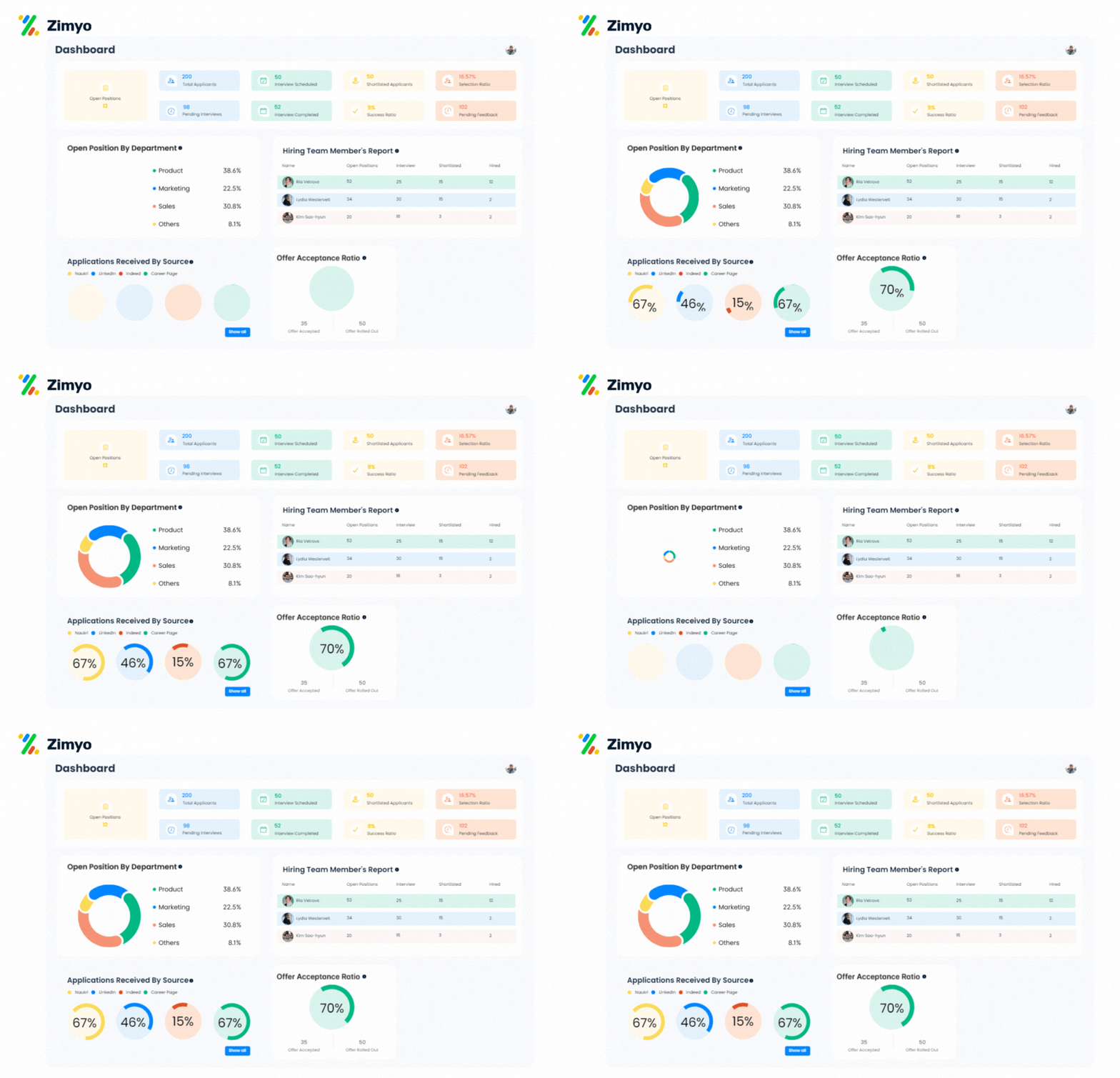
Zimyo is a strong option for healthcare organizations that want recruitment management, onboarding, and wider HR operations connected on one platform. Its applicant tracking system helps recruiters manage candidates from sourcing and application tracking through interviews and hiring.
For hospitals that regularly recruit across clinical, administrative, and support functions, centralized candidate records and structured hiring workflows can help reduce manual coordination. Zimyo also connects recruitment with broader HR processes, making it worth considering for organizations that want to manage employee information and onboarding alongside hiring.
Key features
- Applicant tracking and centralized candidate management
- Job board integrations and branded career pages
- Resume parsing and candidate search.
- Interview scheduling, reminders and feedback scorecards
- Skill assessments and recruitment analytics
- Recruitment workflows connected with onboarding and HRMS
Pros & Cons
| Pros | Cons |
| Connects recruitment with broader HR operations | Pricing requires confirmation from the vendor |
| Supports structured hiring workflows and candidate tracking | Healthcare-specific credential verification and integrations need to be checked during the demo |
| Offers reporting to monitor recruitment progress | Configuration depends on hiring volume and workflow requirements |
| Helps organisations consolidate HR processes on one platform |
Best suited for: Hospitals, clinic networks, and healthcare groups looking to connect recruitment, onboarding, and HR management.
Starting price: On request.
2. Zoho Recruit
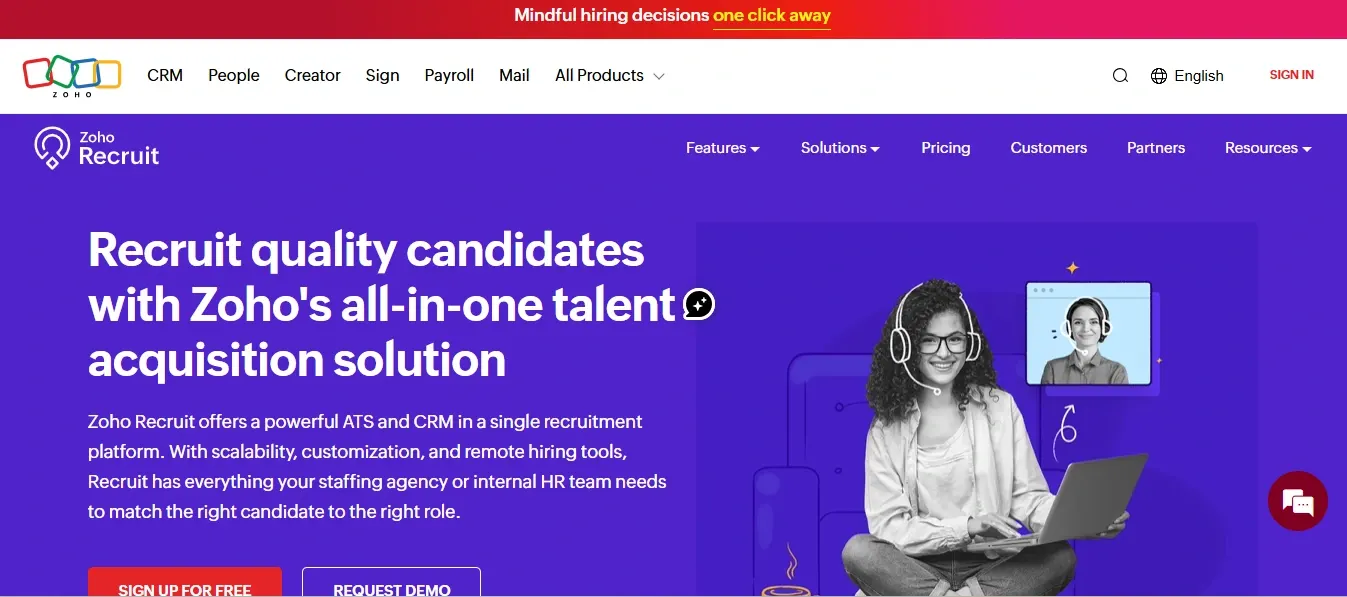
Zoho Recruit is an ATS platform for businesses that need applicant tracking, job posting, candidate management, and interview coordination. Its free plan makes it worth considering for smaller clinics and healthcare providers with limited recruitment requirements.
Paid plans add capabilities such as resume parsing, job-board integrations, assessments, and more advanced recruitment workflows. Healthcare organizations should assess whether these features meet their requirements for managing specialized roles and verifying professional credentials.
Key features
- Candidate and job-opening management
- Career site and job-board support
- Resume parsing on eligible paid plans.
- Interview scheduling and feedback forms
- Candidate assessments and recruitment reporting
- Workflow automation in supported plans
Pros & Cons
| Pros | Cons |
| Free plan available for basic recruitment needs | Advanced features depend on the selected plan |
| Offers a wide range of recruitment features | Healthcare credential checks may require separate processes or integrations |
| Integrates well with other Zoho applications | Integration with an existing HRMS may require additional setup |
| Paid plans support growing recruitment requirements | Costs may increase as advanced features are added |
Best suited for: Small and mid-sized hospitals, independent clinics, and healthcare businesses seeking a standalone ATS.
Starting price: Paid pricing depends on the plan and billing terms. Zoho's published India pricing has listed Standard per recruiter per month when billed. Confirm current pricing before purchasing.
3. TalentRecruit
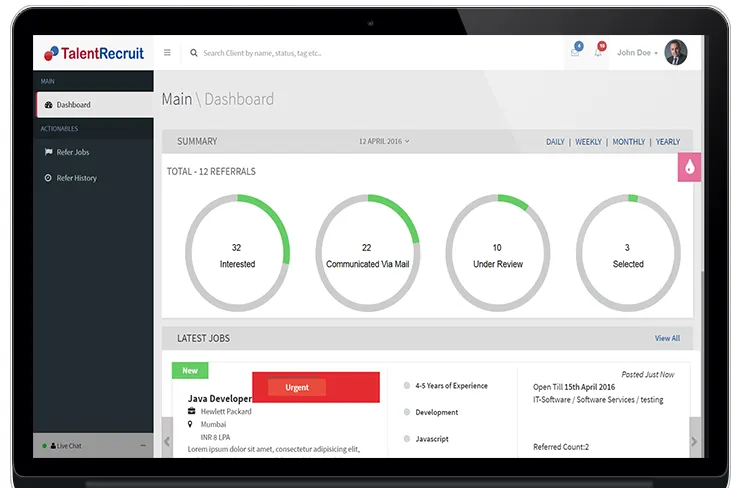
TalentRecruit is worth evaluating for larger healthcare organizations that manage many vacancies across departments or locations. Recruitment automation and candidate pipeline management can help teams coordinate bulk hiring while maintaining visibility into individual applications.
For hospital groups recruiting nurses, technicians, administrative staff, and other frontline employees, the main consideration is how well the platform handles high application volumes without making specialized hiring harder to manage.
Key features
- Applicant and candidate pipeline management
- Recruitment workflow automation
- Candidate sourcing and screening capabilities
- Interview coordination
- Recruitment reporting and analytics
- Support for structured recruitment processes
Pros & Cons
| Pros | Cons |
| Suitable for large-scale recruitment operations | Pricing and package availability require vendor confirmation |
| Helps standardise hiring workflows | Integrations may depend on the selected configuration |
| Supports recruitment coordination across departments | Healthcare credential verification may require separate processes |
| Provides a dedicated recruitment platform | Advanced requirements may need additional customisation or setup |
Best suited for: Large hospitals, healthcare groups, and organisations running recurring bulk recruitment drives.
Starting price: Contact the vendor for current pricing.
4. Zappyhire — Best for AI-Powered Healthcare Recruitment
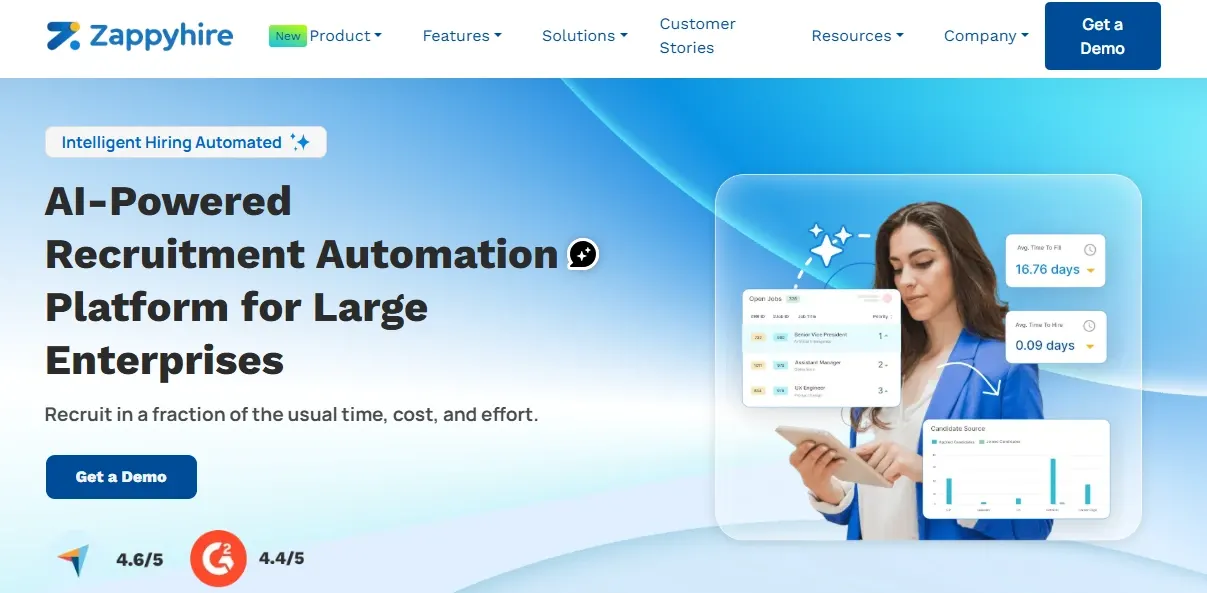
Zappyhire is an AI-driven recruitment automation platform that helps organisations streamline candidate screening, manage recruitment workflows, and improve hiring efficiency. It is worth considering for healthcare organisations that handle multiple vacancies and need to coordinate recruitment across departments and locations.
For hospitals hiring doctors, nurses, technicians, and administrative staff, recruitment automation can help reduce repetitive tasks and organise candidate pipelines. Healthcare teams should confirm whether the platform supports their specific credential verification, compliance, and HRMS integration requirements.
Key features
- AI-powered candidate screening and matching
- Applicant tracking and candidate pipeline management
- Recruitment workflow automation
- Interview coordination and candidate management
- Recruitment analytics and hiring reports
- Candidate sourcing through the ecosystem.
Pros & Cons
| Pros | Cons |
|---|---|
| Supports AI-powered recruitment automation | Pricing requires confirmation from the vendor |
| Helps streamline candidate screening and tracking | Healthcare-specific credential verification must be validated |
| Can support recruitment across multiple vacancies | Integration availability depends on the required systems |
| Provides tools to manage recruitment workflows | Suitability for specific hospital hiring needs should be assessed during the demo |
Best suited for: Hospitals, healthcare groups, and organisations looking to automate recruitment and manage high-volume hiring.
Starting price: On request.
5. Darwinbox
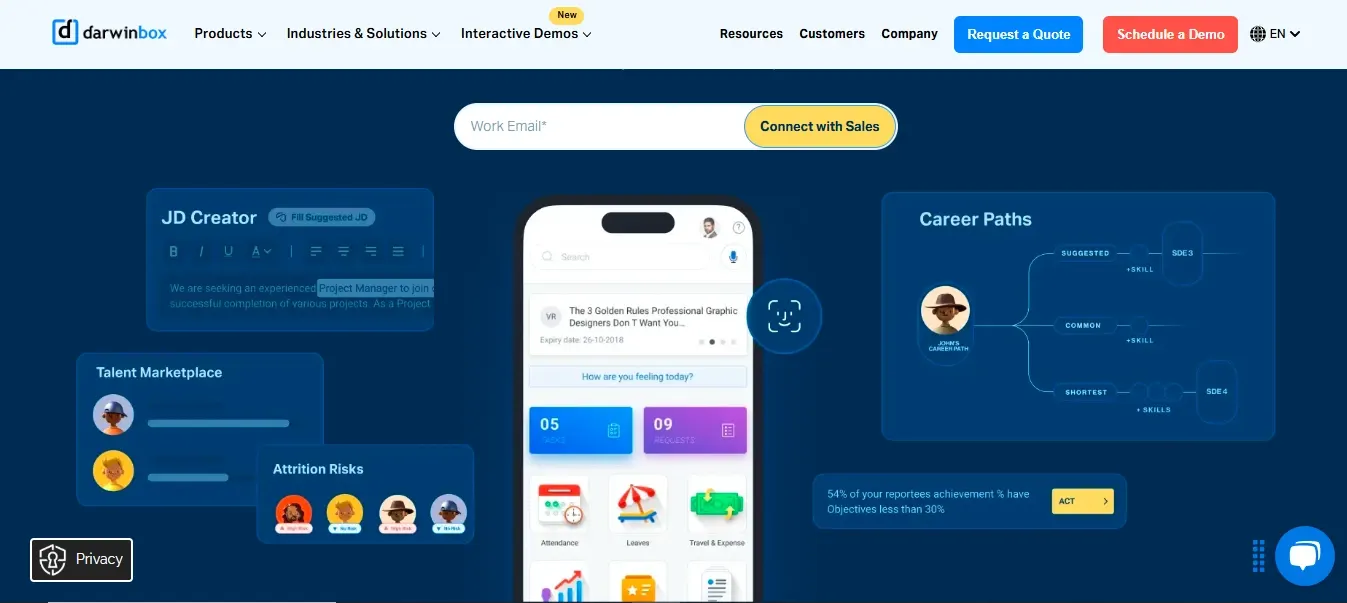
Darwinbox is an enterprise HR platform with recruitment capabilities. It is worth evaluating for large hospital chains and healthcare enterprises that want recruitment connected to wider human capital management processes.
For organisations with complex approval structures, multiple facilities and large HR teams, an enterprise platform can help standardise recruitment processes and connect hiring with employee lifecycle management. The right fit depends on the required recruitment features, implementation scope and integrations.
Key features
- Applicant tracking and recruitment pipeline management
- Recruitment and applicant tracking capabilities
- Hiring workflow and approval management
- Candidate and hiring team collaboration
- HR and employee lifecycle integration
- Workforce and talent management capabilities
- Reporting and analytics, depending on configuration
Pros & Cons
| Pros | Cons |
| Designed to meet enterprise HR requirements | May be more complex than smaller clinics need |
| Connects recruitment with broader HR processes | Pricing and implementation costs require vendor consultation |
| Supports complex, multi-location operations | Healthcare-specific workflows and credential checks must be validated |
| Helps standardise recruitment workflows across business units | Implementation may require additional configuration based on organisational needs |
Best suited for: Large hospital chains, multi-location healthcare groups and enterprise healthcare organisations.
Starting price: On request.
What to Look For in a Healthcare ATS
However, an all-purpose ATS is not always enough to meet hospital requirements. Here are some issues:
- Specialised positions: Doctors, nurses, paramedics, technicians, and even support staff have a specific set of skills and qualifications.
- Credential verification and compliance: Employers must verify licenses and professional registration and document the hiring process.
- Staff shortage: Hospitals can struggle to find candidates with the right qualifications. Therefore, quick, easy application pre-screening can help solve the problem.
- High-volume hiring and niche recruiting: A hospital could be hiring dozens of nurses and one specialised consultant at the same time.
- Multiple locations hiring: A hospital chain could have many branches, clinics, or diagnostics centers that need candidates.
- Candidate data privacy: Hospitals must protect applicants' data to comply with Indian data privacy laws.
Consider all these issues when choosing the best healthcare ATS.
Choosing the Right Applicant Tracking System for Your Hospital
This will depend on the size of your organization, recruiting process, and the technologies currently used by the HR department.
- Small clinics should begin with ease of use, basic applicant tracking, interview scheduling, and cost-effectiveness. Free or starter packages may suffice if you are looking to fill only a few positions at once.
- Growth-stage hospitals should focus on resume parsing, structured screenings, automated communications, and reporting to ensure recruiters can handle more vacancies without increasing their workload.
- Hospital chains with multiple locations should focus on centralized candidate information, location-based vacancy tracking, workflow approvals, and a standardized recruiting process.
- For specialized medical recruiting, the platform should support verifying qualifications, professional registration, credential expiration, and role-specific screening. Don't assume all of those capabilities come standard with every ATS solution.
- Enterprise healthcare organizations should consider security measures, integration capabilities, implementation support, reporting, and HRMS integration.
Before choosing, test a hiring scenario for each selected ATS solution. For instance, you could use a scenario involving hiring for a staff nurse position.
Conclusion
Healthcare recruitment doesn’t stop when the candidate agrees to join the company. HR staff must gather employee data, onboard candidates, and manage HRMS records in a broader context.
Multiple solution to consider if you want to connect recruitment and onboarding with a broader solution rather than using disconnected tools. Zimyo’s recruitment management system includes applicant tracking, candidate management, job board integration, interview scheduling, testing, and recruitment analytics.
When choosing a solution for a hospital, the most important step is to see the entire process in action during a product demonstration.
Ready to simplify healthcare recruitment? Book a demo to explore its recruitment, onboarding, and HR capabilities.
Frequently Asked Questions
What is the best ATS for Indian hospitals?
The best ATS depends on your hiring volume, budget, and HR systems. For companies that are looking to integrate recruitment into onboarding and broader HR operations, Zimyo is an option worth considering. Zoho Recruit works well for smaller hiring teams, while TalentRecruit and Darwinbox are options worth investigating for larger hiring operations.
Can an ATS assist hospitals in hiring doctors and nurses?
Yes. An ATS can help organize the application process, screen resumes, schedule interviews, communicate with candidates, and manage other workflows. Hospitals should also consider the platform's ability to support credential verification.
What must be included in hospital recruitment software?
Key features include applicant tracking, resume parsing, position-based screening, interview scheduling, candidate communication, recruitment metrics, data security, and onboarding integration. Hospitals must ensure their software supports professional registration management and credential expiration dates.
What is the cost of hospital applicant tracking systems in India?
Cost depends on the number of recruiters, number of employees, hiring volume, features, and deployment costs. Some software vendors offer free options, whereas others give customized quotations.
Is an ATS enough to ensure compliance in healthcare recruitment?
No. An ATS may help keep records and recruiting documentation organized, but it does not automatically ensure compliance. It is important to determine the verification procedures, access controls, audit trails, and data protection capabilities the software offers, and to track them for each position.
Does an ATS software allow integration with a hospital’s HRMS and payroll system?
Some ATS software programs offer HRMS integration capabilities. Before purchasing, confirm whether the ATS can transfer all hiring data to the company's HRMS.