
HR management in the hospital is a 24/7 activity. Patient care never stops, so employees work shifts across departments and emergency units. Shift rosters must be accurate to the hour for statutory compliance, and one wrong shift can have serious consequences for patient safety. On top of that, healthcare faces constant employee turnover and talent shortages.
In this blog, we will curate the best HR software for hospitals and healthcare in India in 2027, including the top choice in this category. For each product, you will get details on key features, pros and cons, target audiences, and pricing, making it easier to choose a solution that fits your business.
Healthcare Workforce in India: The Numbers
The staffing pressures facing Indian healthcare make strong HR support essential:
- India faces a serious workforce gap. One study projects a shortfall of around 0.57 million doctors and 1.98 million nurses and midwives in the active health workforce by 2030.
- An expert group estimated India would be short of roughly 15 to 24 lakh nurses in 2024.
- The private sector carries most of the load: more than 80% of doctors and 70% of nurses and midwives work in private healthcare.
With talent scarce and demand rising, hospitals can’t afford to lose time to manual HR. Efficient scheduling, retention, and compliance are now operational priorities, not back-office chores.
Why Healthcare and Hospital HR Is Different
These needs are not easily accommodated by HR software:
- Shifts run round-the-clock: Hospitals need rosters for the wards, ICU, labs, and the ERs to run 24/7.
- Complicated payroll structure: Hospitals have allowances for night shifts, overtime, on-call work, and multiple pay scales, which makes payroll more complex than in an office setting.
- Professional credentials management: Staff licenses, registrations, and certifications must be valid, and alerts must be issued before they lapse.
- High turnover and shortage of skilled workers: The constant hiring and induction of medical staff like doctors, nurses, and paramedics is normal.
- Multi-location and deskless staff: Most hospital staff work across multiple locations without a desk.
- Compliance requirements: Labor laws, statutory deductions, and industry regulations must be complied with.
A good healthcare HR software solution can accommodate this complexity.
Top HR Software for Healthcare companies in India
1. Zimyo
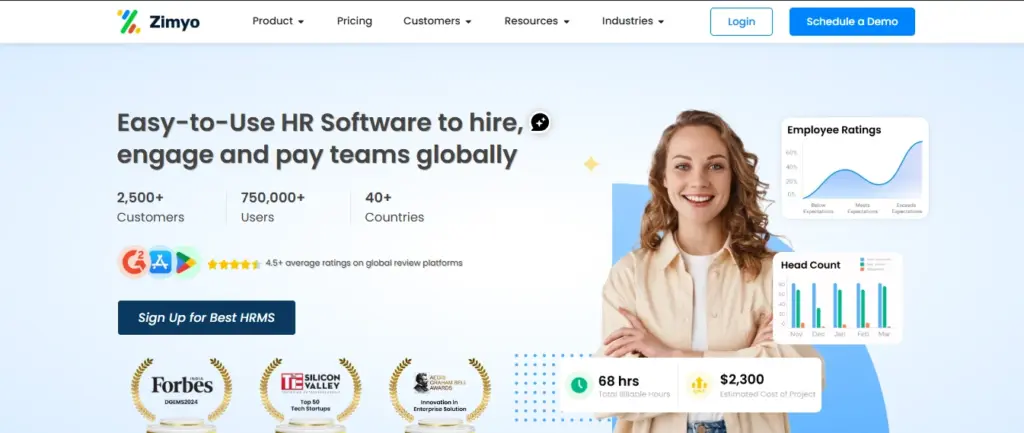
Zimyo is our top pick for hospitals and healthcare businesses that need one platform to run a large, shift-based, multi-site workforce. Trusted by 2,500+ organizations across 40+ countries, it brings Core HR, attendance, payroll, recruitment, and engagement together in 60+ integrated modules.
For healthcare, the fit is strong. Zimyo handles multi-location attendance with biometric and geo-tagging, manages complex 24/7 rosters, and flows night allowances and overtime straight into payroll. Its recruitment and onboarding tools handle constant clinical hiring, and a mobile-first self-service app suits deskless nurses, paramedics and support staff.
In 2026, Zimyo adds Zim, its agentic AI, which screens large applicant pools in minutes, audits payroll before it runs, and answers workforce questions instantly, while keeping people in control.
Key features
- 24/7 shift and roster management feeding into payroll
- Multi-site attendance with biometric, geo-tagging and mobile options
- Payroll with allowances, overtime and full statutory compliance
- Recruitment and onboarding for high-volume clinical hiring
- Mobile-first self-service plus agentic AI (Zim)
Pros & Cons
Pros | Cons |
All-in-one HR, payroll and hiring | Full value comes from the wider platform |
Built for shift-based, multi-site teams | Pricing is quotation-based, not public |
Strong compliance; VAPT, ISO, AICPA SOC | Smaller brand than some global names |
AI shortlisting and payroll audits | Newer AI features still maturing |
Best suited for: Hospitals, clinic chains and diagnostics networks wanting one platform for a shift-based, multi-site workforce.
Pricing: Quotation-based, in INR, by team size and modules.
Case Study: How THB Improved HR Operations with Zimyo
THB, an Indian clinical intelligence company established in 2015, partnered with Zimyo to streamline its HR operations.
Zimyo helped simplify payroll, attendance, leave, and expense management through automation. Its performance management features enabled SMART goal setting, performance reviews, and continuous feedback. Recruitment automation and workforce analytics further improved HR efficiency and decision-making.
These solutions reduced manual administrative work and improved employee engagement.
“One of the best HRMS out there, and it’s user-friendly unlike other software available in the market.” — Ayesha Hussain, HR Manager, THB
2. Keka
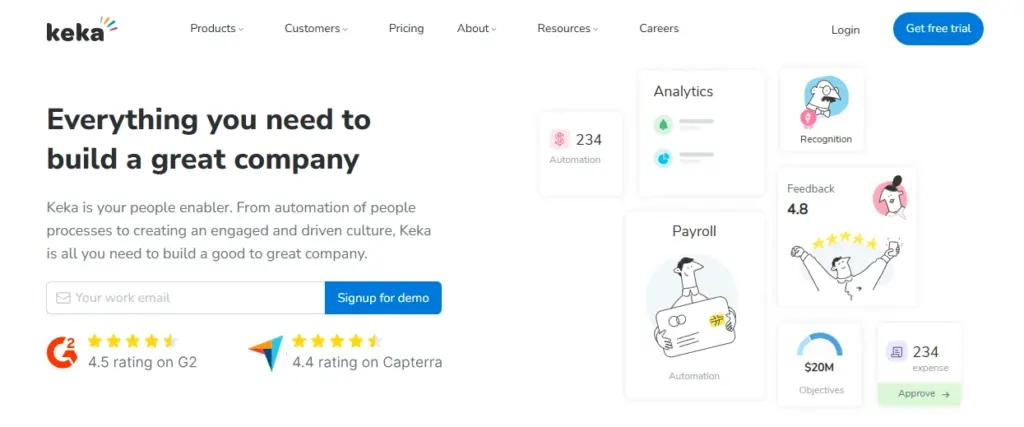
A modern HRMS with a clean interface covering attendance, payroll, and performance, suited to hospital head-office teams and growing healthcare groups.
Key features
- Attendance and leave management
- Payroll with statutory compliance
- Performance and goal tracking
- Intuitive employee self-service
Pros & Cons
Pros | Cons |
Easy to use and quick to adopt | Shift rostering lighter than specialists |
Strong self-service | Not healthcare-specific |
Full HR and payroll suite | Higher entry price |
Good reporting | Advanced features need higher tiers |
Best suited for: Growing healthcare groups that value user experience.
Pricing: From around ₹9,999 per month.
3. greytHR
A well-established Indian payroll and HR platform, strong on compliance and reliable at scale, a dependable choice for hospitals focused on payroll accuracy.
Key features
- Automated payroll and compliance
- Leave and attendance tracking.
- Employee self-service portal
- Reliable 24/7 support
Pros & Cons
Pros | Cons |
Strong payroll and compliance | Fewer healthcare-specific features |
Large, established India base | Scheduling less robust for 24/7 shifts |
Dependable support | Advanced HR needs add-ons |
Good value for SMBs | Interface more HR than clinical |
Best suited for: Hospitals that prioritize payroll and compliance. .
Pricing: From around ₹2,495 per month for 50 employees
4. HROne
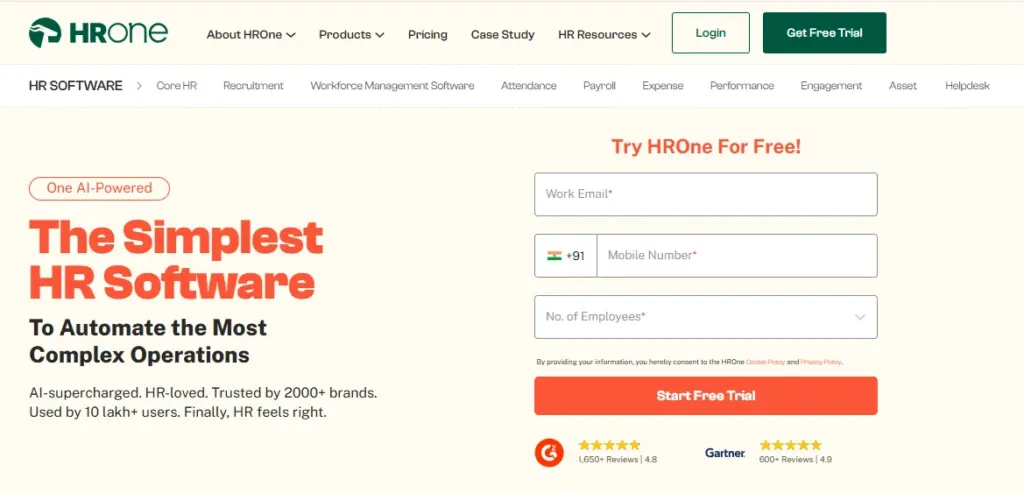
A full HCM suite with strong automation and a mobile-first design, built for mid-to-large, distributed workforces like hospital chains.
Key features
- Full HCM with payroll and compliance
- Attendance and shift management
- Mobile-first design
- Lifecycle automation
Pros & Cons
Pros | Cons |
Built for larger, distributed teams | More than small clinics need |
Strong automation | Setup effort for full rollout |
Mobile-first | Premium features in higher tiers |
Scales across sites | Pricing rises with headcount |
Best suited for: Mid-to-large hospital chains.
Pricing: From around ₹4,950 per month.
5. factoHR
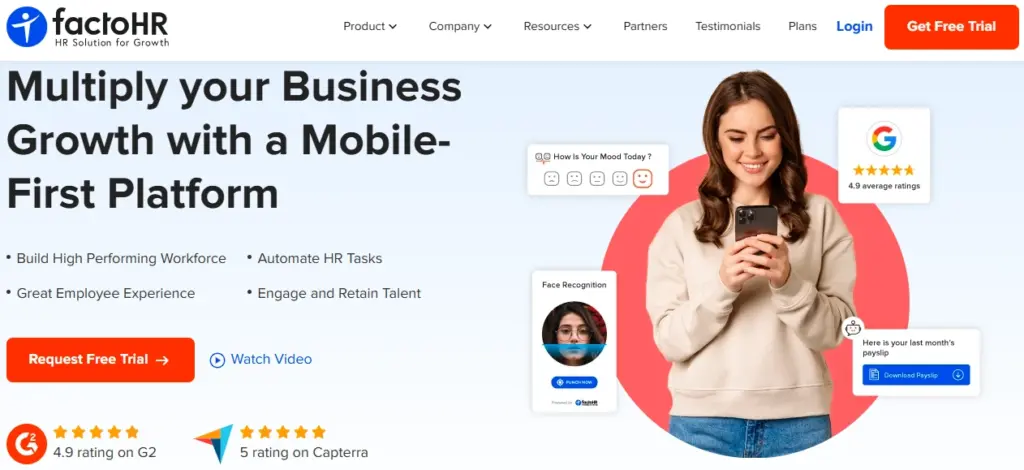
A hire-to-retire platform built for Indian businesses, with multi-location support and well-reviewed attendance and payroll, suited to multi-site healthcare providers.
Key features
- Hire-to-retire HR suite
- Multi-location attendance and payroll
- Mobile app for frontline staff
- Well-reviewed across modules
Pros & Cons
Pros | Cons |
India-built, multi-location support | Broad suite, not healthcare-specific |
Strong attendance and payroll | Many features to configure |
Good mobile tools | Custom pricing, not public |
Scales with growth | Onboarding takes effort |
Best suited for: Multi-site healthcare providers.
Pricing: From around ₹4,999 per month.
6. Pocket HRMS
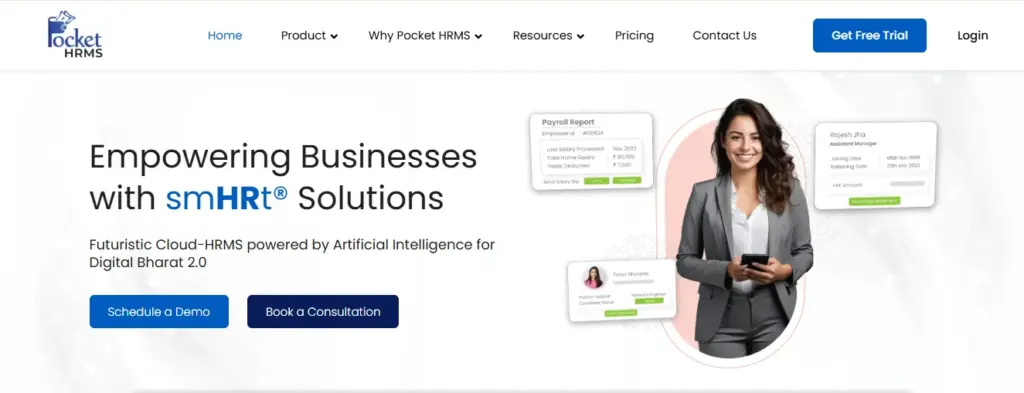
A mobile-first HRMS focused on simplicity, handy for deskless clinical and support staff who need rosters and payslips on the go.
Key features
- Mobile-first attendance and payslips
- Payroll processing
- Employee self-service
- Quick, simple setup
Add Your Heading Text Here
Pros | Cons |
Handy for deskless staff | Lighter on advanced HR |
Simple and quick to roll out | Less suited to large hospitals |
Mobile-first | Fewer integrations |
Affordable for small teams | Scheduling is basic |
Best suited for: Smaller clinics and healthcare businesses.
Pricing: From around ₹4,995 for up to 100 employees.
7. Qandle
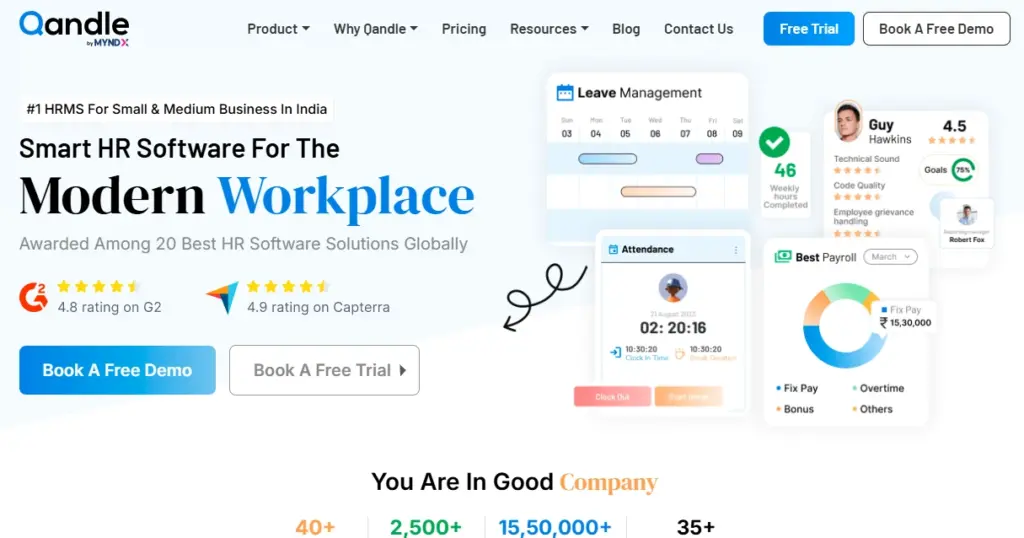
A modular, configurable HRMS that lets providers pick the features they need, with attendance, payroll, and engagement tools.
Key features
- Modular, configurable modules
- Attendance and leave management
- Payroll and compliance
- Engagement and self-service
Pros & Cons
Pros | Cons |
Flexible, pick-what-you-need | Configuration takes setup |
Good value per employee | Smaller brand presence |
Modern interface | Fewer healthcare-specific tools |
Scales with growth | Advanced features in higher tiers |
Best suited for: Growing providers wanting a configurable platform.
Pricing: From around ₹49 per employee per month.
8. ZingHR
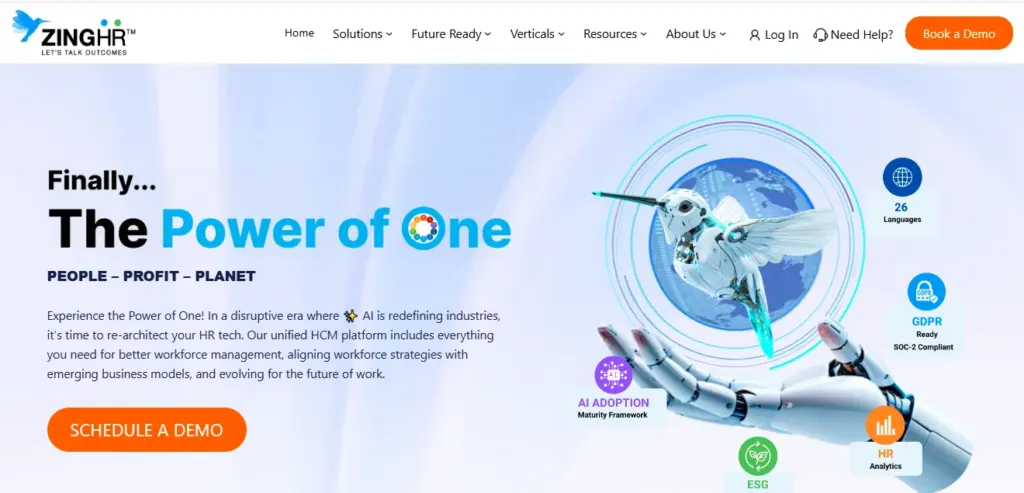
An enterprise HR and payroll platform used across large, workforce-heavy sectors, built to streamline payroll and attendance at scale.
Key Features
- Enterprise payroll and attendance
- Recruitment and onboarding
- Mobile access for frontline staff
- Analytics and compliance tools
Pros & Cons
Pros | Cons |
Enterprise-grade scale | Heavier than small clinics need |
Proven in large workforces | Setup effort for full rollout |
Strong payroll automation | Pricing on request |
Mobile support | Interface less modern than some |
Best suited for: Large hospital enterprises needing scale.
Pricing: On request.
Quick Comparison
Software | Best suited for | Starting price |
Zimyo | All-in-one HR, payroll and AI for healthcare | On request (INR) |
Keka | Growing healthcare groups wanting great UX | From ₹9,999/mo |
greytHR | Compliance-focused hospitals | ₹2,495/mo (50 employees) |
HROne | Mid-to-large hospital chains | From ₹4,950/mo |
factoHR | Multi-site healthcare providers | From ₹4,999/mo |
Pocket HRMS | Smaller clinics with deskless staff | ₹4,995 (up to 100 employees) |
Qandle | Configurable platform for growing providers | From ₹49/employee/mo |
ZingHR | Large hospital enterprises | On request |
Implementation: What to Expect for HR Software for the Healthcare Industry
Implementing HR software at a hospital should be done through distinct phases:
- Discovery: Identify your organizational units, shift requirements, salary structure, and compliance before configuring the system.
- Data Migration: Transfer your employees’ information, qualifications, and payroll history into the new system and cleanse it in the process.
- Configuration: Configure rosters, leave policy, salary structure, and approvals based on how operations work within your individual units.
- Pilot: Implement the HR software starting with one unit or location, then roll it out.
- Training: Train your HR administrators and provide a quick guide to the mobile app to the front-line staff.
- Go-Live and Support: Go live incrementally and ensure vendor support is available during the first payroll and roster cycle.
Platforms that run off your existing data can be up and running in weeks at one location and several weeks longer for larger, multi-location organizations.
What to Look For
While selecting HR software for a hospital or a healthcare enterprise, consider the following:
- Shifts/Roster management: Efficient 24-hour shift scheduling that integrates with the payroll module.
- Employee attendance: Biometric or geo-tagged attendance system for employees who operate across wards and other units.
- Complex payroll with multiple payrolls: Allowances, overtime calculations, and deductions for PF, ESI, PT, and TDS.
- Compliance management: Manage compliance to licenses/certifications with expiry dates.
- Recruitment and on-boarding: Ability to recruit and on-board clinical and support staff.
- Mobile self-service portal: A mobile app for employees without desktop access to check rosters and request leave and payslips.
- Security: Important security measures for keep employee records safe.
How to Choose the Right HR software for Hospitals
The best choice depends on your organization’s size, number of locations, and the complexity of schedules and payroll policies.
Most hospitals will benefit more from using one system that brings rostering, attendance, payroll, credentialing, and hiring management into a unified platform. Lack of integration creates the disconnects that lead to scheduling and payroll issues, which healthcare can ill afford. That’s why Zimyo leads this list: it supports the full employee lifecycle for a shift-based, multi-site workforce and makes HR work easier.
Looking for more insight? Book a Zimyo demo and see how it can make HR easy for your hospital or health system.
Conclusion
Healthcare runs on its people, yet staffing them is harder than in almost any other sector: round-the-clock shifts, complex pay, compliance, and a persistent talent shortage. The HR software with the right choice turns that complexity into something manageable, freeing HR teams to focus on retaining staff and supporting care rather than wrestling with rosters and spreadsheets.
Any of the platforms here can help, and the best choice depends on your size and needs. For most hospitals and healthcare businesses, though, a single, integrated platform wins, which is why Zimyo leads this list. It brings rostering, attendance, payroll, hiring, and AI together, built for the shift-based, multi-site workforce healthcare depends on.
Frequently Asked Questions (FAQs)
What is the best HR software for healthcare?
Zimyo is an ideal solution for most hospitals and healthcare organizations in India because it brings rosters, attendance, payroll, recruitment, and compliance under one roof. Keka, greytHR, HROne, and factoHR are other solutions you might consider, depending on your organizational requirements.
What are the top 5 HR software?
The five most efficient HR software solutions for healthcare in India will include Zimyo, Keka, greytHR, HROne, and factoHR. Zimyo is known for integrating HR, payroll, attendance, and recruiting under one roof, with more than 60 modules and agentic AI.
Which software is best for healthcare?
Healthcare establishments use a variety of software, including clinical systems such as HIS and EMR for treating patients and HR software for employees. To handle people-related tasks in a hospital, HRMS such as Zimyo is required.
What software is best for an HR department?
The best HR management software integrates core HR functions, attendance, payroll, recruitment, and self-service. Zimyo is a good choice for the healthcare industry as it offers a unified platform and incorporates AI for process automation, whereas smaller organizations can try Pocket HRMS and Qandle.