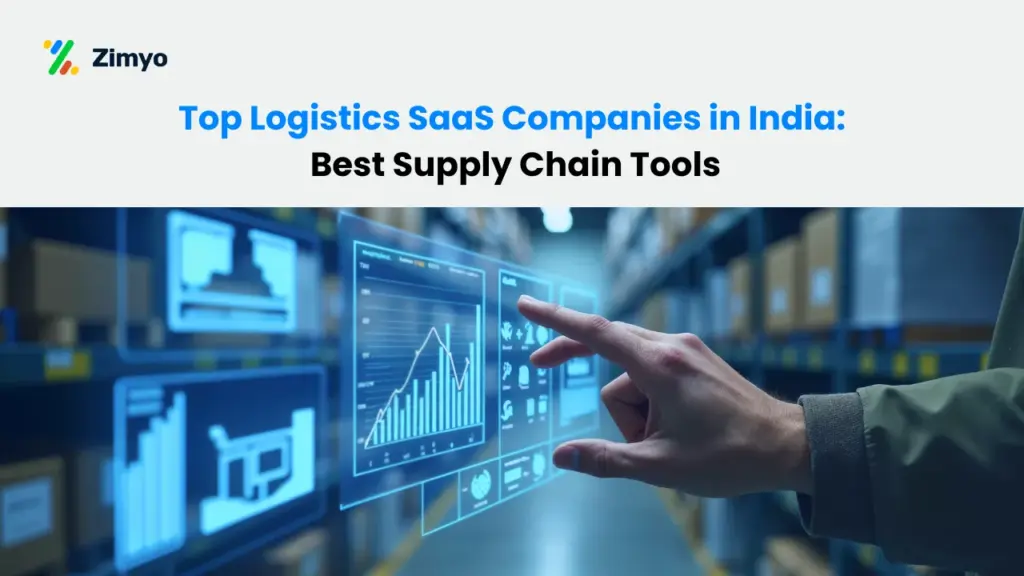

Logistics today is not just about moving goods, it’s more about speed and visibility. With e-commerce growing fast, businesses now need better systems to handle deliveries, tracking, and operations. Because of this, many top logistics SaaS companies in India are offering tools that help manage things like warehousing, fleet tracking, and daily logistics work.
At the same time, old methods don’t always work well, especially when operations grow. That’s why businesses are shifting towards logistics automation software and supply chain management software to make processes easier and reduce manual work. Many are also exploring the best logistics software in India to stay competitive.
List of Top Logistics SaaS Companise in India
Here are the top selected supply chain tools:
- Shiprocket
- LoadShare
- Shipsy
- Porter
- LogiNext
- Pickrr
- GoBOLT
- Locus
- Intelligence Node
- PetPooja
- Unbxd
- Kale Logistics Solutions
Check Out Our Blog For Top SaaS Companies in Hospitality Industry
Top Logistics SaaS Companies in India: Indepth Analysis
Here’s a quick look at some of the top logistics SaaS companies in India that are shaping logistics and supply chain operations today.
1. Shiprocket
Shiprocket is something a lot of small businesses in India are already using, especially D2C brands and online sellers. It connects with platforms like Shopify, WooCommerce, and even Amazon, so handling orders and deliveries doesn’t feel too complicated. One reason people go for it is that it helps manage shipping costs, which can otherwise get confusing. Recently, with Shiprocket Fulfillment, it’s not just about shipping anymore, it also supports storage and faster delivery, so overall it feels more complete.

Key Features:
- Works with 20+ courier partners, so you get multiple delivery options
- Helps track shipments and manage routing without much manual work
- Supports COD orders and also handles returns in a simple way
- Lets you manage multiple warehouses and keep inventory in sync
Best For: Online stores, growing D2C brands, MSMEs, and sellers looking for fast and affordable charges.
Notable Users: Used by many small businesses and growing brands, especially in categories like fashion, beauty, and home décor.
2. LoadShare
LoadShare mainly focuses on solving mid-mile and last-mile delivery issues in India, especially in Tier-2, Tier-3, and remote areas. Instead of building everything on its own, it works with local delivery partners and connects them through its platform. This approach makes it easier for businesses to expand into new regions without spending too much. Because of this model, it’s often seen among top logistics SaaS companies in India, especially for businesses looking for logistics automation software to handle local deliveries.

Key Features:
- Works on a partner model to automate supply chain operations
- Covers Tier-2 and Tier-3 cities using local delivery networks
- Helps with real-time tracking and route planning
- Supports last-mile delivery and regional distribution needs
Best For: Works well for regional logistics, local deliveries, and businesses operating beyond metro cities.
Notable Users: Used by regional retail networks, food delivery brands, and smaller chains in non-metro areas.
3. Shipsy
Shipsy is mostly known for its strong logistics automation, especially for larger businesses. It covers everything from order management to last-mile delivery and even cross-border logistics, so companies don’t have to rely on multiple tools. What stands out is that it uses AI to manage fleets, third-party carriers, and marketplace deliveries all in one place. Because of this, it’s often considered among top logistics SaaS companies in India, especially for businesses looking for advanced logistics automation software. It also supports international operations with features like container tracking and freight cost control, which is useful for industries like manufacturing and exports.

Key Features:
- Covers the full logistics process, from import to freight and last-mile delivery
- Handles cross-border shipping along with basic customs workflows
- Connects fleets and carriers with better ETA visibility
- Uses AI to manage deliveries and handle exceptions when things go off track
Best For: More suitable for large businesses, manufacturers, and companies handling bigger supply chain operations.
Notable Users: Used by companies managing global supply chains, especially in manufacturing, logistics, and enterprise-level commerce.
4. Porter
Porter works more like an on-demand logistics platform, mainly for businesses that need quick transport within the city. It’s commonly used by furniture shops, FMCG distributors, and even construction suppliers who rely on regular local deliveries. The platform makes it easy to find vehicles instantly and manage bookings through a simple system. It also offers things like driver tracking, GPS updates, and pricing based on distance or fuel, which helps keep things transparent. With options like two-wheelers, tempos, and small trucks, Porter has made same-city deliveries a lot more flexible for businesses.

Key Features:
- Lets you book vehicles on demand, from 2-wheelers to trucks
- Keeps pricing clear and processes mostly contactless
- Offers GPS tracking and helps manage multi-stop deliveries
- Provides a basic dashboard for handling regular logistics tasks
Best For: Good for businesses that need flexible, within-city logistics for moving goods.
Notable Users: Used by retail stores, FMCG companies, furniture sellers, and other local service businesses.
5. LogiNext
LogiNext focuses on AI-driven logistics automation, especially for businesses handling large volumes of deliveries and routing. It helps with things like route planning, driver scheduling, and live shipment tracking, which makes daily operations a bit easier to manage. Because of these features, it is often seen among top logistics SaaS companies in India, particularly for companies looking for advanced logistics analytics tools and better route optimization.
The platform also works well for time-sensitive industries like food delivery and healthcare, where accurate ETAs really matter. With support for multi-country operations, it fits businesses that are scaling across regions and need reliable supply chain optimization tools to keep everything running smoothly.

Key Features:
- Helps plan routes based on real-time traffic and conditions
- Supports delivery scheduling, capacity planning, and field team management
- Gives basic analytics with live dashboards for tracking deliveries
- Can be adjusted for different regions, fleets, and operations
Best For: Mostly used by large retail brands, FMCG companies, logistics providers, and businesses with heavy delivery needs.
Notable Users: Seen among retailers, pharma distribution networks, and major 3PL service providers.
6. Pickrr
Pickrr is mostly used by small and mid-level e-commerce sellers who need something simple to manage their shipping. It doesn’t feel too complicated to start with, and things like courier selection, NDR handling, and address checks are already built in, so it saves some effort.
It also gives the option to split inventory across different locations, which can help with faster delivery in some cases. Along with that, there are basic reports around costs, deliveries, and returns, so businesses can get an idea of what’s going on without digging too much.

Key Features:
- Helps pick the right courier and handles NDR cases without much manual work
- Supports returns and reverse logistics in a simple way
- Offers storage options and fulfillment support across different regions
- Connects easily with online store platforms without much setup
Best For: Good for small sellers who want a simpler process to manage things.
Notable Users: Used by D2C brands, online sellers, and small e-commerce businesses.
7. GoBOLT
GoBOLT works as a tech-enabled trucking platform, mainly for businesses handling large shipments and long-distance transport. It focuses on areas like line-haul planning, fleet tracking, and maintenance, which helps keep operations running more smoothly. The platform also gives visibility into shipments, driver activity, and overall performance, so companies can manage things better.
Because of these capabilities, it’s often seen among top logistics SaaS companies in India, especially for businesses looking for reliable logistics automation software in bulk and interstate movement. It’s commonly used by manufacturers, retail chains, and FMCG companies to reduce delays and improve delivery consistency.

Key Features:
- Helps improve fleet usage, track fuel efficiency, and manage compliance
- Gives visibility into shipments along with route planning and basic analytics
- Supports handling large transport volumes across different regions
- Covers end-to-end trucking operations, from planning to execution
Best For: More suited for enterprises that handle logistics at a larger scale.
Notable Users: Used by FMCG brands, manufacturers, and companies dealing with high-volume logistics.
8. Locus
Locus mainly focuses on route planning and last-mile delivery, using AI to make things more efficient. It helps businesses deal with common issues in manual routing, like traffic, delivery time slots, fuel costs, and vehicle capacity. Because of this, it’s often used by industries like grocery delivery, retail, and consumer goods where timing really matters.
It also supports features like proof of delivery, fleet planning, and basic customer communication, which makes daily operations a bit easier to manage. Over time, it helps improve delivery timelines and reduce missed deliveries.

Key Features:
- Uses AI for dispatching, routing, and handling tasks with better visibility
- Helps manage returns and coordinate deliveries across different carriers
- Improves address accuracy with geocoding and basic demand forecasting
- Gives a single view of logistics across internal teams and third-party partners
Best For: Businesses handling large delivery volumes across multiple cities and fleet types.
Notable Users: Used heavily by global and Indian retail, grocery, and courier companies.
9. Intelligence Node
Intelligence Node is not really a delivery platform, it’s more about data and planning. It helps brands figure out what to stock, where to send it, and how fast things are moving. So instead of handling shipments directly, it gives insights that make logistics decisions easier over time.
A lot of businesses use it along with supply chain management software or logistics analytics tools, especially when they want better visibility on inventory and demand. It also gives some idea about trends and competition, which can help in planning across warehouses and stores.

Key Features:
- Helps plan stock and distribution based on expected demand
- Gives real-time insights to avoid too much stock or stockouts
- Offers SKU-level forecasting with some warehouse planning inputs
- Supports decision-making with data instead of guesswork
Best For: Brands needing inventory efficiency and demand tied to supply chain decisions.
Notable Users: Retail companies managing large SKU portfolios.
10. PetPooja
PetPooja is mostly known as a restaurant POS, but over time it has also become useful for handling basic logistics in food businesses. Cloud kitchens and restaurants use it to manage things like inventory movement, procurement, and order flow without too much manual work.
It connects different parts like order routing, raw material tracking, vendor details, and billing, which helps keep operations more organized. Because of this, it’s often used along with logistics automation software and supply chain management software, especially in the growing food delivery space. As more kitchens move towards digital systems, tools like this are slowly becoming a part of everyday operations.

Key Features:
- Helps manage vendors, track supplies, and handle inventory with less manual work
- Connects delivery orders with basic routing workflows
- Keeps an eye on raw material costs and overall kitchen movement
- Brings POS and supply operations together in one system
Best For: Restaurants, cloud kitchens, and food chains managing delivery operations.
Notable Users: Cloud kitchens, food chains, and restaurants.
11. Unbxd
Unbxd is mainly known for product discovery and personalization, but it also helps in managing the backend side of operations, especially for e-commerce businesses handling large volumes. It connects product data with inventory and availability, which makes order routing a bit more efficient.
By using this kind of logic, businesses can decide from which warehouse an order should go, based on location and stock. This helps avoid stockouts, balance inventory better, and improve delivery timelines without too much manual effort.

Key Features:
- Uses AI to improve product search while keeping inventory in mind
- Helps decide delivery feasibility and route orders from the right warehouse
- Matches search results with available stock, which can improve conversions
- Prioritizes order fulfillment based on stock levels and location
Best For: E-commerce platforms needing smart logic tied to inventory availability and customer demand.
Notable Users: Enterprise retail platforms, stores, and large D2C brands.
12. Kale Logistics Solutions
Kale Logistics mainly works in areas like aviation, cargo, and multimodal logistics, where processes are usually more complex and documentation-heavy. It’s often used by ports, airports, and customs-related operations where a lot of coordination is needed between different parties.
Instead of focusing on last-mile delivery, it helps digitize backend processes like paperwork, compliance, and data exchange. Its system connects freight forwarders, customs, and cargo handlers, which can reduce delays and manual work. Over time, it has become useful for improving how cargo moves across air, sea, and land in a more organized way.

Key Features:
- Connects ports, customs, and logistics players through a shared system
- Helps with document exchange and basic compliance processes
- Supports digital processing with better visibility across transport modes
- Includes tools for warehouse and cargo handling operations
Best For: Freight operators, ports, customs, airport cargo, and networks.
Notable Users: Airports, ports, freight, and government logistics nodes.
Future Outlook of Logistics SaaS in India
Things in logistics are already changing, and it’s likely to keep going in that direction. More companies are slowly moving towards tools that can handle planning and tracking in real time instead of relying only on past data. A lot of this is happening because of AI and automation, which are now becoming part of daily operations.
You’ll probably see more use of logistics automation software and supply chain management software, especially as businesses try to cut costs and avoid delays. Some newer ideas, like testing logistics plans before actually using them, are also starting to come in, though not everyone is using them yet.
ONDC is another thing that might change how logistics works in India. It could make it easier for different players to connect instead of depending on one system. At the same time, warehouses are also becoming more automated, with better tracking and forecasting, especially in areas like grocery and pharma.
Looking ahead, India might start seeing more of these in logistics:
- Drone deliveries for last-mile orders
- Electric and maybe even autonomous delivery vehicles
- More focus on green logistics and sustainability efforts
- AI tools that help in managing supply chain decisions
- Better collaboration between different logistics companies and networks
Conclusion
India’s logistics space is changing quite fast, and the shift towards digital tools is becoming more visible now. From startups to large enterprises, many businesses are turning to top logistics SaaS companies in India to manage operations better and reduce delays. Using the right logistics automation software or supply chain management software can make a noticeable difference in cost, speed, and overall efficiency.
The platforms mentioned above are already helping businesses simplify complex logistics. And while logistics tools handle movement, solutions like Zimyo can support the people side of operations, making it easier to manage teams, payroll, and daily workflows alongside logistics.
Frequently Asked Questions (FAQs)
What is Logistics SaaS?
Logistics SaaS are software tools that help businesses manage their logistics work, like route planning, freight handling, and last-mile delivery.
Why are Logistics SaaS companies growing so fast in India?
The rapid rise of e-commerce, increasing D2C brands, demand for faster deliveries, and the need for digital tracking systems have accelerated the adoption of Logistics SaaS in India.
How do Logistics SaaS platforms help brands?
These platforms assist e-commerce sellers by offering automated shipping, courier selection, real-time tracking, return management, address validation, and multi-warehouse fulfillment. This leads to lower delivery costs, fewer failed deliveries, and improved customer satisfaction.
Which Logistics SaaS platform is best for small businesses?
Shiprocket and Pickrr are popular among small and mid-size e-commerce sellers because they offer easy onboarding, affordable pricing, and automated shipping workflows.