
The logistics and supply chain industries rely heavily on individuals who are constantly on the run. These include drivers, warehouse staff, delivery workers, and teams working in different places and at different times of the day.
Managing their attendance, wages, and adherence to regulations manually is a time-taking and mistake-prone process. Therefore, this shows the importance of having the appropriate HRMS and payroll software tailored for logistics and the supply chain to ensure that a huge workforce receives accurate and timely payments.
Why Logistics Needs Purpose-Fit HR and Payroll Software
A logistics workforce is rarely uniform. Permanent staff, contract workers, and daily-wage labor each come with different pay rules, shift patterns, and allowances. Spread that across multiple warehouses and states, and payroll gets complicated fast. A good HR and payroll software brings attendance, salary processing, and compliance into one place, while automated payroll systems help eliminate expensive mistakes that can occur when compensating numerous employees each month.
Why Logistics and Supply Chain Need an HRMS
Logistics runs on a large, scattered, and constantly changing workforce, which makes logistics workforce management unusually hard, especially when it comes to employee data. A few challenges stand out.
- Scattered records across locations: Staff members work in various locations such as warehouses, distribution centers, and transportation routes, and they are often located in different states. When each site maintains its own records or spreadsheets, employee information becomes scattered, mixed up, and hard to gather by the end of the month. Payroll for teams that are spread across different locations can really become a big challenge if you don’t have the right system in place.
- High turnover and constant onboarding: Drivers, loaders, and delivery agents come and go frequently. Keeping joining details, documents, and exits updated by hand is relentless, and outdated records quickly lead to payroll and compliance errors. Structured employee onboarding helps bring new hires into the system cleanly from day one.
- Mixed worker types: Permanent, contract, and daily-wage workers each need different data points, pay rules, and documents. Tracking all this manually across a big team invites mistakes, which is why reliable human resource payroll software matters.
- Attendance and shift data gaps: With rotating shifts and field staff who rarely visit an office, shift and attendance management often go uncaptured or get logged late, which throws off salary calculations. A dedicated attendance management system with GPS and biometric check-ins closes these gaps.
- Compliance and security risks: Employee data includes confidential data like bank account details, PAN, and PF numbers that are considered sensitive. Keeping this information in separate files spread out in different places is both a legal risk and a security problem.
5 Best HRMS and Payroll Software for Logistics and Supply Chain
Below are five strong options, starting with the platform built to handle exactly this kind of complexity.
1. Zimyo
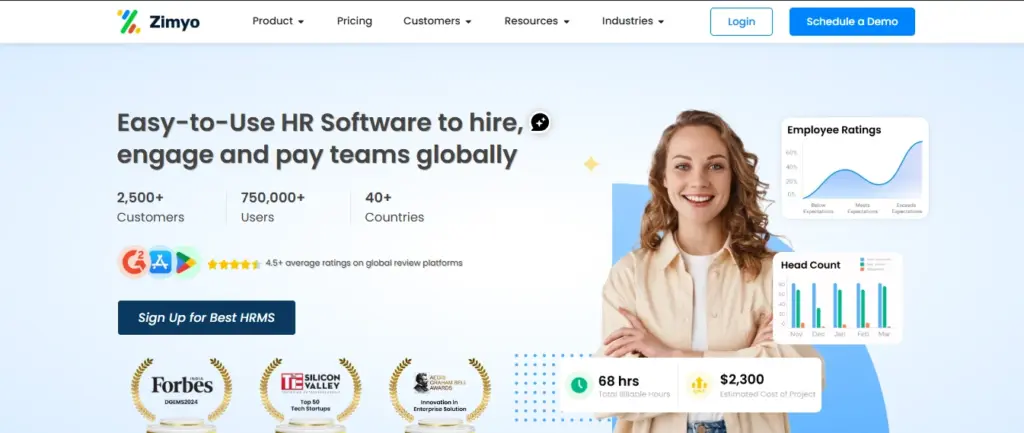
Zimyo brings payroll, attendance, and compliance together on a single platform, which suits the shift-heavy, multi-location reality of logistics. Its dedicated logistics industry solution is designed for distributed teams, and its attendance management handles a lot of areas, including rotating shifts and mobile check-ins without manual tracking.
The payroll software processes complex salary structures and statutory deductions in one flow, while built-in statutory compliance keeps you aligned with PF, ESI, PT, and TDS across states. For employees in the field and warehouse who rarely access a desk, the self-service portal enables them to view pay slips and submit leave requests directly from their mobile devices. It occupies an advantageous space, providing more than just payroll functions, yet is less cumbersome and more cost-effective compared to large enterprise software packages.
Key Features: End-to-end payroll, attendance, and compliance on one platform with mobile self-service for distributed teams.
G2 Rating: 4.5/5
2. greytHR
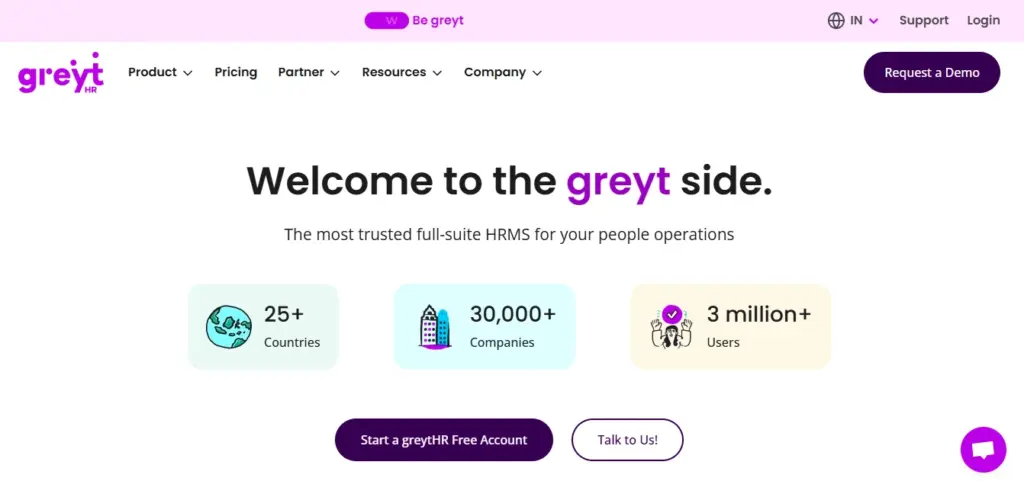
greytHR is a well-known company in India’s payroll sector, known for its strong understanding of legal requirements and precise payment processes. It works with biometric systems and is suitable for use in warehouses or factories, making it a great choice for small and medium-sized logistics companies that want dependable, affordable payroll services and strong support during the onboarding process.
Key Features:
Deep statutory compliance and biometric attendance support, ideal for small and medium logistics teams.
G2 Rating: 4.4/5
3. Keka
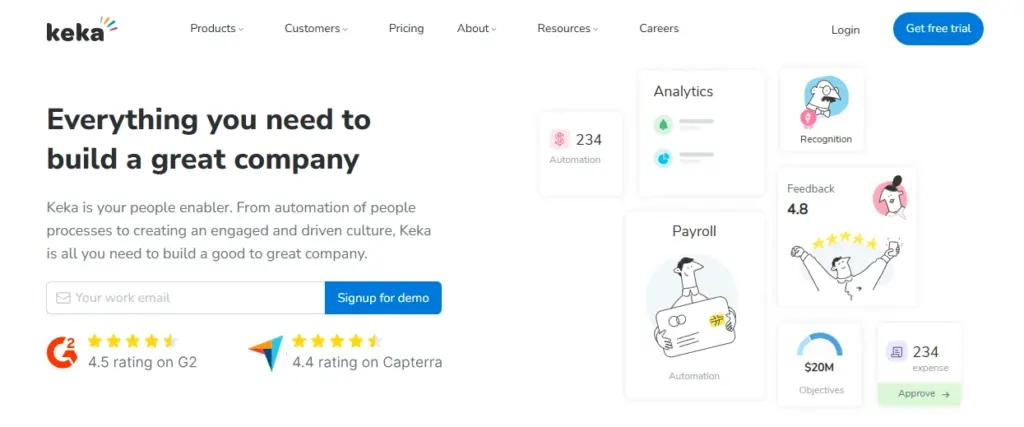
Keka is a cloud-based HRMS with a clean, unified employee record and strong analytics. Unpaid leaves, overtime, shift differentials, and arrear calculations are cleanly handled here in this cloud-based Indian HRMS and payroll software. Moreover, all these matter for logistics teams juggling variable shifts. It suits mid-to-large companies that want structured HR and performance tools alongside payroll.
Key Features: Unified employee record with clean shift, overtime, and arrear handling for mid-to-large teams.
G2 Rating: 4.5/5
4. RazorpayX Payroll
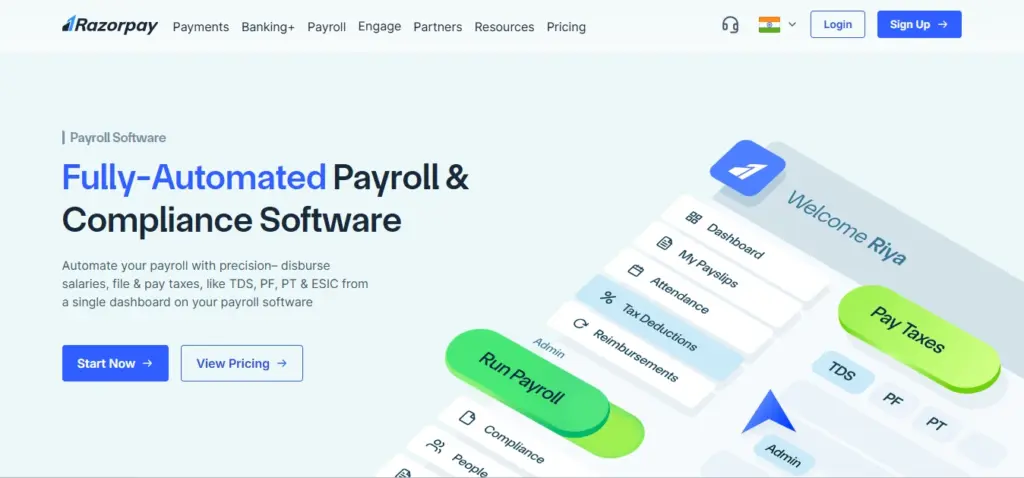
RazorpayX Payroll is designed for fast processes like quickly sending salaries, allowing transfers on the same day through its banking system. This software handles tasks like TDS, PF, and ESI automatically, and it also takes care of paying contractors and gig workers through the same system. That makes it especially helpful for logistics companies that rely a lot on temporary and freelance workers. It’s best for startups and small teams to focus on payment management when setting up their online payroll services.
Key Features: Same-day salary disbursal with automated compliance and contractor payouts, best for startups.
G2 Rating: 4.3/5
5. Zoho Payroll
Zoho Payroll is a reliable and affordable payroll solution that handles Indian tax rules automatically and sends payments directly to employees’ bank accounts. It works for companies that are already using Zoho tools and smaller logistics teams that need easy online payroll services without needing a complicated setup.
Key Features: Low-cost payroll with automated tax compliance, best for smaller teams in the Zoho ecosystem.
G2 Rating: 4.4/5
How an HRMS Solves These Problems
A good HRMS fixes such issues by making employee data central, accurate, and accessible. Instead of scattered files, every record lives in one system, so HR always works from a single source of truth. Secure document management keeps employee records and sensitive files organized in one place, while HR and payroll software connects attendance, salary, and compliance data so shift and overtime information flows straight into payroll without re-entry.
An employee self-service portal lets field and warehouse staff update their own details and submit documents from their phones, keeping records current even for a mobile workforce. Automated payroll software applies the correct pay rules for each worker type and ensures PF, ESI, PT, and TDS are applied consistently across all states. Role-based access and encryption protect sensitive information, addressing the security issues that happen when using manual files. This means the data is more accurate, there are fewer errors, and HR teams spend less time doing manual tasks.
Key Features to Prioritise
When comparing HRMS and payroll software for logistics and supply chain, weigh the features against how the industry runs:
- Shift and attendance management: For rotating warehouse and delivery teams.
- Automated salary processing: To account for overtime and allowances.
- Statutory compliance: For PF, ESI, PT, and TDS across multiple states.
- Mobile self-service: For field staff to manage pay slips and leave remotely.
Strong human resource payroll software should cover all four without forcing workarounds.
Quick Comparison: HRMS and Payroll Software for Logistics and Supply Chain
Software | Best For | Strength | G2 Rating | Logistic Fit |
Zimyo | Mid to large logistics teams | All-in-one HRMS with payroll, attendance & compliance on one platform | 4.5/5
| Built for shift-heavy, multi-location teams with mobile self-service
|
greyt HR | Logistics SMBs | Deep statutory compliance, proven and budget-friendly | 4.4/5
| Works well with biometric devices and warehouse setups |
Keka | Mid to large companies | Unified employee record with strong analytics | 4.5/5 | Handles overtime, shift differentials and arrears cleanly |
RazorpayX Payroll | Startups, contract-heavy teams | Same-day salary disbursal via banking rails | 4.3/5 | Good for contractor and gig-worker payouts |
Zoho Payroll | Small teams, Zoho users | Low-cost payroll with tax automation | 4.4/5
| Simple online payroll for smaller logistics teams |
How the Right Platform Helps Supply Chain Teams
Paying workers on time and accurately helps build trust with a mobile and hard-to-reach workforce, and this trust leads to better retention. Automated compliance helps you avoid penalties when auditors check your work. When payroll processes automatically, HR teams can focus their time on hiring and planning for the workforce, rather than spending it on end-of-month pay calculations.
For businesses that work in multiple locations, cloud–based online payroll tools let HR handle paychecks from any place, while employees can view their information on their own devices.
How to Choose the Right Software for Logistics Teams
The best option depends on how big your team is, the types of workers you have, and how much you need to follow rules. Begin by identifying your locations, the types of workers you have, and the legal requirements you must follow. Then find a tool that can manage all three of these areas. What logistics teams really need is for attendance, salaries, and compliance to work together as a team, not being handled separately in different systems.
If you need a platform that brings together payroll, shift tracking, and compliance across multiple states for a big, mobile team, Zimyo is the best option. Made for the logistics sector, it ensures your staff get paid correctly and on time, while reducing the busy work for your HR team, keeping your business running smoothly.
FAQs
1. What is the best HRMS and payroll software for logistics and supply chains?
Zimyo is one of the best HRMS and payroll software for logistics and supply chains. It keeps a scattered, shift-based workforce paid accurately and on time, cuts payroll errors across multiple warehouses and states, and stays compliant with PF, ESI, PT, and TDS as teams scale. Field and warehouse staff manage pay slips and leave their phones, so HR spends less time chasing records and more time running operations. Rated 4.5/5 on G2.
2. Why do logistics companies need dedicated payroll software?
Logistics teams mix permanent, contract, and daily-wage workers across multiple locations and shifts, which makes manual payroll slow and error-prone. Dedicated software automates salary processing, shift-based attendance, and multi-state compliance, so a large, mobile workforce gets paid accurately and on time. Platforms like Zimyo bring all of this onto one system, cutting the errors that creep in when data is scattered across warehouses and sites.
3. Can payroll software handle shift and overtime calculations?
Yes. Good payroll software automatically calculates pay based on shifts, overtime, and allowances, which is essential for warehouse and delivery teams working rotating hours. Zimyo links attendance data, including GPS and biometric check-ins, directly to payroll, so overtime and shift differentials are captured and paid correctly without manual tracking.
4. Does logistics payroll software manage statutory compliance?
Yes. Reliable platforms handle PF, ESI, PT, and TDS across states and update automatically when rules change, helping logistics companies stay compliant during audits. Zimyo builds this compliance into every payroll run, generating accurate deductions and filings even for teams operating across multiple states.