In many workplaces today, HR teams are still handling a lot of small, repetitive tasks—leave requests, salary slips, employee data updates, and more. This is exactly where employee self service in HRMS starts to make a real difference. Instead of routing everything through HR, employees get the ability to manage basic tasks on their own.
Over time, this shift changes how teams operate. It’s not just about saving time (though that definitely helps), but also about giving employees a bit more control over their day-to-day work experience. And honestly, that matters more than most companies realize.
For Indian companies especially, where teams are often growing quickly, adopting an employee self service portal isn’t just a “nice-to-have” anymore. It’s becoming part of how modern HR actually works—simple, accessible, and less dependent on manual effort.
What is Employee Self Service in HRMS?
Why Use Employee Self Service in HRMS?
Key Features of Employee Self Service Portal
Top Benefits of Employee Self Service in HRMS Software
The benefits of employee self service in HRMS software are often felt gradually, not instantly. But they do add up.
1. Less Manual Work for HR
HR teams spend less time answering repetitive queries. That time can be used for more meaningful work.
2. Faster Processes
Requests move quicker because there’s no middle layer. Employees take action directly.
3. Better Accuracy
When employees update their own data, errors tend to reduce. It’s their information, after all.
4. Improved Employee Experience
Access to information anytime makes things feel smoother and more transparent.
These everyday improvements are what make employee self service benefits practical rather than just theoretical.
How Employee Self Service Improves HR Efficiency
If you look at it closely, most HR delays come from dependency. One person waiting on another.
This is where how employee self service improves HR efficiency becomes clear. It removes unnecessary steps.
Instead of HR acting as a middle point for everything, systems handle the flow. That’s a key part of HR automation—letting software take care of routine processes while people focus on decision-making.
For companies scaling quickly, this kind of setup isn’t optional anymore. It’s what keeps operations from slowing down.
Employee Self Service System Advantages for Businesses
There are a few practical employee self service system advantages that stand out, especially for growing teams:
- Scalability: Works well as the company grows
- Consistency: Same process for everyone
- Accessibility: Employees can use it anytime, anywhere
- Reduced Dependency: Less reliance on HR for small tasks
It also fits naturally into other systems like a payroll management system, making overall HR operations more connected.
Why It Works Well for Indian Companies
In India, many organizations are moving towards digital HR systems, but adoption still varies. That’s why employee self service examples are helpful—they show how simple changes can improve everyday work.
For instance, a mid-sized company switching to an employee self service portal might see fewer HR tickets within weeks. Not because work disappeared, but because employees started handling things on their own.
That’s the real shift.
Where Zimyo Fits In
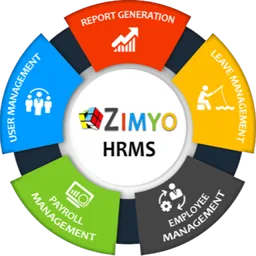
Platforms like Zimyo are designed to bring these features together in one place. From leave tracking to payroll access, everything sits within a single system.
If you want to explore how this works in detail, you can check their Hr solutions.
The idea isn’t to complicate HR—it’s to make it easier for both teams and employees.
What is employee self service in HRMS?
Employee self service in HRMS is a feature that allows employees to manage their own tasks like applying for leave, checking attendance, and downloading payslips without depending on HR. It basically gives employees direct access to their information in one place.
What features are included in an employee self service portal?
Most portals include leave management, attendance tracking, payroll access, and profile updates. Some also offer document storage and basic communication tools for easier HR interaction.
How does employee self service improve HR efficiency?
It cuts down repetitive tasks like sharing documents or updating records. HR teams can then focus more on important work like employee engagement, hiring, and strategy instead of daily admin work.
Which HR software offers employee self service features in India?
Many HR platforms in India offer employee self service capabilities, and tools like Zimyo are commonly used by growing businesses. It brings features like leave management, attendance tracking, payroll access, and employee data management into one place, making everyday HR tasks easier for both teams and employees.