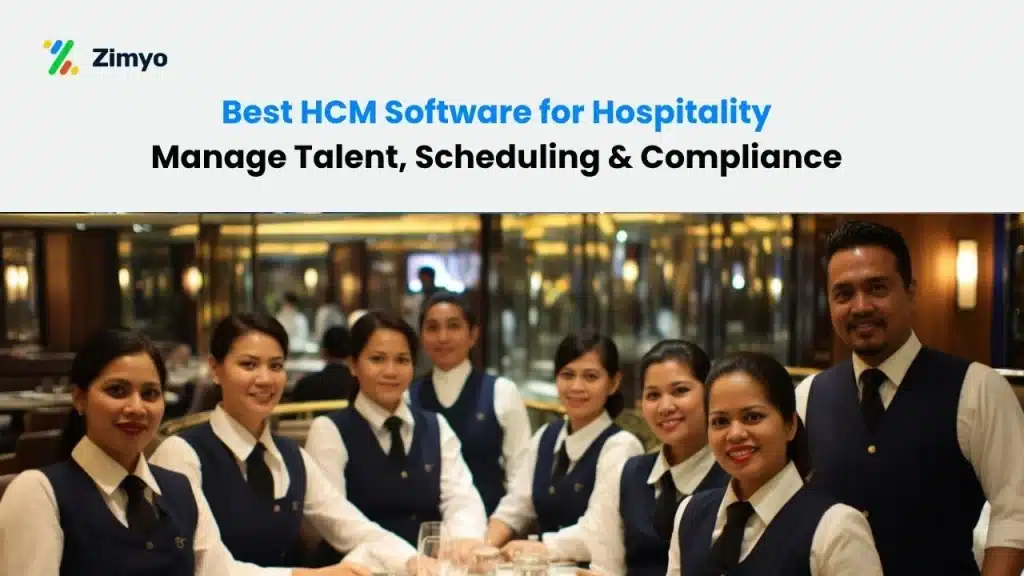

Hospitality is one industry where employee management can directly affect customer experience. Whether it’s a hotel, restaurant, café, or resort, businesses rely heavily on staff coordination, smooth scheduling, and quick service. But managing all this manually often becomes difficult. Problems like high employee turnover, seasonal hiring, payroll errors, compliance issues, and last-minute shift changes are very common in the hospitality sector.
This is why many businesses are now investing in the Best HCM Software for Hospitality to simplify daily HR operations. From handling attendance and payroll to managing employee schedules and performance, modern hospitality HR software helps businesses save time and reduce manual work. In fact, many hotels and restaurant chains now use HR Software for Hospitality Industry to improve workforce productivity and deliver better guest experiences.
For example, imagine a hotel during the holiday season. The management suddenly needs extra housekeeping staff, front desk employees, and kitchen workers. Without proper workforce scheduling software, handling shifts and payroll can quickly become confusing. But with the right hospitality workforce management software, managers can assign shifts, track attendance, manage salaries, and stay compliant from a single platform.
In this blog, we’ll understand what HCM software actually means and explore some of the best HCM software for hospitality industry options available in 2026. Whether you manage a luxury hotel, a small café, or a growing resort chain, choosing the right hotel HR software can help you manage staff more efficiently and keep operations running smoothly.
What is HCM Software for Hospitality Industry
Running a hotel, café, or restaurant is not only about serving guests. A lot of work also goes into managing employees properly. Staff shifts, salaries, hiring, attendance, and training all need attention every single day. Doing these things manually can become difficult, especially during busy seasons. That’s where the Best HCM Software for Hospitality becomes useful.
HCM software, which stands for Human Capital Management software, helps hospitality businesses handle employee-related work from one place. Instead of maintaining spreadsheets or paperwork, managers can use the software to manage hiring, payroll, shift timings, and employee records more easily.
Many businesses now prefer using HR Software for Hospitality Industry because it saves time and reduces everyday confusion. For example, if a hotel suddenly gets more bookings during holidays, managers can quickly arrange staff schedules using employee scheduling software for hospitality without calling employees one by one.
Compared to basic HR tools, modern hospitality HR software offers more features. Along with attendance and payroll, it also helps with staff planning, onboarding, performance reviews, and compliance management. This is why many hotels and resorts are moving towards hospitality workforce management software to manage their teams better.
The hospitality industry has one of the highest employee turnover rates in the world. In the United States alone, hotels and restaurants report annual turnover rates of around 70–80%, which makes managing and retaining staff a constant challenge.
Most HCM software for hotels generally includes features like:
- Staff hiring and onboarding
- Payroll and salary management
- Attendance and leave tracking
- Workforce scheduling software for shifts
- Employee performance tracking
- Training and learning management
- Compliance and document management
Using the right hotel HR software can make daily operations smoother for both managers and employees. It also helps businesses stay organized while improving staff productivity and guest service at the same time.
Read Our Blog on Best HR Strategies in Hospitality Industry
12 Best HCM Software for Hospitality Industry in 2026
- Zimyo
- BambooHR
- Deel
- Paycor
- ADP
- Rippling
- Paylocity
- Workday
- ADP Workforce Now
- Gusto
- UKG Pro
- WorkTango
Understanding HCM Software for Hospitality Industry in Detail
Now let’s take a look at some of the best HCM software for hospitality industry that can work well for hotels, restaurants, and other hospitality businesses.
1. Zimyo
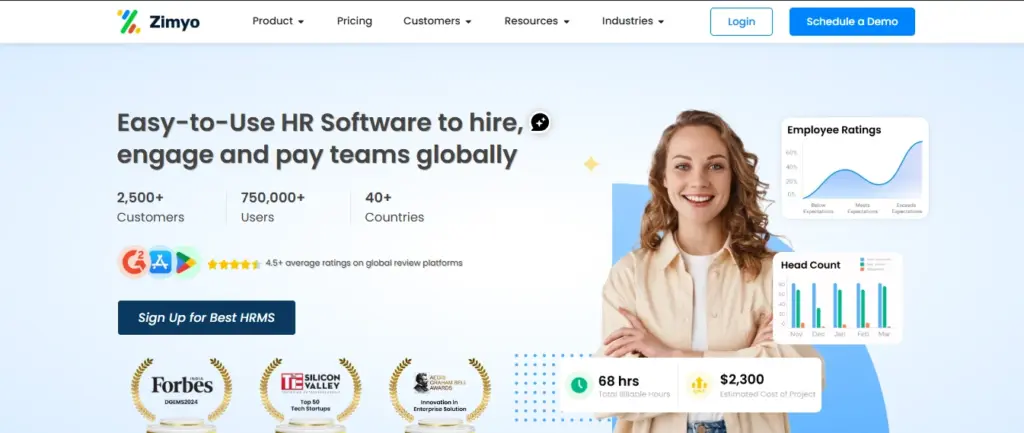
Zimyo is an all-in-one HCM platform designed to handle different HR needs in one place. In the hospitality industry, it works well because managing staff is usually more complex, especially with seasonal hiring and shift-based roles.
It can help with hiring in bulk, handling payroll, and keeping frontline employees engaged without too much manual work. Whether it’s a small hotel, a restaurant chain, or a larger resort setup, tools like this make HCM software for hotels easier to use in day-to-day operations.



Unique Features:
- Payroll can be handled automatically, and it also keeps compliance in check for different regions
- There’s an ATS that helps with hiring, especially when companies need to onboard many people at once
- Performance can be tracked through goals, feedback, and regular appraisals
- It also includes things like surveys and recognition, which help keep employees engaged
- Employees can use the mobile app to check shifts, apply for leave, or view salary details
- It connects with attendance and time tracking, so most HR tasks stay in one place
| Pros | Cons |
|---|---|
| Covers most HR needs like payroll, hiring, and performance in one place | Global payroll features are still developing in some areas |
| Simple interface, so hospitality staff can use it without much effort | Advanced analytics may not be included in basic plans |
| A bit more affordable compared to many global HCM tools | Some integrations are still being added |
| Focuses on employee experience and engagement | Initial setup may need some support |
Pricing
Pricing in India starts at around ₹80 per employee per month for the Basic plan, while Standard and Enterprise plans generally range between ₹120 to ₹160 per employee per month, depending on features and company size.
2. BambooHR
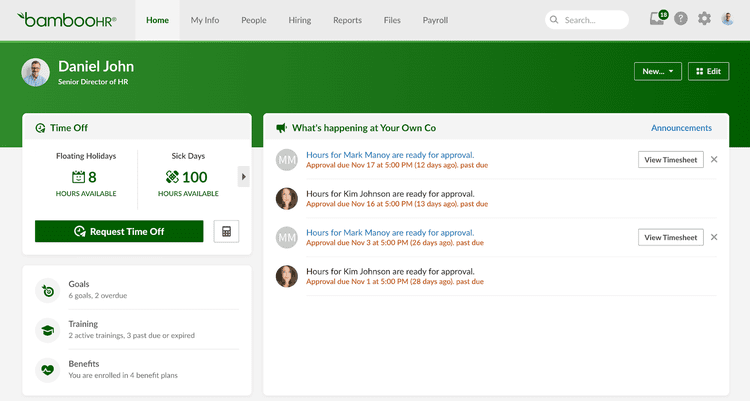
BambooHR is popular among small and mid-sized businesses because it keeps HR work simple and easy to manage. Tasks like onboarding, leave tracking, payroll, and employee records can be handled smoothly from one place. For small hotels, cafés, and restaurants, it works well as an HR Software for Hospitality Industry and helps manage daily staff operations without adding too much complexity. It’s a good option for businesses looking for simple hospitality HR software and basic workforce scheduling support.
Unique Features:
- Onboarding is handled with simple checklists, so new hires don’t miss steps
- Leave and time-off requests can be managed without too much manual work
- Employees can update details or apply requests on their own
- Basic reports help HR understand hiring and employee data
Pros | Cons |
User-friendly interface | Limited global payroll options |
Affordable for small businesses | Lacks advanced enterprise features |
Strong onboarding tools | Not ideal for very large hotel groups |
Pricing
pricing starts at around $10 per employee per month for the Core plan, while Pro and Elite plans cost around $17 to $25 per employee per month, depending on features and company size.
3. Deel
Deel is mostly used by companies that hire employees across different countries. For hotels and hospitality groups with international teams, it works well as an HR Software for Hospitality Industry by helping manage global hiring, payroll, and compliance from one platform. It can also support businesses looking for hospitality workforce management software to handle staff across multiple locations without too much confusion. This makes it useful for managing international hotel teams, employee payments, and compliance requirements more smoothly.
Unique Features:
- Supports payroll across many countries, so payments don’t get complicated
- Takes care of local tax rules and labor compliance in different regions
- Helps manage both full-time employees and contractors in one place
Pros | Cons |
Great for global hotel chains | Expensive for small businesses |
Handles compliance automatically | Learning curve for non-tech teams |
Supports contractors and full-time staff | Limited engagement features |
Pricing
pricing starts at around $5 per employee per month for HRIS features, while Global Payroll starts at $29 per employee per month and Contractor Management costs around $49 per contractor per month. Employer of Record (EOR) services usually start from $599 per employee per month depending on the country and hiring requirements.
4. Paycor
Paycor is a flexible HCM platform that helps businesses manage payroll, hiring, attendance, and scheduling from one place. It works well as a hospitality workforce management software, especially for hotels and restaurants where employees usually work in shifts. Many businesses use it as an HR Software for Hospitality Industry because it helps manage hourly staff, payroll processing, and workforce scheduling without making daily operations too complicated. It can also support businesses looking for reliable employee scheduling software for hospitality and hotel staff management tools.
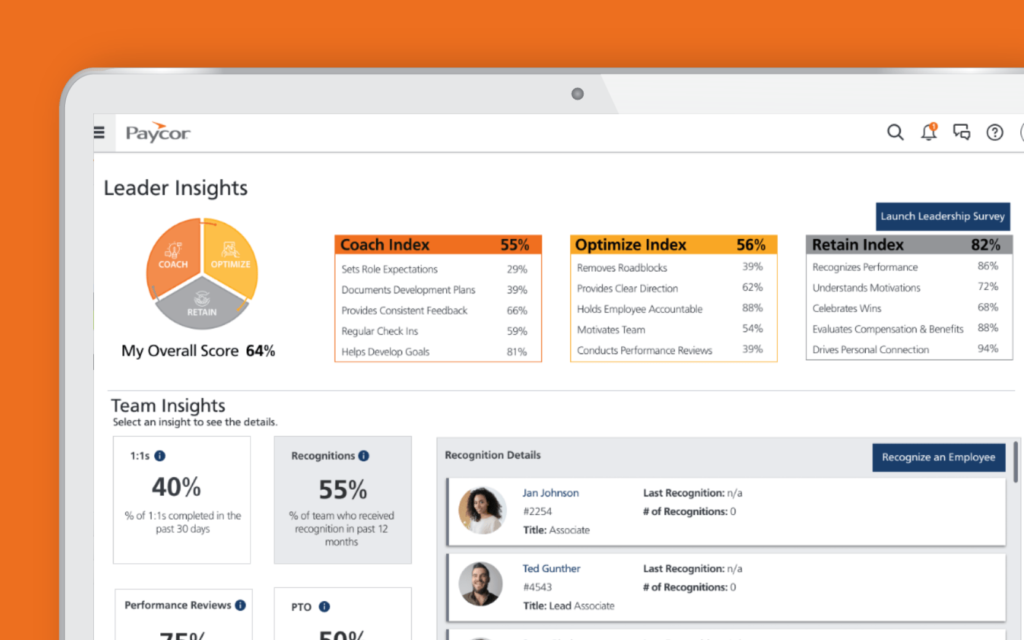
Unique Features:
- Helps manage shift schedules without too much confusion
- Includes basic learning and training support for employees
- Payroll is connected with benefits, so things stay in sync
Pros | Cons |
Strong payroll compliance features | Interface feels dated |
Great for hourly workforce | Expensive for small hotels |
Built-in learning management | Advanced features need add-ons |
Pricing
Pricing starts at around $99 per month + $5 per employee per month for the basic plan, while advanced HCM and workforce management plans can cost up to $12 per employee per month, depending on features and business size.
5. ADP
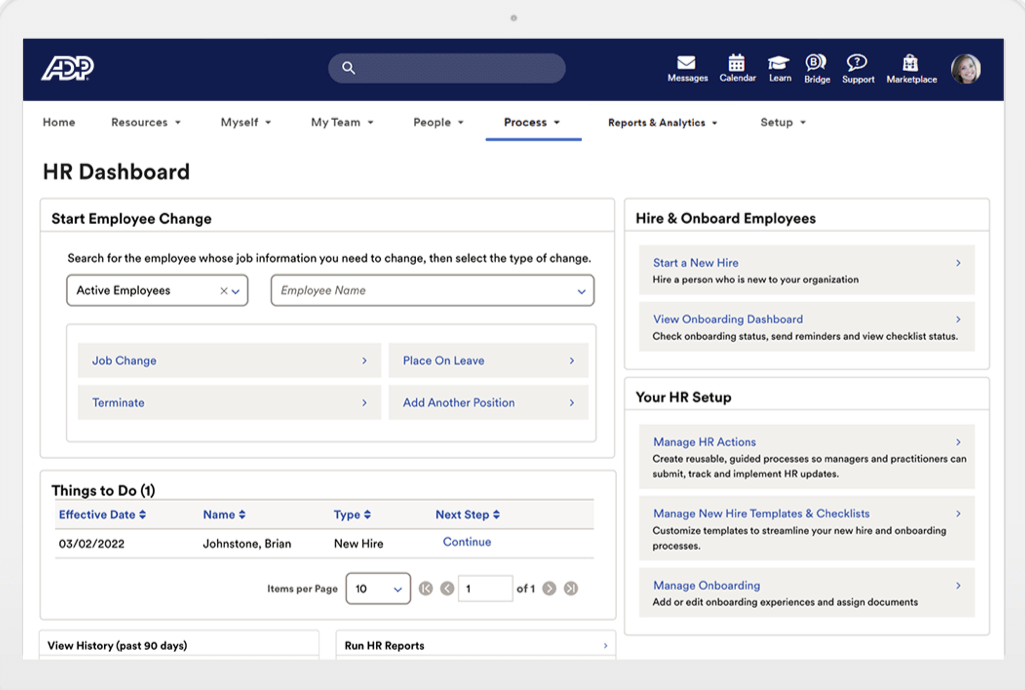
Unique Features:
- Handles payroll and employee benefits across different countries
- Offers HR support services, so some tasks don’t need to be managed internally
- Helps manage taxes and compliance without too much manual effort
Pros | Cons |
Highly reliable payroll system | Complex pricing |
Scales well for large companies | Not user-friendly for very small teams |
Excellent compliance support | Limited engagement features |
Pricing
Pricing usually starts at around $79 per month + $4 to $10 per employee per month for basic payroll plans, while advanced workforce management and HCM solutions can range between $15 to $30 per employee per month, depending on features, company size, and modules selected.
6. Rippling
Rippling combines HR, payroll, and IT management in one platform, which makes it slightly different from regular HR tools. Along with employee records and payroll, it also helps businesses manage devices, app access, and employee onboarding from a single system. For hotels and restaurants, it can work well as an HR Software for Hospitality Industry because hospitality teams often change frequently and require smooth staff management. It also supports features related to hospitality workforce management software, including payroll, onboarding, and workforce scheduling for shift-based employees.
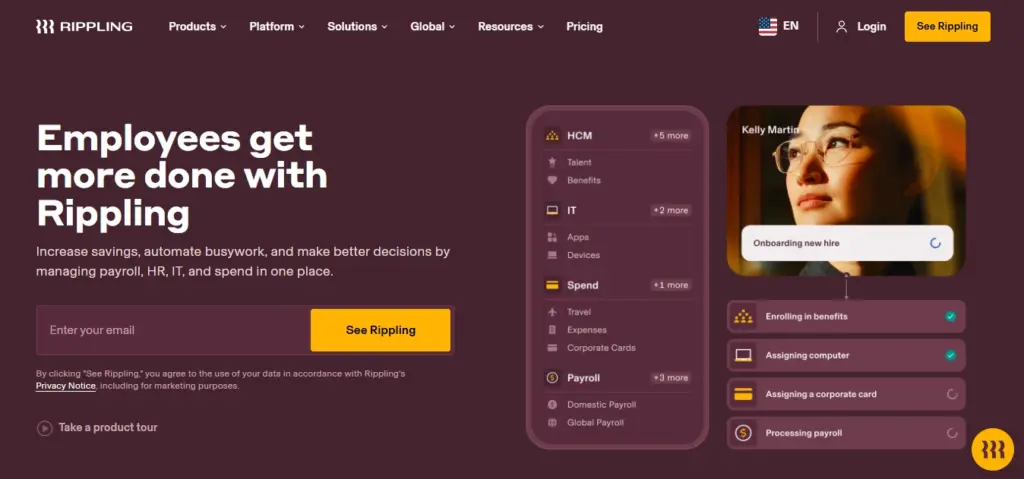
Unique Features:
- Automates onboarding in minutes.
- Handles both HR tasks and basic IT setup in one place
- Works for teams spread across different locations
Pros | Cons |
Combines IT + HR in one | Higher cost for small businesses |
Very fast onboarding | Complex for non-tech-savvy managers |
Scales globally | Limited built-in engagement tools |
Pricing
Pricing usually starts at around $8 per employee per month with a base platform fee of nearly $35 per month. Advanced HR, payroll, IT, and workforce management features can increase the total cost to around $15–$45 per employee per month, depending on the modules and company size.
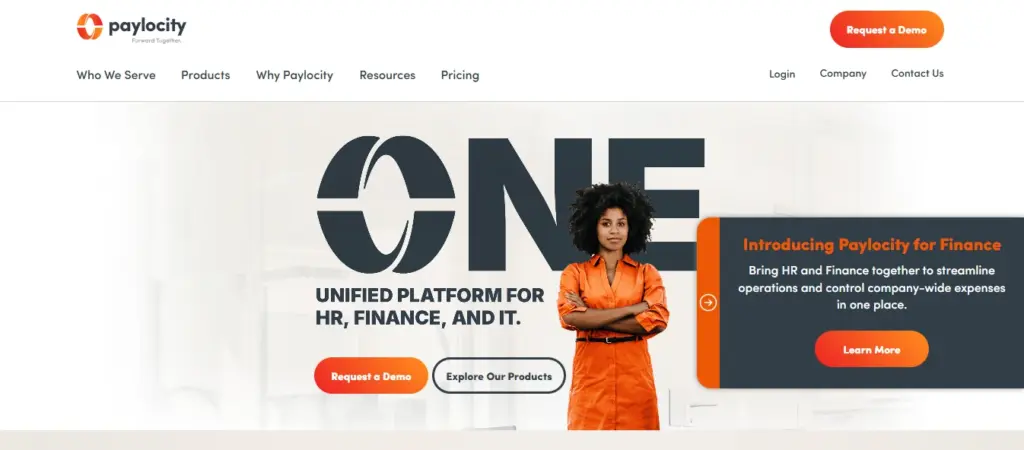
7. Paylocity
Paylocity offers payroll, HR, and employee management features in one system, which makes it useful for hotels, cafés, and restaurant businesses. The platform is fairly easy to manage, so hospitality teams can handle hiring, attendance, and payroll without too much confusion. It also supports hotel HR software needs like employee communication and shift management, making it helpful for businesses looking for smoother staff coordination. For companies searching for tools to manage hotel staff and payroll, it can be a practical option that keeps everyday operations more organised.
Unique Features:
- Peer recognition and engagement tools.
- Payroll and compliance.
- Mobile-first design for hospitality staff.
Pros | Cons |
Strong employee engagement tools | Costly for smaller setups |
Comprehensive payroll | Learning curve for admins |
Great mobile app | Limited global features |
Pricing
Pricing usually starts at around $5 to $10 per employee per month for basic HR and payroll features, while full HCM and workforce management solutions can range between $22 to $32 per employee per month, depending on company size, modules, and implementation needs.
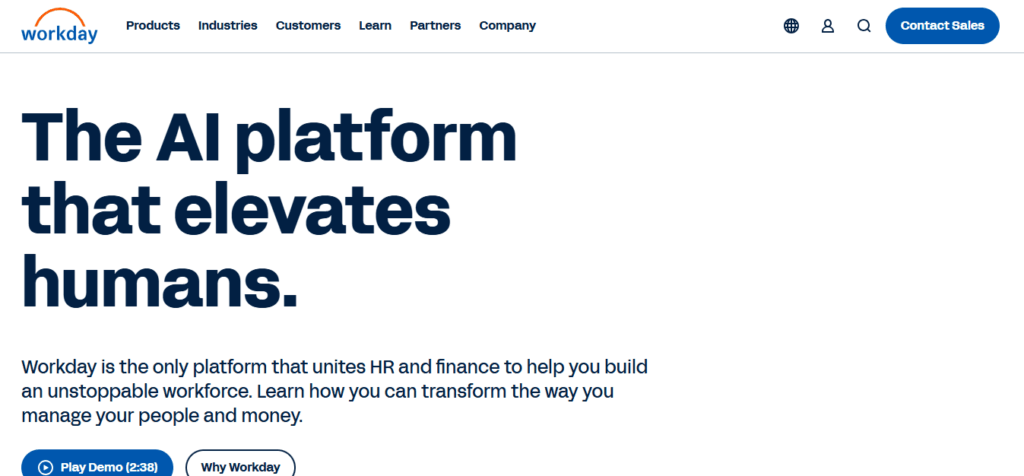
8. Workday
Workday is mostly used by large businesses that need advanced HR and workforce management features. In the hospitality sector, bigger hotel chains and resort groups often use it to manage global teams, workforce planning, payroll, and employee data across multiple locations. It works well as an HCM software for hotels because it offers detailed reporting, analytics, and staff management tools beyond basic HR functions. Many enterprises also prefer it for hospitality workforce management software needs where deeper workforce insights and long-term employee planning are important.
Unique Features:
- Uses AI to give basic insights on workforce and trends
- Recruitment and performance tracking.
- Connects HR data with financial planning for better visibility.
Pros | Cons |
Scales globally for enterprises | Very expensive |
Deep analytics and insights | Too complex for small hotels |
Integrates HR + finance | Needs significant setup time |
Pricing
Pricing is usually custom-based for larger businesses, but estimated costs generally start around $34 to $100 per employee per month for core HCM features. Advanced enterprise solutions with payroll, analytics, and workforce planning can go beyond $150 per employee per month, depending on company size, modules, and implementation needs.
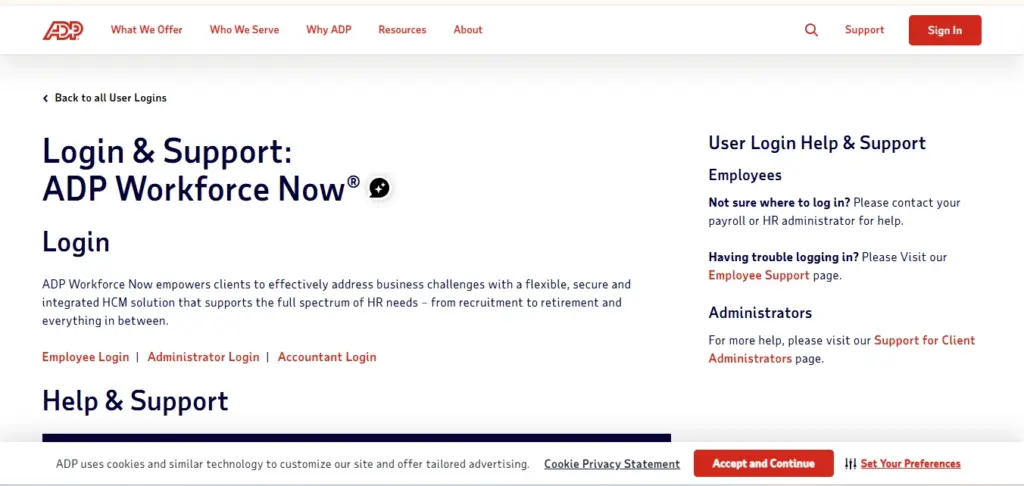
9. ADP Workforce Now
Unique Features:
- Employees can check details and manage requests on their own
- Helps with compliance and basic reporting without too much effort
- Makes it easier to handle employee benefits in one place
Pros | Cons |
Reliable payroll system | Expensive compared to simpler tools |
Strong compliance features | Limited customization |
Employee-friendly interface | Engagement tools not very advanced |
Pricing
Pricing usually starts at around $23 to $30 per employee per month for core payroll and HR features, while advanced workforce management, benefits, and compliance modules can increase the cost up to $50 per employee per month, depending on business size and selected features.
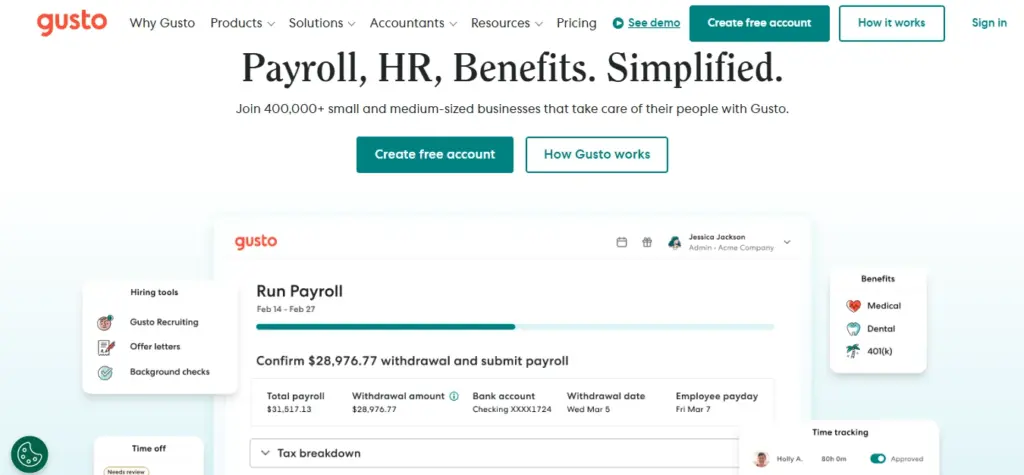
10. Gusto
Gusto is mostly known for making payroll and compliance easier for small businesses. Many cafés, restaurants, and boutique hotels prefer it because the platform is simple to use and doesn’t feel overly complicated. It works well as an HR Software for Hospitality Industry for businesses that mainly need help with payroll, onboarding, and employee records. For smaller hospitality teams looking for basic hotel HR software or tools to manage staff salaries and attendance, it can be a practical and easy-to-manage option.
Unique Features:
- Takes care of tax filing automatically, so less manual work
- Onboarding is simple and doesn’t take too many steps
- Helps manage employee benefits in one place
Pros | Cons |
Easy-to-use payroll solution | Limited for global payroll |
Affordable for small businesses | Lacks advanced HR modules |
Great for startups | Not scalable for large hotel chains |
Pricing
Pricing generally starts at around $49 per month + $6 per employee per month for basic payroll features. More advanced HR, time tracking, and workforce management plans can range between $80 to $180 per month + $12 to $22 per employee per month, depending on the selected features and business size.
11. UKG Pro
UKG Pro is mostly used by larger organizations that need a more advanced HR and workforce system. In the hospitality industry, many big hotel chains and resorts use it as an HR Software for Hospitality Industry because it helps manage employee engagement, payroll, and workforce data in one place. It is also widely used as hospitality workforce management software, allowing businesses to track performance, manage staffing needs, and analyze workforce trends more effectively.
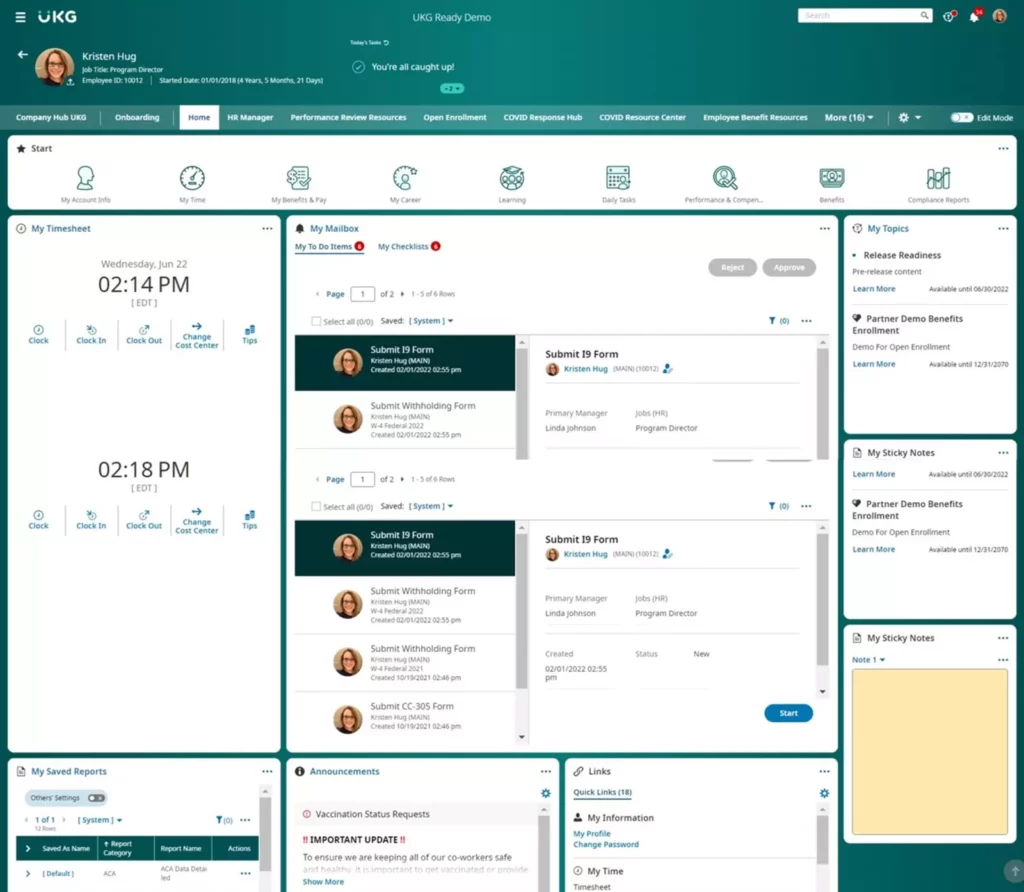
Unique Features:
- Uses AI to help with everyday HR tasks
- Gives some insights for workforce planning and tracking
- Includes surveys to understand employee feedback
Pros | Cons |
Excellent for large-scale HR | Very expensive |
Deep analytics and AI insights | Complex onboarding |
Strong employee engagement focus | Not designed for small teams |
Pricing
UKG Pro pricing is not fixed and is usually offered on a custom quote basis. However, it generally starts at around $27 to $37 per employee per month for core HR and payroll features, and can increase depending on advanced modules and company size.
12. WorkTango
Unique Features:
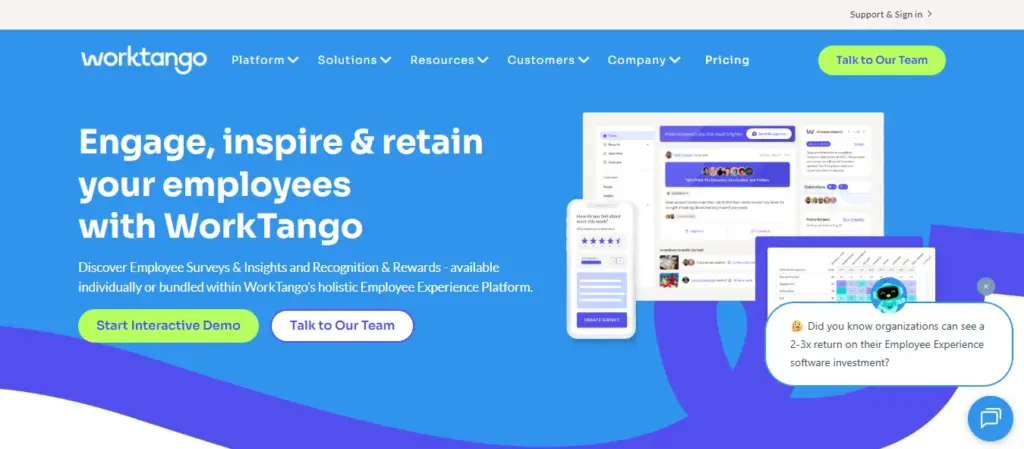
- Helps recognise employees and reward their work
- Includes surveys to check how employees are feeling
- Basic tools for feedback and performance tracking
Pros | Cons |
Great for boosting retention | Not a complete HR suite |
Strong recognition features | Needs integration with payroll/HR |
Improves staff morale | No scheduling or compliance tools |
Pricing
Pricing is not publicly fixed and is usually provided on a custom quote basis depending on company size and selected features. However, it generally starts around $5 to $10 per employee per month, based on employee engagement and rewards modules.
Why a Best HCM Software for Hospitality Industry is a Game-Changer
Hospitality is a people-driven industry. Guests don’t just remember the food or the place, they also remember how staff behaved and handled things. Because of this, managing employees properly becomes really important, especially in hotels and restaurants. That’s where tools like Best HCM Software for Hospitality or even a hospitality HR software start to matter more.
But the real issue is that managing people in this industry is not really simple. Compared to other sectors, things change quickly here — staff comes and goes, shifts keep rotating, and daily operations can get unpredictable. That’s why many businesses now depend on hospitality workforce management software to handle these challenges better.
So, what actually makes it more difficult than other industries?
High turnover rates:
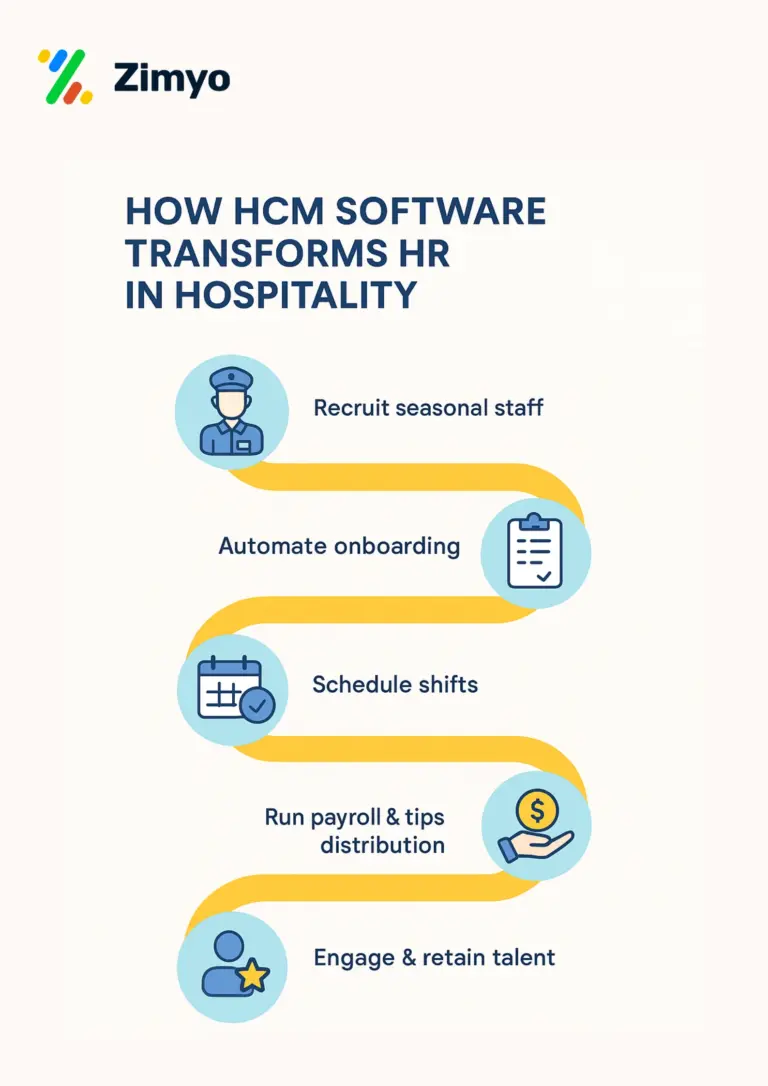
The hospitality industry still sees very high employee turnover, often around 70–75% every year, which is much higher than most industries . People often leave for better pay, flexible shifts, or less stressful work. This makes hiring and retention a constant challenge for HR teams using hospitality workforce management software.
Seasonal hiring requirements:
Hotels and resorts usually hire more staff during peak travel seasons and reduce later. This constant change makes workforce planning difficult, and many businesses depend on Best HCM Software for Hospitality to manage bulk hiring and scheduling.
Complex payroll:
Payroll in hospitality is not that simple. Different shifts, tips, overtime, and compliance rules make it harder to manage. Using hospitality HR software can help reduce confusion and manual errors.
Multi-location management:
Many hotel chains and restaurant groups operate in different cities or even countries. Managing staff across locations can get messy without proper systems, which is why HCM software for hotels becomes important.
Keeping the service standards high:
Employees directly impact guest experience, so even small gaps in training or morale can affect service quality. Low engagement is already a concern in the industry, making employee management even more important.
This is where the Best HCM Software for Hospitality starts to make a difference. A good system can handle a lot of daily HR work that usually takes time and effort.
- Cuts down repetitive tasks like payroll, scheduling, and compliance
- Helps improve employee engagement, which can reduce turnover over time
- Gives managers some insights so they can make better decisions
- Keeps HR processes similar across different locations
- Lets employees check shifts, payslips, and training details easily
In simple terms, using a hospitality HR software makes HR work less reactive and a bit more organised, so teams can focus more on service instead of paperwork.
A large number of hotel employees work irregular or night shifts, with estimates showing over 60% in such roles. Because of this, managing schedules manually becomes difficult, and tools like workforce scheduling software or the Best HCM Software for Hospitality can make shift planning and attendance tracking much easier.
Must-Have Features in HCM Platform for Hospitality
When selecting human capital management software for your hotel, resort, or restaurant chain, not every platform will suit you. The hospitality industry is distinct, and your software must be. Below are the essentials that you should be searching for:
Recruitment & Onboarding
Hospitality companies recruit fast and sometimes dozens or even hundreds of employees in peak periods. A good HCM system must enable you to publish positions, monitor applications, execute background checks, and welcome staff easily.
Payroll & Compliance Management
Hospitality payroll is complicated by tips, fluctuating hours, and overtime. A good hospitality HR software must accurately calculate wages, accept multiple forms of payment, and adhere to local labor regulations.
Shift Scheduling & Workforce Management
Scheduling is one of the largest and most difficult challenges of the HRM in the hospitality sector. Your HCM system needs to enable managers to create, modify, and publish shifts in an efficient manner while providing employees with visibility and ease.
Learning & Training Modules
Guest service quality depends on well-trained employees. Look for an HCM platform that supports online training, certifications, and continuous learning so your staff stays motivated and skilled.
Performance Management
Managers need to evaluate staff performance regularly. From feedback surveys to KPIs, the right software should help track performance and reward top employees.
Employee Engagement Tools
Engaged employees translate to happy guests. Engagement tools such as surveys, appreciation, and rewards make employees feel appreciated and stem attrition.
Mobile Accessibility
In hospitality, most employees are not sitting in offices, they’re usually moving around and handling guests. Because of that, having a mobile-based system makes things easier. With a tool like the Best HCM Software for Hospitality, staff can check their schedules, apply for leave, or see their payslips anytime without depending on HR. Zimyo also offers this through its mobile app, so employees can access things on the go.
Analytics & Reporting
To control multiple properties or big teams, decision-makers require information. The software must provide information about turnover, payroll expenses, scheduling productivity, and staff satisfaction
These factors streamline HR processes and fit ideally with the needs of human resource administration in hospitality business.
How to Select the Best HCM Software
There are a lot of options available today, so picking the right one can get a bit confusing. For hospitality businesses, it’s not just about features but also how well the system fits daily operations. Choosing the Best HCM Software for Hospitality or even a reliable hospitality HR software depends on what your team actually needs.
To make things easier, here’s a simple step-by-step way to decide:
Step 1: Determine Your Needs
A boutique hotel can’t use the same HCM system as an international resort chain. Begin by categorizing your pain points, understand – is payroll, recruitment, scheduling, or employee retention causing you headaches?
Step 2: Think Business Size & Scale
- Small hotels or restaurants → Low-cost, straightforward platforms
- Mid-size groups of hotels → All-around solutions
- Large business → Advanced systems such as Zimyo or UKG Pro.
Step 3: Assess User-Friendliness
Hospital staff are not necessarily tech-savvy and are busy. The platform must be intuitive and user-friendly.
Step 4: Inspect Integrations
Does the software connect with your POS (Point of Sale), payroll software, or time-tracking applications? This is important to ensure seamless operations.
Step 5: Consider Customization
Each hospitality company possesses special workflows. Select an HCM system that lets you customize workflows, reports, and levels of access.
Step 6: Compare Pricing & ROI
Budget is important, but don’t go with the lowest-cost option. Assess the return on investment based on decreased error rates, improved retention, and increased efficiency.
Step 7: Read Case Studies & Reviews
See how other resorts, hotels, or restaurants have gained from the platform. Real-life case studies are a treasure trove of knowledge.
By following these steps, you’ll ensure that your hospitality HR software fits your exact needs rather than becoming an expensive tool that goes unused.
Key Benefits of Using HR Software for Hospitality
Investing in the Best HCM Software for Hospitality can make a real difference over time. It doesn’t just help with HR tasks, but also improves how teams work and how businesses manage their staff. For hotels and restaurants, using a good hospitality HR software can impact both employees and overall operations.
Let’s look at some of the main benefits:
1. Efficiency & Time Savings
Manual HR activities such as payroll computation, leave management, or employee information consume hours. An HCM tool automates these, freeing HR and managers’ time.
2. Better Employee Retention
With tools for engagement, recognition, and transparent career ladders, employees feel appreciated. This makes them less likely to turn over, which is one of the hospitality industry’s largest human resource management challenges.
3. Correct Payroll & Compliance
Payroll miscalculations can annoy employees. With automated payroll, employees get paid accurately and timely, and labor law compliance is maintained.
4. Improved Guest Experience
Content employees provide enhanced service. A motivated team directly correlates to enhanced guest satisfaction and brand loyalty.
5. Scalability
As your restaurant or hotel grows, your HCM system expands with it. You won’t have to change systems as you grow your business.
6. Data-Driven Decisions
Analytics detect trends such as why workers are departing, which shifts are too staffed, or how training affects service. Such insights inform improved strategic decisions.
7. Cost Savings
Decreasing errors, turnover, and inefficiencies is cost-saving. The return on investment in the best HCM software is large in the long term.
In a nutshell, the advantages go further than HR, they enhance business performance overall within the HRM in hospitality industry.
Final Thoughts
Hospitality runs on people, so when staff is not managed properly, it directly reflects in the guest experience. Most hotels and restaurants already deal with common challenges like high staff turnover, frequent shift changes, and payroll confusion, so managing everything manually often adds more stress instead of solving it. That’s where the Best HCM Software for Hospitality really makes a difference, as it helps bring structure and clarity to daily HR operations without making things complicated.
A good hospitality HR software or hospitality workforce management software like Zimyo can handle everyday tasks such as employee scheduling, attendance tracking, payroll, and core HR processes in a more organized way. Over time, this not only reduces manual effort but also allows managers to focus more on improving service quality instead of getting stuck in operational issues.
When employees are supported with the right systems, they feel more balanced and valued, which naturally improves productivity and teamwork. And in hospitality, better teamwork always leads to better guest experiences. In the end, using the right HR software for hospitality industry is not just about managing staff—it’s about creating a smoother, happier workplace where both employees and guests have a better experience.
Frequently Asked Questions (FAQs)
What is the best hospitality management software?
Zimyo HRMS works well for hospitality businesses as it brings HR, payroll, attendance, scheduling, and performance management together in one system for hotels and restaurants.
Which HCM software is best?
The right HCM software usually depends on the size and needs of the business. Tools like Zimyo HRMS are often used by growing companies, while platforms like Workday or Oracle HCM are more suited for larger organisations with complex requirements.
What features should hospitality HR software have?
A good hospitality HR software should include payroll, employee scheduling, attendance tracking, hiring tools, and performance management.
What is the difference between HRMS and HCM software?
HRMS mainly handles basic tasks like payroll and attendance, while HCM software also includes features like performance tracking, engagement, and workforce planning.