

A few years back, most HR teams were still handling employee records through spreadsheets, paperwork, or software installed only on office systems. It worked for small teams, but as companies started growing, managing HR tasks that way became slow and confusing.
Now things are changing. More businesses are moving towards cloud based HRMS software because it makes daily HR work easier to manage. From attendance and payroll to employee records and leave tracking, everything can be handled from one place without depending too much on manual work.
The demand for cloud HRMS and cloud based HR software has increased a lot, especially after remote and hybrid work became common. HR teams today need systems that they can access from anywhere, not just from office desktops. That is one reason why many companies are choosing HRMS on cloud instead of traditional software.
For growing businesses, using the best cloud HRMS software for companies also helps save time. HR teams spend less time on repetitive tasks and more time focusing on employees and overall workplace management.
Another reason companies prefer cloud HR software India solutions is flexibility. Whether a company has 20 employees or 2,000, cloud systems are usually easier to manage, update, and scale over time.
So, what are the actual benefits of cloud HR systems, and why are more businesses shifting towards them? Let’s look at them one by one.
What is Cloud Based HRMS Software?
A cloud based HRMS software is an online system that helps companies manage HR tasks without installing software on office computers or servers. Since it works on the cloud, businesses can access it through the internet from anywhere. Most cloud HRMS platforms are managed by the service provider, so companies do not have to worry about software updates, maintenance, or technical setup.
One of the biggest benefits of cloud based HRMS is that everything stays organized in one place. Employee records, payroll, attendance, leave management, and performance data can all be managed through a single system. This reduces manual work and improves overall HR efficiency.
Many businesses now prefer cloud based HR software because it is flexible and easier to scale as teams grow. Instead of spending heavily on hardware and servers, companies can simply subscribe to an HRMS on cloud platform based on their needs.
The demand for cloud HR software India solutions has also increased because businesses want faster, more accessible, and cost-effective HR systems that support modern work environments.
Why Do Organizations Prefer Cloud Based HRMS Software Over On-Premise HRMS?
On-premise HR systems usually require extra infrastructure, IT support, and regular maintenance, which can become costly over time. This is why many companies now prefer cloud based HRMS software.
Some major cloud HRMS benefits for businesses include:
- No need to maintain physical servers
- Automatic software updates and maintenance
- Easy access from anywhere with internet
- Better flexibility for remote and hybrid teams
- Reduced dependency on internal IT teams
- Easier scaling as the company grows
These advantages of cloud based HR software are one of the main reasons why businesses are moving towards HRMS on cloud solutions.
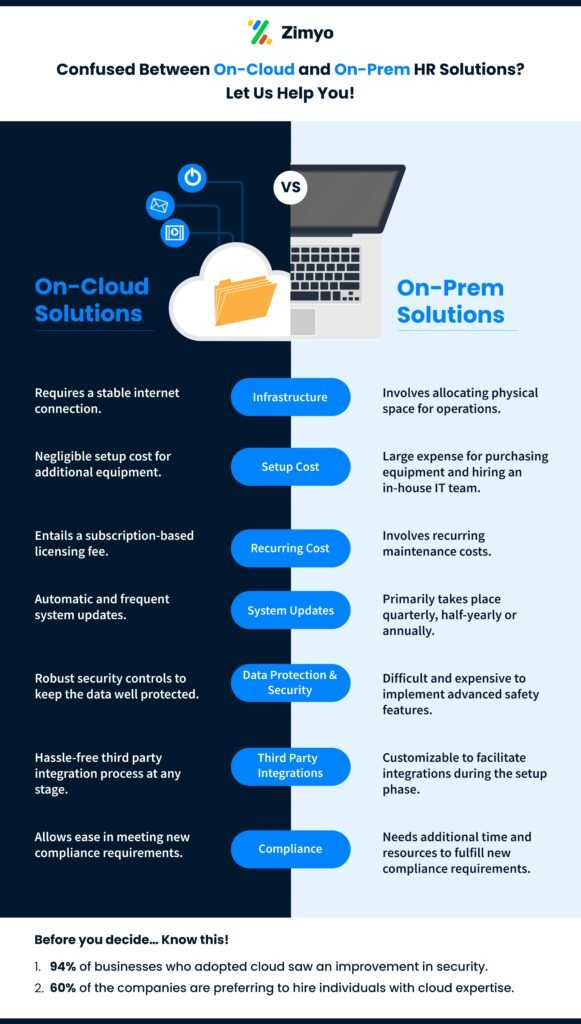
Now, let’s know about the benefits of cloud-based HRMS.
Benefits of the Best Cloud HRMS Software for Companies
The adoption of cloud tools has been steadily increasing as businesses shift toward more flexible and scalable solutions. Companies are now experiencing the real, practical benefits of the best cloud HRMS software for companies, especially in terms of saving time, reducing manual effort, and improving overall workforce efficiency. A modern cloud-based HRMS system also helps organizations streamline HR operations, enhance employee management, and boost productivity across departments.
Let’s break these down in a more practical way.
1. Hassle-free installation and maintenance
Setting up traditional HR systems usually takes time. There’s installation, configuration, and a lot of back and forth with IT teams.
With cloud based HRMS software, things are much simpler. You don’t have to install anything manually. The provider handles everything—from setup to updates.
- Why this matters:
This saves a lot of initial effort and avoids delays. For growing teams, starting quickly without technical dependency makes a big difference.
2. Accessible at any time from anywhere
One of the biggest advantages of a cloud HRMS is that it doesn’t tie you to one location.
Whether employees are working remotely, traveling, or in a hybrid setup, they can still access the system. Attendance, payroll details, and documents are all available in one place.
- Why this matters:
It keeps work moving without interruptions. This kind of flexibility is one of the key cloud HRMS benefits for businesses, especially with remote teams.
3. Reduced costs and better financial control
Traditional systems often come with hidden costs—hardware, maintenance, upgrades, and support.
With cloud payroll and HR software, companies usually pay a fixed subscription. There’s better control over expenses, and no need for large upfront investment.
- Why this matters:
It helps businesses plan budgets better and avoid unexpected spending. This is one of the practical benefits of cloud based HRMS for SMEs and startups.
4. Better data security and updates
HR data is sensitive, and security is always a concern.
Modern cloud based HR software comes with built-in protection like encrypted storage, access control, and automatic updates. You don’t have to manually upgrade systems to stay secure.
- Why this matters:
You reduce the risk of data loss or breaches without extra effort. Security stays updated in the background while HR focuses on work.
5. Customizable according to business needs
Every company has its own way of working. Some focus more on payroll, others on performance or attendance.
With flexible cloud HRMS features, companies can choose what they need and customize accordingly. Changes can be made without rebuilding the system from scratch.
- Why this matters:
It gives companies the freedom to adapt the system as they grow, instead of adjusting their processes around rigid tools.
6. Easy to scale as your team grows
Growth brings changes more employees, more data, more processes.
With HR automation software cloud, scaling is not a problem. You can upgrade plans, add features, or integrate tools without starting over.
- Why this matters:
It supports business growth without creating operational stress. This is one of the most useful HRMS cloud technology advantages in the long run.
7. Improves employee experience and engagement
HR is not just about managing data—it’s also about how employees interact with systems.
With employee self service cloud HRMS, employees can access their own information, apply for leaves, download payslips, and update details without waiting for HR.
- Why this matters:
It reduces dependency on HR and makes everyday tasks quicker. Over time, this improves employee satisfaction and overall workflow.
How Cloud HRMS Supports Modern Work Culture
Work culture today feels very different from what it used to be. Teams are not always sitting in the same office anymore—remote work, hybrid setups, and distributed teams have become quite normal.
In such a setup, traditional tools can start feeling a bit limiting. That’s where cloud HR software India solutions or a flexible cloud HRMS fit in better. They are built to support this kind of working style without making things complicated.
Teams can log in, check updates, manage tasks, or access employee data from anywhere. With the help of cloud based HRMS software and even cloud payroll and HR software, everyday work doesn’t get stuck just because someone isn’t physically present. Over time, this makes processes smoother and easier to handle, especially for companies that are growing or managing teams across different locations.
Is Cloud HRMS the Right Choice for Your Business?
Not every company feels the need to switch right away, but as teams start growing, HR work naturally becomes harder to manage with manual methods. That’s usually when businesses begin looking at cloud based HRMS software as a more practical option.
If HR tasks are starting to feel slow, scattered, or dependent on too many spreadsheets and emails, then moving to a cloud HRMS system can genuinely make things easier. Many companies exploring cloud HR software in India often notice small but important changes early on—things become a bit more organized, information is easier to find, and daily HR work doesn’t feel as messy.
Over time, using cloud payroll and HR software along with basic HR automation software cloud tools helps reduce manual effort. Instead of chasing files or updating multiple sheets, everything starts coming together in one place, which naturally reduces confusion and mistakes.
When companies usually consider switching:
- HR work starts taking more time than expected
- Attendance or payroll data keeps getting confusing
- Information is stored in too many different places
- Remote or hybrid teams become harder to track
- HR team is overloaded with repetitive tasks
Why it actually helps:
It’s not a magic switch that changes everything instantly. But once a cloud based HRMS software is in place, things slowly start to feel more manageable. Workflows become smoother, and the HR team gets more time to focus on actual people-related work instead of just managing data.
Example: A small company with around 60 employees was managing attendance and payroll through Excel sheets and long email threads. It worked fine at first, but as the team grew, mistakes started happening—late entries, mismatched salary calculations, and a lot of back-and-forth between HR and employees. After shifting to a cloud HRMS system, everything—from attendance to payroll—was handled in one platform. It didn’t fix everything overnight, but within a few weeks, the HR team felt less stressed and more in control of daily work.
Final Words
If you look at how companies are working today, moving to cloud based HRMS software feels less like a trend and more like a natural shift. Teams are bigger, work is more flexible, and honestly, handling everything manually just doesn’t hold up for long.
The benefits of HRMS on cloud technology aren’t only about saving money. It’s more about making everyday HR work easier. When you’re using a cloud HRMS, things like payroll, attendance, and employee records stay in one place. You don’t have to keep jumping between files or chasing updates—it just feels more sorted.
Flexibility is another big reason companies are leaning towards this. Work isn’t limited to one office anymore, so systems shouldn’t be either. This is where how cloud HRMS improves HR efficiency actually shows in day-to-day work—faster approvals, fewer follow-ups, and less confusion overall. Many teams also prefer cloud payroll and HR software because it quietly handles multiple tasks without adding extra steps.
Tools like Zimyo come into the picture here. Instead of overcomplicating things, it keeps HR processes in one flow—whether it’s tracking employee data or managing routine tasks. If someone wants to explore how it works in real situations, it’s worth checking out.
At the end of the day, it’s not really about switching to something new just for the sake of it. It’s more about finding a cloud based HR software that actually makes work simpler, especially when the team and workload start growing.
Frequently Asked Questions (FAQs)
What are the main benefits of cloud-based HRMS software?
Cloud-based HRMS software helps manage HR tasks in one place. It reduces manual work, improves data access, and supports remote teams. Over time, it also helps businesses save costs and improve overall efficiency.
Why do companies prefer HRMS on cloud over on-premise systems?
Most companies prefer HRMS on cloud because it doesn’t require heavy setup or maintenance. It’s easier to use, accessible from anywhere, and more flexible compared to traditional on-premise systems.
Is cloud HRMS secure for managing employee data?
Yes, modern cloud HRMS systems come with strong security features like encryption and access control. They are regularly updated, which helps keep employee data safe and protected from risks.
How does cloud-based HRMS improve HR efficiency?
A cloud based HRMS software automates routine tasks like payroll, attendance, and leave management. This reduces manual effort, speeds up processes, and allows HR teams to focus on more important work.