

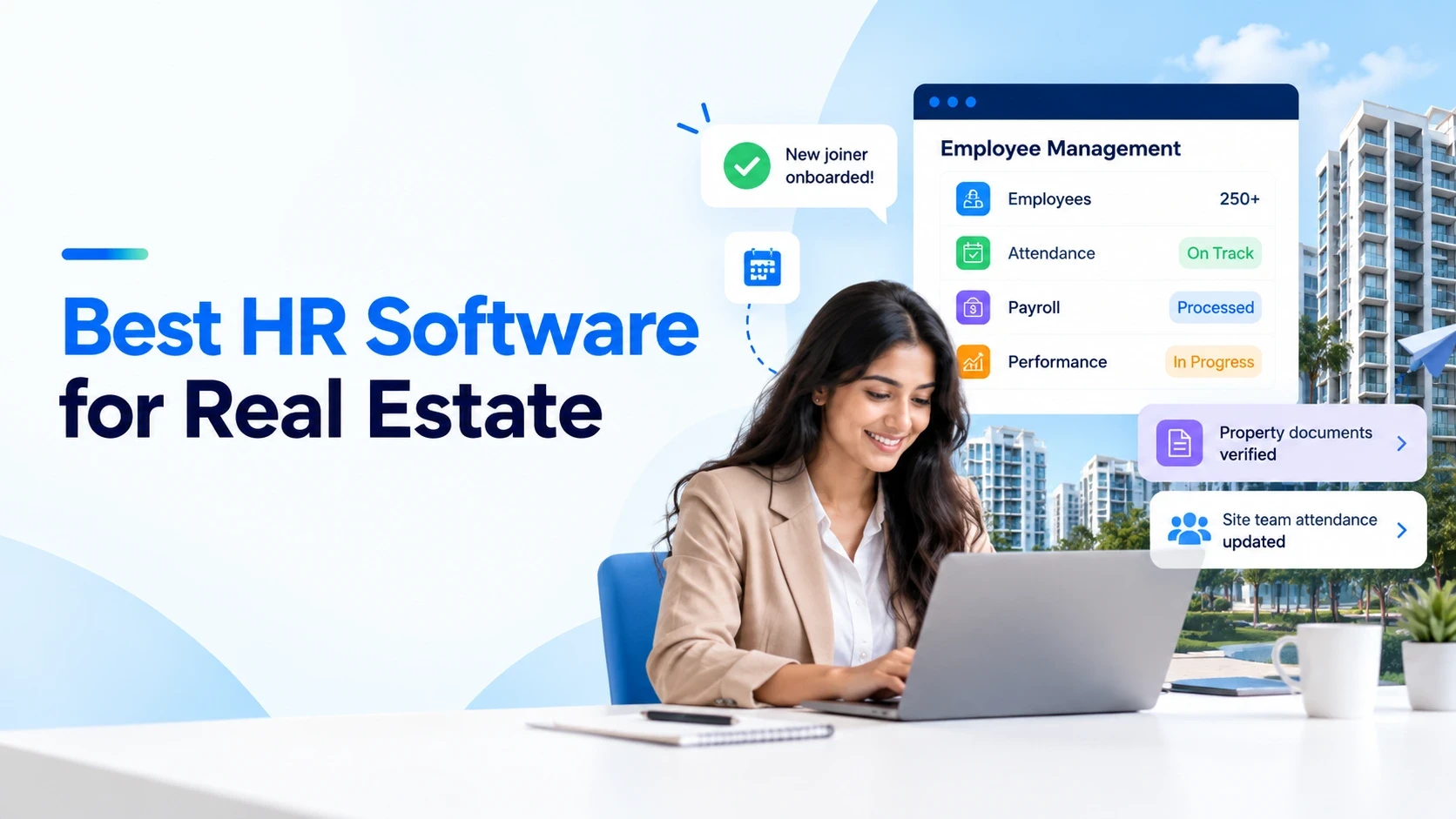
Real estate is one of the trickiest industries to run HR for. Much of your workforce is out in the field: sales teams at sites, property managers across locations, brokers on the move, so attendance isn't a simple punch-in. Pay is rarely just a salary; it's base plus commissions and incentives that change every month. Attrition runs high, hiring is constant, and teams are spread across projects and cities.
The right HR software handles all of this. It tracks field attendance by GPS, calculates commissions and incentives alongside salary, keeps you compliant with PF, ESI, PT, and TDS, and manages hiring and onboarding across every site.
This guide ranks the best HR software options for real estate companies in India in 2027, starting with our top pick. For each, you'll find key features, pros and cons, who it suits best, and pricing, so whether you're a developer, a brokerage, a property management firm, or a sales-led real estate business, you can find the right fit.
What Makes Real Estate HR Different
HR tools often fail to align with the realities of real estate firms. Challenges unique to these organizations include:
- Field and on-site employees: Salespeople and property managers work in the field, so attendance requires mobile GPS check-in, not a stationary biometric system.
- Variable pay structure: The payroll system should calculate salaries with various commission schemes and changing targets and incentives.
- Employee turnover: Constant hiring is necessary due to the high employee turnover rate.
- Project-based work: Employees are deployed across multiple projects and locations, requiring multiple tracking systems.
- Performance pressure: Sales performance metrics should be evaluated, linked to pay, and made transparent.
- Compliance issues: Professional tax, PF, ESI, and TDS laws apply to both on-site and off-site employees across all states.
The most effective HR software for real estate organizations accounts for on-the-ground salespeople, varying pay, and constant hiring.
Quick Comparison
| Software | Best Suited For | Key Features | Payroll Management | Attendance & Leave | Recruitment & Onboarding | Performance Management | Mobile Access | Starting Price |
| Zimyo | Real estate firms needing integrated HR and field attendance | HRMS, employee self-service, payroll automation, recruitment, and analytics | Yes | Yes, including attendance tracking | Yes | Yes | Yes | On request |
| Keka | Growing firms focused on performance and HR automation | Payroll, goal tracking, employee engagement, and HR workflows | Yes | Yes | Yes | Yes | Yes | From ₹9,999/month |
| greytHR | Compliance-focused real estate businesses | Payroll processing, statutory compliance, payslips, and employee records | Yes | Yes | Available; verify plan | Available; verify plan | Yes | ₹2,495/month for 50 employees |
| HROne | Mid-sized and large real estate developers | HR automation, employee self-service, payroll, and performance tools | Yes | Yes | Yes | Yes | Yes | From ₹4,950/month |
| Pocket HRMS | Smaller firms with distributed field teams | Mobile HRMS, payroll, attendance, onboarding, and employee records | Yes | Yes | Yes | Available; verify plan | Yes | ₹4,995 for up to 100 employees |
| Zoho People | Small firms and existing Zoho users | Employee database, timesheets, leave, attendance, and HR workflows | Through integration or connected products | Yes | Through integration or connected products | Yes, plan-dependent | Yes | Free tier; paid plans available |
| Qandle | Growing firms needing configurable workflows | HR automation, attendance, leave, recruitment, and analytics | Plan-dependent | Yes | Yes | Yes | Yes | From ₹49/employee/month |
| ZingHR | Large developers and enterprise groups | Workforce management, payroll, recruitment, and employee engagement | Yes; confirm configuration | Yes | Yes | Yes | Yes | On request |
| Darwinbox | Large, multi-location real estate groups | Core HR, talent acquisition, workforce analytics, and employee lifecycle management | Confirm modules and configuration | Yes; confirm configuration | Yes | Yes | Yes | On request |
| SumHR | Small firms, brokerages, and property startups | Employee records, payroll, leave, attendance, and onboarding | Yes; confirm plan | Yes | Confirm availability | Confirm availability | Confirm availability | Contact vendor |
Pricing is indicative and subject to change; confirm current figures with each vendor.
Top HR software for Real Estate in India
1. Zimyo
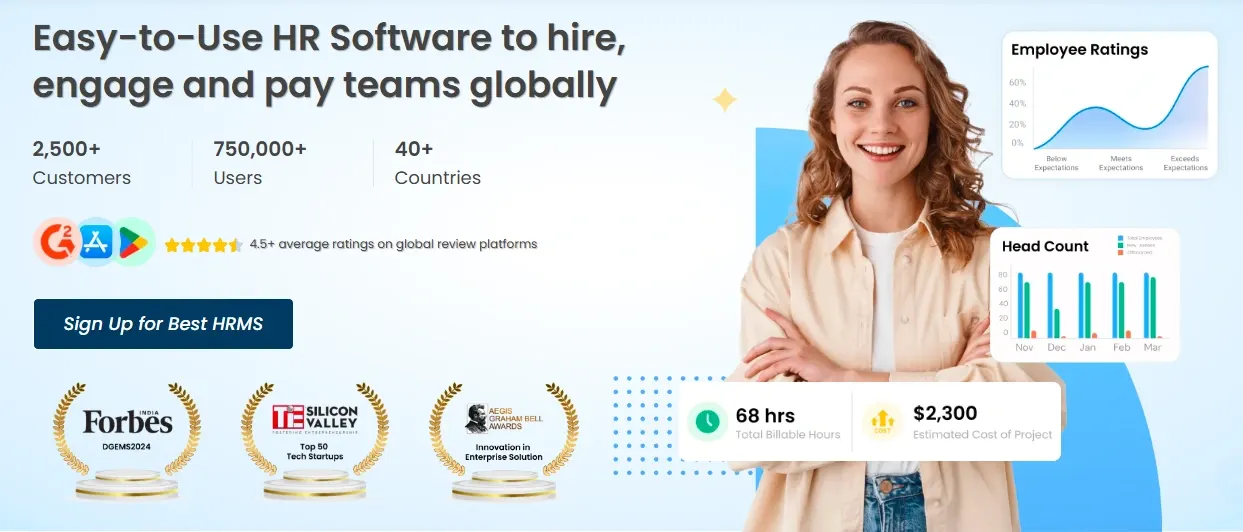
Zimyo is our top pick for real estate companies that want one platform to run a field-heavy, commission-driven, fast-churning workforce. Trusted by 2,500+ organisations across 40+ countries, it brings Core HR, attendance, payroll, recruitment and engagement together in 60+ integrated modules.
For real estate, the fit is strong. Zimyo offers GPS and mobile attendance for field sales and site teams, flows commissions and incentives into payroll alongside base salary, and automates PF, ESI, PT and TDS. Its recruitment and onboarding tools handle the constant sales hiring, and a mobile-first self-service app keeps field staff connected from anywhere.
What sets Zimyo apart in 2027 is Zim, its agentic AI. Beyond automating calculations, Zim prepares the pay run and flags anomalies before approval, screens applicants for high-volume sales hiring, and answers workforce questions instantly, with people firmly in control.
Key features
- GPS and mobile attendance for field and on-site staff
- Commission and incentive handling built into payroll
- Automated statutory compliance (PF, ESI, PT, TDS)
- Recruitment and onboarding for high-volume sales hiring
- Agentic AI (Zim) for payroll audits and shortlisting
Pros & Cons
| Pros | Cons |
| All-in-one HR, payroll and hiring | Full value needs the wider platform |
| Built for field teams and variable pay | Pricing is quotation-based |
| Strong compliance; VAPT, ISO, AICPA SOC certified | Smaller brand than some global names |
| AI-powered payroll and shortlisting | Newer AI features still maturing |
Best suited for: Real estate developers, brokerages, property management and sales-led firms wanting HR, payroll and field attendance on one platform.
Pricing: INR 80/user/month , by team size and modules.
2. Keka
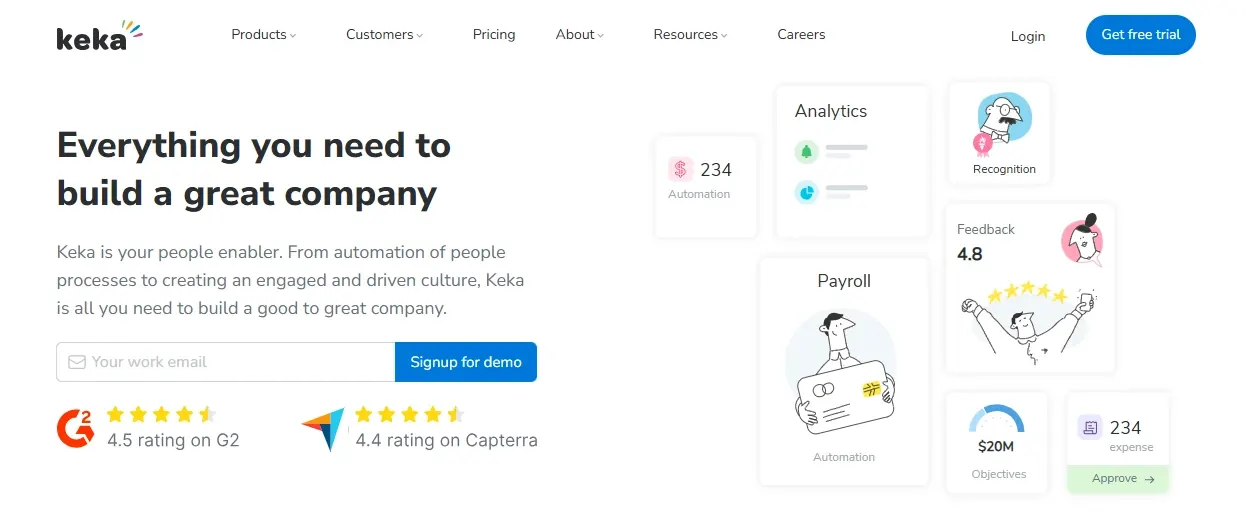
A modern HRMS with a clean interface that covers payroll, attendance, and performance. Its usability and performance tools suit real estate head-office and sales teams.
Key features
- Payroll with statutory compliance
- Attendance and leave management
- Performance and goal tracking
- Strong employee self-service
Pros & Cons
| Pros | Cons |
| Easy to use and quick to adopt | Field/GPS attendance lighter than specialists |
| Strong performance management | Higher entry price |
| Full HR and payroll suite | Not real-estate-specific |
| Good reporting | Advanced features need higher tiers |
Best suited for: Growing real estate firms that value performance tools and UX.
Pricing: From ~₹9,999/mo.
3. greytHR
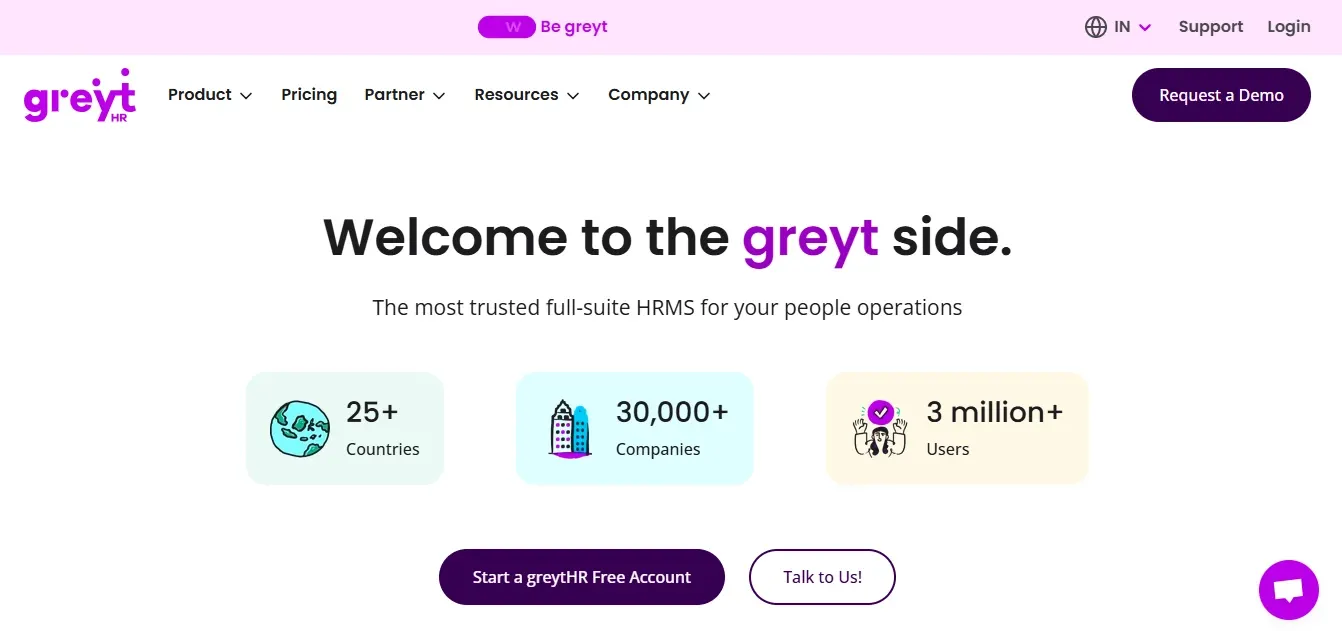
A well-established Indian payroll and HR platform, strong on compliance and reliable at scale. A dependable choice for real estate firms focused on payroll accuracy.
Key features
- Automated payroll and statutory compliance
- Leave and attendance tracking.
- Employee self-service portal
- Reliable 24/7 support
Pros & Cons
| Pros | Cons |
| Strong payroll and compliance | Fewer field-sales-specific tools |
| Large India base | Commission handling needs setup |
| Dependable support | Advanced HR needs add-ons |
| Good SMB value | Interface more HR than sales-led |
Best suited for: Real estate businesses that prioritize payroll and compliance.
Pricing: From ~₹2,495/mo for 50 employees.
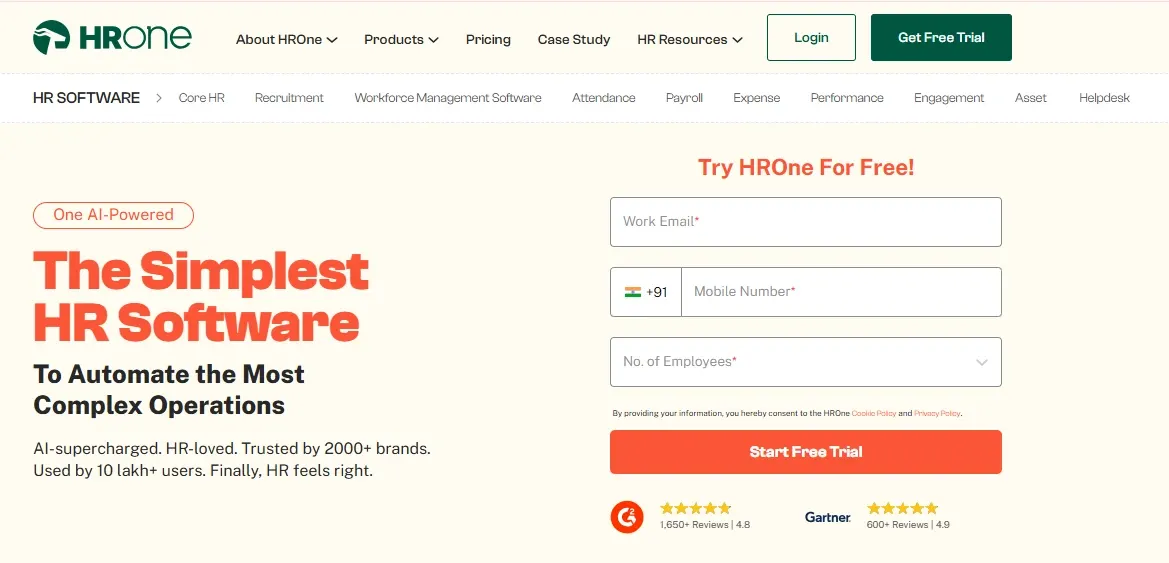
4. HROne
A full HCM suite with strong automation and a mobile-first design, built for mid-to-large, distributed workforces like real estate chains.
Key features
- Full HCM with payroll and compliance
- Attendance and shift management
- Mobile-first design
- Lifecycle automation
Pros & Cons
| Pros | Cons |
| Built for large, distributed teams | More than small firms need |
| Strong automation | Setup effort for full rollout |
| Mobile-first, good for field staff | Premium features in higher tiers |
| Scales across locations | Pricing rises with headcount |
Best suited for: Mid-to-large real estate developers and firms.
Pricing: From ~₹4,950/mo.
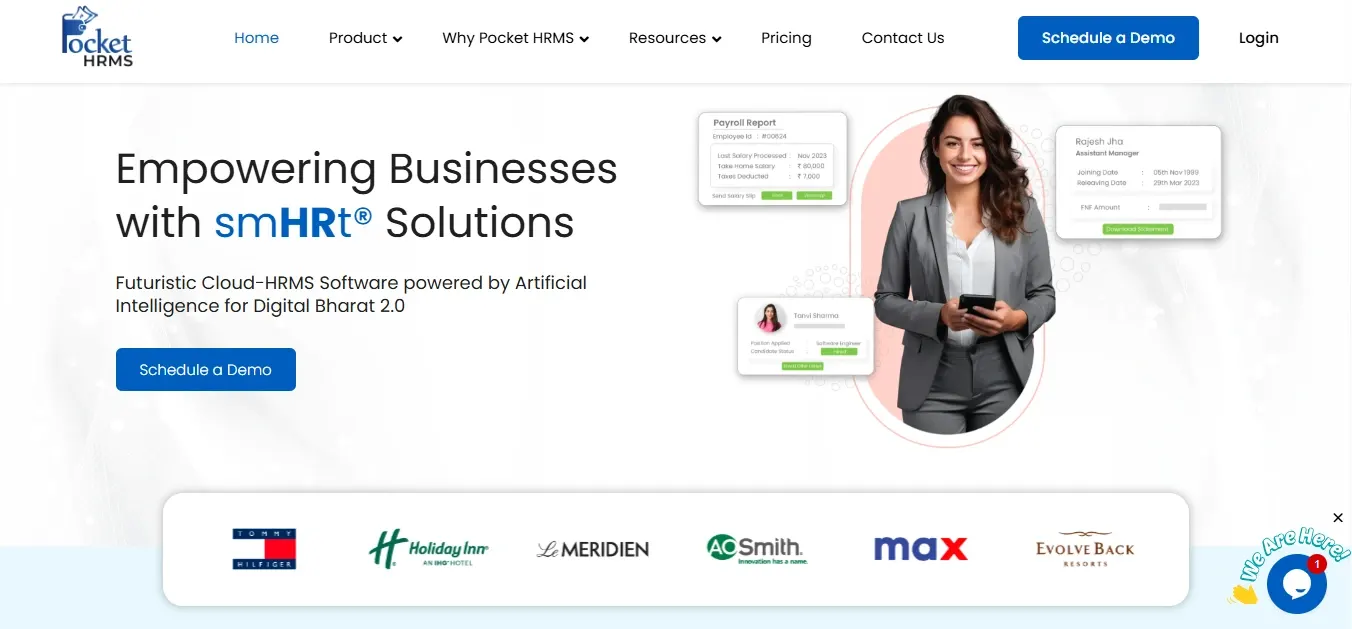
5. Pocket HRMS
A mobile-first HRMS focused on simplicity, handy for field sales and site staff who need payslips and attendance on the go.
Key features
- Mobile-first attendance and payslips
- Payroll processing
- Employee self-service
- Quick, simple setup
Pros & Cons
| Pros | Cons |
| Handy for deskless field staff | Lighter on advanced payroll |
| Simple and quick | Less suited to large enterprises |
| Mobile-first | Fewer integrations |
| Affordable | Commission handling is basic |
Best suited for: Smaller real estate firms with field teams.
Pricing: From ~₹4,995 for up to 100 employees.
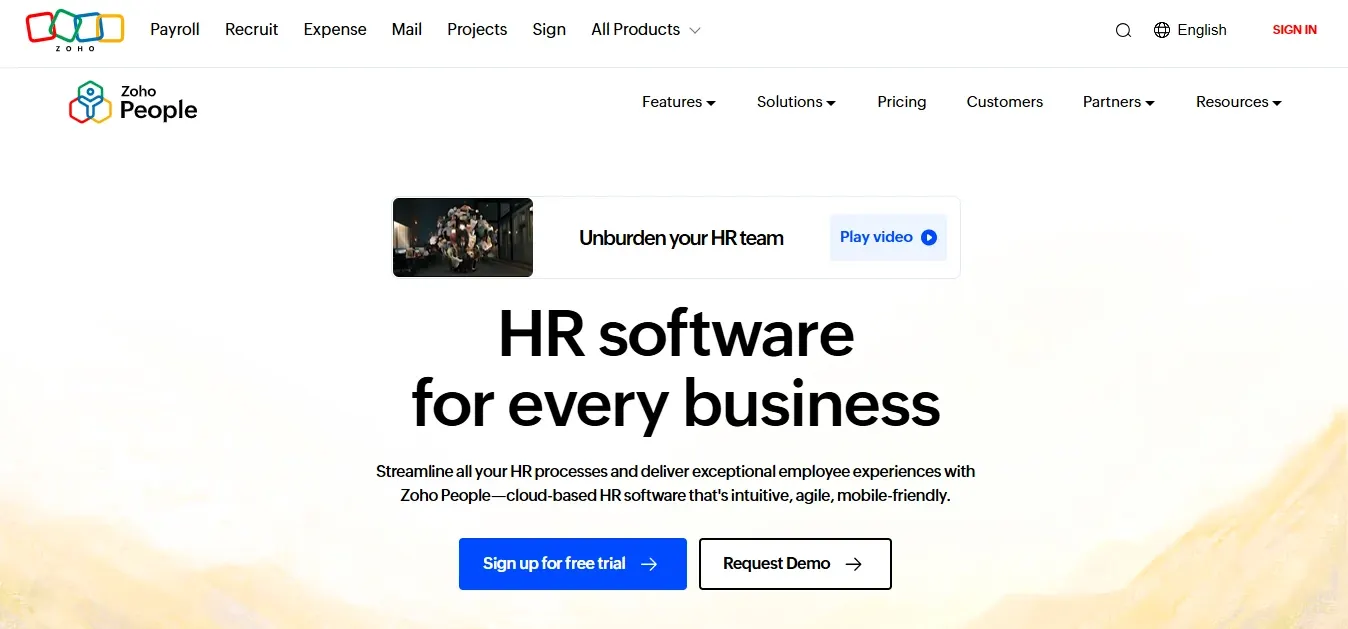
6. Zoho People
Part of the Zoho suite, with attendance, leave, and a free tier—a fit for smaller real estate businesses already using Zoho, especially alongside Zoho CRM.
Key features
- Attendance and leave management
- Self-service and mobile app
- Workflow automation
- Fits the Zoho ecosystem (with Zoho CRM)
Pros & Cons
| Pros | Cons |
| Free tier to start | Best value within Zoho |
| Affordable as you scale | Payroll is a separate product |
| Pairs with Zoho CRM for sales | Not real-estate-specific |
| Easy to set up | Deeper needs need more apps |
Best suited for: Small real estate firms and Zoho users.
Pricing: Free tier; paid per employee.
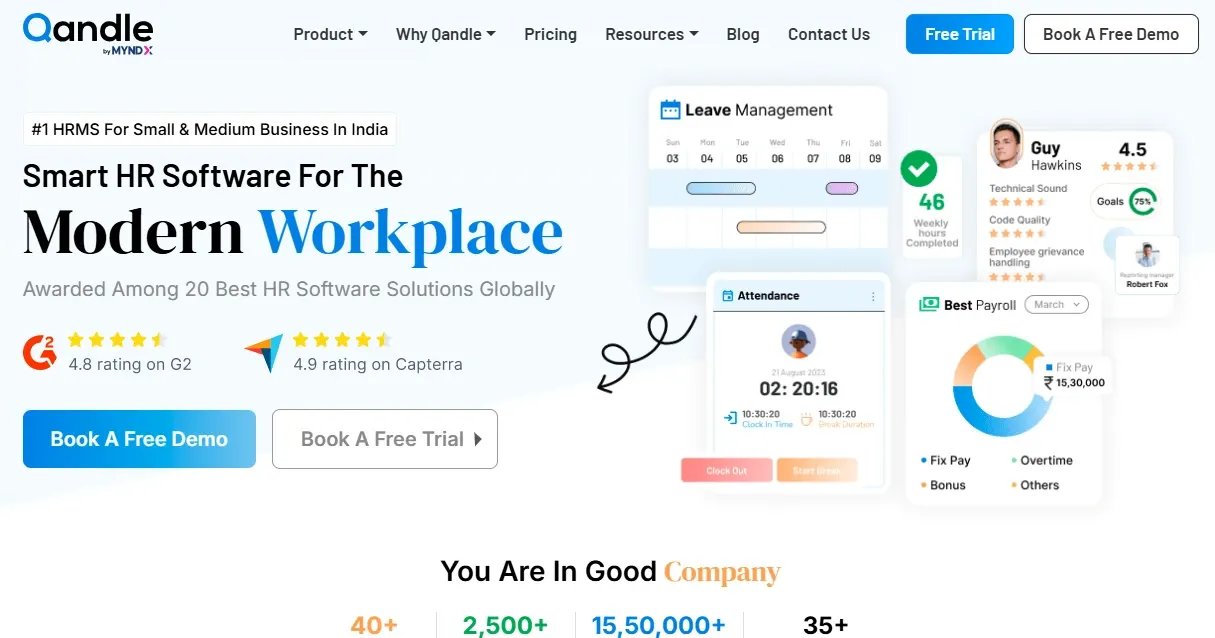
7. Qandle
A modular, configurable HRMS that lets firms pick the features they need, with payroll, attendance, and engagement tools.
Key features
- Modular, configurable modules
- Attendance and leave management
- Payroll and compliance
- Engagement and self-service
Pros & Cons
| Pros | Cons |
| Flexible, pay for what you use | Configuration takes setup |
| Good value per employee | Smaller brand presence |
| Modern interface | Fewer field-sales tools |
| Scales with growth | Advanced features in higher tiers |
Best suited for: Growing real estate firms wanting flexibility.
Pricing: From ~₹49/employee/mo.
8. ZingHR
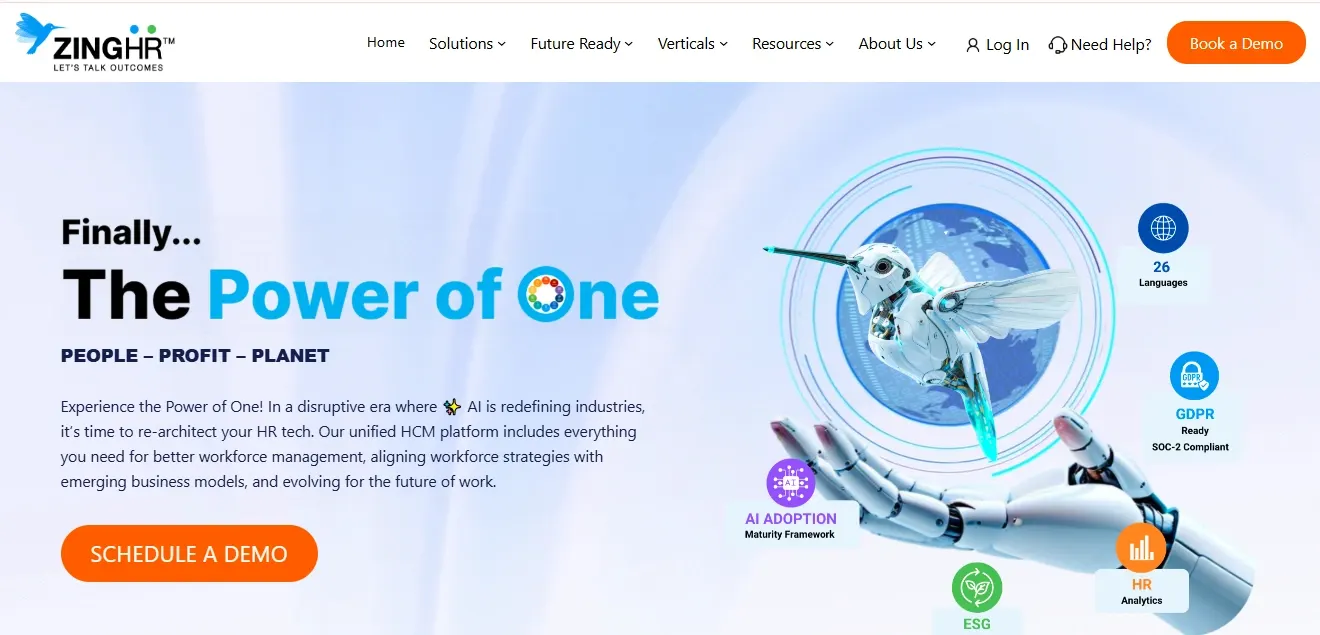
An enterprise HR and payroll platform used across large, workforce-heavy sectors, built to streamline payroll and attendance at scale.
Key features
- Enterprise payroll and attendance
- Recruitment and onboarding
- Mobile access for field staff
- Analytics and compliance tools
Pros & Cons
| Pros | Cons |
| Enterprise-grade scale | Heavier than small firms need |
| Proven in large workforces | Setup effort |
| Strong payroll automation | Pricing on request |
| Mobile support | Interface less modern than some |
Best suited for: Large real estate developers and enterprises.
Pricing: On request.
9. Darwinbox
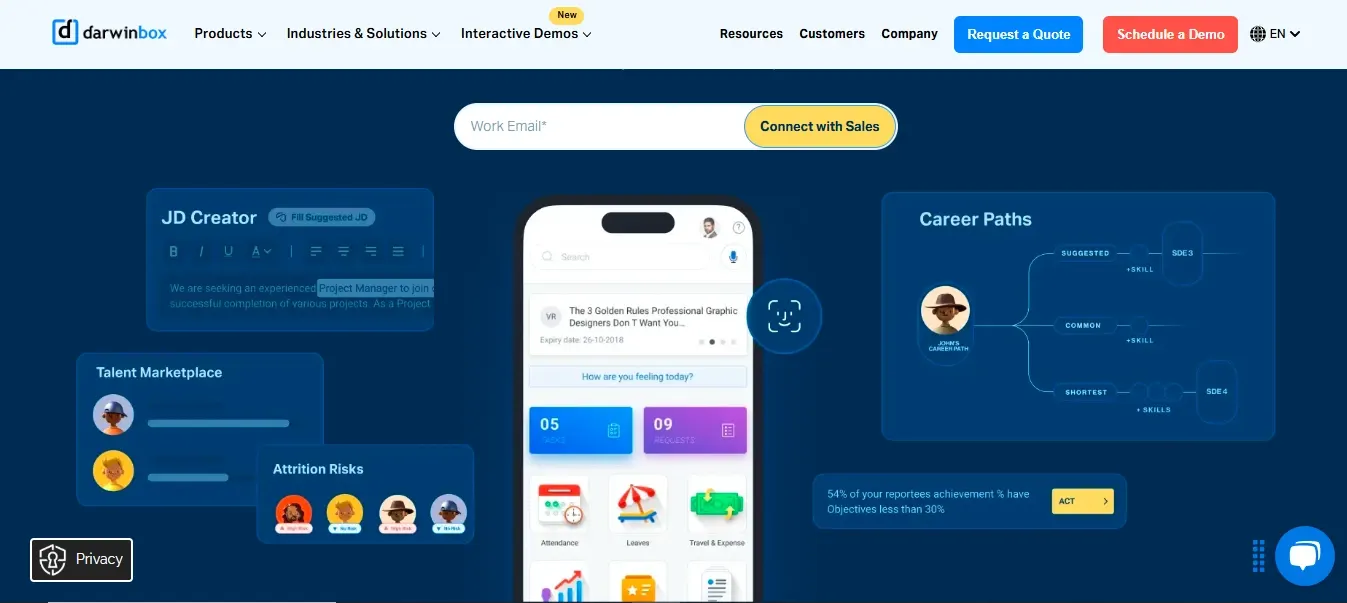
An enterprise-grade HCM used by large Indian and Asian enterprises, with deep features and a strong mobile experience for big, distributed workforces.
Key features
- End-to-end enterprise HCM
- Strong mobile experience
- Advanced recruitment and payroll
- Analytics and automation
Pros & Cons
| Pros | Cons |
| Built for large enterprises | Overkill for small firms |
| Powerful mobile app | Higher cost |
| Deep feature set | Longer implementation |
| Trusted by big brands | Pricing on request |
Best suited for: Large real estate groups and enterprises.
Pricing: On request.
10. SumHR
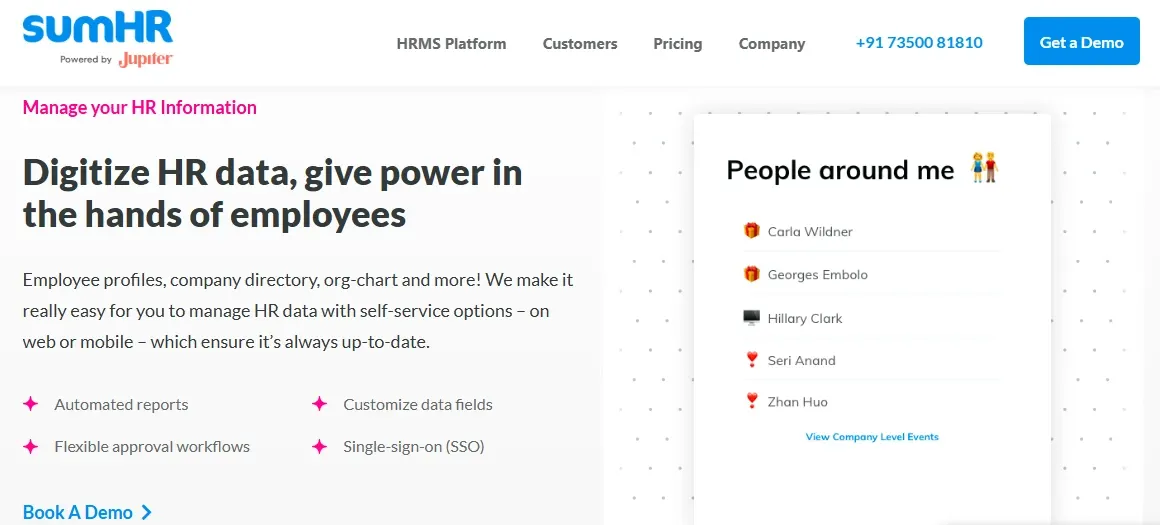
A simple, affordable Indian HRMS covering payroll, attendance, and self-service, a fit for smaller real estate businesses.
Key features
- Payroll processing
- Attendance and leave management
- Employee self-service
- Simple dashboards
Pros & Cons
| Pros | Cons |
| Affordable and simple | Lighter feature set |
| Easy to adopt | Less suited to large firms |
| India-focused | Smaller brand |
| Good for SMBs | Fewer field-sales tools |
Best suited for: Small real estate firms, brokerages, and startups.
Pricing: Affordable per-employee plans.
What to Look For
When choosing HR software for a real estate company, prioritize these:
- GPS and mobile attendance: Geo-tagged, app-based check-in for field sales and on-site staff.
- Commission and incentive management: Payroll that handles variable pay, targets, and incentives alongside base salary.
- Statutory compliance: Automatic PF, ESI, PT, TDS, and Form 16, kept current across states.
- Recruitment and onboarding: Tools to hire and onboard sales staff quickly and at volume.
- Performance tracking: Clear measurement of sales performance, tied to goals and pay.
- Multi-location support: Track attendance, payroll, and records across projects and cities.
- Mobile self-service: An app that lets field staff view payslips, apply for leave, and mark attendance on the go.
Implementing HR Software: What to Expect
Deploying HR software in a real estate company is best done in phases, especially when dealing with field forces and commission-based compensation.
- Discovery & planning: Identify your roles (sales, site, property management, corporate), their location, commission and incentive structure, and approval process before any configuration work.
- Data Migration: Migrate employee database, salary and commission structure, and attendance records to the HR software while de-duplicating.
- Configuration: Configure your company’s GPS attendance rules, leave rules, commission and incentive rules, and pay structure for each role type along with multi-location access.
- Integration: Integrate your CRM or Salesforce, job boards, and most importantly your Payroll and Onboarding system.
- Pilot: Pilot with one team or region, run a payroll and attendance cycle, and address deficiencies before rolling out to more regions.
- Training: Train HR and management teams and the field force with a quick guide on using the mobile app for attendance, leave, and payslips.
- Go live and support: Go live in phases with vendor support available during the first payroll and commission cycle.
Small real estate brokers can go live in 1 to 2 weeks. Large developers with multi-location offices that incorporate commissions, payroll, and onboarding can go live faster when payroll and attendance are combined, since the modules already connect.
HR Software Pricing Guide for Real Estate
HR software pricing in India follows a few common models, and knowing them helps you budget, especially with a mix of on-roll and field sales staff.
| Pricing model | How it works | Best for |
| Per employee (PEPM) | Charged per employee per month | Most real estate firms |
| Tiered plans | Fixed monthly tiers by feature set | SMBs wanting predictability |
| Quotation-based | Custom quote by size and modules | Large developers and enterprises |
| Free tier / freemium | Limited free plan, paid upgrades | Small brokerages and startups |
What drives the cost:
- Headcount: More employees mean higher costs, so consider additional staffing during peak periods.
- Modules and AI: Modules such as commission management, GPS attendance tracking, performance modules, and AI are usually part of more advanced tiers.
- Number of locations: Projects and multi-location organizations might require more advanced packages.
- Integration: Integrating a CRM or sales tool for commission management may add costs.
Typical range of pricing tiers: Free tiers (Zoho People); around ₹49 to ₹100 per employee per month for mid-market vendors; fixed-tier pricing ranging between ₹2,495 to ₹9,999 per month; and quotation-based pricing for enterprise solutions and all-in-one vendors, such as Zimyo. A recommendation for the real estate industry: Make sure GPS attendance tracking and commission management are part of your selected package and don't require a higher tier. Always check the latest pricing with vendors as it changes.
Conclusion
It is about its people - especially the sales team – and managing them, given the complexities in field operations, commissions, and the continual need to recruit new hires, is possibly the toughest HR challenge in the industry. Proper software solves this challenge by ensuring field personnel are tracked effectively, commissions are paid accurately, and TR teams spend less time on paperwork and more time growing the business.
All the platforms presented below can be effective, depending upon the company’s size and workforce composition. However, for most real estate businesses, an all-inclusive platform covering field attendance, commission payroll, recruitment, and performance makes more sense, and that is why Zimyo tops the list of platforms recommended here for real estate firms.
Want to see it in action? Book a demo and see how it can simplify HR across your sites, sales teams, and projects.
Frequently Asked Questions
What is the best HRMS for real estate organizations in India?
Zimyo is one of the best options for many real estate organizations in India because it offers an HR, payroll, GPS-based attendance, and recruitment system for field sales forces and commission-based salaries. Other good options include Keka, greytHR, HROne, and Pocket HRMS, which you may want to check.
Why do real estate firms need HRMS?
The real estate industry has a larger field workforce, commission-oriented roles, and higher turnover. HRMS is extremely useful for tracking field staff attendance via GPS, calculating commissions and incentives, and managing the hiring process.
How can real estate firms track field staff attendance?
By mobile and GPS-based attendance. Apps like Zimyo let the field sales and property management teams mark attendance on their smartphones using geo-tagging. So even when nobody is at work, attendance tracking is not a problem.
Can HR software track payroll for a real estate sales team?
Yes. The best real estate HR software manages base salary, commission, and incentives in one payroll system, and it also automates PF, ESI, PT, and TDS.
How can HR software make payroll processing easier for real estate?
By feeding attendance and commission data directly into the payroll system, along with automated deductions and error checks before submission, it eliminates the manual reconciliation that is so time-consuming in real estate payroll.