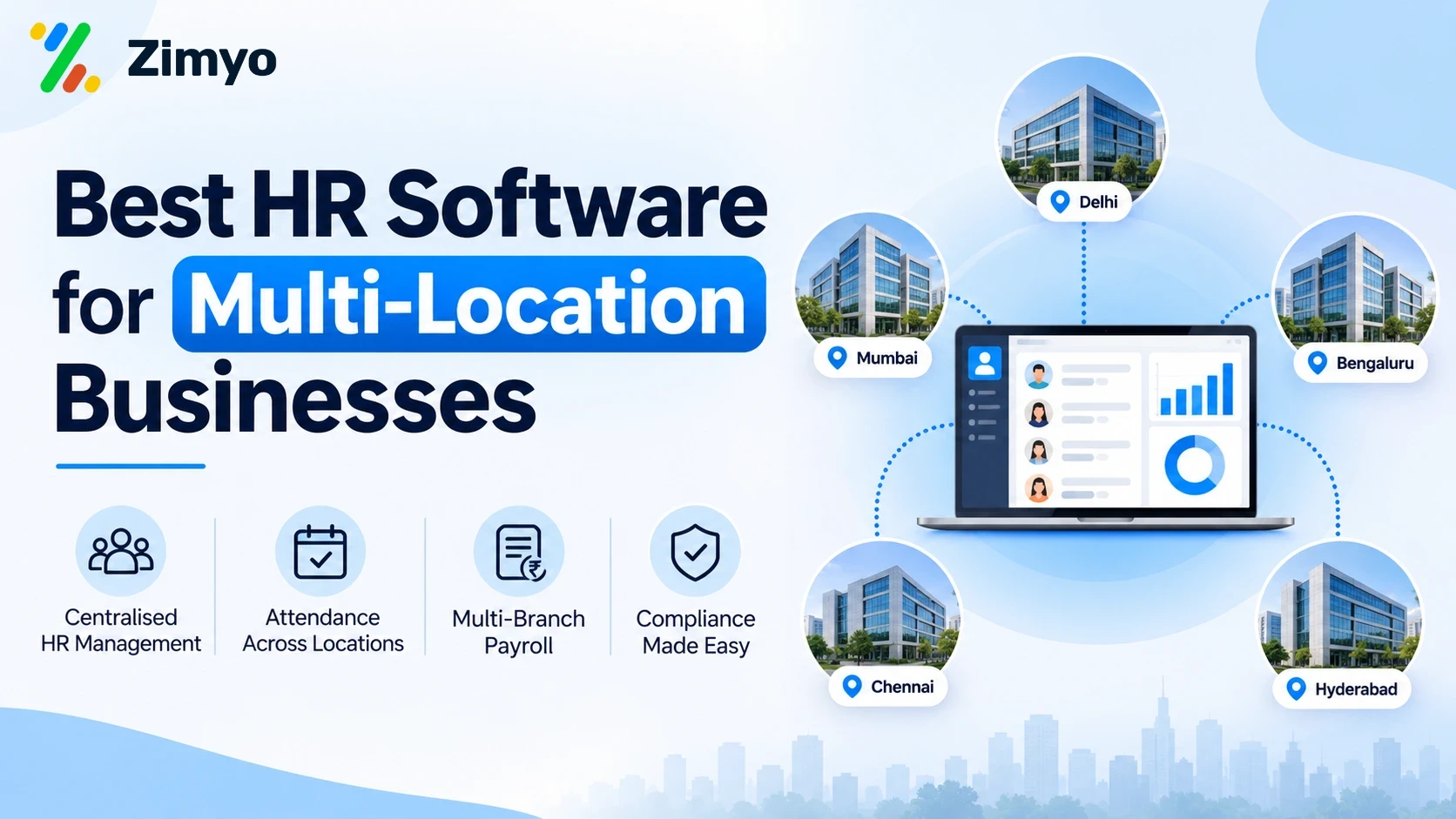
Multi-location HR management is different from single-office HR management. Different branches can have different schedules, holidays, and compliance requirements; attendance may be taken physically at each location; and leaders need one consolidated view across all locations without losing branch details. Spreadsheets and other disjointed solutions can't handle the task.
The right HR software consolidates everything in one system: one solution for managing all your branches with location-specific policies, geolocation-based attendance tracking, branch-wise reports, and payroll in one system that scales with you.
This article presents the top HR software solutions for multi-location businesses. We've listed the best options, starting with the best one. For each HR software solution, we provide key features, pros & cons, ideal users, and pricing.
Top Picks
- Zimyo - Best Overall Multi-location HR and Payroll solution
- Darwinbox – Best for Large and Distributed Organizations
- Keka - Best for Growing Companies expanding to multiple locations
- greytHR – Best for multi-entity payroll & Compliance
- Zoho People - Best for Customizable multi-location HR
- Deel - Best for International Multi-country Teams
- HROne – Best for Mid-Large Distributed Organizations
- Pocket HRMS - Best For On-Site Attendance Tracking in Branches
- ZingHR - Best for Large and Workforce-Intensive Multi-Location Operations
- Qandle - Best configurable Multi-location Solution for growing organizations
What Makes Multi-Location HR Different
Managers of branches, cities, or even countries will require a solution that has the following complexities, which are never present in single-office software:
- Local compliance: Each branch will have different shift timings, holiday schedules, and leave policies.
- Distributed, on-site attendance: Attendance needs to be tracked using biometrics, geofencing, or mobile attendance at all sites.
- Payroll for multiple entities: Each entity and state will have different payroll processes and compliance requirements.
- Central visibility: Leaders require a single dashboard for all locations and the ability to drill down to any branch.
- Role-based access: Branch manager gets to see his branch while headquarters gets to see all – hence the software should have very fine-grained access control.
- Scalability: The system should scale easily and add new branches, entities, and even countries without any disruption.
Best multi-location HR solutions have the above two characteristics – centralized and decentralized - simultaneously.
What to Look For Best HR Software
While selecting HR software for a multi-location business, make sure it has these capabilities:
- Location and Entity controls: Role-based access control, location-specific shift and holiday policy, and entity-wise reporting.
- Integration of Attendance and Payroll: Biometric- or geofencing-based attendance or shift attendance integrated with payroll and compliance.
- Single Dashboard: Single dashboard with drill-down capability at each location level.
- Multi-entity and Multi-state compliance: Proper handling of PF, ESI, PT, and TDS for each entity and state level.
- Scalability: Workflows and pricing structures that scale with the number of locations and entities.
- Mobile Access: Mobile Apps for marking attendance and self-service facility.
- Analytics: Reporting at the branch and organization levels.
Quick Comparison: Best HR Software Solution for Multi-Location Businesses
| Software | Best for | Multi-location capabilities | Key features to consider | Starting price |
| Zimyo | All-round multi-location HR and payroll management | Centralised employee data, branch-wise HR operations and workforce management | Payroll, attendance, leave, recruitment, performance, employee self-service and compliance management | On request (INR) |
| Darwinbox | Large enterprises with distributed workforces | Supports complex organisational structures, multiple business units and geographically distributed teams | Core HR, workforce management, talent management, analytics and employee experience | On request |
| Keka | Growing businesses expanding across locations | Helps manage employee records, attendance and payroll across multiple branches | Payroll automation, attendance tracking, leave management, performance and employee engagement | From ₹9,999/mo |
| greytHR | Businesses managing multi-entity payroll and compliance | Supports payroll administration and employee records across different business entities | Payroll processing, statutory compliance, attendance, leave and employee self-service | ₹2,495/mo (50 employees) |
| Zoho People | Businesses looking for flexible and customisable HR management | Configurable HR workflows, employee records and attendance policies for different locations | HR automation, time tracking, leave management, performance and integrations | Free tier; paid plans per employee |
| Deel | Companies managing international and multi-country teams | Supports workforce administration across countries, including global employment arrangements | Global payroll, contractor management, onboarding, compliance and employee management | On request |
| HROne | Mid-to-large businesses with distributed teams | Helps centralise HR processes and manage employee information across locations | Core HR, payroll, attendance, recruitment, performance and employee self-service | From ₹4,950/mo |
| Pocket HRMS | Businesses with mobile and on-site teams across branches | Supports location-based attendance and employee management through mobile access | Mobile attendance, payroll, leave management, employee self-service and HR automation | ₹4,995 (up to 100 employees) |
| ZingHR | Large, workforce-heavy organisations operating across multiple sites | Designed to support large workforces and distributed business operations | Core HR, payroll, workforce management, attendance, talent management and analytics | On request |
| Qandle | Growing companies needing configurable HR workflows | Helps organise employee information and HR processes across different branches | Core HR, payroll, attendance, leave, recruitment, performance and workflow automation | From ₹49/employee/mo |
Note: Pricing is indicative and subject to change. Actual costs may vary based on employee count, modules, implementation requirements, and contract terms. Confirm current pricing and multi-location capabilities directly with each vendor.
Top 10 HR Software for Multi-Location Businesses
1. Zimyo
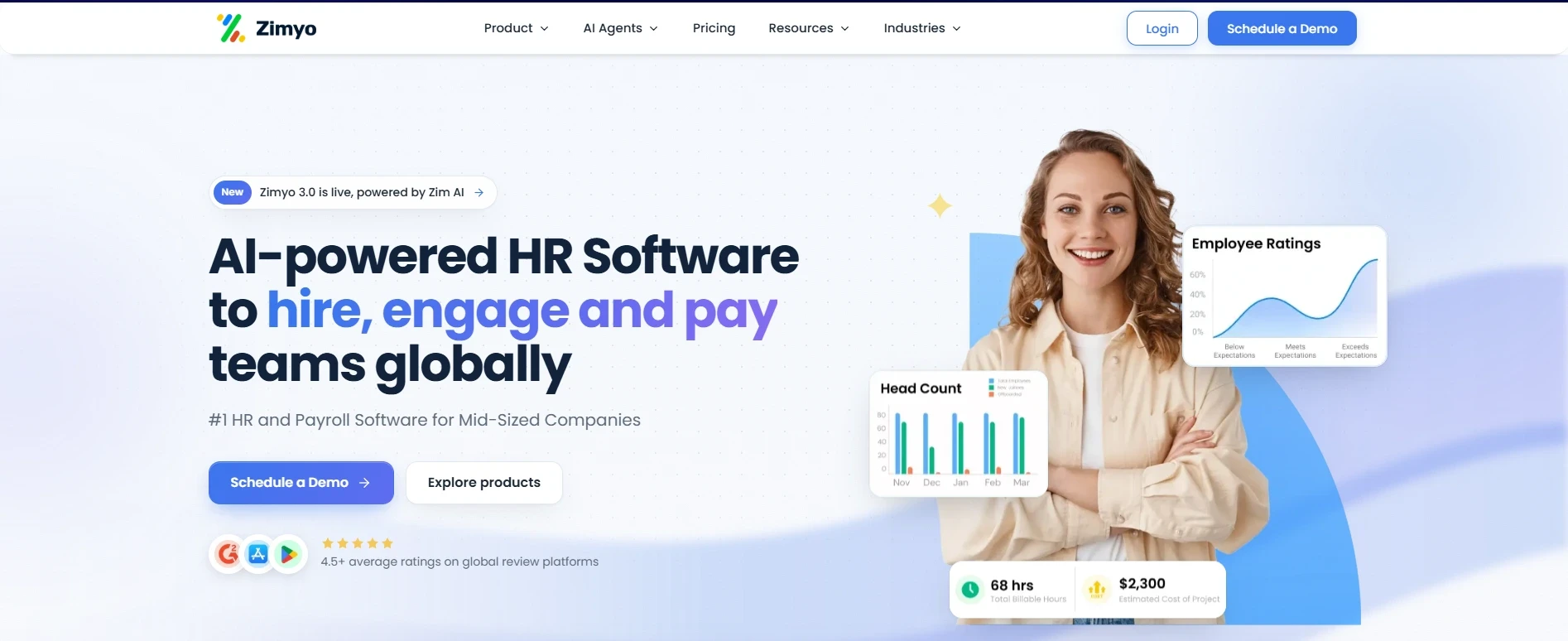
Zimyo is our top pick for businesses running HR across many branches, cities, or entities from one platform. Trusted by 2,500+ organizations across 40+ countries, it brings Core HR, payroll, attendance, recruitment, and engagement together, with the location and entity controls multi-site teams need.
Zimyo offers geofenced and biometric attendance across every location, location-specific shift and holiday rules, and centralized, multi-entity payroll with automated PF, ESI, PT, and TDS by state. Leaders get one dashboard across all branches with drill-down into each, while role-based access keeps branch managers to their location. A mobile-first self-service app keeps distributed staff connected.
Zimyo adds Zim, its agentic AI, which prepares payroll across entities, flags anomalies before approval, and answers staff queries, with people in control, valuable when HR spans many sites.
Key features
- Geofenced and biometric attendance across locations
- Location-specific shift, holiday and leave rules
- Centralized, multi-entity payroll and compliance
- One dashboard with branch-wise drill-down and role-based access
- Agentic AI (Zim) and mobile self-service
Pros & Cons
| Pros | Cons |
| Central control with local flexibility | Full value needs the wider platform |
| Multi-entity payroll and compliance | Pricing is quotation-based |
| Geofenced attendance across branches | Smaller brand than some global names |
| Scales across sites and entities | Newer AI features still maturing |
Best suited for: Growing and established businesses running HR, payroll, and attendance across multiple branches or entities.
Pricing: INR 80/user/month, based on team size and modules.
2. Darwinbox
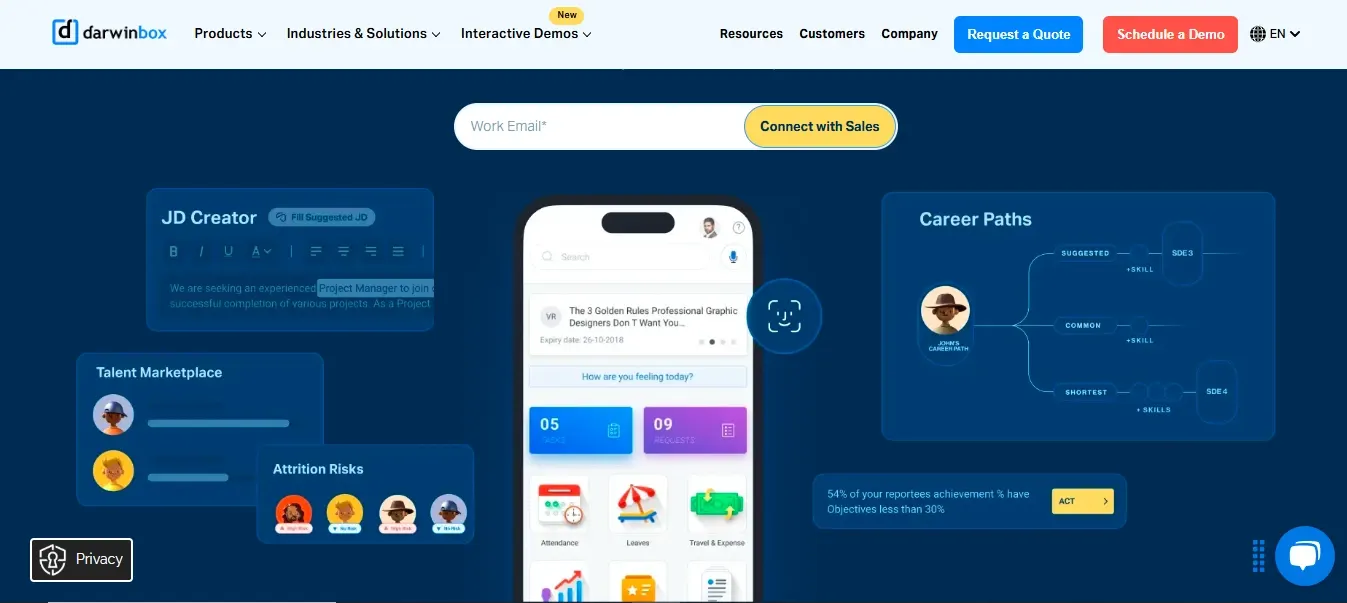
An enterprise HCM built for large, distributed workforces (often 1,000+ employees), with mobile-first workflows, core HR, and talent management across locations and regions.
Key features
- Enterprise HR across locations
- Mobile-first workflows
- Talent management
- People analytics
Pros & Cons
| Pros | Cons |
| Built for large, distributed teams | Overkill for smaller firms |
| Strong mobile and analytics | Longer, complex implementation |
| Handles complex structures | Higher cost |
| Global and regional reach | Pricing on request |
Best suited for: Large enterprises with distributed, multi-region workforces.
Pricing: On request
3. Keka
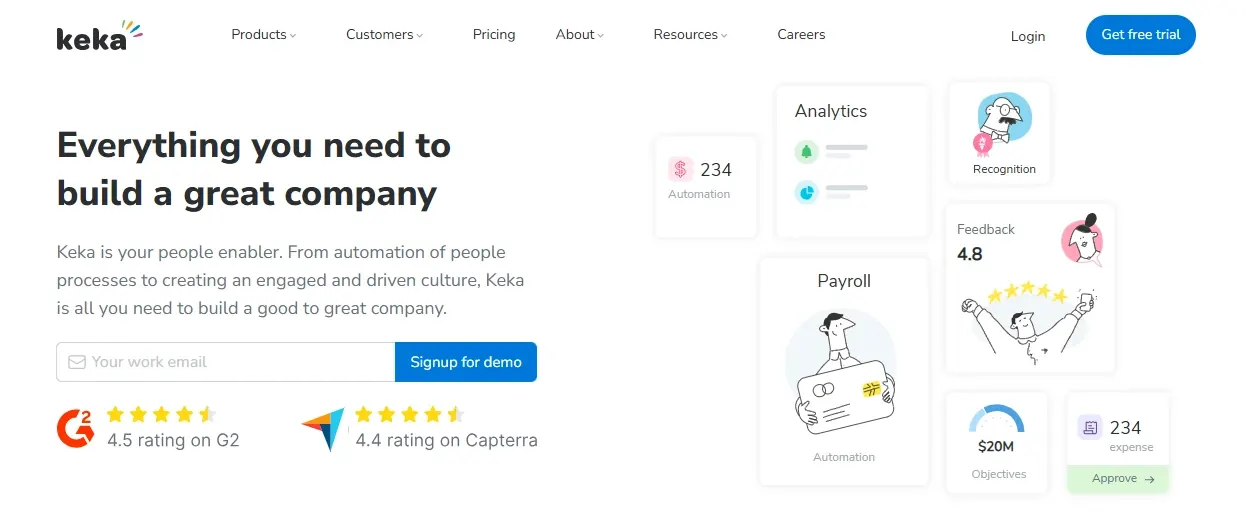
A modern HR and payroll platform popular with growing organizations and startups scaling across locations, combining HR and payroll in a clean interface.
Key features
- Payroll and HR across locations
- Attendance and leave
- Performance management
- Modern, clean interface
Pros & Cons
| Pros | Cons |
| Easy to use and adopt | Higher entry price |
| Good for scaling teams | Enterprise-scale needs may outgrow it |
| HR and payroll in one | Advanced features in higher tiers |
| Strong reporting | — |
Best suited for: Growing businesses and startups scaling across locations.
Pricing: From ~₹9,999/mo.
4. greytHR
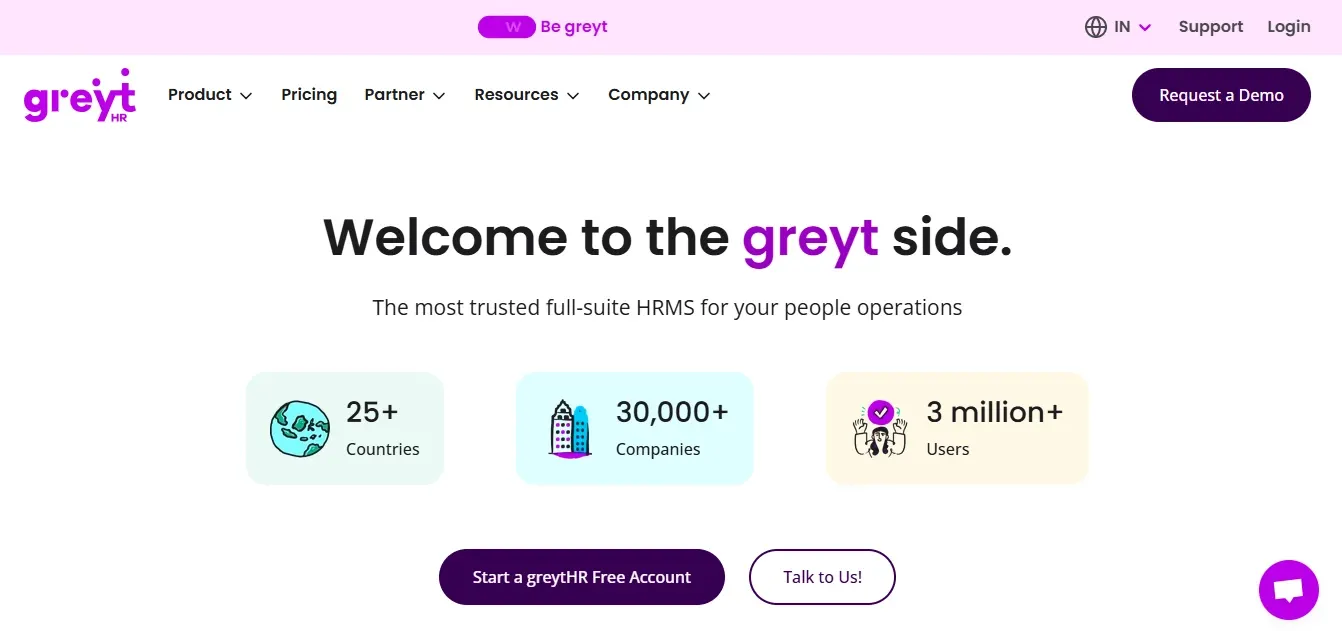
A well-established Indian platform widely used by multi-location and multi-entity teams for payroll automation and local statutory compliance.
Key features
- Multi-entity payroll
- Statutory compliance
- Leave and attendance
- Employee self-service
Pros & Cons
| Pros | Cons |
| Strong multi-entity payroll | Fewer advanced HR modules |
| Reliable compliance | Traditional interface |
| Large India base | Engagement tools lighter |
| Good value | Geofencing less deep than specialists |
Best suited for: Multi-location, multi-entity teams focused on payroll and compliance.
Pricing: From ~₹2,495/mo for 50 employees.
5. Zoho People
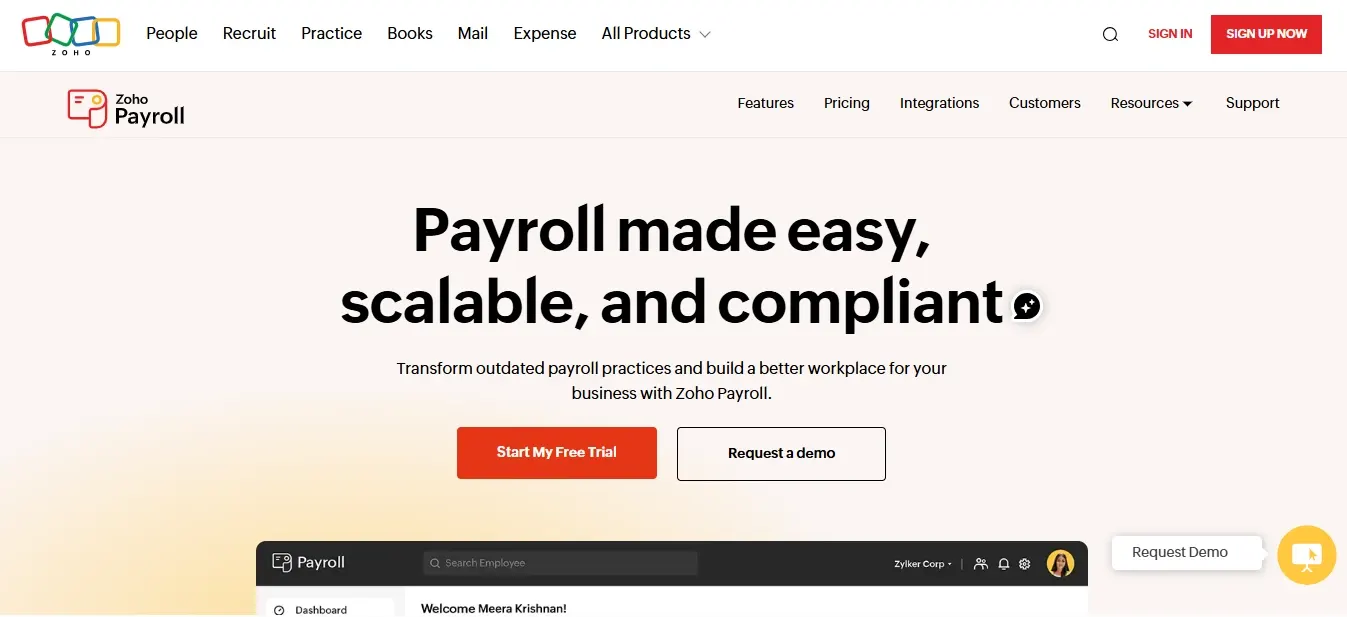
Part of the Zoho suite, flexible for growing teams (roughly 20–1,000 employees) that want customization and integration across broader business apps, across locations.
Key features
- Customisable workflows
- Attendance and leave
- Broad app integrations
- Employee self-service
Pros & Cons
| Pros | Cons |
| Highly customisable | Payroll is a separate product |
| Affordable, free tier | Best value within Zoho |
| Good integrations | Not multi-location-specific |
| Scales with growth | Deeper needs need more apps |
Best suited for: Growing teams wanting flexible, customizable multi-location HR.
Pricing: Free tier; paid per employee.
6. Deel
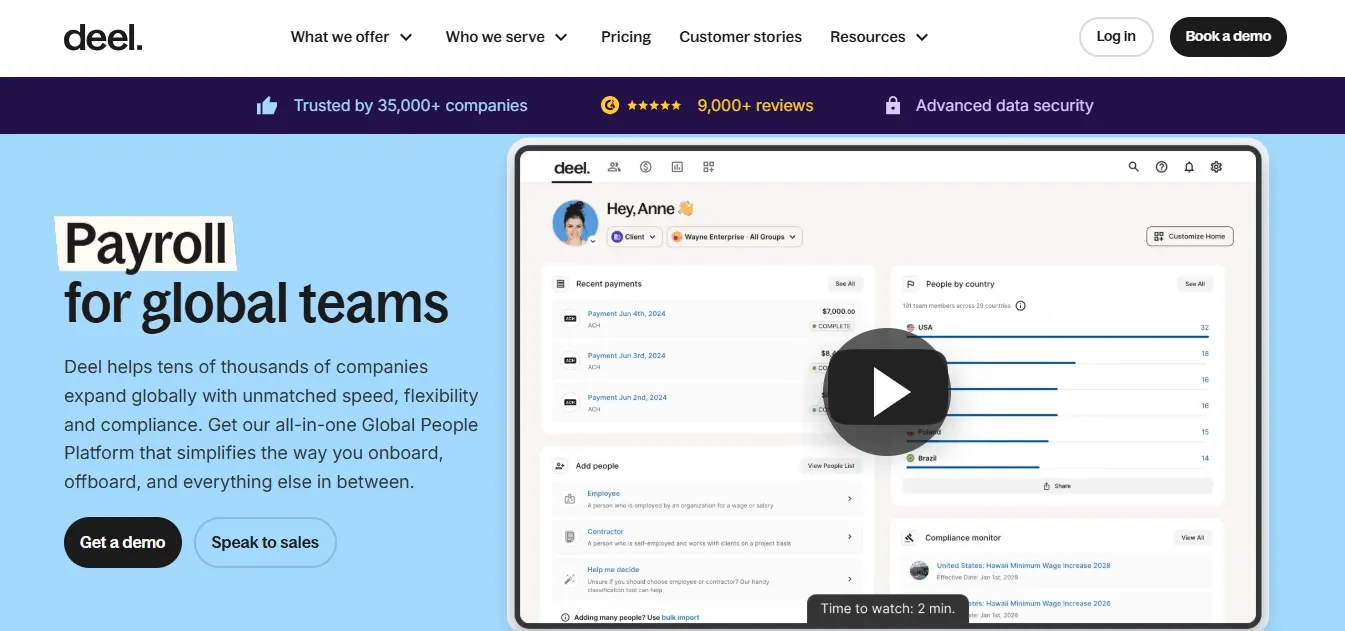
A global HR and payroll platform best suited to international and multi-country teams, managing global payroll, contractors, and Employer of Record (EOR) compliance.
Key features
- Global payroll
- Contractor management
- Employer of Record (EOR) compliance
- Multi-country support
Pros & Cons
| Pros | Cons |
| Excellent for global/multi-country | Overkill for single-country firms |
| Handles contractors and EOR | Less India-SMB-focused |
| Strong compliance across countries | Pricing scales with scope |
| Fast global hiring | Not an India-first HRMS |
Best suited for: International businesses with multi-country teams.
Pricing: On request.
7. HROne
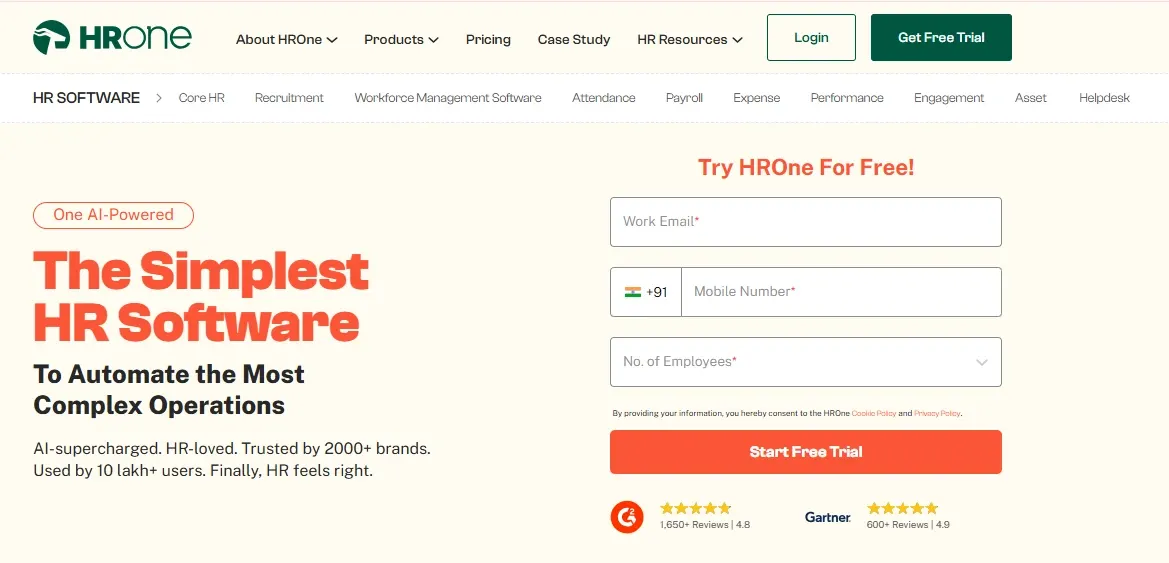
A full HCM useful for mid-to-large teams (50–2,000+ employees), focused on automating routine HR tasks and employee engagement across distributed locations.
Key features
- Payroll and compliance
- Attendance and leave
- Lifecycle automation
- Mobile-first design
Pros & Cons
| Pros | Cons |
| Built for mid-to-large teams | More than small firms need |
| Strong automation | Setup effort for full rollout |
| Mobile-first | Premium features in higher tiers |
| Scales across locations | Pricing rises with headcount |
Best suited for: Mid-to-large, distributed teams.
Pricing: From ~₹4,950/mo.
8. Pocket HRMS
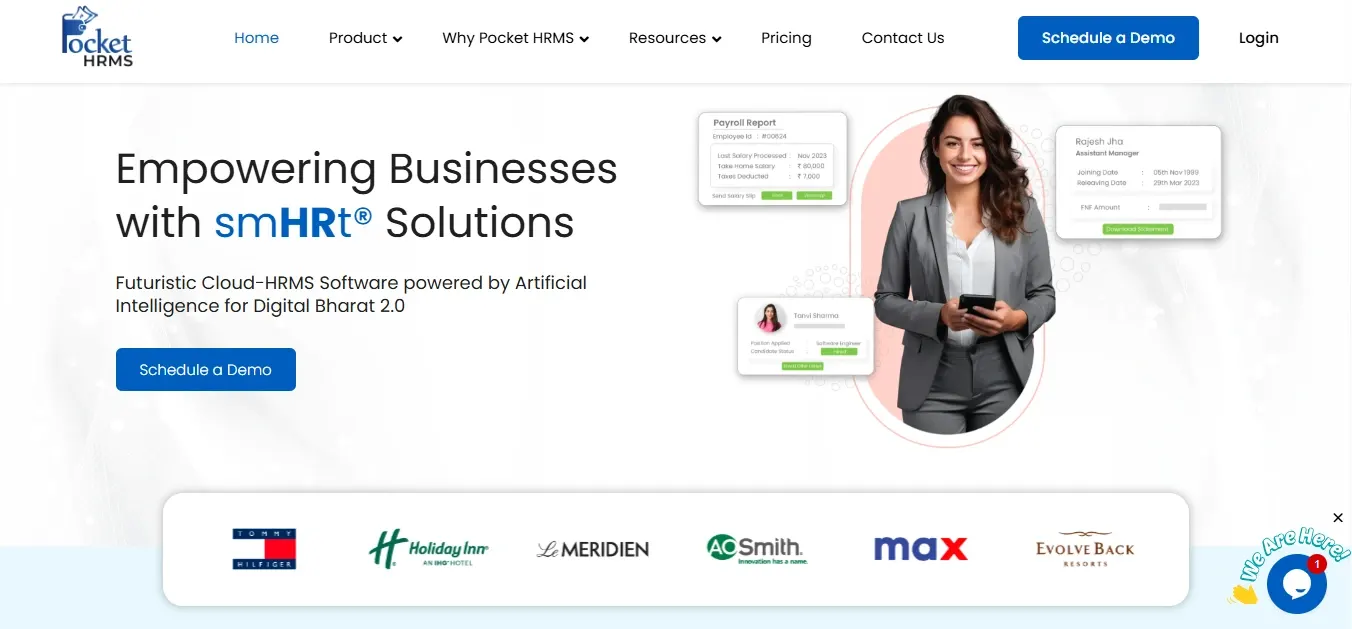
A mobile-first HRMS strong on attendance and self-service, handy for managing on-site staff across multiple branches.
Key features
- Mobile and geo-tagged attendance
- Payroll processing
- Employee self-service
- Quick, simple setup
Pros & Cons
| Pros | Cons |
| Strong mobile attendance | Lighter on advanced HR |
| Simple and quick | Less suited to large enterprises |
| Good for on-site staff | Fewer integrations |
| Affordable | Multi-entity depth varies |
Best suited for: Businesses wanting mobile, on-site attendance across branches.
Pricing: From ~₹4,995 for up to 100 employees.
9. ZingHR
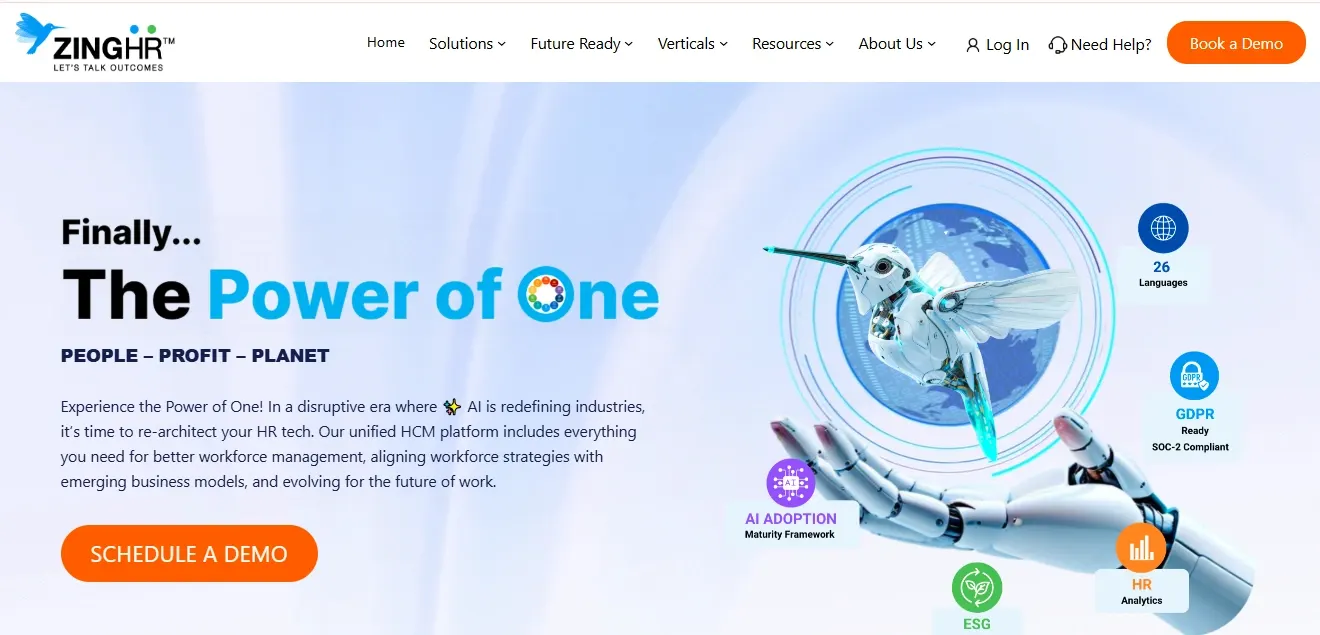
An enterprise HR and payroll platform built for large, workforce-heavy, multi-site operations, including blue-collar and contract staff.
Key features
- Enterprise payroll and attendance
- Multi-site workforce support
- Recruitment and onboarding
- Analytics and compliance
Pros & Cons
| Pros | Cons |
| Handles large, multi-site workforces | Heavier than small firms need |
| Strong blue-collar support | Setup effort |
| Enterprise-grade scale | Pricing on request |
| Mobile access | Interface less modern than some |
Best suited for: Large, workforce-heavy multi-site operations.
Pricing: On request.
10. Qandle
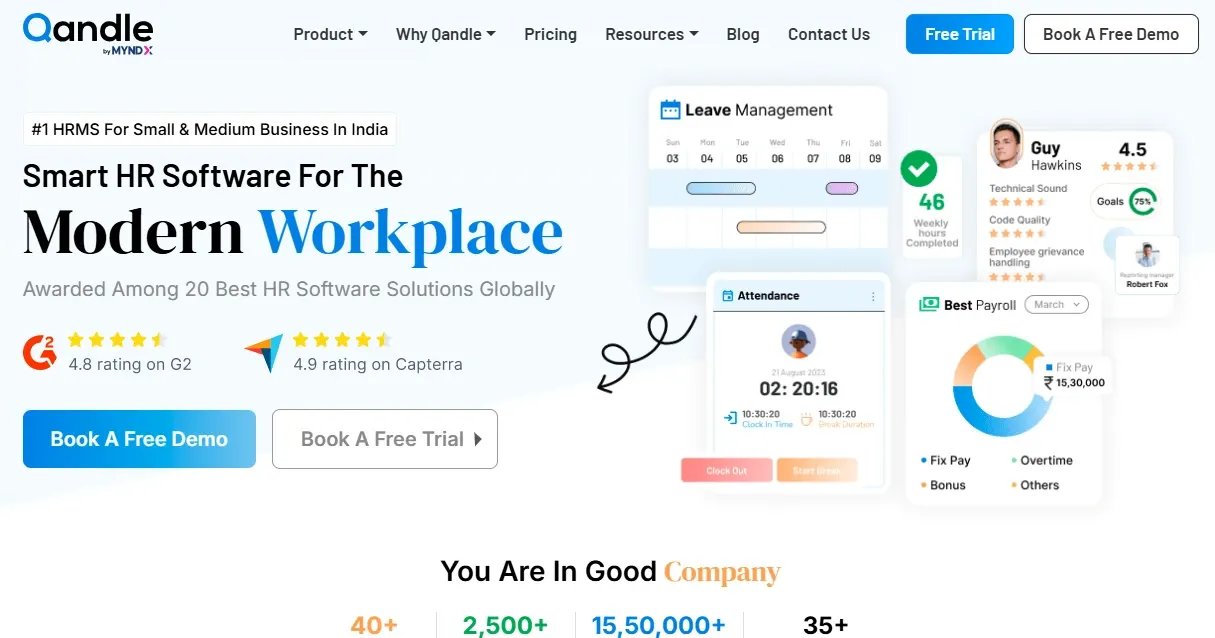
A modular, configurable HRMS that lets multi-location firms pick and pay for the features they need, scaling as they add branches.
Key features
- Configurable, modular design
- Attendance and leave
- Payroll and compliance
- Engagement and self-service
Pros & Cons
| Pros | Cons |
| Flexible, pay for what you use | Configuration takes setup |
| Good value per employee | Smaller brand presence |
| Modern interface | Fewer multi-site-specific tools |
| Scales with growth | Advanced features in higher tiers |
Best suited for: Growing multi-location firms wanting a configurable platform.
Pricing: From ~₹49/employee/mo.
Multi-Location HR Software Implementation: Expectations
Deploying an HR software solution across multiple locations should happen in well-defined stages, enabling organized implementation in each location separately, rather than everything at once.
• Discovery and structure: Identify the structure of your locations/legal entities and the shift schedules, holiday and leave policies applicable to each of the locations, before configuring anything.
• Central configuration: Configure the base platform, organization structure, roles, and the central dashboard, and apply location-specific configurations on top of that.
• Data migration: Import the data, including employees' information, salary structure, and leave balances for all the locations, deduplicating the data along the way.
• Attendance configuration: Configure biometric/geofence/mobile attendance for each of the locations and integrate it with payroll.
• Access and permissions: Grant access and permissions for branch managers to the respective location, while access from headquarters is available to see all of the locations together.
• Pilot at one location: Do a complete cycle of attendance-to-payroll for one location, resolve gaps, and then repeat.
• Phased rollout: Go live one location/entity after another, but not everything together.
• Training and support: Train HR and branch managers, and provide on-site personnel.
Single location deployment is achievable within one or two weeks. Multi-location and multi-entity deployment would take four to eight weeks, depending on the size and scope of operation. With a platform such as Zimyo, where attendance, payroll, and location compliance are all integrated in one, deployment time is minimized because the components already interact.
Conclusion
Multi-location HR management can be achieved if centralization and decentralization exist side by side - one dashboard for all branches, but with appropriate shift policies for each and proper attendance and compliance in each of them. Doing so through spreadsheets or different apps isn't manageable as you grow and open more locations.
Any of these platforms may suit your needs, depending on the number of locations and organizations, and whether you operate globally. For multi-location companies in India, one platform that unifies geofencing attendance, multi-organization payroll, and branch-wise reporting works best; Zimyo stands out on this list.
Want to see it across your branches? Book a demo and see how it handles your locations and entities.
Frequently Asked Questions
Which HR software is good for multi-location businesses in India?
Zimyo is a great option for most Indian multi-location businesses since it brings together geofencing-based attendance, location-based policies, multi-entity payroll, and branch-wise reports onto a single platform. Darwinbox, Keka, greytHR, and HROne are also options, depending on your size and geographical spread.
How does multi-location HR software manage attendance at branches?
Using biometric, geofencing-based, or mobile attendance, employees punch in at each location (even from an on-site location), and the time is fed directly into the central payroll.
Can you have multi-entity payroll done through a single platform?
Yes, multi-entity HR software, like Zimyo, can handle payroll for different legal entities and different states as well.
Can HR software handle international, multiple countries’ teams?
Software such as Zimyo is designed specifically to handle international payroll and contractors. In contrast, software that focuses on India is designed to serve multi-location and multi-entity needs in India.
Can you get a centralized view with multi-location HR software?
Good software should provide a single dashboard for all locations, with drill-down by location and role-based access.