

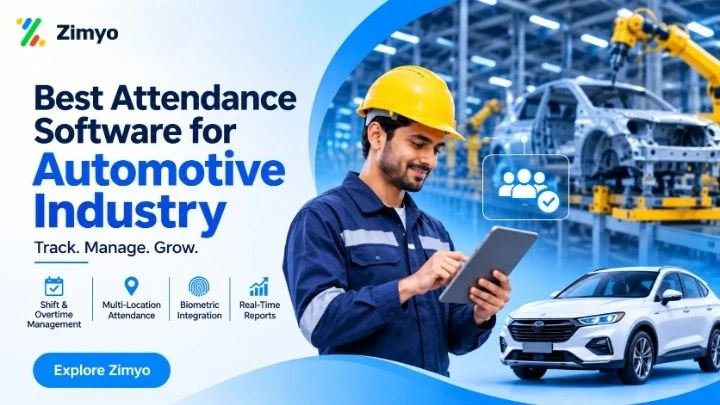
The automotive industry thrives on timing. In factories, from assembly line workers and machine operators to warehouse employees and technicians, and in dealerships, the availability of the right people at the right time is essential.
However, monitoring attendance in a factory environment with multiple shifts and contract workers, and in dealerships spread out across locations, can be challenging. Using registers and spreadsheets can lead to missed punches, inaccurate overtime calculations, incorrect shift timings, and payroll issues.
This is where good attendance software for the automotive industry really comes in handy. It helps businesses track work hours, manage shifts, monitor employees' whereabouts, and keep attendance data up to date for payroll.
In the following article, we will be looking at seven attendance and HRMS solutions for the automotive industry in India.
Key Features to Look for in Automotive Attendance Software
Before choosing an attendance management system, automotive businesses should consider how their workforce operates. A tool that works well for a corporate office may not suit a factory with rotating shifts and contract labor.
| Feature | Why it matters |
| Biometric device integration | Records employee punches through compatible fingerprint, face or other attendance devices. |
| GPS and geo-fencing | Helps track employees working at dealerships, service centres and field locations. |
| Shift scheduling | Supports morning, evening, night and rotating shifts. |
| Overtime calculation | Helps record extra working hours based on company policies. |
| Contractor attendance management | Maintains attendance records for temporary and contract workers. |
| Multi-location attendance | Gives HR teams a consolidated view of different plants and branches. |
| Leave management | Connects attendance records with employee leave balances. |
| Payroll integration | Helps transfer attendance data for salary calculations. |
| Real-time attendance reports | Helps managers identify absences, late arrivals and attendance gaps. |
| Workforce analytics | Helps HR and operations teams understand attendance patterns and workforce availability. |
Quick Comparison: 6 Best Attendance Software for the Automotive Industry
| Software | Best for | Key attendance features | Ideal business size |
| 1. Zimyo | Automotive plants, dealerships and multi-location teams | Biometric, RFID and geo-fencing attendance, shift management, overtime tracking, contract labour attendance | Small to large businesses |
| 2. greytHR | Automotive SMEs managing payroll and attendance | Biometric integration, employee attendance, leave and shift management | Small to mid-sized businesses |
| 3. Keka | Growing automotive companies | Mobile attendance, biometric integration, shift scheduling, leave and overtime tracking | Small to mid-sized businesses |
| 4. HROne | Multi-location automotive businesses | Mobile attendance, biometric punch sync, attendance policies and workforce reports | Mid-sized businesses |
| 5. ZingHR | Large manufacturing and automotive enterprises | Biometric attendance, shift management, employee records and workforce reporting | Mid-sized to large businesses |
| . Pocket HRMS | Dealerships and smaller automotive businesses | Mobile attendance, GPS tracking, biometric options and employee self-service | Small to mid-sized businesses |
Features and availability can vary by subscription plan, device compatibility, and implementation. Confirm the latest details with each provider before purchasing.
Top 6 Attendance management software for Automotive Industry
1. Zimyo
Best for automotive manufacturers, dealerships and multi-location workforces
Automotive businesses often manage different employee groups under one roof. A manufacturing plant may have production workers, quality inspectors, supervisors, maintenance staff, and contract labor working in different shifts. Dealerships, meanwhile, need to track sales teams, service technicians and employees working across branches.
Zimyo brings attendance, workforce management and HR operations together in one platform. It helps automotive businesses record employee attendance through biometric systems, RFID, and geo-fencing across plants, warehouses, and other work locations.
Its attendance management capabilities help businesses manage different shift patterns, monitor workforce availability, and maintain accurate working-hour records.
Key features:
- Biometric, RFID, and geo-fencing attendance tracking.
- Shift, night-shift and double-shift management.
- Overtime and weekly-off calculations.
- Attendance rules based on plants, production lines, and employee roles.
- Attendance tracking for permanent and contract employees.
- Real-time workforce visibility across locations.
- Integration with payroll and other HR functions.
Pros:
- Supports different attendance requirements across manufacturing plants and dealerships.
- Helps manage shift-based and contract workforces.
- Combines attendance with payroll and other HR operations.
- Provides visibility into workforce availability across locations.
Cons:
- Businesses may need initial configuration to match their existing shift and attendance policies.
- Pricing depends on employee strength and selected modules.
Why choose Zimyo?
Zimyo is a practical option for automotive companies that want to move beyond basic punch-in and punch-out tracking. It connects attendance with wider workforce operations, helping HR teams manage employee hours and payroll-related records more consistently.
2. greytHR
Best for automotive SMEs looking for attendance and payroll management
greytHR offers attendance management as part of its broader HRMS and payroll platform. Automotive suppliers, workshops, and smaller manufacturing businesses can consider it if they want to manage employee attendance alongside leave and payroll records.
Its attendance capabilities help HR teams maintain employee time records, manage shifts, and prepare attendance information for payroll processing.
Key features:
- Biometric attendance integration.
- Employee attendance tracking.
- Shift and leave management.
- Overtime and attendance regularisation.
- Attendance reports.
- Payroll integration.
Pros:
- Brings attendance, leave, and payroll into one platform.
- Suitable for businesses looking to organize routine HR processes.
- Helps maintain structured attendance records.
Cons:
- Businesses with complex plant-level requirements should confirm the available shift and device configurations.
- Some capabilities may depend on the selected plan.
3. Keka
Best for growing automotive companies with mixed office and plant teams
Keka combines attendance management with payroll and other HR functions. It can suit automotive businesses that manage office employees, dealership staff, and production teams through a central HR platform.
Employees can use mobile attendance options, while businesses can connect compatible biometric devices. Its attendance and shift features can help HR teams manage working hours, leave, and overtime records.
Key features:
- Mobile attendance and employee check-ins.
- Biometric device integration.
- Shift and roster management.
- Leave and attendance tracking.
- Overtime tracking.
- Attendance reports and payroll integration.
Pros:
- Combines attendance with broader HR and payroll functions.
- Useful for businesses managing different employee groups.
- Offers mobile access for employees and managers.
Cons:
- Companies with complex manufacturing shifts should check whether their specific roster rules are supported.
- Confirm pricing and available modules with the vendor.
4. HROne
Best for multi-location automotive businesses
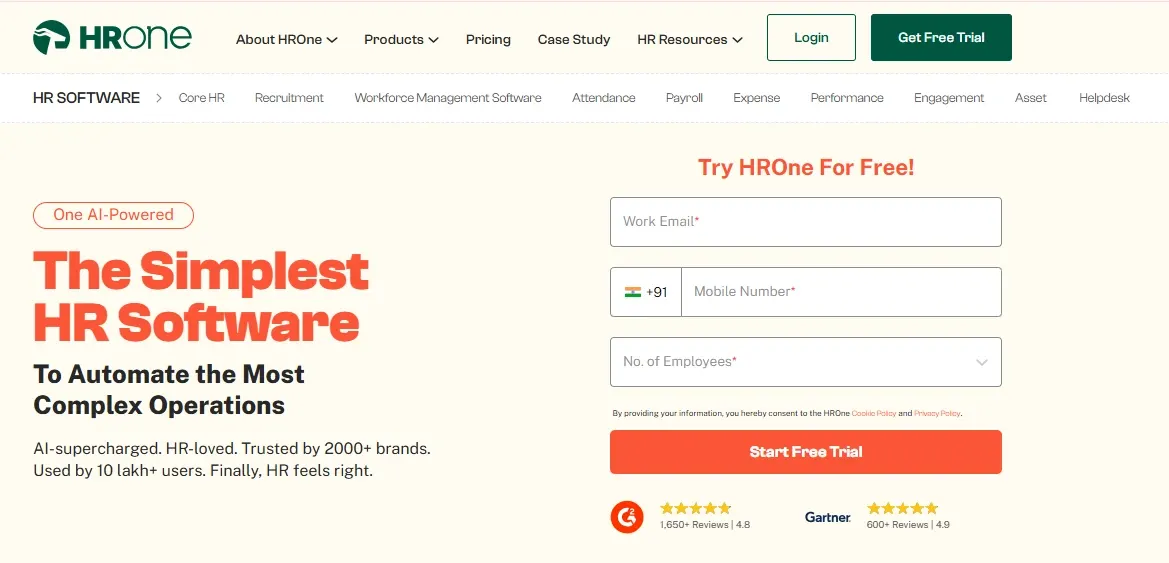
Automotive companies with multiple plants, warehouses, and dealerships need a consistent way to track attendance across locations. HROne offers attendance management within its HRMS platform, helping businesses maintain employee attendance records and manage different attendance policies.
Its mobile and biometric attendance options can support teams working across office, plant, and field environments.
Key features:
- Mobile attendance tracking.
- Biometric punch synchronisation.
- Attendance and leave management.
- Configurable attendance policies.
- Multi-location workforce management.
- Attendance reports and dashboards.
Pros:
- Supports attendance management across different work locations.
- Combines attendance with other HR functions.
- Useful for businesses managing office and field employees.
Cons:
- Businesses should check device compatibility and configuration requirements before implementation.
- Complex plant-specific shift rules may require additional setup.
5. ZingHR
Best for large automotive manufacturing businesses
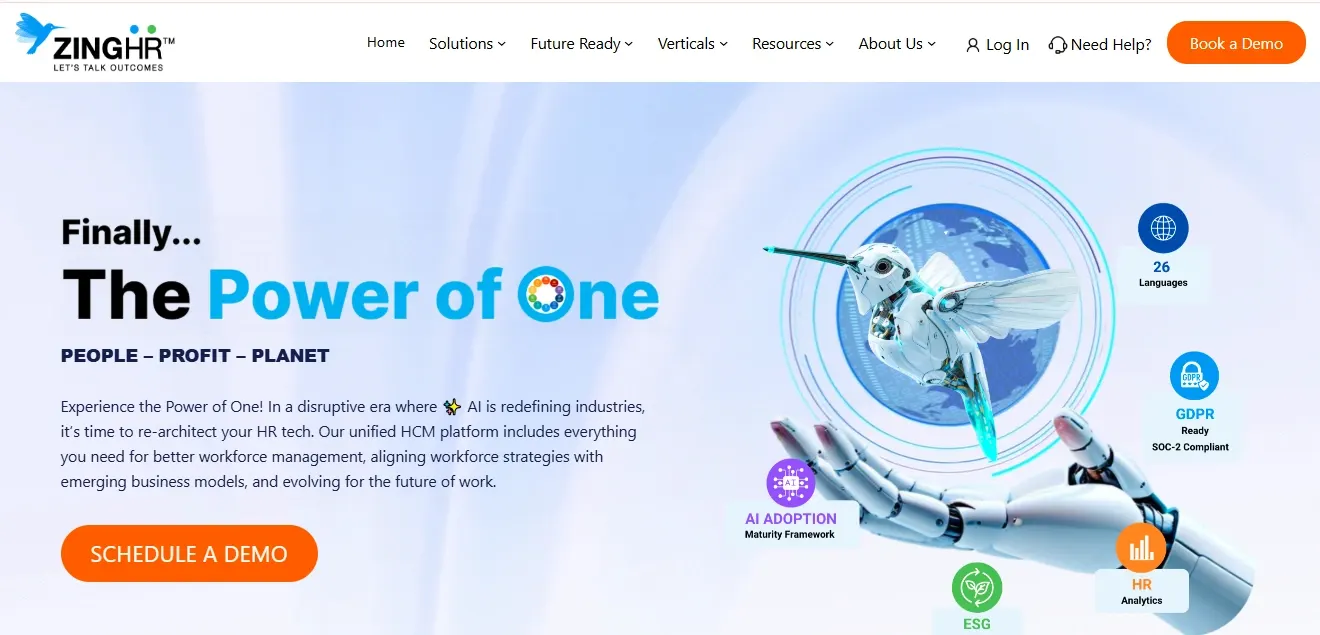
Large automotive manufacturers often have thousands of employees working across production facilities, warehouses, and administrative offices. ZingHR offers a broader HRMS platform with attendance and workforce management capabilities for businesses managing large employee populations.
Enterprises that need centralized employee records and attendance management across multiple locations can consider it.
Key features:
- Biometric attendance management.
- Mobile and location-based attendance options.
- Employee and workforce management.
- Shift and leave management.
- Attendance reporting.
- Payroll and HR integration.
Pros:
- Suitable for large and distributed workforces.
- Combines attendance with broader HR operations.
- Supports centralised workforce management.
Cons:
- May be more than smaller dealerships or workshops need.
- Implementation and pricing depend on business requirements.
6. Pocket HRMS
Best for smaller automotive businesses and dealerships
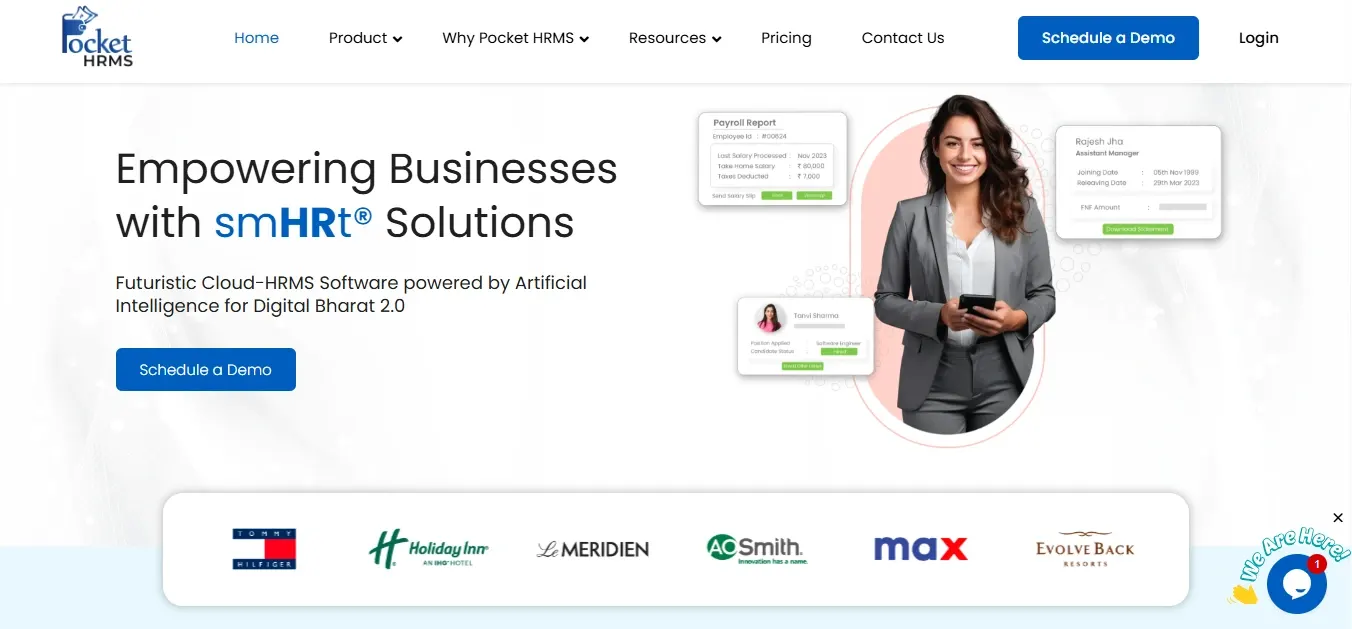
Smaller dealerships, service centers, and automotive workshops may not need a complex enterprise attendance system. They need a simple way to record employee working hours, manage leave, and maintain attendance data for salary processing.
Pocket HRMS offers attendance management as part of its HRMS platform, with mobile access and employee self-service features.
Key features:
- Mobile attendance tracking.
- GPS and location-based attendance options.
- Biometric attendance options.
- Leave management.
- Employee self-service.
- Attendance reports and payroll support.
Pros:
- Useful for smaller teams looking for a broader HRMS.
- Mobile access makes attendance management convenient.
- Combines attendance with employee and payroll functions.
Cons:
- Larger manufacturing plants should evaluate whether it can handle complex shift and contractor requirements.
- Available attendance features may vary by plan.
Why Automotive Businesses Need Dedicated Attendance Management Software
However, attendance management in the automotive industry differs from office time management because a factory can run multiple shifts. In contrast, a dealer may have employees serving at different branches or clients.
Below are a few examples of issues that justify having a specialized attendance management solution.
Management of Rotating/Night Shifts
Operations often run outside regular business hours. Employees may work morning, evening, night, or rotating shifts. An effective attendance system will help record shift timings and identify latecomers, early leavers, and missed punches.
Recording the contract labor
The manufacturing industry usually employs contract workers or temporary workers. It becomes difficult to keep a register of such employees, especially when the number of employees varies. Attendance software helps maintain a structured record of these employees' working hours.
Calculation of overtime correctly
Employees might be required to work more than their usual shift hours in production schedules. Overtime calculation tools allow HR departments to calculate extra work hours and enforce the organization's overtime policy accordingly.
Attendance tracking of employees in multiple locations
The automotive industry operates through several manufacturing plants, warehouse centers, repair centers, and dealerships. With a cloud-based attendance management tool, HR departments are able to track attendance in all branches together.
Integration of attendance with payroll
Inaccurate attendance results can affect salary calculations, overtime calculations, and leave. Integrating attendance and payroll lets HR departments use accurate work-hour records during monthly salary processing.
How to Choose the Right Attendance Software for Your Automotive Business
The right software depends on your workforce size, number of locations, and how your employees work.
- For manufacturing plants: Prioritise biometric device integration, shift scheduling, overtime calculation, and contractor attendance management.
- For automobile dealerships: Look for GPS employee tracking, mobile attendance and multi-location reporting.
- For service centers and workshops: Choose a system that makes employee check-ins, leave tracking, and attendance reports easy to manage.
- For large automotive groups: Consider a platform that supports multiple locations, centralised reporting and payroll integration.
- For businesses with contract labor: Check whether the software can maintain separate attendance records and apply different work schedules.
Before finalizing a vendor, ask for a demonstration using your actual attendance process. Test how the system handles missed punches, shift changes, overtime, weekly offs, and employees working across locations.
Conclusion
Attendance Management is a key activity in the automotive industry. Whether it's a manufacturing plant, dealership, or several service centers, correctly recording employee details ensures everything runs efficiently.
Despite alternatives like greytHR, Keka, HROne, ZingHR, factoHR, and Pocket HRMS, Zimyo is often considered the best all-inclusive platform for automotive companies looking to integrate attendance, shift management, overtime management, and broader HR processes.
What matters most is comparing the platforms against your exact requirements, existing biometric systems, shift patterns, and even payroll.
Frequently Asked Questions
What is the most appropriate attendance software solution for automotive companies?
Zimyo attendance software is ideal for automotive companies that need biometric, RFID, and geo-fencing attendance, shift management, overtime tracking, and location-based tracking. GreytHR, Keka, HROne, ZingHR, factoHR and Pocket HRMS could also be considered.
Is attendance software able to handle night shifts and rotating shifts?
Yes. Attendance software with shift-scheduling capabilities and customizable attendance policies will help record rotating, night, and double shifts. However, rules vary by vendor.
Can I use the biometric attendance software in automotive factories?
Yes. Biometric attendance software is useful for recording check-in/check-out at the entrance of automotive factories. The business needs to verify whether the software solution works with existing biometric systems.
Can attendance software monitor contract employees?
Many HRMS applications can maintain attendance data for contract-based employees. When choosing an application, ensure it supports separate employee categories, shift scheduling, and attendance reports for contract employees.
Is attendance management software beneficial for payroll operations?
Yes, when attendance is linked to payroll, verified hours of attendance and overtime attendance can be utilized while paying salaries. It reduces data entry effort and payroll errors caused by attendance management.