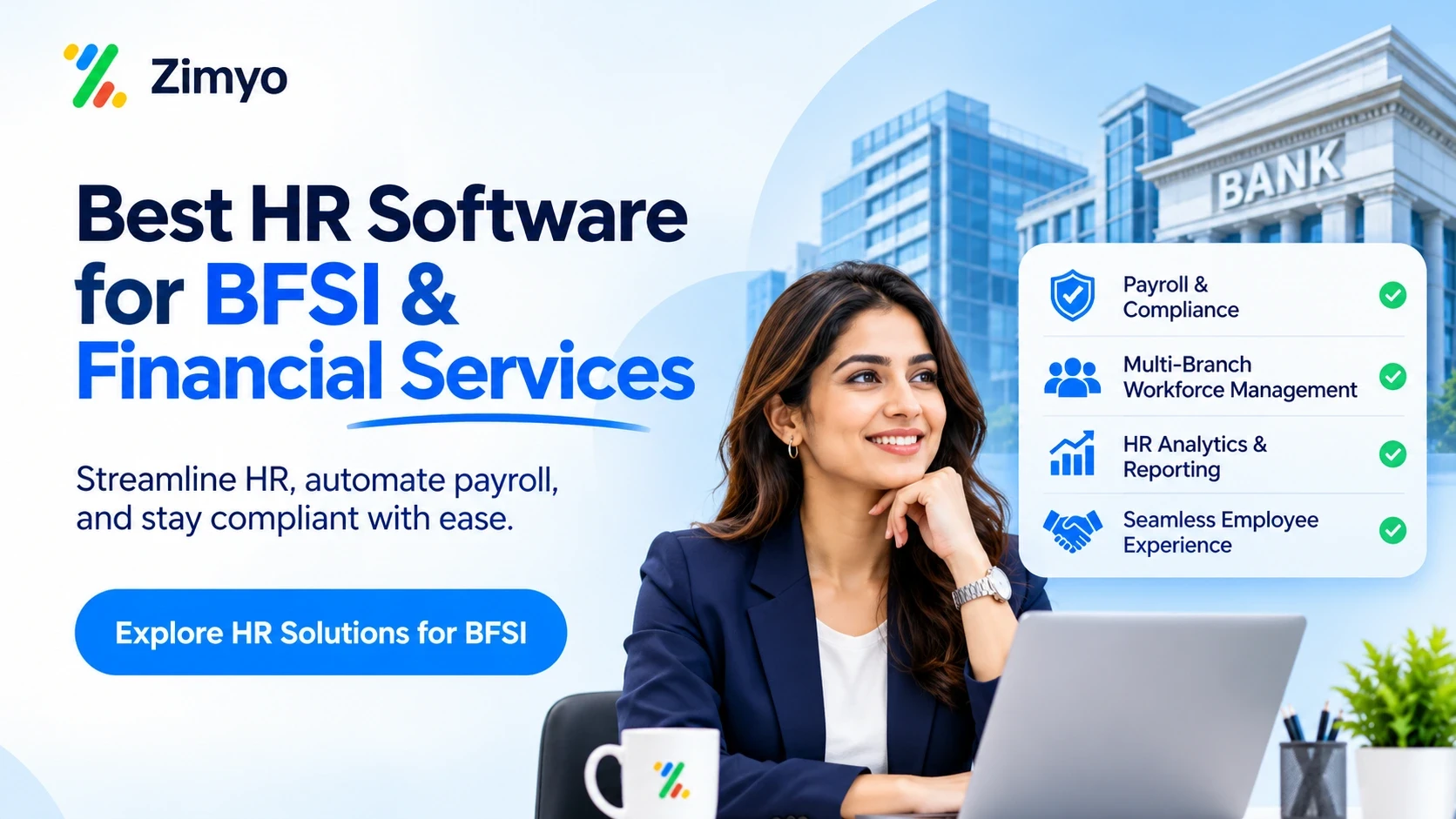
The BFSI (Banking, Financial Services, and Insurance) sector is governed by several rules and regulations, making employee management, payroll management, information security, and compliance among the most crucial aspects. Whether it's banks, NBFCs, insurance companies, or fintech companies, managing a geographically dispersed workforce demands more than conventional HR practices.
HRMS software for financial services firms provides all these functionalities, such as recruitment, onboarding, payroll, performance management, and employee engagement, on a single platform while also giving you better visibility of your workforce, safe handling of information, and reporting capabilities.
In this guide, we look at some of the best HR software solutions for BFSI and financial services firms in India.
What Makes HR Software Suitable for BFSI Companies?
BFSI companies have particular HR needs due to the following reasons:
Due to the nature of work in BFSI companies, they require proper HR management software that provides
- Payroll processing: This includes accurate salary calculations, deductions, reimbursements, and payslip generation.
- Compliance with statutory requirements: This includes support for PF, ESI, TDS, professional tax, and labor law requirements.
- Data security: It includes role-based access, employee data security, and controlled information flow.
- Workforce management at multiple locations: Employee management at different branches, offices, and regional workforces.
- Attendance and shift management: Attendance recording, shift management, and leave management.
- Recruitment and onboarding: Recruitment process and employee onboarding.
- Audit trail and reporting: Payroll records, employee data, and HR reports.
- Integration capabilities: Connection to finance and accounting applications.
Quick Comparison of the Best HRMS Software for BFSI in India (2027)
| Software | Best for | Key strengths | Pricing |
|---|---|---|---|
| Zimyo | Banks, NBFCs & fintech | Payroll, attendance, HR automation, Zim AI | From ₹80/user/month |
| Darwinbox | Large financial enterprises | Core HR, talent management, analytics | Custom |
| ADP | Complex payroll operations | Payroll, tax administration, integrations | On request |
| Ramco HCM | Large financial institutions | Global payroll, workforce management | Custom |
| SAP SuccessFactors | Enterprise banks & insurers | Talent management, workforce planning | On request |
| Oracle HCM Cloud | Multinational BFSI companies | Global HR, payroll, analytics | Custom |
| Keka HR | Mid-sized NBFCs & fintech | Payroll, attendance, performance | Custom |
| greytHR | Small and mid-sized BFSI firms | Payroll, statutory compliance, attendance | Plan-based |
| HROne | Growing financial services firms | Core HR, payroll, recruitment | Custom |
| ZingHR | Multi-location financial organisations | Workforce management, payroll, analytics | Custom |
Note: Pricing is indicative and should be verified with vendors. Features and availability may vary by plan and implementation.
Top 10 HR Software for BFSI & Financial Services in India
1. Zimyo
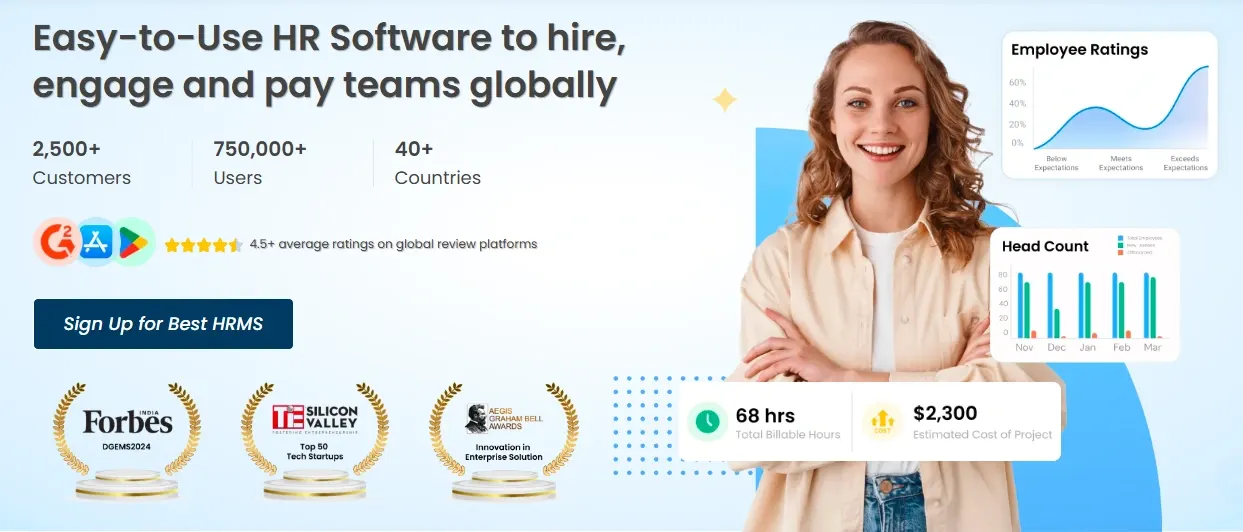
Zimyo is a one in all HRMS solution that helps BFSI organizations manage employees efficiently and automate payroll. The platform consolidates functions such as recruiting, onboarding, attendance management, leaves, payroll, performance management, and employee engagement into a single platform.
Zimyo enables banks, NBFCs, insurance firms, and Fintech organizations to manage distributed workforces, manage employee data, automate HR processes, and improve workforce visibility. Zimyo 3.0, powered by Zim AI, also offers agentic AI options.
Key features
- Automated payroll processing and payslip generation
- Attendance, shift, and leave management.
- Employee self-service portal
- Recruitment and onboarding automation
- Performance and employee engagement management
- HR analytics and reporting
- Role-based access and employee data management
- Zim AI-powered HR automation
Pros & Cons
| Pros | Cons |
| Complete hire-to-retire HR management | Advanced configurations may require onboarding |
| Integrated payroll and attendance | Some integrations may require additional setup |
| Supports multi-location workforce management | Feature availability can vary by plan |
| AI-powered HR automation |
Best suited for: Banks, NBFCs, insurance companies, and fintech businesses seeking centralized HR and payroll automation.
Pricing: Starts at approximately ₹80/user /month, depending on the selected plan and modules.
2. Darwinbox
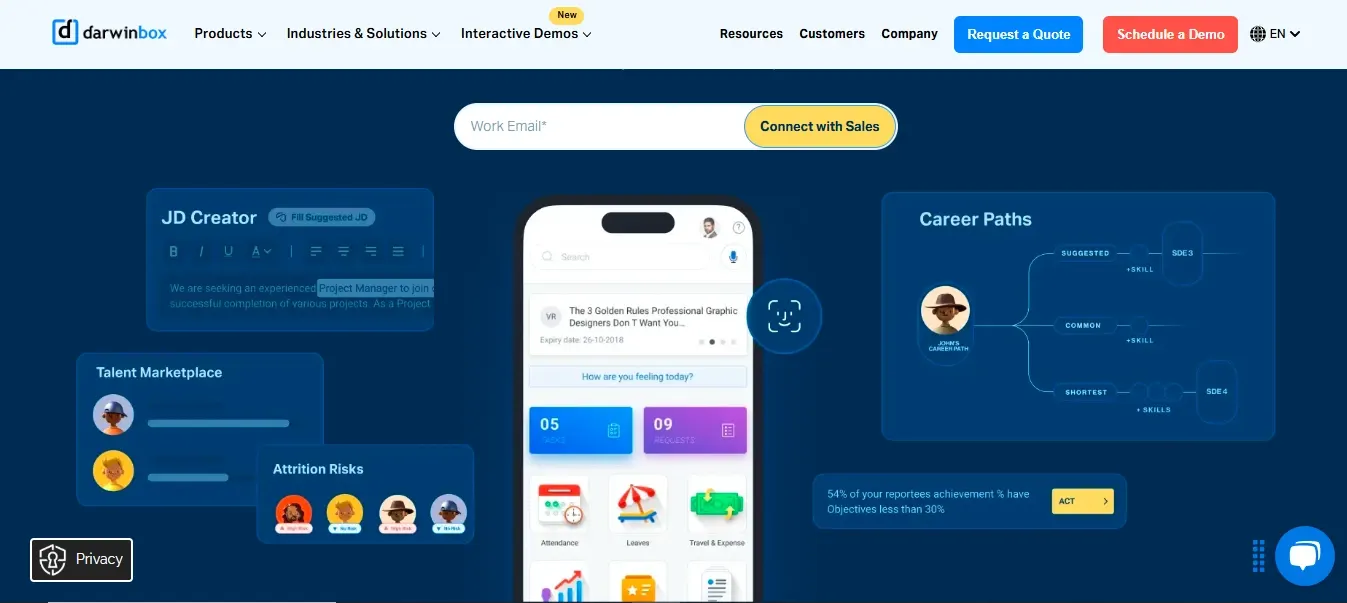
Darwinbox is an enterprise HRMS platform designed to manage complex workforce requirements across large and growing organisations. It offers employee lifecycle management, payroll, talent management, workforce analytics, and HR automation.
For BFSI organisations with multiple branches and large employee populations, Darwinbox provides centralised HR operations and workforce visibility.
Key features
- Core HR and employee lifecycle management
- Payroll and compensation management
- Recruitment and onboarding
- Performance and talent management
- Workforce analytics
- Employee self-service and mobile HR
Pros & Cons
| Pros | Cons |
| Comprehensive enterprise HR capabilities | Implementation can be complex |
| Supports large and distributed workforces | Pricing is not publicly standardised |
| Strong talent and performance management | Requires employee adoption and training |
| Advanced HR analytics | May be extensive for smaller organisations |
Best suited for: Large banks, financial institutions, and insurance companies managing complex workforce structures.
Pricing: Custom pricing based on employee count.
3. ADP
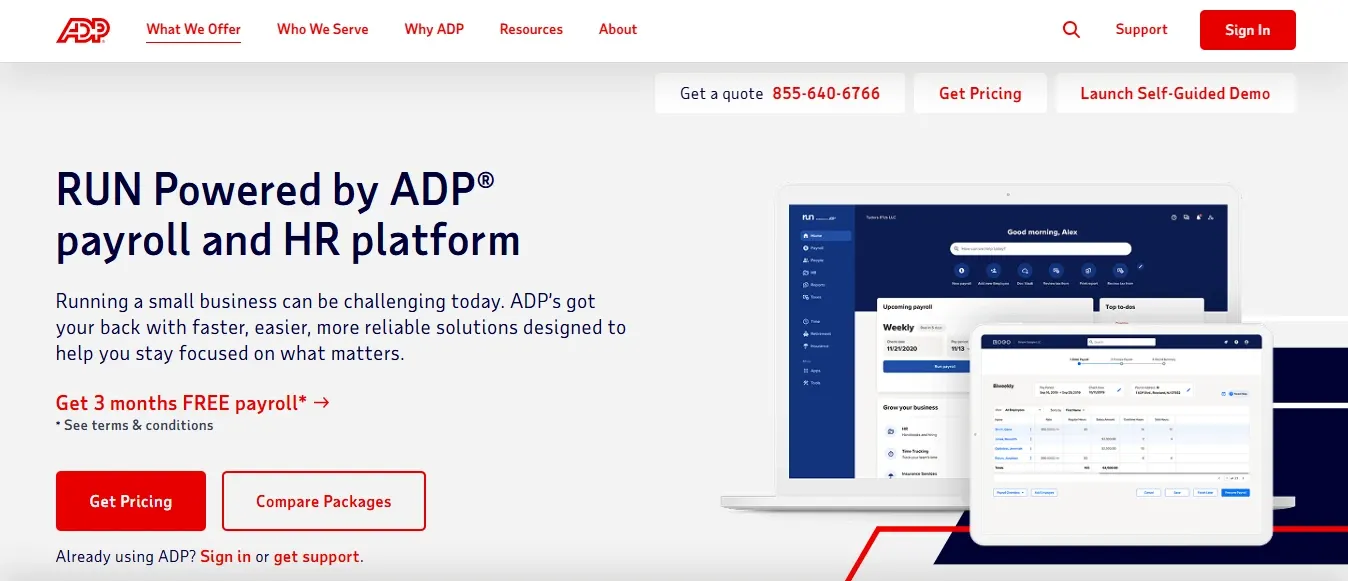
ADP provides payroll and human capital management solutions for businesses of different sizes. Its platform focuses on payroll processing, workforce administration, employee records, and compliance-related requirements.
For financial services companies, ADP can help streamline payroll operations, manage employee information, and support multi-location workforce administration.
Key features
- Payroll processing and tax administration
- Employee information management
- Time and attendance tracking
- Benefits administration
- Workforce reporting
- HR and payroll integrations
Pros & Cons
| Pros | Cons |
| Established payroll management capabilities | Pricing varies by solution and region |
| Supports complex payroll requirements | Some features may require separate modules |
| Scalable for growing organisations | Implementation may take time |
| Multiple HR and payroll integrations | Platform selection can be complex |
Best suited for: Financial institutions and multinational BFSI companies with complex payroll and workforce administration needs.
Pricing: Available on request.
4. Ramco HCM
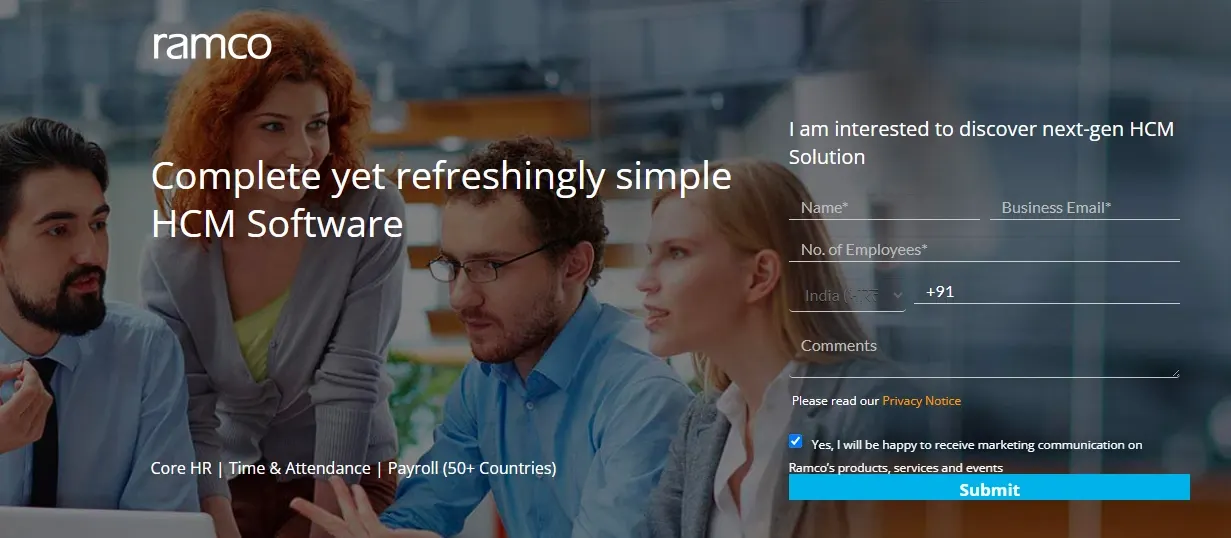
Ramco HCM offers human capital management and payroll solutions for organisations with complex workforce structures. It combines HR administration, payroll, attendance, and workforce management capabilities.
Its payroll and workforce management capabilities make it relevant for financial institutions operating across multiple locations and requiring structured HR processes.
Key features
- Global and local payroll management
- Core HR administration
- Time and attendance management
- Leave and absence management
- Employee self-service
- Workforce analytics and reporting
Pros & Cons
| Pros | Cons |
| Strong payroll and workforce management capabilities | Implementation can require significant planning |
| Supports complex organisational structures | Learning curve for new users |
| Suitable for multi-location operations | Custom pricing can affect budget planning |
| Integrated HR and payroll processes | May be more than smaller businesses need |
Best suited for: Large financial institutions, banks, and organisations managing complex payroll operations.
Pricing: Custom enterprise pricing.
5. SAP SuccessFactors
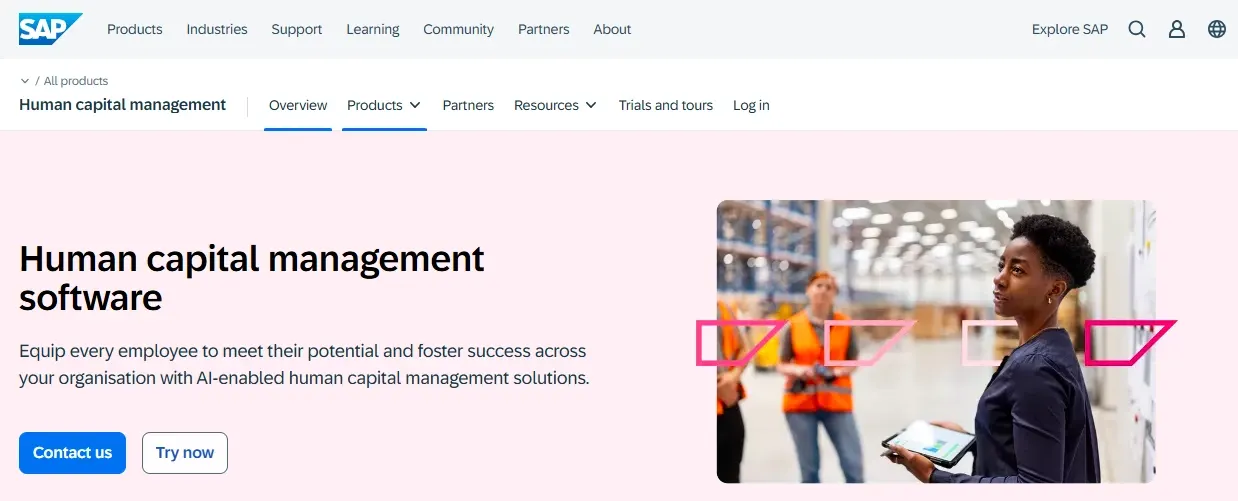
SAP SuccessFactors is an enterprise human capital management platform that supports employee lifecycle management, talent acquisition, performance, learning, and workforce planning.
For BFSI companies, it provides structured HR processes and workforce management capabilities that can support large employee populations and complex organisational hierarchies.
Key features
- Employee central and core HR
- Talent acquisition and onboarding
- Performance and goal management
- Learning management
- Compensation planning
- Workforce analytics
Pros & Cons
| Pros | Cons |
| Comprehensive enterprise HR capabilities | Implementation can be expensive |
| Strong talent and workforce management | Requires technical expertise |
| Integrates with SAP business applications | Can be complex for smaller organisations |
| Supports large employee populations | Pricing depends on modules and deployment |
Best suited for: Large banks, insurance groups, and financial enterprises with extensive HR requirements.
Pricing: Available on request.
6. Oracle HCM Cloud
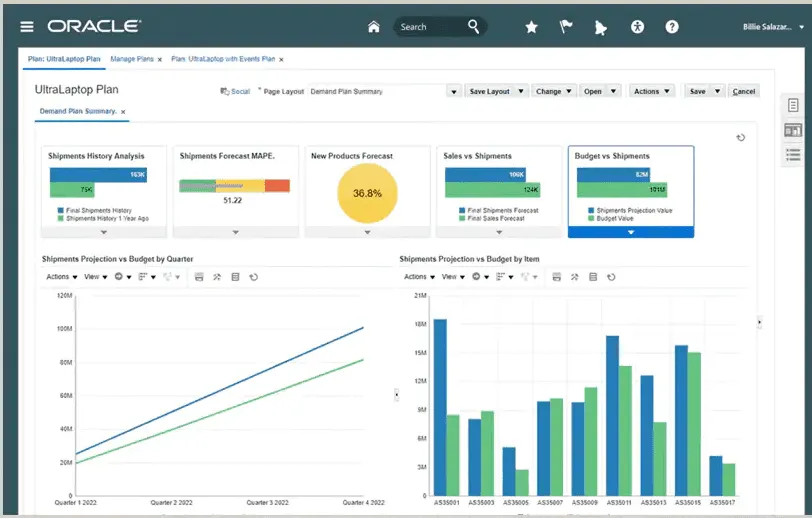
Oracle HCM Cloud is an enterprise HR platform that brings core HR, payroll, talent management, workforce planning, and analytics into one ecosystem.
Financial institutions can use it to manage employee information, automate HR processes, and improve workforce planning across different departments and locations.
Key features
- Global HR and employee data management
- Payroll management
- Talent acquisition and management
- Workforce planning and analytics
- Performance management
- Employee self-service
Pros & Cons
| Pros | Cons |
| Broad enterprise HR capabilities | Higher implementation complexity |
| Advanced workforce analytics | Can be costly for smaller organisations |
| Supports complex organisational structures | Requires technical expertise |
| Integrates with Oracle applications | Customisation may require specialist support |
Best suited for: Large banks, multinational financial services companies, and insurance enterprises.
Pricing: Custom enterprise pricing.
7. Keka HR
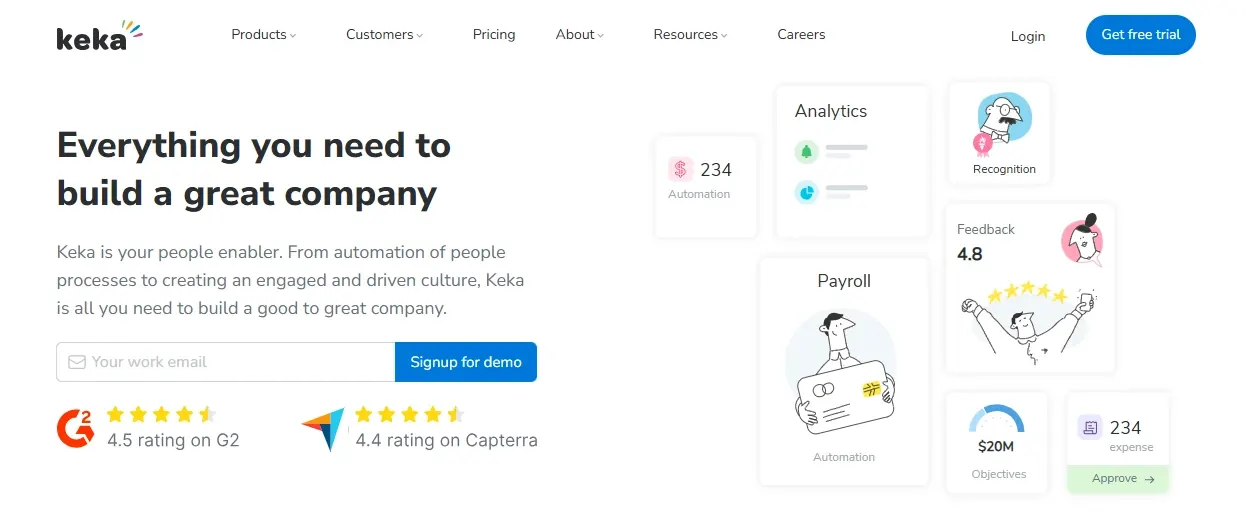
Keka is an HR and payroll platform that helps businesses manage employee records, salary processing, attendance, leave, and performance. Its integrated approach makes it useful for growing financial services companies looking to automate everyday HR operations.
Key features
- Payroll and salary processing
- Attendance and leave management
- Employee self-service
- Recruitment and onboarding
- Performance management
- HR reporting and analytics
Pros & Cons
| Pros | Cons |
| Easy-to-use interface | Advanced enterprise requirements may need additional configuration |
| Integrated payroll and HR management | Pricing depends on selected modules |
| Useful employee self-service features | Some integrations may require additional setup |
| Supports growing organisations | May not cover every specialised BFSI workflow |
Best suited for: Mid-sized NBFCs, fintech companies, and financial services businesses looking for integrated HR and payroll software.
Pricing: Customised plans
8. greytHR
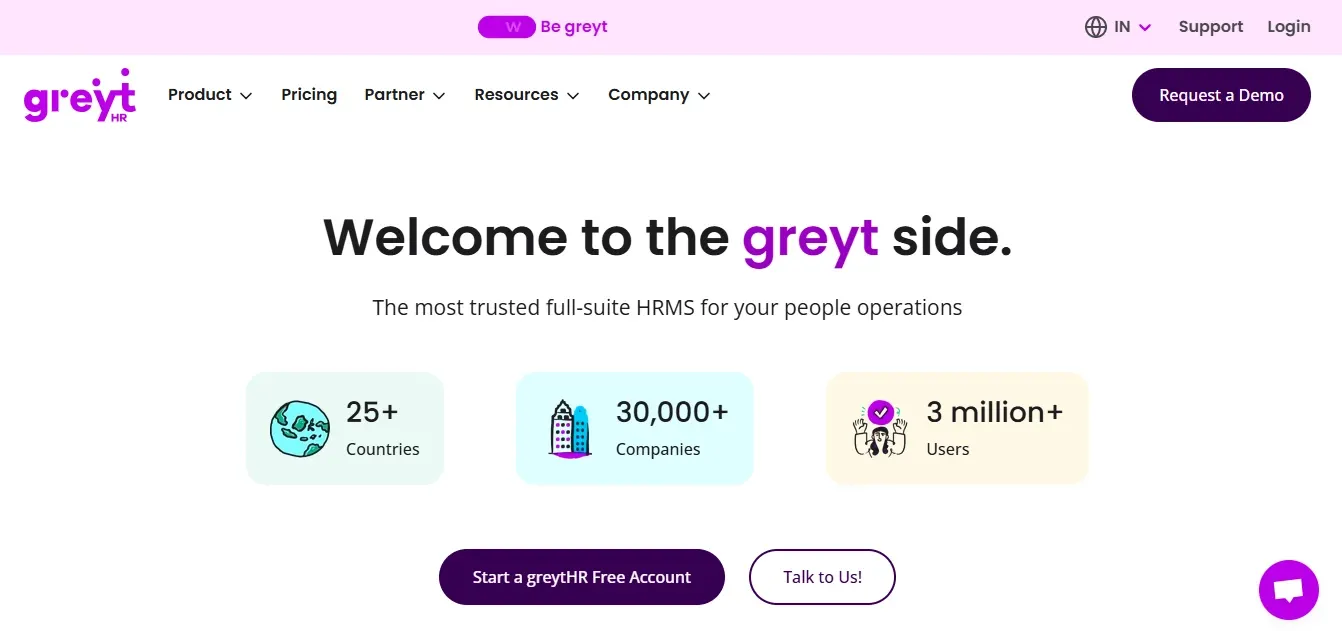
greytHR is an HR and payroll software platform focused on payroll processing, statutory compliance, attendance, and employee administration. It helps organisations reduce manual payroll work and maintain structured employee records.
For BFSI companies in India, its payroll and compliance capabilities can support recurring salary operations and employee administration.
Key features
- Payroll processing and payslip generation
- PF, ESI, and tax-related payroll support
- Attendance and leave management
- Employee self-service
- Employee records and document management
- Payroll reports and analytics
Pros & Cons
| Pros | Cons |
| Strong payroll and compliance focus | Limited advanced enterprise customisation |
| Simplifies monthly salary processing | Some advanced capabilities require higher plans |
| Employee self-service access | Less specialised for complex financial workflows |
| Useful payroll reporting | Advanced talent management may require other tools |
Best suited for: Small and mid-sized NBFCs, financial services firms, and insurance businesses prioritising payroll and statutory compliance.
Pricing: Plan-based pricing
9. HROne
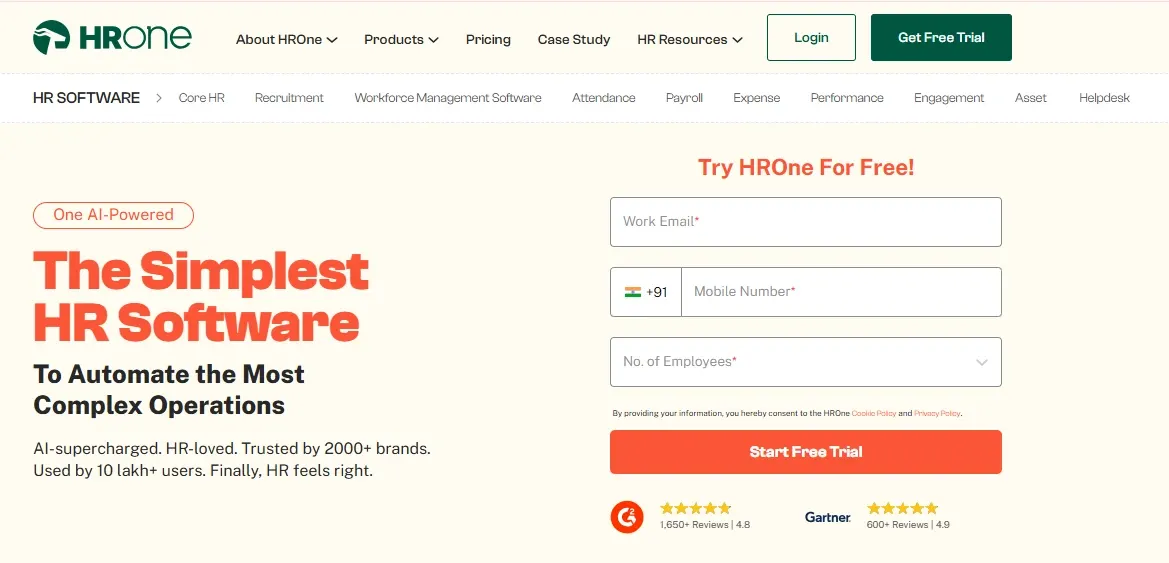
HROne is an HRMS platform that helps organisations manage employee information, payroll, attendance, recruitment, and performance. It brings multiple HR functions together to simplify workforce administration.
For BFSI companies, HROne can help manage employee records, automate routine HR tasks, and coordinate workforce operations across departments.
Key features
- Core HR and employee management
- Payroll processing
- Attendance and leave management
- Recruitment and onboarding
- Performance management
- Employee self-service
Pros & Cons
| Pros | Cons |
| Covers multiple HR functions | Advanced features may require higher plans |
| Integrated employee management | Initial configuration may take time |
| Recruitment and payroll capabilities | Some integrations may need additional setup |
| Supports growing organisations | Complex enterprise workflows may require customisation |
Best suited for: Mid-sized financial services companies, NBFCs, and insurance firms looking for centralised HR operations.
Pricing: Custom pricing
10. ZingHR
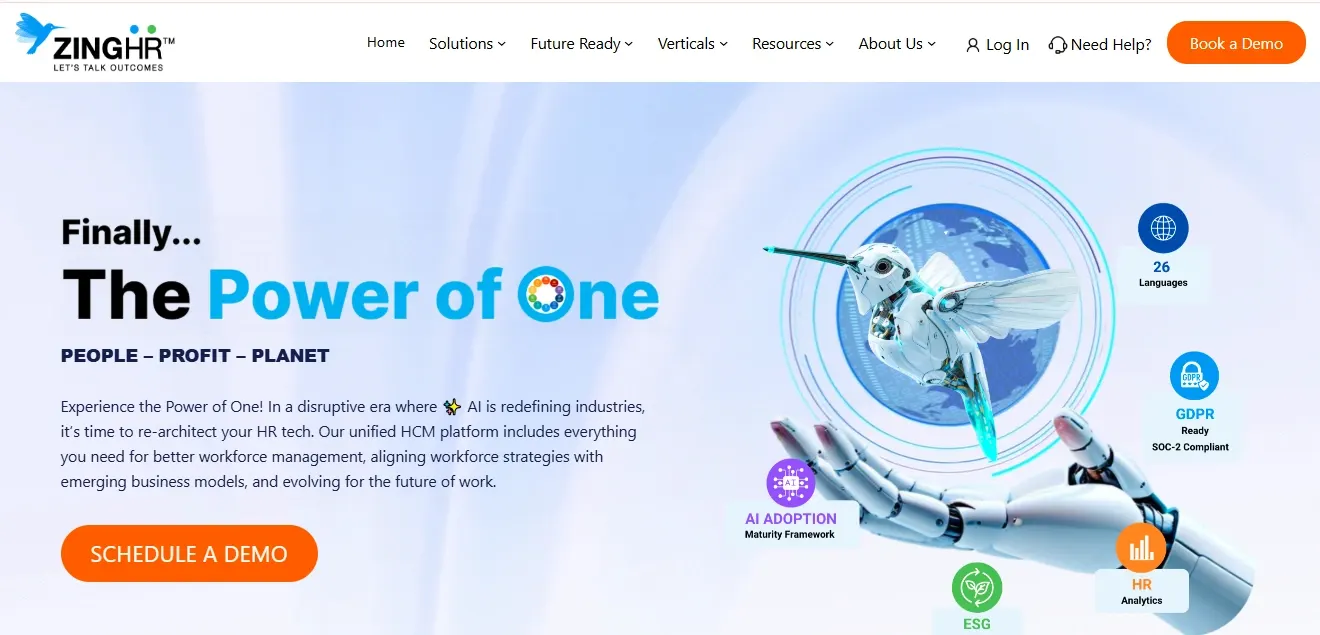
ZingHR is a cloud-based HCM platform that offers workforce management, payroll, talent management, and employee experience solutions. It supports organisations that need to manage employees across multiple locations and departments.
For BFSI organisations, it can help centralise HR operations, manage employee attendance, and improve workforce administration.
Key features
- Core HR and employee lifecycle management
- Payroll and compensation management
- Attendance and workforce management
- Recruitment and onboarding
- Performance management
- Employee engagement and analytics
Pros & Cons
| Pros | Cons |
| Broad HR and workforce management features | Interface and workflows may require familiarisation |
| Supports multi-location organisations | Pricing is not always publicly available |
| Integrated employee lifecycle management | Implementation may require planning |
| Offers HR analytics and reporting | Advanced features may need additional configuration |
Best suited for: Mid-sized and large financial institutions managing distributed workforces and multiple HR functions.
Pricing: Custom pricing
How to Choose the Right HR Software for BFSI Companies?
Selecting HR software in BFSI involves more than just choosing a software solution to manage employees. The following considerations should be kept in mind:
1. Payroll and statutory compliance
Select software that can process payroll, handle deductions, payments, and reimbursements, and meet Indian statutory compliance requirements like PF, ESI, TDS, and professional tax.
2. Security of employee data
BFSI businesses handle sensitive employee information. Choose software with role-based access, data security, access control, and audit trails.
3. Managing multi-branch workforce
BFSI companies usually work from many branches. Hence, it is important to have HR software that will help them maintain employee details, attendance, and location-wise reporting.
4. Integrations
Look for software that integrates well with accounting software, ERP systems, banking applications, and other business-related applications via APIs.
5. Scalability
HR software must scale easily as you add new branches and grow your workforce management.
6. Reporting and analytics
Payroll reports, employee details, attendance reporting, and workforce analytics help make HR-related decisions.
Why BFSI Companies Need Automated Payroll and HR Management
The BFSI industry relies on precision, accountability, and efficiency in workforce management. There are certain benefits that BFSI organizations derive from automated HR and payroll solutions:
- Payroll accuracy: Automating payroll processing, including salaries, deductions, reimbursements, and payslip creation.
- Compliance: Keeping payroll records and ensuring compliance with relevant statutory provisions.
- Efficiency: Automating routine HR management and other administrative tasks.
- Enhancing employee experience: Giving employees access to their payslips, leave balance, attendance, and personal details.
- Increased visibility in the workforce: Monitoring employees’ details and attendance across all branches.
- Data-driven decision-making: Making decisions based on HR reporting and analytics.
How to Implement HR Software in BFSI Industry?
Introducing HR software in BFSI companies starts with defining requirements for payroll, attendance, compliance, and workforce management. Firms should organize employee information, set up the salary structure, establish an approval workflow, and transfer information securely. Testing payroll, attendance, and statutory calculations is also needed to avoid issues during operation.
The next step is to properly train HR managers, branch managers, and employees. Organizations may introduce the system in a few branches initially and then gradually roll it out in all locations.
Conclusion
Selecting the right HR software is necessary for BFSI and financial service companies that want to simplify workforce management, reduce payroll errors, and remain compliant with laws and regulations. Whether it is a bank, NBFC, insurance company, or a fintech organization, proper HRMS software will help them optimize their HR processes.
First, consider the features you need in your HR software, such as payroll calculation, data security, compliance with statutory requirements, integrations, scalability, and usability. Some tools are designed for enterprise-level workforce management, while others fit growing financial services organizations.
The best HR software meets your company's needs, provides scalable HR services, and improves HR operational efficiency.
Explore different software option, book a demo, and choose the one that best matches your BFSI company.
Frequently Asked Questions (FAQs)
Which is the best HR software for BFSI companies in India?
BFSI organizations can consider Zimyo, Darwinbox, ADP, Ramco HCM, and SAP SuccessFactors. Depending on factors like business size, payroll needs, compliance requirements, and workforce complexities, BFSI organizations may need to choose the right software.
Which HRMS software is recommended for banks and NBFCs?
Banks and NBFCs can consider platforms such as Zimyo, Darwinbox, Ramco HCM, and Oracle HCM Cloud. Compare them based on payroll automation capabilities, employee data security, multi-location support, and integration capabilities.
What does HR software do for payroll of financial institutions?
HR software manages the entire payroll process and includes features like payroll automation, salary calculations, reimbursements, deductions, payslip generation, and payroll reports.
What features should you consider when choosing HR software for banking companies?
Key features include payroll automation, attendance management, employee self-service, role-based access control, statutory payroll compliance, audit trails, workforce analytics, and multi-branch employee management.
Does the HR software provide compliance management for financial service companies?
Yes, HR software platforms and payroll platforms offer statutory payroll processes, including PF, ESI, TDS, and professional tax. Organizations should verify the specific compliance capabilities of their chosen platform.
Is payroll software the same as HRMS software for BFSI?
Payroll software mainly handles payroll calculations, deductions, and payslips. HRMS software handles many more operations, such as recruitment, onboarding, attendance, leave management, performance appraisal, employee data management, and payroll management.