

Work has never evolved as fast as it is today. The workplace is no longer just a physical location where employees clock in, complete tasks, and leave. It’s a dynamic environment influenced by hybrid work models, digital tools, shifting expectations, generational diversity, and a new priority: employee well-being.
Employees are asking deeper questions:
- Am I valued here?
- Does this company care about my growth?
- Do my contributions matter?
- Is this a place I can belong?
Organizations who can answer yes to these questions win can definitely attract top talent, retain high performers, and build a culture where people feel motivated, connected, and supported.
This shift is the reason employee experience has become a core competitive advantage, not just a feel-good HR initiative. And technology now plays a central role in making this experience consistent, measurable, scalable, and meaningful.
Check Out Our Blog on How To Enhance Employee Experience .
What Is Employee Experience Software?
Employee experience software is a broad term used for the digital platform along with different apps and integrations that help organizations improve how employees feel, engage, communicate, and grow throughout their journey from onboarding to exit.
It focuses on real human outcomes such as:
- Belonging
- Recognition
- Fair growth opportunities
- Transparent communication
- Employee happiness
- Psychological safety
A modern employee experience platform typically includes:
Function | Purpose |
Feedback & Pulse Surveys | To listen and understand employee sentiment in real time |
Recognition & Rewards | To reinforce positive behavior and boost morale |
Performance & Growth Tools | To support alignment, coaching, and career mapping |
Digital Employee Experience Tools | To simplify employee services and workplace interaction |
Analytics & Insights | To help HR make data-backed culture decisions |
In simple terms:
Employee experience software helps companies understand their people better and support them in a way that improves engagement, culture, and retention.
List of Top Employee Experience Platforms
Here are the top 12 employee experience platforms to boost your org. growth:
- Zimyo
- Motivosity Inc.
- Culture Amp
- WorkTango
- 15Five
- Lattice
- Bonusly
- Workvivo
- Kudos
- Qualtrics
- Awardco, Inc.
- BambooHR
12 Best Employee Experience Software Solutions for 2026
Here’s a curated list of top platforms, along with their features, ideal use cases, and pros-cons comparison.
1. Zimyo
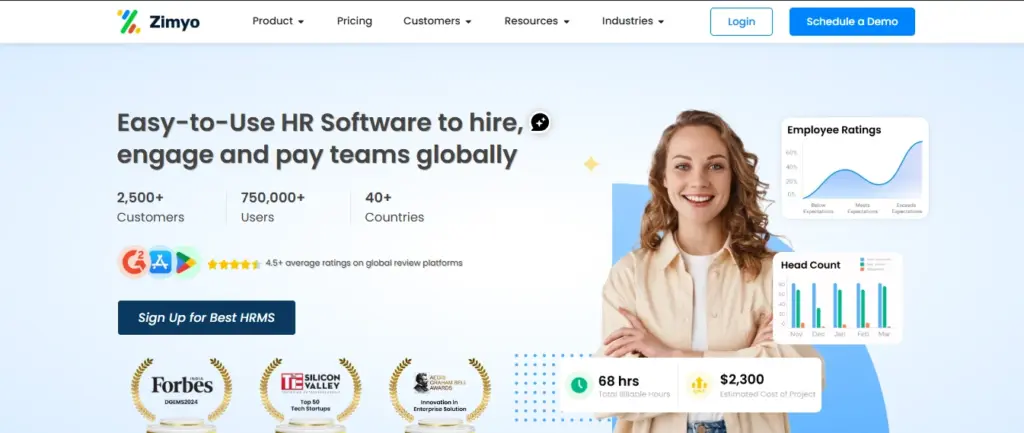
Zimyo is an end-to-end HR and employee experience software designed to strengthen workforce engagement, recognition, and culture while also managing HR operations. It’s ideal for organizations looking for a single platform to manage the employee lifecycle, from onboarding to engagement and performance.
Key Features:
- Automated onboarding and workflows
- Pulse surveys & employee sentiment tracking
- Employee recognition wall and rewards program
- Performance management with OKRs and feedback
- Employee self-service mobile app
- HRIS, payroll, attendance, and leave management
Pros | Cons |
Easy to use and intuitive for employees and HR | Some advanced analytics features may require configuration |
All-in-one HR + employee experience ecosystem | Advaced Feature May Require Training |
Excellent onboarding and engagement tools |
|
2. Motivosity
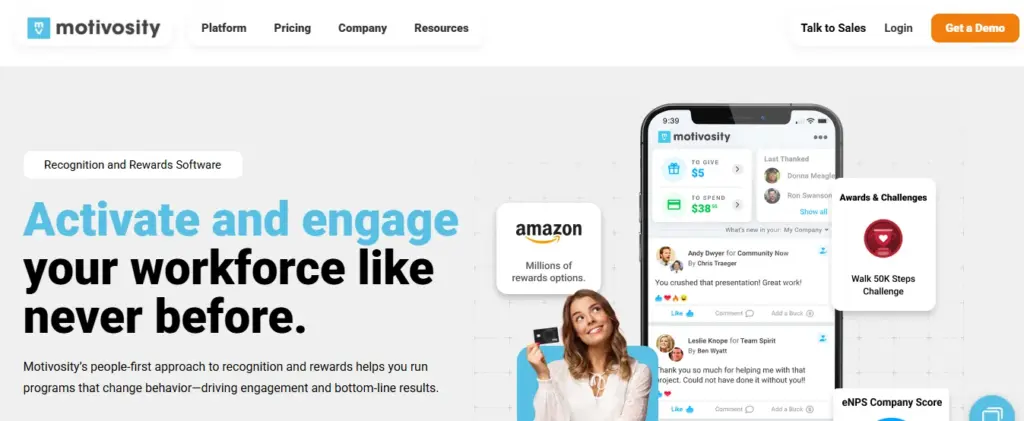
Motivosity focuses on helping companies build a recognition-rich culture. It empowers employees to appreciate one another, celebrate milestones, and strengthen social connections at work.
Key Features:
- Peer-to-peer recognition feed
- Reward points marketplace
- Manager feedback and coaching
- Social profiles and community culture tools
Pros | Cons |
Highly engaging and simple for employees | Limited surveys and analytics capabilities |
Great for culture building and rewards | Not a full HR suite |
Friendly pricing for small to mid-sized teams | May require pairing with other HR tools |
3. Culture Amp
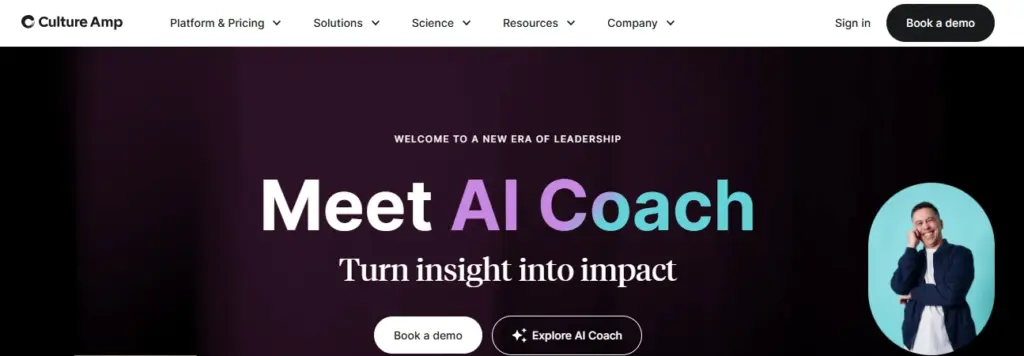
Culture Amp is built for organizations that want deep insight into employee sentiment and growth. Its science-backed survey templates and predictive analytics make it one of the most data-driven employee experience platforms.
Key Features:
- Engagement and lifecycle surveys
- Research-based templates and benchmarking
- Performance management tools
- Development and coaching frameworks
Pros | Cons |
Excellent analytics and insights | Higher learning curve |
Trusted by HR teams in growth-focused companies | Premium pricing |
Research-backed templates and reports | Best for teams with HR maturity |
4. WorkTango
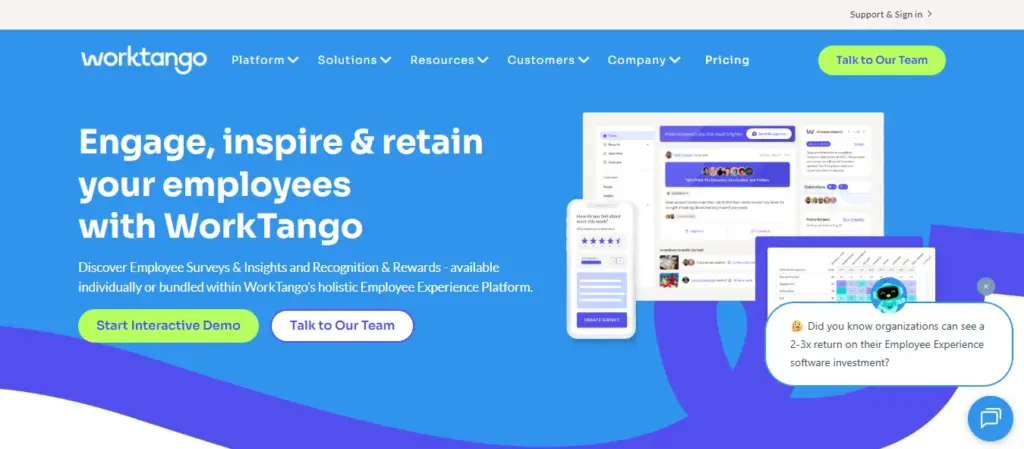
WorkTango combines recognition, feedback, and performance insights into one employee experience platform. It aims to improve workplace relationships and give leaders visibility into engagement trends.
Key Features:
- Real-time recognition and rewards
- Surveys and feedback cycles
- Goals and performance alignment
- Engagement dashboards
Pros | Cons |
Balanced focus across engagement + recognition | May require complementary HR tools |
Strong analytics and reporting | Pricing not always transparent |
Good for distributed and hybrid teams | Setup can take time |
5. 15Five
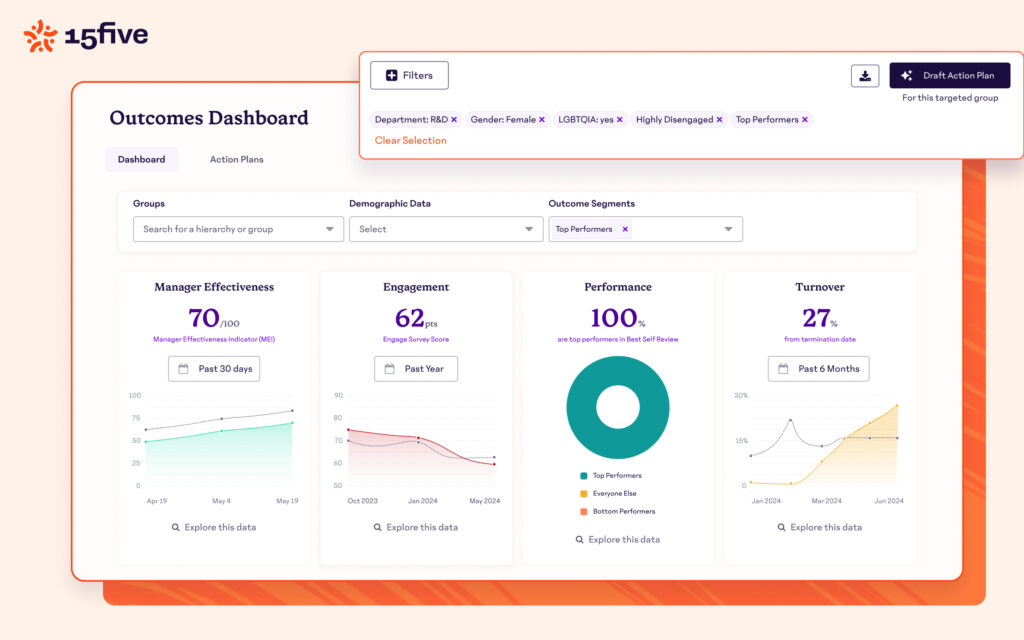
15Five is designed to support high-performance cultures through continuous feedback, one-on-one check-ins, OKRs, and performance reviews. It helps managers create healthier communication habits and development-focused leadership.
Key Features:
- Manager check-ins and review templates
- Continuous feedback workflows
- OKR tracking
- Engagement surveys and performance insights
Pros | Cons |
Great for leadership alignment and coaching | Recognition features lighter |
Strong OKR and feedback structure | Add-ons increase total cost |
Ideal for hybrid/remote manager teams | Not an all-in-one HR suite |
6. Lattice
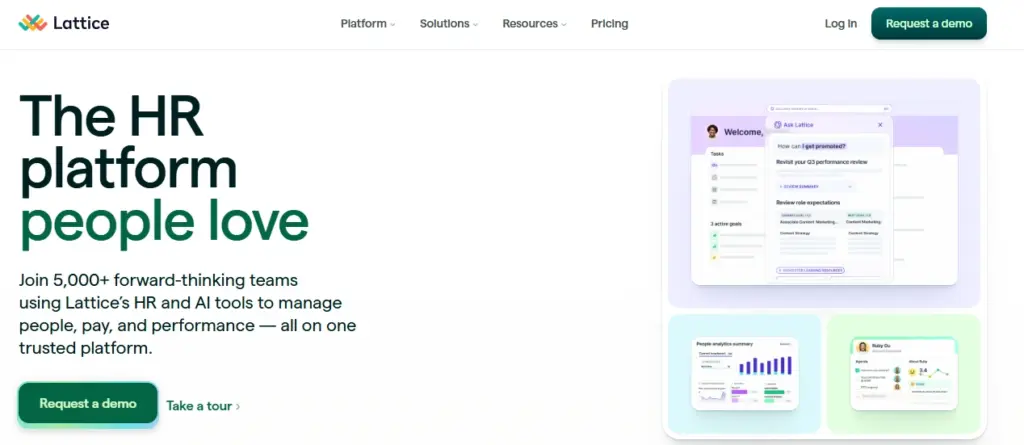
Lattice offers an integrated approach to employee experience, combining engagement, goals, growth, and performance processes in one system. It’s commonly used by scaling tech and modern organizations.
Key Features:
- Performance reviews and feedback loops
- OKRs and goal settings
- Engagement surveys and insights
- Growth plans and career frameworks
Pros | Cons |
Comprehensive for performance culture | Requires setup and change management |
Ideal for scaling and mature orgs | Pricing increases with modules |
Strong analytics and dashboards | May overwhelm small teams |
7. Bonusly
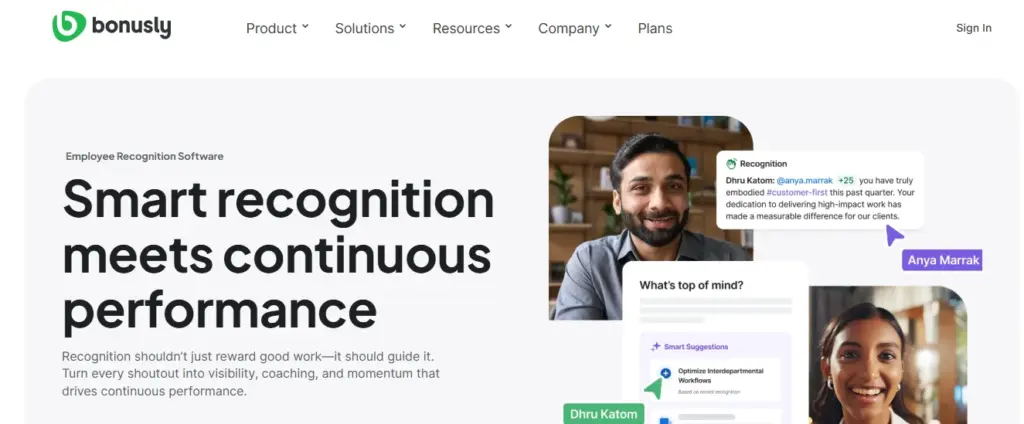
Bonusly focuses on creating a fun and frequent recognition experience through small meaningful rewards. Employees can give micro-bonuses to peers, reinforcing positive workplace values.
Key Features:
- Peer-to-peer recognition portal
- Automated celebrations and reminders
- Rewards catalog and digital gift options
- Integrations with Slack, Teams, and HR tools
Pros | Cons |
Very easy, fun, and social to use | Not ideal for deeper EX measurement |
Quick adoption across teams | Limited performance or engagement modules |
Affordable pricing | Recognition may feel transactional if not guided |
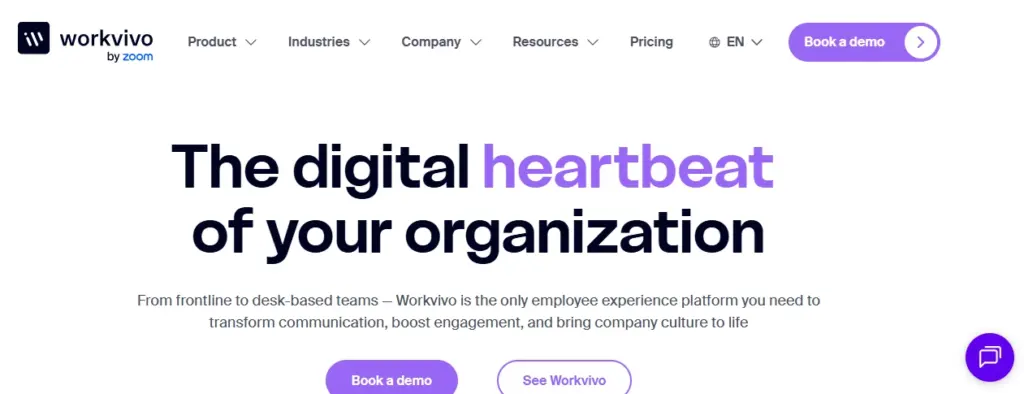
8. Workvivo
Workvivo acts as a digital workplace and communication hub, especially useful for distributed or frontline teams. It blends communication, engagement, and recognition in an app-based environment.
Key Features:
- Employee communication feed
- Community spaces and updates
- Recognition and celebrations
- Analytics and engagement tracking
Pros | Cons |
Excellent for remote or shift-based teams | Not a full HR suite |
Strong internal communication focus | Setup requires content and adoption effort |
Highly engaging mobile app experience | Best suited for larger organizations |
9. Kudos
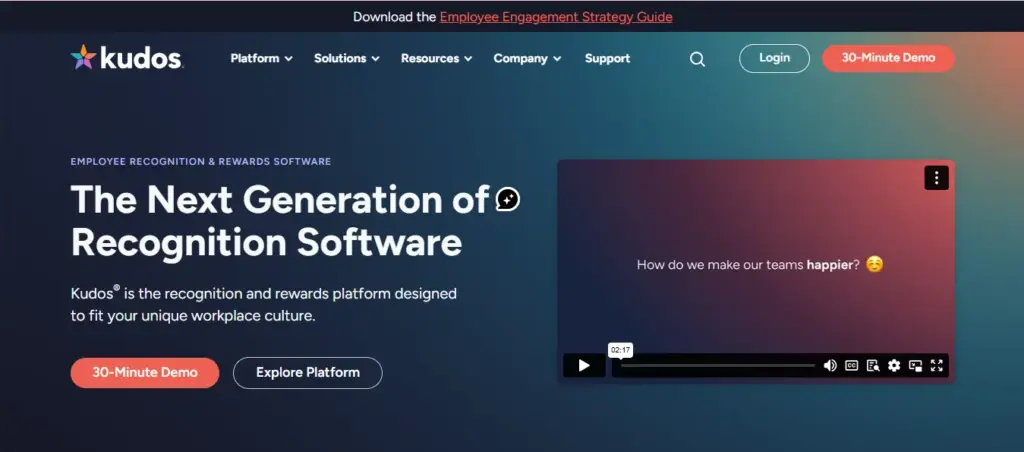
Kudos is centered on values-based recognition to drive meaningful appreciation aligned with company culture. It helps organizations reinforce specific behaviors that matter.
Key Features:
- Values-based recognition messages
- Award programs and incentive options
- Culture score dashboards
- Analytics and insights
Pros | Cons |
Great for reinforcing company values | Requires cultural readiness |
Deep reporting on recognition trends | Limited feedback and performance tools |
Easy to adopt and scale | May require pairing with HRIS or performance tools |
10. Qualtrics EmployeeXM
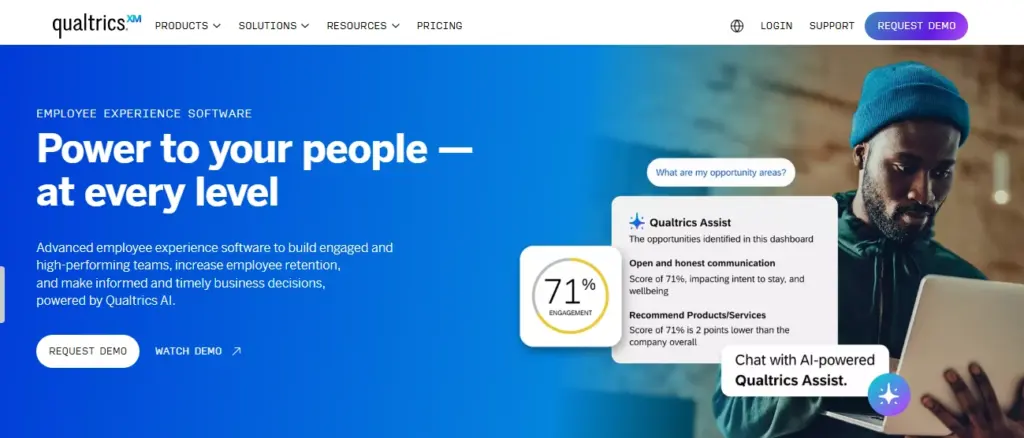
Qualtrics EmployeeXM is an advanced employee experience intelligence platform. Known for powerful survey design, journey mapping, and analytics, it is widely used by enterprise organizations.
Key Features:
- Lifecycle and engagement surveys
- AI-driven analytics and predictive insights
- Sentiment and text analysis
- Benchmarking and decision support tools
Pros | Cons |
Extremely powerful analytics engine | Expensive and complex implementation |
Ideal for large-scale strategic programs | Requires well-defined strategy |
Customizable to any organization | Best suited for enterprises |
11. Awardco
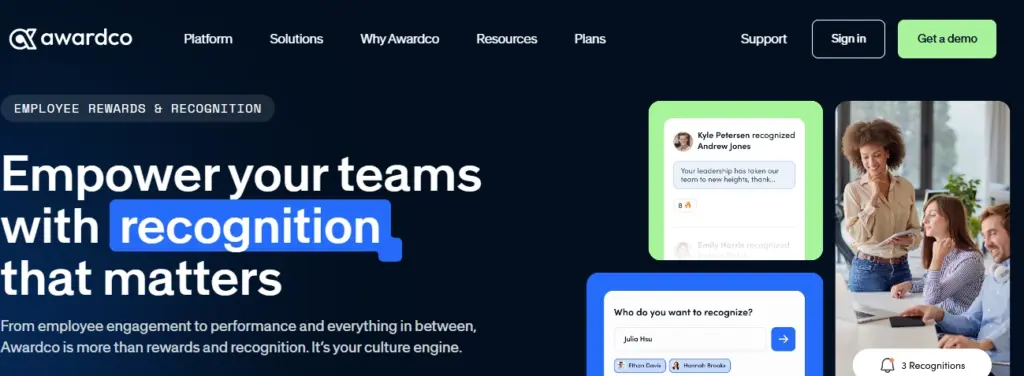
Awardco focuses heavily on recognition backed by global reward options, including Amazon business catalogs. It offers automation, milestones, and customizable programs.
Key Features:
- Global rewards catalog
- Recognition and engagement features
- Automated celebrations
- HR integrations
Pros | Cons |
Strong reward marketplace | Limited surveys and analytics |
Good for global teams | Pricing varies by configuration |
Simple user experience | Less focus on performance or growth |
12. BambooHR
BambooHR combines HR management features with light employee experience tools such as surveys, onboarding, and performance. It’s ideal for organizations beginning their EX journey.
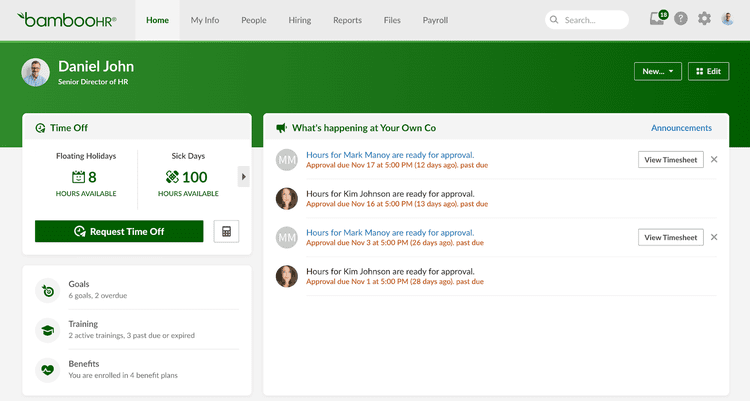
Key Features:
- Employee records and HR automation
- Basic surveys and eNPS
- Performance review module
- Self-service employee portal
Pros | Cons |
Great HR + lightweight EX stack | Not built for deep engagement analytics |
User-friendly and clean interface | Limited recognition features |
Works well forSMBs | May require add-on tools for scaling |
Check Out the List of Best Rated Employee Engagement software for Startups
Features to Look for in an Employee Experience Platform
Here are the key features to look for, along with why they matter:
1. Real-Time Pulse Surveys and Feedback Tools
Employees don’t wait for yearly surveys to feel frustrated or motivated because their experience shifts weekly, sometimes daily.
A modern platform should:
- Send short, frequent pulse surveys
- Collect feedback anonymously
- Surface emerging issues early
Why it matters: You can fix challenges before they turn into resignations.
2. Employee Recognition and Rewards
People thrive when their work is acknowledged. The platform should offer:
- Peer-to-peer recognition
- Badges, points, or reward systems
- Celebration reminders (work anniversaries, wins, etc.)
Why it matters: Recognition boosts motivation, morale, and belonging.
3. Onboarding and Lifecycle Automation
The first 90 days define whether a new hire feels set up to succeed. Look for features like:
- Automated onboarding workflows
- Personalized welcome journeys
- Role-based resources
Why it matters: Strong onboarding increases retention and accelerates productivity.
4. Performance and Growth Tools
Growth is a core expectation at modern workplaces. Tools should include:
- OKRs or goals tracking
- Coaching and one-on-one templates
- Continuous performance reviews
- Self-reflection forms
Why it matters: Employees who grow, stay. Those who stagnate, leave.
5. Internal Communication and Engagement Hub
A great employee experience platform should also serve as the digital workplace, especially for hybrid teams. Look for:
- Announcements and updates
- Social feeds or communities
- Chat or collaboration tools
Why it matters: Connection builds culture.
6. Sentiment Analytics and Dashboards
Data should tell a story and not overwhelm. The platform must:
- Measure engagement
- Track satisfaction patterns
- Provide actionable insights
Why it matters: HR decisions become smarter and evidence-based.
7. Mobile-First Design
Employees should access the platform easily regardless of their role, location, or device.
Why it matters: A tool only works if people really use it.
8. Integrations With Existing Systems
The platform shouldn’t become another silo. It must integrate with HRMS, payroll, Slack, Teams, or ATS platforms.
Why it matters: Seamless workflows save time and reduce friction.
What Are the Benefits of Employee Experience Software?
Implementing employee experience software isn’t just about improving HR operations; it’s about improving outcomes across the entire organization.
Here’s what companies gain:
1. Improved Employee Engagement
When employees feel seen, heard, and supported, throughout their journey then they naturally engage more deeply in their work.
2. Higher Retention and Lower Hiring Costs
Replacing an employee can cost up to 2x their annual salary but retention immediately saves time, budget, and productivity loss.
3. Stronger Workplace Culture
A shared platform helps reinforce company values and create a unified employee identity which benefits even remote and global teams.
4. Better Communication and Clarity
Information no longer gets lost between different platforms, emails, and documents. Instead, everything employees need lives in one place.
5. Improved Performance and Productivity
When employees receive recognition, goals alignment, and feedback, performance naturally rises.
6. Data-Driven HR Decision Making
Instead of guessing employee sentiment, leaders can act based on real patterns, trends, and employee feedback.
7. Enhanced Digital Employee Experience
Employees interact with systems daily, so ensuring a smooth workflow helps reduce friction, frustration, and workplace fatigue.
8. Happier, More Motivated Employees
At its core, employee experience software helps people feel valued.
And happy teams → better business outcomes.
How to Choose the Right Employee Experience Platform
With so many tools available, selecting the right platform can be overwhelming. The best approach is to evaluate based on your organization’s needs, size, culture maturity, and digital ecosystem.
Here’s a simple decision framework:
1. Define Your Primary Purpose
Ask yourself:
- Do we want better engagement?
- Better communication?
- Strong recognition programs?
- A complete HR + employee experience ecosystem?
Clarity prevents tool fatigue later.
2. Consider Employee Size and Structure
- Small teams need simple, intuitive tools
- Mid-size teams benefit from automation
- Large enterprises require scalability and deep analytics
3. Check Integration Compatibility
Does it integrate with:
- Your HRMS?
- Slack/Teams?
- Email systems?
- SSO logins?
If not, it may create more workload but not less.
4. Evaluate User Experience
Ask: “Will employees enjoy using it?”
If the answer is not a confident yes, adoption will struggle.
5. Look for Customization
Your culture is unique, and the platform should adapt, not force limitations.
6. Test Analytics Capabilities
Can the system help you predict turnover, engagement dips, or culture gaps?
If yes, the tool becomes strategic, not just operational.
7. Check Pricing Against Value
The best solution isn’t always the most expensive, but it’s the one that fits your culture and adoption ability.
8. Start With a Pilot Group
Pilot testing with managers and employees ensures you choose based on real experience and not assumptions.
Employee Experience Success Examples
Below are real-world examples that demonstrate how investing in employee experience can lead to measurable business outcomes.
1. Benesch (Lower Attrition Through Feedback Insights)
Benesch, an engineering consulting company, recognized a growing gap between leadership assumptions and real employee sentiments. To address this, the organization adopted an employee listening and feedback platform that enabled regular pulse surveys and insights on engagement patterns.
By analysing responses and acting quickly on recurring issues like workload balance and communication expectations. Benesch was able to prevent disengagement before it turned into resignations. As a result, the company experienced a decline in avoidable turnover and stronger alignment between teams and leadership.
Takeaway:
When companies collect feedback and more importantly act on it trust grows, retention improves, and employees feel genuinely valued.
2. Cardinal Health (Empowering Frontline Workers With a Mobile Employee Experience Platform)
Cardinal Health employs a large frontline workforce distributed across locations and shifts. The company introduced a mobile-first employee experience solution to make communication and essential resources easily accessible despite employees not working at traditional desks.
With one digital space for updates, training, and communication, frontline workers felt more informed and supported. This shift helped reduce communication barriers and strengthened inclusion across job roles.
Takeaway:
Frontline workers often lack access to traditional HR systems. A mobile, accessible platform ensures every employee, whether remote, deskless, or shift-based, feels connected and informed.
3. LG Electronics & ABN AMRO (Using People Analytics to Improve Workforce Strategy)
Organizations like LG Electronics and ABN AMRO have embraced people analytics to better understand what drives employee engagement, performance, and satisfaction. Instead of relying on guesswork, they analysed workforce data to identify training needs, development gaps, and cultural opportunities.
This analytical approach helped HR teams make informed decisions, from restructuring onboarding to improving leadership communication and career pathways.
Takeaway:
People analytics transforms employee experience into a measurable, strategic function rather than an abstract HR concept.
Conclusion
Work is evolving and so are the expectations.
Employees no longer stay for salaries alone. They stay for meaning, connection, growth, and an environment where they feel respected and valued. Organizations that understand this shift are the ones winning the future.
Employee experience software helps HR teams and leaders:
- Listen with intention
- Act with insight
- Scale engagement consistently
- Strengthen culture with purpose
Whether you’re a startup strengthening your foundation, a mid-sized company building engagement, or an enterprise shaping the future of work, the right employee experience platform can be a real accelerator.
Because when you invest in the employee experience, you’re not just improving workflows – You’re building a workplace where:
- People do their best work
- Ideas are shared openly
- Success feels meaningful
- Teams feel connected
- Growth is possible for everyone
Frequently Asked Question (FAQ)
What is the best employee management software?
Zimyo is considered one of the best employee management software solutions because it offers a complete HR suite including attendance, payroll, onboarding, performance reviews, and employee engagement tools. Other commonly used alternatives include BambooHR and Zoho People.
Which is the best employee monitoring software?
If monitoring is needed as part of a wider HR system, Zimyo offers attendance tracking, productivity insights, and work logs to support compliance and transparency. For standalone tracking, tools like Time Doctor, Hubstaff, and ActivTrak are also popular choices.
What is employee experience software?
Employee experience software is a platform designed to improve how employees feel at work by streamlining communication, recognition, surveys, engagement, and performance feedback. For example, Zimyo helps companies measure satisfaction, automate surveys, and support continuous improvement through data-driven insights.
Which company has the best employee experience?
Organizations like Google, Microsoft, Salesforce, and HubSpot are often recognised for great employee experiences. Many growing companies across industries are also improving employee experience with platforms like Zimyo that help them build stronger engagement and feedback programs.