
Why Payroll Audits Matter More Than Ever in 2026
Bit of context first, because the “why” really does matter here. Not long ago, most companies treated the payroll audit like a yearly chore, usually a panicked scramble right before the books closed. That mindset has aged badly. Payroll compliance today is an ongoing process, not a once-a-year event. Rules change, teams grow, employees join and leave, and one incorrectly configured rule can create payroll errors for months before anyone notices. That’s why businesses are increasingly relying on HRMS performance software, employee management software, and workforce management software to maintain accuracy and compliance throughout the year.
The real change is automation. With payroll automation and AI built into modern platforms, mistakes can be identified and resolved before they become larger issues. A smart Payroll AI Agent can detect duplicate payments, unusual reimbursements, or missed deductions in real time. Combined with a reliable payroll processing system and efficient employee document management, payroll audits become proactive reviews rather than reactive fire drills. Many organizations also use tools such as an OKR Template to align HR, payroll, and compliance goals while tracking operational improvements more effectively.
And if you’re an Indian business managing PF, ESI, TDS, professional tax, gratuity, and other statutory requirements across multiple states, this matters even more. Maintaining payroll compliance in India is no longer optional. As regulations become more complex, organizations are increasingly adopting payroll compliance software and integrated HR solutions to reduce risk, improve accuracy, and stay audit-ready.
Right, let’s get into it.
What Is a Payroll Audit?
- Go through employee data. They’ll check names, roles, departments, and joining dates against your actual records to confirm the people you’re paying are real, active, and listed correctly. This is where ghost employees and duplicate entries get caught, the kind of thing that quietly drains money for years if nobody looks.
Check the maths on pay. Every salary, deduction, bonus, and benefit gets recalculated and compared to what was actually paid out. Even a small rounding slip or a wrong tax rate can throw the whole figure off, so catching it here means fixing one entry instead of correcting hundreds of payslips later. Organizations can also use insights from a Learning Management System (LMS) to train payroll and HR teams on compliance updates, payroll processes, and best practices, helping reduce future payroll errors.
- Confirm statutory contributions. The auditor verifies that PF, ESI, and TDS have been deducted at the right rates and deposited on time, tracing whether what was left of the salary actually reached the authorities. Gaps here are exactly what trigger penalties, so this step gets plenty of attention.
- Look at the whole payroll process. Finally, they step back and check the process itself against labor and tax laws, not just the numbers but the workflow behind them. Are approvals in place? Are records being kept? It’s the part that turns a one-off fix into a system you can trust.
Types of Payroll Audit
1. Internal Payroll Audit:
Your own HR or finance folks handle this one in-house. It’s the regular self-check that catches slip-ups early, before they snowball into something expensive, say, cross-verifying whether leave deductions, bonuses, and tax and gratuity calculations landed correctly for everyone on the roll. Because the people running it already know your systems inside out, an internal payroll audit is quick to organize and easy to repeat. It won’t give you outside objectivity, but it’s the cheapest way to keep your numbers honest month after month.
2. External Payroll Audit:
3. Payroll Compliance Audit
4. Tax Audit Related to Payroll
5. Operational Payroll Audit
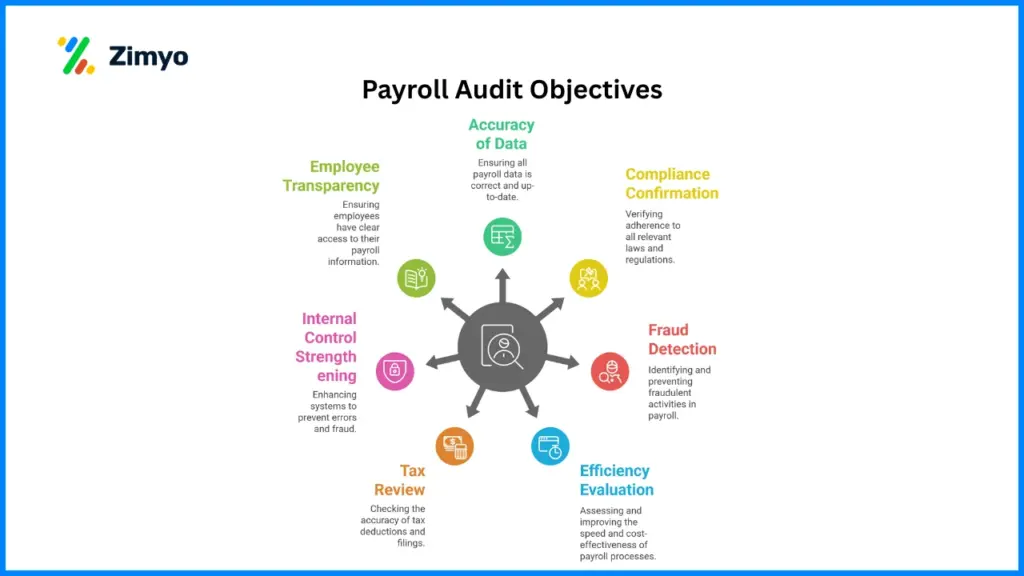
Key Objectives of a Payroll Audit
1. Improve Payroll Accuracy
A payroll audit helps verify employee data, salary calculations, deductions, and attendance records to ensure payroll accuracy. Identifying errors early prevents recurring payroll issues and improves employee trust.
2. Ensure Payroll Compliance
A payroll compliance audit ensures your organization follows statutory requirements such as PF, ESI, TDS, gratuity, and minimum wage regulations. This helps avoid penalties and compliance risks.
3. Detect Payroll Fraud
Regular audits help uncover payroll fraud, including ghost employees, unauthorized payments, and duplicate transactions. Reviewing payroll records improves accountability and financial security.
4. Increase Process Efficiency
A payroll audit process helps identify manual bottlenecks and inefficiencies. Businesses can improve accuracy and save time by implementing payroll automation and modern payroll software.
5. Verify Tax Deductions and Filings
Audits ensure TDS, professional tax, and other statutory deductions are calculated correctly and filed on time. This supports both payroll compliance and accurate tax reporting.
6. Strengthen Internal Controls
A payroll audit reviews approval workflows and access controls to reduce errors and fraud risks. Strong internal controls improve transparency and support effective payroll compliance management.
7. Build Employee Trust
Accurate and timely salary payments improve employee confidence in the organization. A well-managed payroll processing system reduces disputes and enhances the overall employee experience.
Benefits of Payroll Audits for Businesses
Audits help identify discrepancies in salary calculations, attendance records, and employee classifications before they become recurring issues. This ensures employees are paid accurately and on time, improving trust and overall employee engagement. Detecting a misconfigured payroll rule early prevents larger payroll errors across the workforce, while cleaner and more accurate data makes future payroll audits smoother and more efficient.
When your internal records are well-organized, government inspections and external audits become much easier to manage. With proper Employee Document Management, payroll records, compliance documents, and employee files remain accessible, accurate, and audit-ready. This eliminates last-minute document searches and helps ensure that all records are reconciled, filed, and readily available when needed. Strong internal documentation practices make external audits far smoother and more efficient.
Steps to Prepare for a Successful Payroll Audit
1. Gather Payroll Records
Collect employee data, attendance records, salary slips, tax documents, and previous payroll audit reports. Organized records make the payroll audit process faster and more accurate.
2. Review Payroll Policies
Check salary structures, bonuses, deductions, and approval workflows to ensure they align with current laws and payroll compliance requirements.
3. Reconcile Payroll Data
Compare payroll records with bank statements and accounting ledgers to identify discrepancies. This helps improve payroll accuracy and financial reporting.
4. Test Payroll Software
Review your payroll software or HRMS ROI to ensure tax calculations, attendance tracking, and deductions are working correctly. Reliable systems simplify payroll compliance audits.
5. Verify Data Security
Review user access, backups, and security controls to protect sensitive payroll information. Strong security is essential for effective payroll compliance management.
6. Involve Key Stakeholders
Coordinate with HR, finance, and compliance teams to ensure all required information is available and responsibilities are clearly assigned.
7. Identify Risk Areas
Review previous compliance issues, tax errors, or delayed payments to address potential problems before the audit begins.
8. Create an Audit Schedule
Plan the scope and frequency of audits. Regular payroll audits in India, whether quarterly or annually, help maintain compliance and reduce payroll risks.
Following these steps helps businesses conduct a smooth payroll compliance audit, improve payroll accuracy, and strengthen overall compliance management.
Payroll Audit Process Step by Step
Step 1: Review Employee Data
Verify employee records, job details, salary structures, and employment status. Accurate employee data is the foundation of a successful payroll audit.
Step 2: Validate Attendance Records
Cross-check attendance, leave, and overtime data with payroll calculations. This helps improve payroll accuracy and prevents salary discrepancies.
Step 3: Verify Salary Calculations
Review base pay, bonuses, incentives, and deductions to ensure calculations align with company policies and legal requirements. Using a salary calculator can help verify payroll calculations, improve accuracy, and identify discrepancies before payroll is processed.
Step 4: Check Statutory Compliance
Confirm PF, ESI, TDS, professional tax, and other statutory deductions are calculated and deposited correctly. This is a critical part of payroll compliance in India.
Step 5: Identify Fraud and Irregularities
Look for duplicate employee records, unauthorized payments, or unusual payroll changes. Regular audits help prevent payroll fraud and financial losses.
Step 6: Reconcile Financial Records
Compare payroll data with bank statements and accounting records to identify mismatches and maintain accurate financial reporting.
Step 7: Prepare the Payroll Audit Report
Document findings, highlight compliance issues, and provide recommendations. A detailed payroll audit report helps organizations address risks and improve processes.
Step 8: Implement Corrective Actions
Resolve identified issues, improve controls, and automate repetitive tasks using payroll software or a payroll processing system to reduce future errors.
By following this payroll audit process step by step, businesses can improve payroll accuracy, strengthen compliance, and create a more reliable payroll management system.
Comprehensive Payroll Audit Checklist for Employers
| Category | Key Items to Review | Purpose / What to Verify |
|---|---|---|
| Employee Master Data | Verify employee name, ID, designation, department, joining date, and update transfer, promotion, or exit records. Check for duplicate or inactive employees. | Ensure data accuracy and identify ghost employees or duplicate records. |
| Attendance & Time Tracking | Review attendance, leave, overtime, holiday records, and attendance-to-payroll integration. | Ensure attendance data is accurately reflected in payroll calculations. |
| Salary Calculation & Approvals | Validate gross pay, net pay, bonuses, incentives, deductions, and approval workflows. | Ensure salary calculations are accurate and all payments are authorized. |
| Statutory Deductions & Compliance | Check PF, ESI, TDS, professional tax, gratuity, bonus compliance, and timely statutory deposits. | Maintain payroll compliance and avoid legal penalties. |
| Reconciliation with Accounting | Match payroll records with accounting ledgers, bank statements, and outstanding liabilities. | Ensure financial accuracy and consistency between HR and finance records. |
| Tax Audit & Filings | Verify TDS calculations, Form 16 generation, filing timelines, and previous audit observations. | Ensure tax compliance and accurate statutory reporting. |
| Data Security & Access Control | Review payroll access permissions, encryption settings, backups, and system audit logs. | Protect sensitive employee and payroll data from unauthorized access. |
| Documentation & Record Keeping | Confirm payroll reports, salary slips, tax forms, compliance documents, and audit records are properly stored. | Maintain complete records for future audits and compliance checks. |
| Error Tracking & Reporting | Identify recurring payroll errors, review corrective actions, and document process improvements. | Strengthen payroll controls and improve payroll accuracy over time. |
| Post-Audit Implementation | Review audit findings, assign action owners, create timelines, and implement process improvements. | Close identified gaps and prepare for future payroll audits effectively. |
Best Payroll Software for Compliance in India
- Automated statutory compliance. The software should handle PF, ESI, TDS, professional tax, and gratuity on its own, and update the rules automatically when laws change. That spares your team from tracking every amendment by hand and keeps deductions correct even when thresholds shift mid-year. For multi-state operations, especially, this alone saves a huge amount of effort.
- A built-in payroll AI agent. Look for a system that catches discrepancies, duplicate payments, and unusual patterns as they happen rather than at year-end. A good payroll AI agent acts like a second set of eyes that never gets tired, flagging the odd reimbursement or missed deduction the same day it occurs. That real-time safety net is exactly what turns audits from stressful to routine.
- A connected payroll processing system. Your payroll shouldn’t live on an island. The right payroll processing system plugs straight into attendance management, leave, and accounting so data flows without manual re-entry, and fewer handoffs mean fewer chances for things to break. When everything talks to everything else, your numbers stay consistent end to end.
- Audit-ready reporting. The software should let you generate a clean payroll audit report in a few clicks rather than a few weeks of spreadsheet wrangling. Ready-made compliance reports make both internal and external audits far smoother, so you spend your time reviewing findings, not assembling data. That’s a real time-saver when deadlines are tight.
- Solid access controls and security. Payroll data is sensitive, so strong permissions, encryption, and change logs aren’t optional. The system should let you control exactly who sees and edits what, protecting you from both breaches and accidental edits. It also gives auditors confidence that your data hasn’t been tampered with.
Conclusion
FAQs
What is a payroll audit?
A payroll audit is a detailed review of a company’s payroll records to ensure employee payments, tax deductions, and compliance processes are accurate and legally correct.
What is the HRMS payroll process?
The HRMS payroll process involves automating salary calculations, deductions, tax filings, and payslip generation through a Human Resource Management System for better accuracy and efficiency.
What are the 7 steps in the audit process?
The 7 steps in the audit process are: planning, risk assessment, internal control testing, evidence collection, evaluation, reporting, and follow-up.
What are the 5 payroll steps?
The 5 payroll steps are: collecting employee data, calculating gross pay, applying deductions, processing payments, and maintaining payroll records.