

Running a small or medium-sized business is exciting, but it is also challenging. Limited teams, tight budgets, and fast-moving customer expectations can make it hard for SMBs to grow at the pace they want. This is where AI (Artificial Intelligence) becomes a game-changer. Today, AI is no longer a luxury reserved for large enterprises. It is now affordable, easy to adopt, and built specifically for SMB needs, helping them automate tasks, save costs, and scale smarter.
In 2026, SMBs are going to use AI to:
- Make smarter business decisions
- Automate repetitive work
- Improve hiring and HR operations
- Manage customers more efficiently
- Boost productivity with fewer people
- Enhance employee experience
In this blog, we explore the top HR AI software solutions that help SMBs operate faster, smarter, and with less effort and how Zimyo stands out as a leading AI platform built for HR and workforce management.
List of Top HR AI Software for SMBs
Below is a curated list of AI-powered HR tools that help small and medium businesses manage hiring, people operations, and employee experience more efficiently.
- Zimyo
- Eightfold AI
- Disprz
- Zoho Recruit
- Leena AI
- Paradox AI (Olivia)
- Humanly.io
- Xobin
- Incruiter
Top HR AI Software for SMBs: Indepth
1. Zimyo
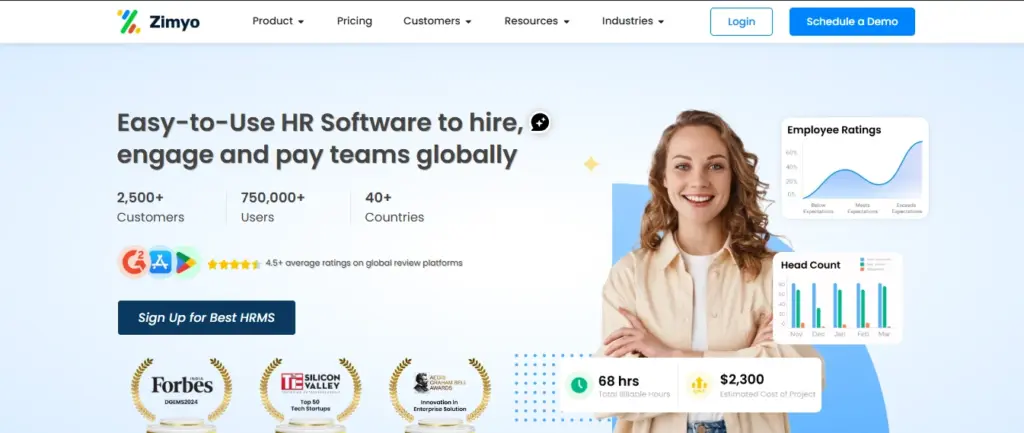
Zimyo is an all-in-one HR and payroll software designed specifically for growing businesses. Its AI capabilities help SMBs automate HR processes, reduce manual workload, and improve employee experience, all in one system.
Key AI Features:
- AI-based resume parsing and candidate scoring
- AI chatbot for employee FAQs and policy assistance
- Automated payroll calculations and compliance support
- Voice-enabled actions for daily HR tasks
- Workforce dashboards and predictive insights for decision-making
2. Eightfold AI
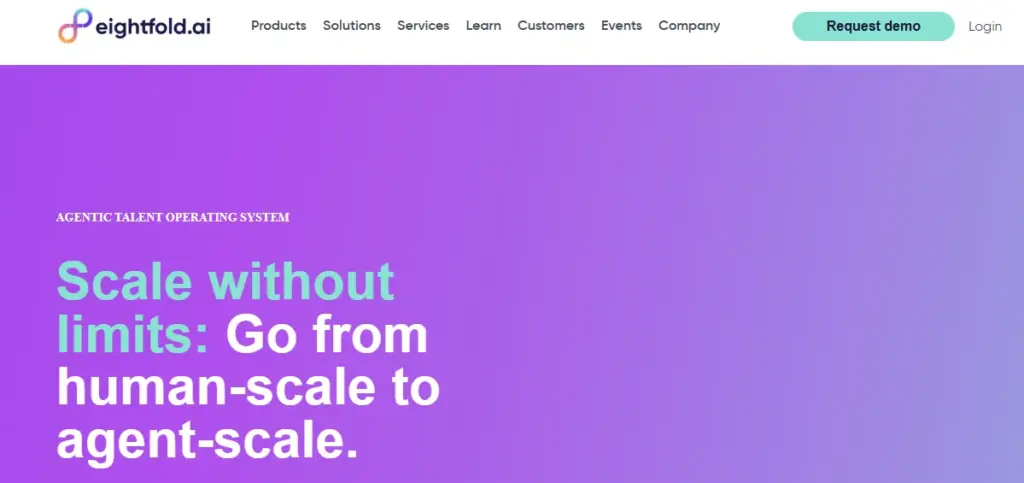
Eightfold AI focuses on talent intelligence. It helps companies find the right candidates and supports internal mobility by understanding skill sets and career growth patterns.
Key Features:
- Skill-based matching for applicants and employees
- Predictive hiring suggestions
- Workforce planning and talent forecasting
- Diversity-focused recommendations
3. Disprz
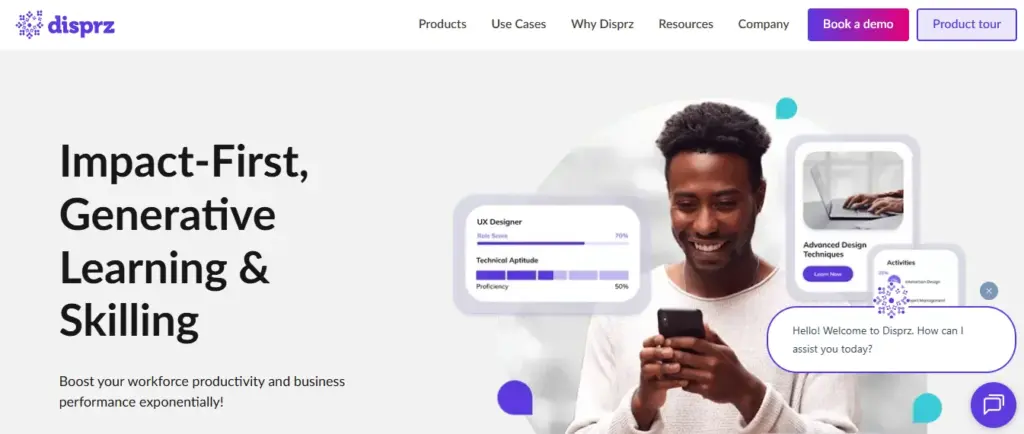
Disprz is an Artificial intelligence-powered learning and talent development platform that helps small and medium businesses build employee skills and improve performance. It adds intelligence to training, upskilling, internal mobility, and engagement – making it useful for SMBs that want to grow talent from within.
Key Features:
AI Skill Gap Analysis
Personalized Learning Paths
Content Curation & Recommendations
Performance and Engagement Tracking
Mobile-First Experience
4. Zoho Recruit
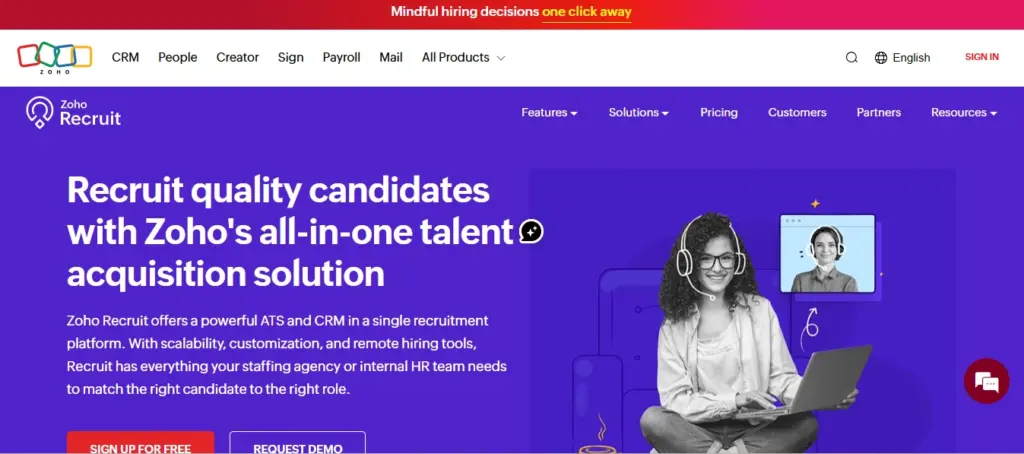
Zoho Recruit is an AI-enhanced applicant tracking system ideal for SMBs that want to simplify sourcing, screening, and hiring candidates.
Key Features:
- AI-powered resume reading and matching
- Job posting automation across platforms
- Candidate scoring for faster shortlisting
- Interview scheduling and email templates
5. Leena AI
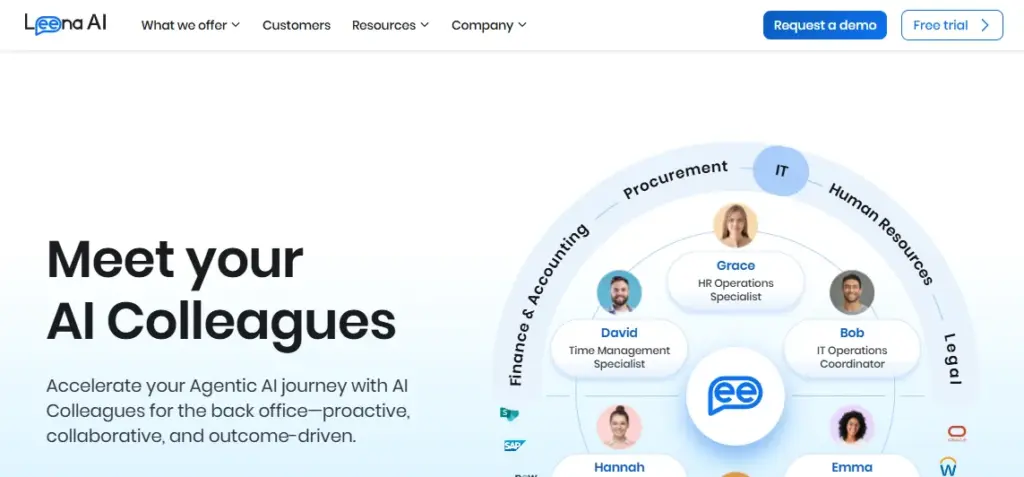
Leena AI provides an AI-driven HR helpdesk. It answers employee questions instantly, reducing the number of support queries HR teams handle manually.
Key Features:
- 24/7 conversational chatbot
- Automated issue-ticket creation
- Onboarding checklists and lifecycle support
- Analytics on employee requests and engagement
6. Paradox AI (Olivia)
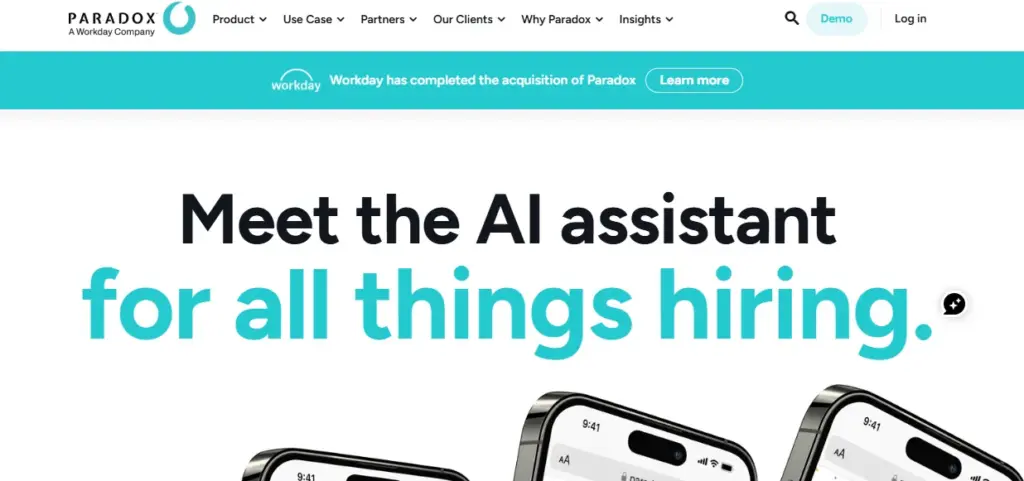
Paradox AI is known for its virtual recruiter “Olivia,” which automates early hiring conversations and scheduling, perfect for fast-paced or high-volume recruitment.
Key Features:
- Chat-based candidate screening
- Automatic interview scheduling
- Mobile-first hiring experience
- Candidate FAQs answered instantly
7. Humanly.io
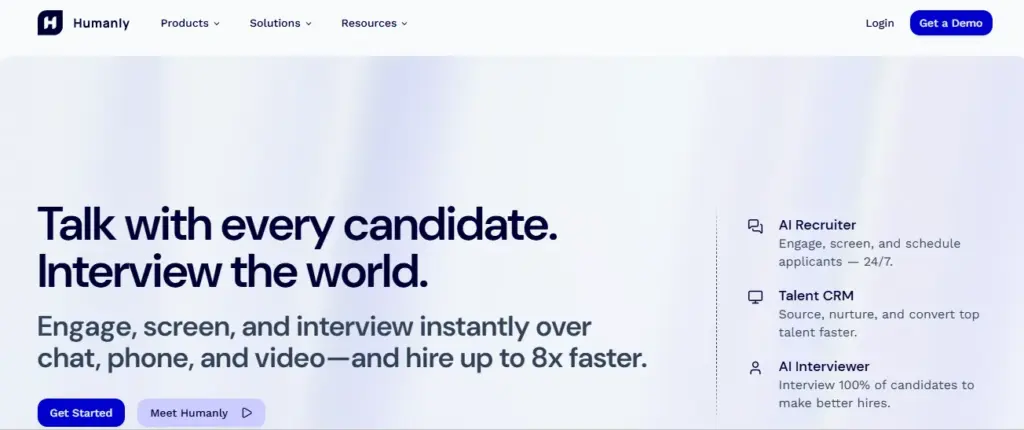
Humanly.io helps recruiters automate first-level screening conversations and analyze responses to shortlist stronger talent faster. per mattis, pulvinar dapibus leo.
Key Features:
- AI chat-based candidate pre-qualification
- Automated scoring and shortlisting
- Interview analytics for HR teams
- Candidate experience tracking
8. Xobin
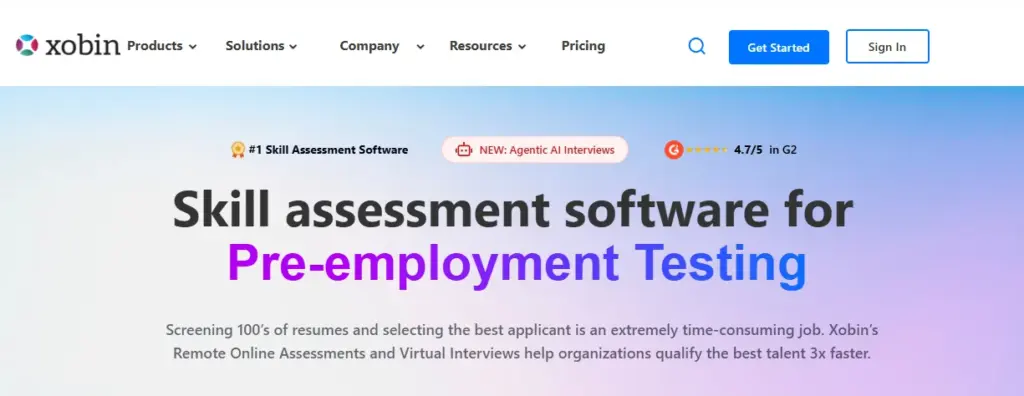
Xobin is a talent assessment platform that uses Artificial intelligence to run skill-based tests, automate proctoring, and support unbiased hiring decisions.
Key Features:
- AI-powered online assessments
- Automated remote proctoring
- Role-based test library
- Scoring and reporting dashboards
9. Incruiter
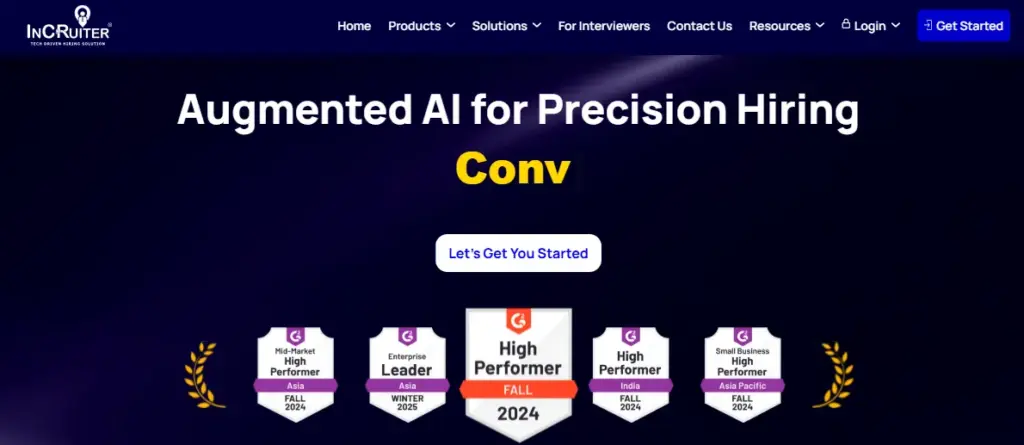
Incruiter is a recruitment automation platform built to help small and mid-sized businesses hire faster. It centralizes job posting, resume tracking, and candidate communication, so HR teams can manage the full hiring process without juggling multiple tools.
Key Features:
- AI Resume Screening & Shortlisting
- Smart Job-to-Candidate Matching
- Automatic Job Posting
- AI Interview Support
- Applicant Tracking Dashboard
Why SMBs Need AI?
Small and medium-sized businesses are about to experience an era where speed, efficiency, and effective decision-making are more valuable than before. In 2026, “customer expectations will continue to accelerate, competition increases, and holding talented people is costly.” Ai assists SMBs in overcoming such difficulties because it works faster, involves less manual work, and provides perspectives that may not be possible for humans.
AI could be utilized for automating certain mundane tasks such as performing payables and payables-related data, filtering resumes for candidates based on their requirements, making updates for employees, tracking attendance, and even following up with the clients. This is the kind of job that would have taken the company hours but now requires only a few minutes.
By using AI, businesses also benefit in terms of decision-making capacity. The systems are able to scan the information they need regarding the employees or the marketplace/customers and make suggestions based upon the need. This includes when to recruit more employees or strategies to retain employees or regions where productivity is decreasing. By the looks of it, AI is the equalizer for small businesses
What Should SMBs Look For in AI Software?
Before purchasing any HR AI software, small businesses need to check if the software can help them in terms of time and cost savings. An ideal AI solution should be user-friendly and should also fit into the budget of small businesses.
Some of the most important factors for SMBs are-
Ease of Use – It should be easy to use even for teams with little technical knowledge.
Automation Capabilities – It has to be able to automate repetitive tasks such as payment activities, resume screening, approvals, analysis, among others.
Integration Support – It integrates easily with CRMs, payroll software, job portals, and communication applications. Whether an application is integrated is determined on a case-by-case basis.
Scalability – With the growth from providing 20 people to providing for 200, the application should be scalable.
Data Security & Compliance – Since SMBs work with confidential information about employees and payments, data security best practices apply.
AI Insights & Reports – In addition to being able to automate, it must enable leaders to make better decisions using reports, trends, and forecasts.
Cost Effectiveness – SMBs have limited budgets, and therefore their pricing needs to be transparent and adaptable.
Before shortlisting a tool, SMBs should ask for a free demo or trial experience to assess usage, dashboarding, and automation workflow. A tool which takes months of orientation or costly training is not ideal for SMBs.
How SMBs Can Begin to Leverage AI?
There are many SMBs interested in using AI but lacking a clue on where to start. The key is to identify where they should begin by focusing on one problem area and then automating it first. For instance, the human resources team may consider automating the tracking of employees’ attendance, while the sales team may consider automating CRM notifications and/or lead scores using AI.
Step-by-step adoption strategy:
1️⃣ What is your greatest operation pain – What is slowing you down? Payroll errors? Sorting resumes?
2️⃣ Pick a tool to solve it with AI – Do not consider using multiple platforms.
3️⃣ Request demos and compare 2-3 solutions – Test usability, dashboards, costs, analytics, and automation levels.
4️⃣ Train your team gradually- Begin training 1-2 people on your team and then extend it to your entire team.
5️⃣Measure results every month – Measure time saved, cost saved, error reduced, and feedback from users.
6️⃣ Scale AI into other departments – Once confident, expand to HRMS, CRM, customer support, analytics, etc.
Conclusion:
AI is not replacing people it is helping them do more with less effort. For SMBs trying to grow in 2026, AI is one of the smartest investments: it gives small teams the power of a big workforce.
Whether you need help in hiring, payroll, attendance, customer communication, or daily work, there is an AI tool available. And if you are looking for a complete HR solution with built-in AI, Zimyo is built exactly for SMBs like you.
Frequently Asked Questions (FAQs)
Which AI tool is best for HR?
For an all-in-one solution that manages payroll, attendance, hiring, and performance, Zimyo is a strong choice because it brings automation and analytics into one single platform.
Which AI tool is best for small businesses?
Small businesses need tools that are easy to use and affordable. Platforms like Zimyo and Freshteam work well because they offer quick setup, simple dashboards, and automation that helps small teams save time without needing technical skills.
Is HRMS suitable for small businesses?
Yes, HRMS is suitable because it eliminates manual spreadsheets, automates attendance and payroll, and keeps employee data organized.
What is the best way for HR to use AI?
The best starting point is to automate repetitive tasks. HR teams can use AI to scan resumes, calculate payroll, send reminders, track attendance, and collect employee feedback.