
Operating a service organization means that the product of the organization is its people. If there is a delay in delivering consulting services or an exhaustion of a support agent, the financial bottom line will feel the effect of that almost right away. It is precisely this connection between everyday activity and billable performance that makes a proper performance management tool so important for service organizations.
Unfortunately, most existing performance management tools were developed with product organizations and their relatively neat organizational structures in mind. Services are more fluid in nature; people move between projects, bill their hours, deal with many clients at once, and are evaluated not just for their performance but also in terms of their clients’ satisfaction. This is precisely why this guide is going to cover the ten best platforms to be considered in 2026 and what exactly makes them unique.
What Makes Performance Management Different for Service-Based Companies?
It’s useful to understand why service organizations require a different kind of appraisal tool before we go on to compare them.
Firstly, in a service organization, a large proportion of employees’ bill clients. They make money out of their work. Hence, utilization and profitability cannot be separated from performance. A developer with technical skills who has 40% utilization will be a whole different discussion than his colleague who has 85% utilization.
Secondly, working in a service organization is project-oriented and not static. An individual designer could report to three different project managers in a quarter. The annual appraisal, written by only one manager, would fall short of this picture, which makes multi-source feedback suitable for service teams.
Finally, there’s the client perspective. In agencies, consulting organizations, and professional services, what the client thinks about your performance is a significant indicator in itself. Good internal metrics wouldn’t matter much if all your accounts keep turning over.
Skill development is significant as well; your competitive advantage is knowledge and, therefore, the measurement of skills and filling skill gaps is your growth tool rather than HR’s luxury. Given that there are so many service teams that operate on a remote or hybrid basis nowadays, the managers require insight into the people they do not work next to.
It all is relevant for any type of company, whether you are a consultancy with utilization and client results, an agency dealing with creative teams in multiple accounts, an IT services provider with delivery SLAs, any type of professional services firm or staffing company that operates with talent on client locations.
List of the Best Performance Management System for Service-Based Companies
Following is the list of the Best Performance Management System for Service Based Companies:
- Zimyo
- Lattice
- PerformYard
- Culture Amp
- BambooHR
- ClearCompany
- 15Five
- Workleap (Officevibe)
- Betterworks
- Leapsome
Now let us understand each of these in detail and know how they are uniquely different from each other.
Best Performance Management System for Service Based Companies
1. Zimyo
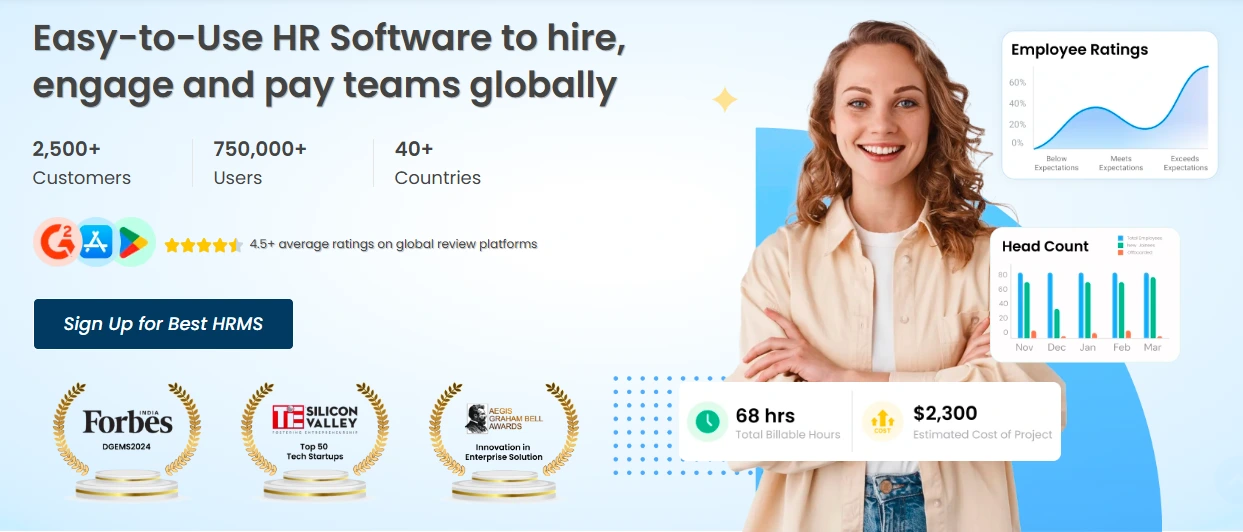
Founded in 2018 and based in Gurugram, Zimyo provides a comprehensive HR tech suite to more than 2,500 companies. Zimyo performance management system is designed to help service-based businesses streamline goal setting, continuous feedback, performance reviews, appraisals, and employee development. As part of Zimyo’s integrated HRMS, the performance management module connects seamlessly with attendance, timesheets, and payroll, ensuring every aspect of employee performance is aligned with business outcomes.

Key Features:
- Feedback and 360-degree feedback for impartial, multiple source feedback.
- Objective-based performance management using OKRs and KPIs.
- Customizable performance cycle and appraisal forms.
- Skill and competency management.
- Bell Curve and calibration for standardization of ratings.
- AI-driven insights and analytics.
- Manager dashboards with real-time workforce data.
- Learning management and development planning.
- Inbuilt HRMS, payroll and timesheet management.
Pros: -
- End-to-end performance plus HRMS in one platform.
- Strong value versus global competitors.
- Strong fit for distributed, project-driven teams.
- Flexible, configurable review workflows.
Cons:
- Some advanced analytics sit in higher tiers.
- Cloud-first, so limited offline access.
- Newer to Western markets than incumbents like Lattice.
Why service-based companies choose it: Efforts and outcomes can be viewed together, since time sheets, utilization rates and appraisals all reside in one system. This feature makes sense for a business that tracks efforts and outcomes from employees spread out on multiple projects and/or accounts.
2. Lattice
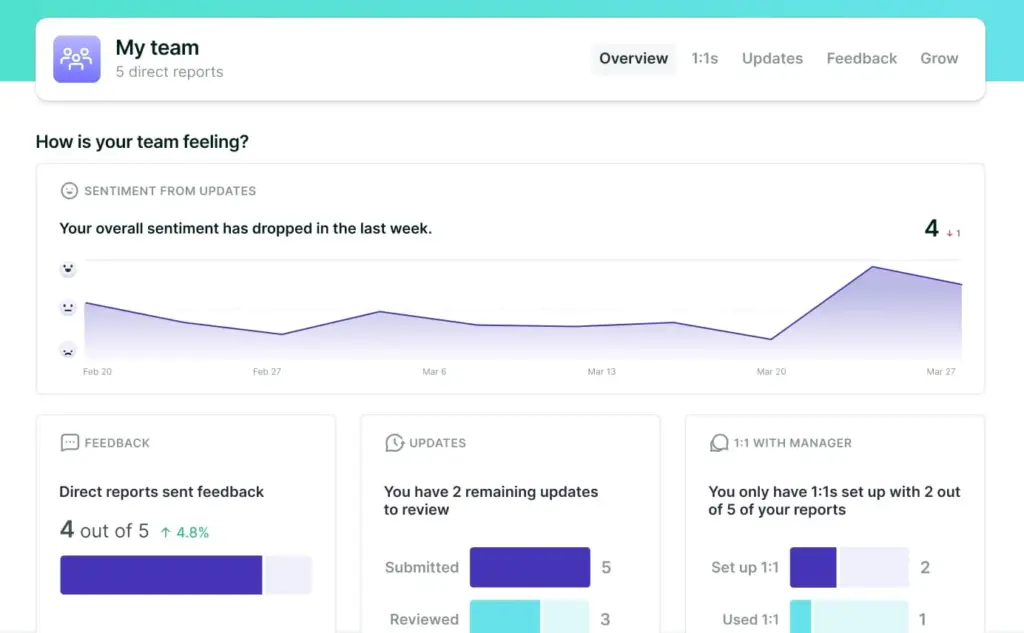
Founded in 2015 in San Francisco, Lattice is one of the most recognizable performance review software solutions, particularly preferred by tech and consulting startups that are at the growth stage.
Best for: Medium-sized service organizations with an established HR team and enough budget for an advanced analytics tool.
Key Features:
- 360 review, manager and peer review.
- Objective and KR tracking.
- Compensation planning linked with performance.
- People analytics and employee engagement survey (as add on).
- Integration with Slack, Bamboo HR and Salesforce.
Pros: -
- Strong analytics capabilities and an impressive interface design.
- Good for calibrations and structured review cycles.
- Modular – Begin with Performance, then Engagement or Compensation.
Cons: -
- High learning curve for small groups.
- Difficulty increases rapidly when adding modules.
- Minimum annual cost eliminates small companies.
Why service-based companies choose it: Its calibration and compensation tools suit consulting and professional services firms that run formal, cyclical reviews and want defensible pay decisions.
3. PerformYard
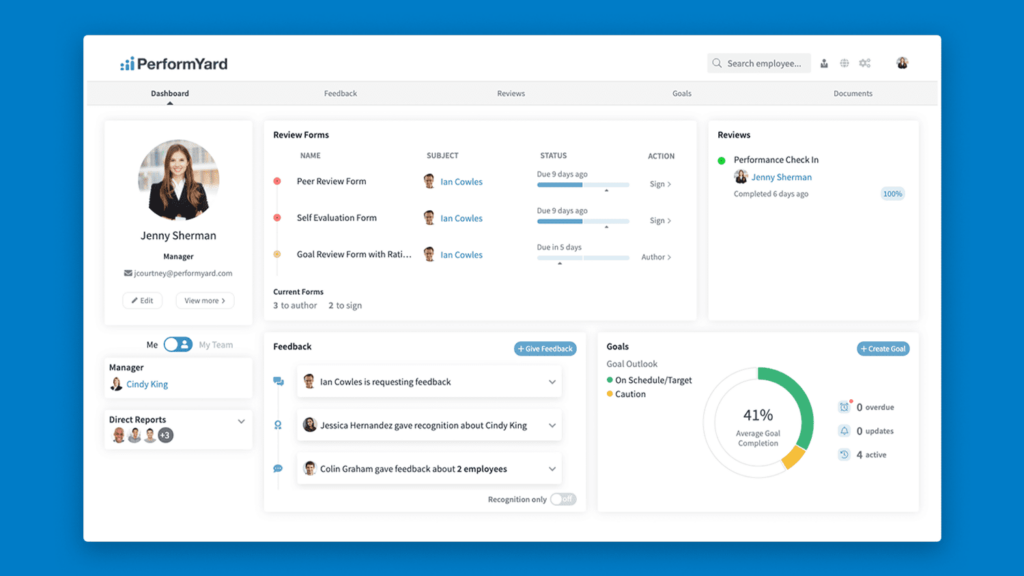
PerformYard, which was released in 2015 as well, has established its niche as the streamlined and budget-friendly choice that excels at performance reviews only.
Best for: Service businesses that need very customizable review schedules and don’t want to pay for a bulky bundle.
Key Features:
- Extremely customizable 360-degree reviews.
- Ongoing feedback and check-ins.
- Goal tracking.
- Advanced analytics and performance history.
- Integrated recognition with Slack and Teams.
Pros: -
- The most customizable review process at its price point.
- Simple, no-frills implementation.
- A lightweight option to alternatives that are more robust.
Cons: -
- Not very engaging or educational.
- Not as advanced in terms of goal setting.
- Lower brand recognition than other companies.
Why service-based companies choose it: Companies with strange or unique survey formats will enjoy the flexibility offered by the form builder. For companies where reviews are the key but not surveys, there is little value to match.
4. Culture Amp
Culture Amp was founded in 2011 and started as an employee engagement and survey solution provider and then evolved to become a performance management software vendor.
Best for: Large service-based companies with an engagement first mentality.
Key Features:
- Engagement and pulse surveys grounded in research.
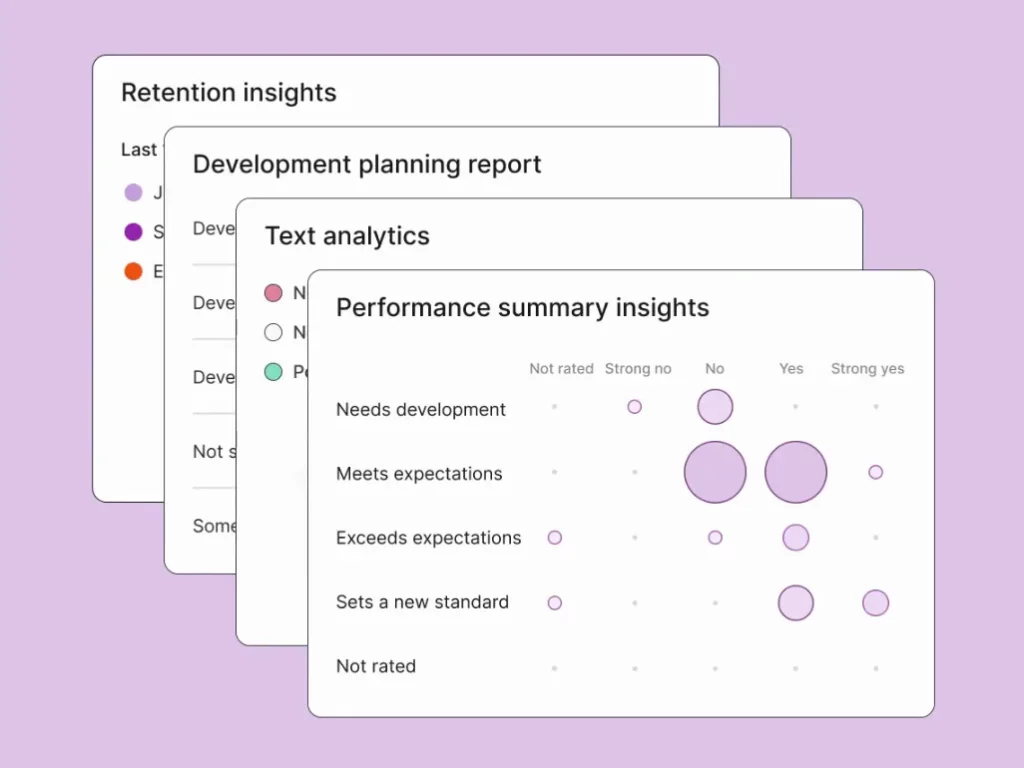
- Predictive analytics to predict retention risks.
- Reviews, objectives, one-to-ones, and calibration.
- AI-coaching for managers to draft effective feedback.
- Development-oriented processes.
Pros: -
- Great engagement metrics and benchmarking.
- Good coaching by managers.
- Combination of performance with sentiment metrics.
Cons: -
- Difficult survey and review process to set up.
- It takes longer time to implement compared to most other products.
- The performance metrics module is the result of a merger.
Why service-based companies choose it: When retention is the top risk, common in high-burnout agencies and consultancies, its predictive analytics help you spot flight risk before resignation letters land.
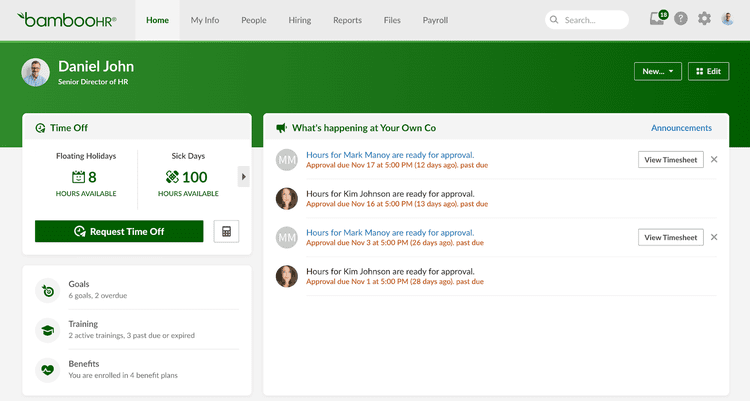
5. BambooHR
BambooHR was started in 2008. This company mostly operates an HRIS system which includes performance management along with basic HR services.
Best for: Small service companies which need basics of HR management with some good performance management system in one system.
Key Features:
- 360-degree performance appraisals.
- Multiple customizable review cycles.
- Goal tracking with alerts.
- HRIS + ATS + Performance Management in one.
Pros: -
- Really easy to use.
- HRIS + performance management together.
- Great choice for small HR departments.
Cons: -
- Weak custom reports.
- Difficulties at an enterprise level.
- Performance management is an add-on tool.
Why service-based companies choose it: For a 30–150 person agency that wants one friendly system for the whole HR lifecycle, it’s an easy adoption win.
6. ClearCompany
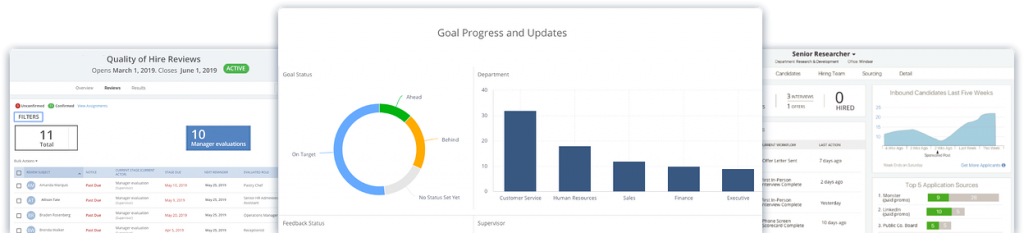
Founded in 2004, ClearCompany integrates recruitment, onboarding, and performance management throughout the entire employee lifecycle.
Best for: Services organizations recruiting large numbers of people and wanting integration between recruiting and performance.
Key Features:
- ATS together with performance in one system.
- Customized performance workflows.
- Goal alignment and review process.
- Payroll and HRIS integration.
Pros: -
- Smooth connection from recruiting to performance.
- Very flexible and customizable workflows.
- Comprehensive coverage of the lifecycle.
Cons: -
- Less user-friendly interface compared to modern solutions.
- Can be more expensive than specialized competitors.
- Requires initial configuration.
Why service-based companies choose it: Staffing companies and fast-scaling IT services firms benefit when the same platform tracks a person from applicant to appraisal.
7. 15Five
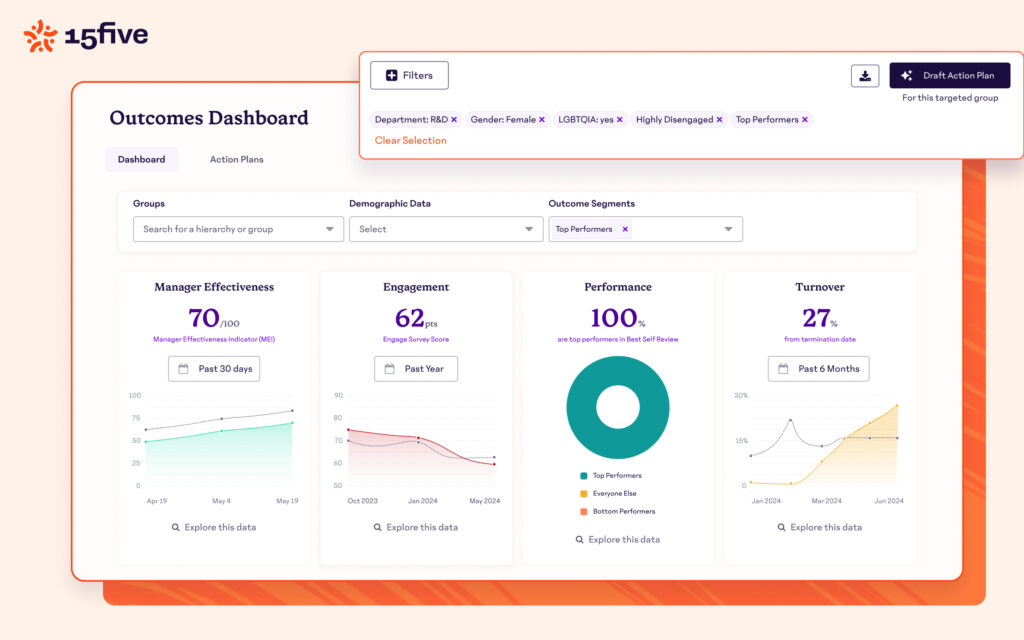
The company founded in 2011 was the first to offer lightweight weekly check-ins and created an ongoing performance management solution based on manager coaching.
Best for: Service organizations with less than 500 employees who think that effective managers, not lengthy processes, motivate people.
Key Features:
- Weekly check-ins and 1:1 models.
- Best-Self Review for 360 reviews.
- OKRs & Goal Tracking.
- High Fives Peer Recognition.
- Manager coaching and AI assistance.
Pros: -
- Best-in-class feedback loop.
- Excellent tools for manager development.
- High customer retention and satisfaction.
Cons: -
- No in-built compensation planning.
- Weekly schedule can be additional burden if not implemented properly.
- Analytics are less robust compared to Lattice.
Why service-based companies choose it: Distributed service teams that live in weekly check-ins get a steady coaching cadence that keeps remote employees connected to their managers.
8. Workleap (Officevibe)
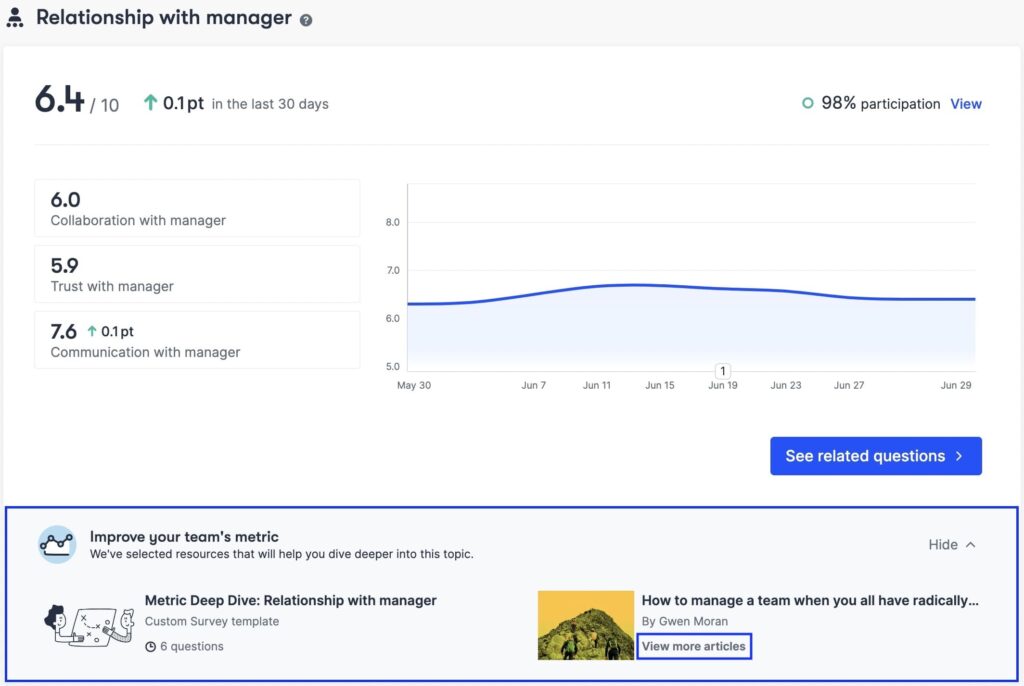
Workleap (previously known as Officevibe), established in 2013 in Canada, is focused on light, user-friendly performance and feedback management.
Best for: Small-scale service teams who prefer engagement over detailed analytics.
Key Features:
- Simple, collaborative performance evaluations.
- Pulse surveys.
- Recognition (“Good Vibes”).
- Feedback flow templates.
Pros: -
- Very easy to implement.
- Very good employee engagement technology.
- Low barrier for employees.
Cons: -
- Lacks enterprise-level depth.
- Heavily depends on managers using data.
- Lacks deep analytics.
Why service-based companies choose it: Small agencies that want a gentle, low-overhead way to keep a pulse on morale gravitate here.
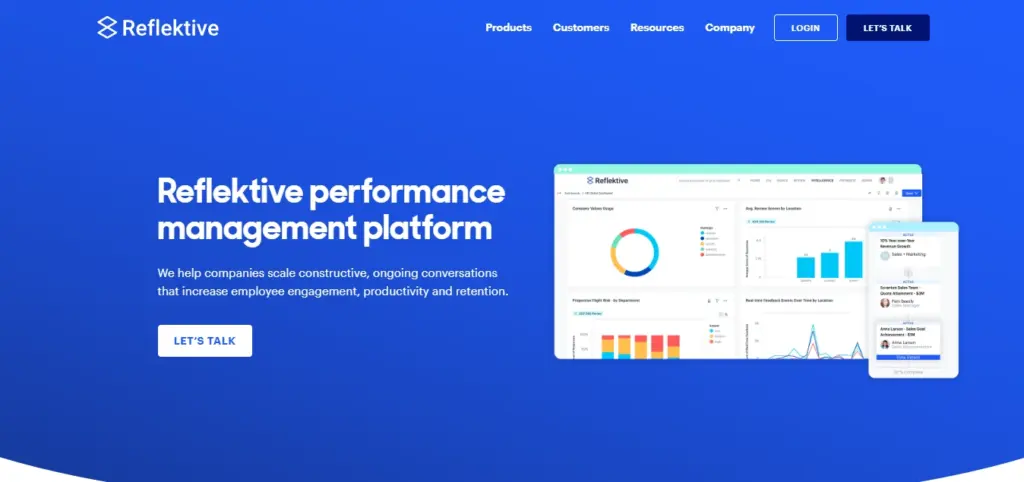
9. Reflektive
Founded in 2013, Betterworks is an enterprise-grade platform built around continuous performance, goals, and OKRs, with growing AI capabilities.
Best for: Large service enterprises running company-wide OKR programs.
Key Features:
- Continuous conversations, feedback, and recognition.
- Deep goal and OKR management.
- Calibration and succession planning.
- AI-assisted reviews and bias detection.
- Talent analytics and multilingual support.
Pros: -
- Enterprise-grade depth.
- Excellent for cascading OKRs.
- Strong analytics and Workday integration.
Cons: -
- Heavy for SMBs.
- Longer, more involved implementation.
- More than smaller teams need.
Why service-based companies choose it: Large consulting and IT services firms that need goals to cascade cleanly from leadership to individual contributors across thousands of people find Betterworks built for exactly that.
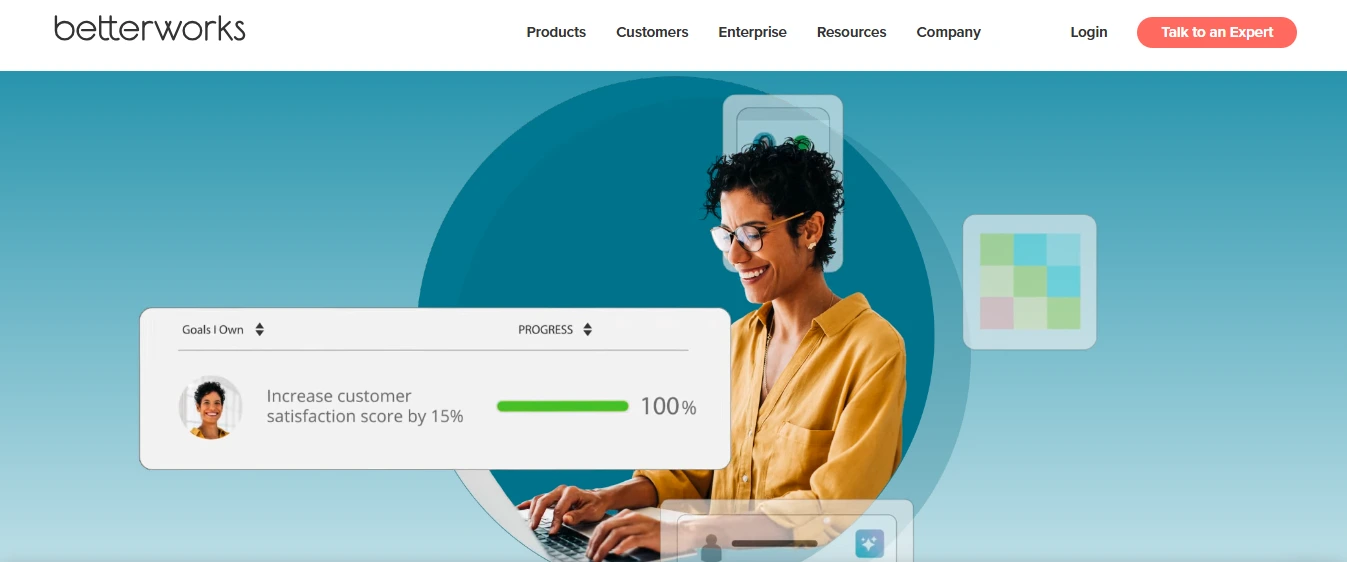
10. Betterworks
Leapsome is one more platform that can be mentioned as a solid option to consider, which is highly rated and modular in nature, offering a combination of reviews, goals, learning, and engagement.
Best for: Medium market service companies looking for performance management with learning and development incorporated into it.
Key Features:
- 360 reviews and continuous feedback.
- Goals and OKRs.
- Learning paths and competency frameworks.
- Engagement surveys.
- Analytics across the talent lifecycle.
Pros: -
- Learning and performance in one platform.
- Clean, modern interface.
- Strong native HRIS integrations.
Cons: -
- Modular setup grows more complex as you expand.
- Some depth trade-offs versus specialist tools.
- Newer to some buyers than incumbents.
Why service-based companies choose it: Firms whose edge is expertise appreciate that skill-building lives right alongside reviews, closing gaps as they surface.
Case Study: How Kommunicate Simplified Its HR Processes with Zimyo
The company: Kommunicate is an AI-powered customer service automation platform based in Bengaluru, offering generative AI chatbots and live chat solutions that help businesses automate support, cut costs, and improve customer experiences. Trusted by global brands like Amgen, Rakuten, and Bridgestone, Kommunicate is also part of Google’s 2024 AI First Accelerator. As a lean, fast-moving SaaS company of around 36 people, it’s a textbook service-based organization where every hour of admin is an hour not spent on customers.
The challenge: Like many growing tech firms, Kommunicate’s HR function was weighed down by manual, time-consuming processes. Payroll, attendance, compliance, and everyday HR tasks ate into the team’s capacity, and there was limited transparency across those processes. The company needed a system its small HR team could run without heavy IT support.
The solution: Kommunicate adopted Zimyo’s HRMS to bring its core HR operations onto one platform. The team put several modules to work, including leave, time and attendance, salary disbursement, bonus and overtime planning, and statutory compliance. Crucially, the platform was self-service enough that HR could get up and running independently. As Sonali Aditya, Senior HR Admin at Kommunicate, put it: she was able to implement the platform on her own, and uses it for assigning tasks, running surveys and polls, and more praising the ease of use and self-onboarding.
The results: After moving to Zimyo, Kommunicate reported measurable gains across its HR operations:
- 90% reduction in manual effort for payroll
- 3x improvement in overall HR efficiency
- 75% increase in process transparency
- 2x faster issue resolution
Why it matters for service firms: Kommunicate’s story shows what integrated HRMS-plus-performance can do for a service business. By collapsing scattered manual work into one system, a tiny HR team reclaimed hours, gained visibility, and could focus on people rather than paperwork exactly the kind of leverage distributed, project-driven service companies are looking for.
Comparison Table
| Software | Best For | Continuous Feedback | 360 Reviews | Goal Management | Analytics |
|---|---|---|---|---|---|
| Zimyo | Integrated HRMS + Performance | ✔️ | ✔️ | OKRs & KPIs | AI-powered |
| Lattice | Analytics-heavy mid-market | ✔️ | ✔️ | OKRs | Strong |
| PerformYard | Custom review cycles | ✔️ | ✔️ | Basic | Solid |
| Culture Amp | Engagement-led organizations | ✔️ | ✔️ | ✔️ | Predictive |
| BambooHR | Small firms, all-in-one HR | Limited | ✔️ | ✔️ | Basic |
| ClearCompany | Recruiting + Performance | ✔️ | ✔️ | ✔️ | Moderate |
| 15Five | Manager-coaching culture | ✔️ | ✔️ | OKRs | Good |
| Workleap | Lightweight engagement | ✔️ | Limited | Basic | Basic |
| Betterworks | Enterprise OKR programs | ✔️ | ✔️ | Deep OKRs | Deep |
| Leapsome | Learning + Performance | ✔️ | ✔️ | OKRs | Strong |
Key Features to Look For
However, everything is not necessary, but there is something to consider for service providers.
First of all, goal management: OKR and KPI that will connect employees’ tasks and activities to their performance at the client end and revenues from clients. This should be combined with continuous feedback, so that information about employees would come continuously, not on an annual basis, as well as 360-degree review, as floating employees can be evaluated only through people who have worked with them.
When it comes to measuring performance, competency tracking, a skill matrix, performance analytics and manager dashboards will help you make the right decision out of all this information. Automated appraisal and self-appraisal from employees will reduce administrative burden and allow them to voice their opinions.
If we are talking about service work in particular, project-based performance view is what one should consider. More and more often learning recommendations and AI are helping managers to find skill gaps and some trends, such as employee leaving or under-utilization.
Common Mistakes While Choosing a Performance Management System
Many teams purchase the right solutions and then regret making them. Below is what they do wrong.
First of all, they purchase HR software without scalability – the solution works fine for 40 users, but fails when scaled to 200. Next in line comes lack of integrations – inability of the software to work with your HRMS, payroll systems, and project management tools will make you work in double entries.
Annual-only reviews are also a mistake. Services business is based on projects, not calendar years, so the yearly review system will become outdated within weeks. As for a tool that lacks any analytical functions, it means that you have to make decisions based on your guesswork rather than statistics.
Of course, don’t forget about the poor employee experience – the software that is hard to use will become unused very quickly, so you’ll lose your access to data. Absence of automation means more work in Excel. And for 2026, failure to pay attention to the mobile accessibility leaves no chance to get data from field consultants and on-site employees who never touch their laptops.
Why Continuous Performance Management Matters ?
The annual review is fading for good reason. Frequent feedback catches problems while they’re still fixable rather than six months later in a formal sit-down.
Continuous models lean into coaching and recognition -small, regular moments that shape behavior far more than one big conversation. Layer in quarterly reviews and you get a rhythm that matches how service projects actually unfold.
The payoff is measurable: teams that shift to continuous performance management consistently report productivity improvements, stronger employee engagement, and better retention. For service firms where attrition means lost client knowledge, that last one is worth real money.
Benefits for Service-Based Organizations
When the right system is in place, the gains compound across the business.
You get higher productivity as goals stay visible and current, plus better utilization because effort and billable output sit side by side. Clients feel it too, in stronger client outcomes driven by teams aligned to delivery.
Operationally, automation delivers faster appraisals and frees HR from busywork. Continuous feedback lifts employee engagement and drives reduced attrition. Managers gain better visibility into distributed teams they rarely see in person.
Best of all, everything becomes evidence-based: data-driven decisions on promotions, pay, and staffing, and improved accountability because expectations and results are documented and shared.
Conclusion
Choosing the best performance management system for service-based companies comes down to matching the tool to how your teams actually work – across projects, clients, and shifting priorities. The ten platforms here each shine for different sizes and needs, from lightweight engagement tools to enterprise OKR engines.
Start by naming your must-haves: continuous feedback, project-based visibility, HRMS integration, and analytics you’ll actually use. Then shortlist two or three, run demos with your real workflows, and pay attention to adoption, not just feature lists.
For service firms that want performance, engagement, and HRMS working as one system, Zimyo’s performance management software is a strong place to begin – especially if managing distributed, project-driven teams is your daily reality. Whatever you choose, the goal is the same: a motivated workforce delivering measurable results for your clients.
FAQs
What are best performance management systems for service-based companies in India?
Some of the best performance management systems for service-based companies in India include Zimyo, Darwinbox, Keka HR, Zoho People, SAP SuccessFactors, Oracle Fusion HCM, Workday, and Lattice. These platforms offer continuous feedback, goal tracking, appraisals, analytics, and performance reviews to improve workforce productivity.
What is a performance management system for service companies?
A performance management system for service companies is software that helps organizations set goals, track employee performance, provide continuous feedback, automate appraisals, and measure productivity. It aligns employee performance with business objectives, improving client satisfaction, project delivery, and overall workforce efficiency.
How to choose a performance management tool for service industries?
Choose a performance management tool that offers goal tracking, continuous feedback, performance reviews, analytics, HRMS integration, automation, and scalability. Ensure it supports project-based performance, customizable appraisal cycles, and real-time insights to improve employee productivity and business outcomes in service industries.
How to choose a performance management platform for a consulting firm?
Choose a performance management platform that supports goal management, continuous feedback, 360-degree reviews, project-based KPIs, performance analytics, and HRMS integration. Prioritize ease of use, scalability, automation, and real-time insights to help consulting teams improve productivity, client outcomes, and employee development.