
Hiring becomes harder as small businesses grow. What starts as a few resumes quickly turns into overflowing inboxes, missed follow-ups, and messy spreadsheets. When that happens, it’s time for a better system.
That’s where an Applicant Tracking System (ATS) helps. An ATS organizes your entire hiring process, from job posting to onboarding, so you can hire faster without chaos.
In this guide, we cover the best applicant tracking systems for scaling small businesses, including all-in-one HR platforms and AI-powered hiring tools. Whether you’re hiring your first team or expanding across departments, this list will help you choose the right ATS to grow with confidence.
What Is an Applicant Tracking System?
An Applicant Tracking System (ATS) is software that helps businesses manage hiring in one place. It automates tasks like posting jobs, collecting resumes, scheduling interviews, and tracking candidates.
Instead of juggling emails and spreadsheets, recruiters and hiring managers use an ATS to store candidate data, review applications, and collaborate on hiring decisions.
For small businesses, an ATS is a major time-saver. It reduces manual work, speeds up hiring, and keeps the process organized. With the right applicant tracking system, growing teams can focus on building the business, not managing admin work.
Check Out Our ATS Guide For Recruiters.
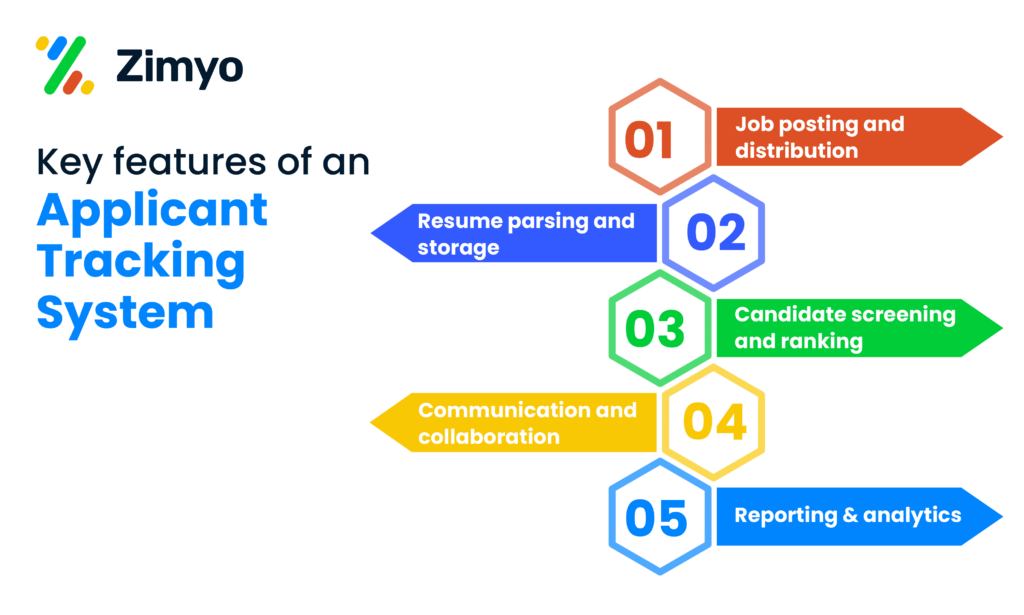
Major Functions of an ATS:
- Posting jobs and sending them to job boards
- Collecting resumes and keyword filtering
- Interview coordination and scheduling
- Tracking candidate communication
- Collaborative feedback and scoring
- Hiring analytics and reporting
Whether scaling a startup or optimizing an expanding HR function, the best applicant tracking system can enable you to attract, engage, and hire the right talent more effectively.
List of Top 12 Best Applicant Tracking System
- Zimyo
- Greenhouse
- BambooHR
- Zoho Recruit
- Workable
- Breezy HR
- JazzHR
- Manatal
- Recruit CRM
- Recruitee
- BullhornLever
- Lever
Best Applicant Tracking Systems for Scaling Small Businesses: In Deatil
Below, we’ve compiled the most powerful and user-friendly ATS systems tools designed for the needs of small businesses and startups aiming to grow fast without compromising on talent quality.
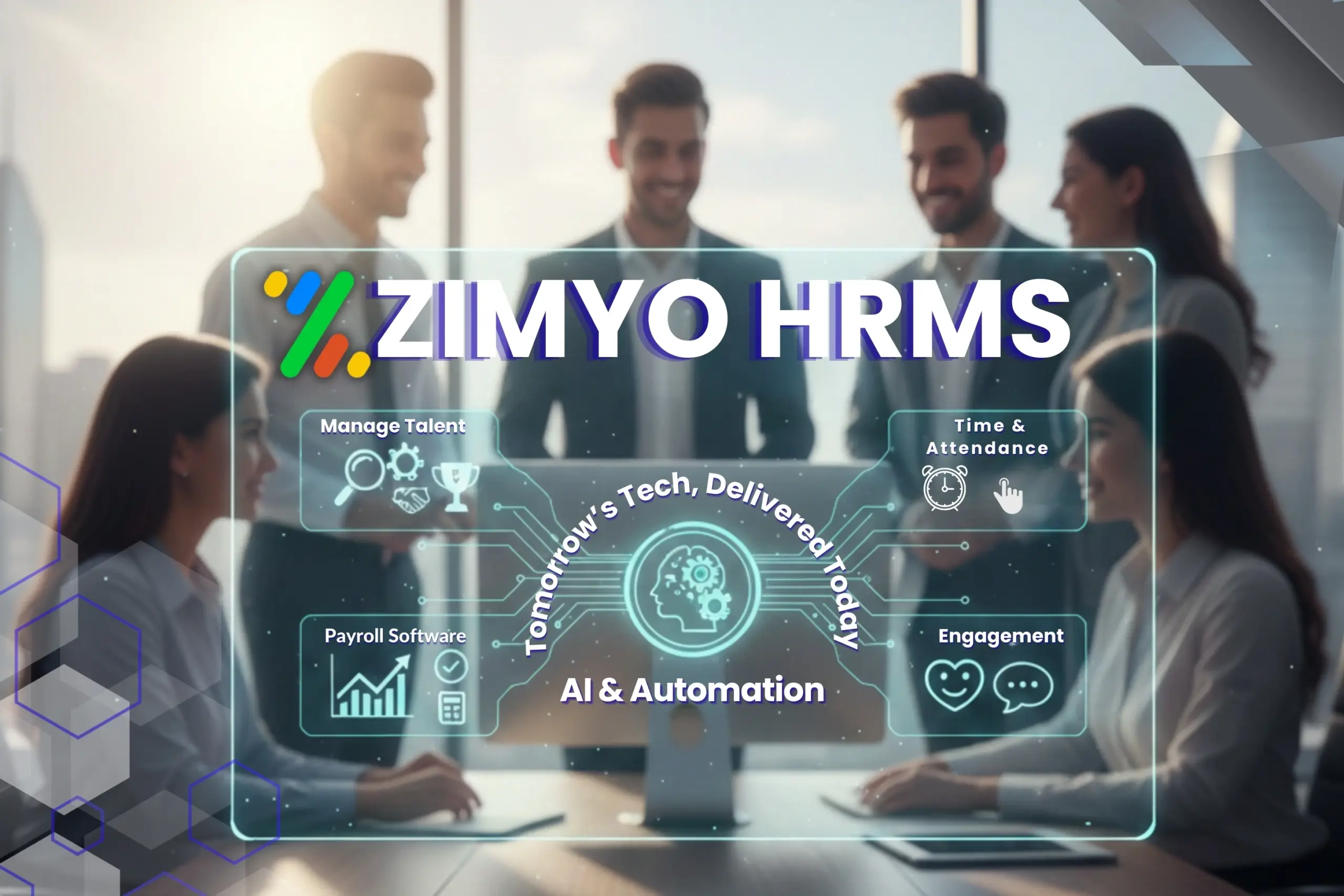
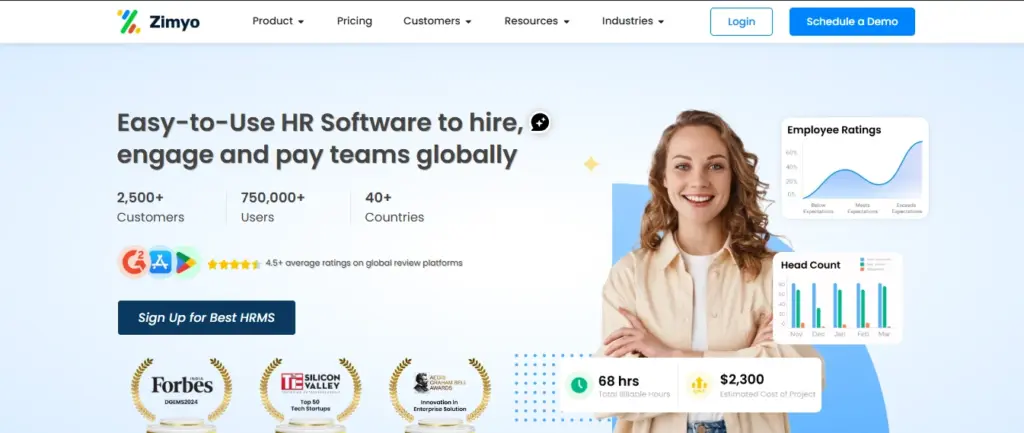
Zimyo is an emerging star in the Indian HR technology space, providing a comprehensive HRMS with a robust ATS designed exclusively for small and medium enterprises. It’s not only an applicant tracking solution, Zimyo designs a smooth recruitment-to-onboarding experience and also manages HR functions such as payroll, leave, attendance, and performance management. For small enterprises that want to prevent managing separate tools, Zimyo provides a unified ecosystem to manage the entire employee journey. Therefore, this tool could be considered on top for Best Applicant Tracking Systems for Scaling Small Businesses.



Key Features:
- Multi-channel job posting with one click
- AI-enabled resume parsing and smart candidate filtering
- Interview feedback loops and collaboration tools
- Instant offer letter generation and digital onboarding
Pros:
- Budget-friendly pricing for growing companies
- Localized compliance features (ideal for Indian market)
- Offers a complete HRMS + Payroll + ATS suite
Cons:
- Currently limited third-party ATS integrations
- Advanced recruiting analytics still in progress
Check Zimyo’s ATS.
2. Greenhouse
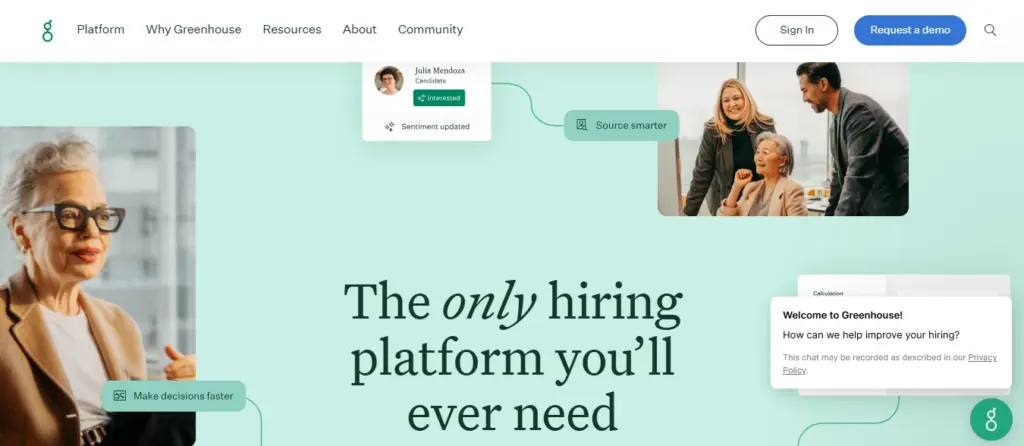
Greenhouse is an internationally recognized recruitment tool for building a consistent, unbiased, and data-informed hiring experience. Built for scale, Greenhouse allows businesses to construct structured hiring processes from day one fully intact with interview kits, scorecards, and DEI tools. Although it might have more than smaller companies need at first, those planning on speedy growth will find enormous value in the long run.
Key Features:
- Structured interview kits with scorecards
- Custom hiring processes and approval processes
- Strong Talent CRM and DEI-driven hiring
- Data-driven analytics and pipeline reports
Pros:
- Strong customization and scalability
- Deep integration ecosystem with more than 300 apps
- Industry-leading candidate experience tools
Cons:
- Can be daunting to set up at first
- Premium plans are expensive for small teams
3. BambooHR
BambooHR has its reputation for being an easy HR platform to use. Although it’s not specifically an ATS but it does have a simple, straightforward applicant tracking module integrated into its core HR offering. For companies wanting to boost HR and hiring without cumbersome tools, BambooHR offers an uncluttered and smooth experience that gets the job done on the basics.
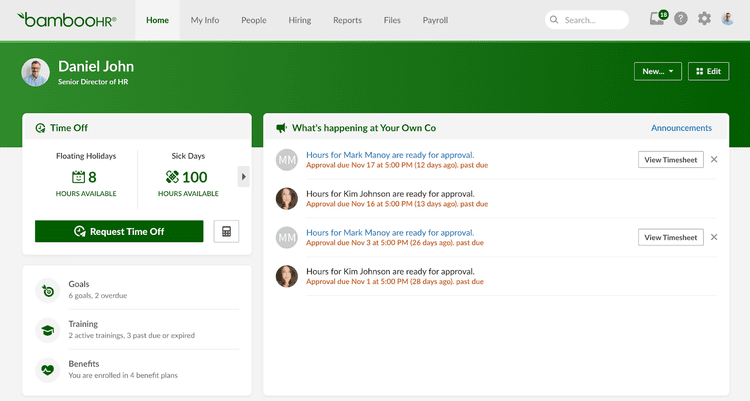
Features:
- Customized job postings and application tracking
- Pre-designed offer letters and eSignatures
- Automated onboarding checklists
Pros:
- Extremely user-friendly interface
- Seamless integration between ATS and core HR functions
- Ideal for early-stage businesses
Cons:
- Limited job sourcing or AI matching tools
- Not suitable for companies with complex hiring needs
4. Zoho Recruit
A part of the larger Zoho suite, Zoho Recruit is an affordable and flexible ATS catering to corporate HR departments as well as recruitment agencies. It excels in automation, resume management, and pipeline tracking. Whether posting jobs on several portals or auto-emailing applicants, Zoho makes recruiting easier.
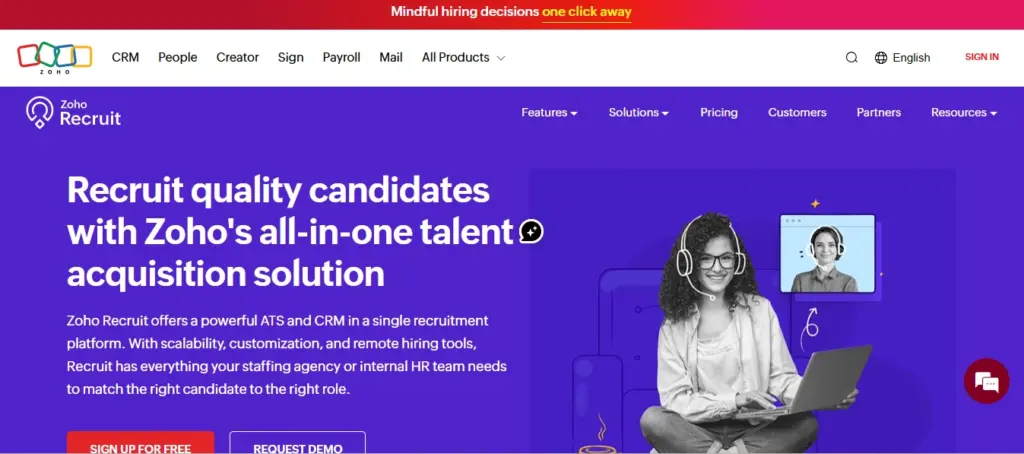
Key Features:
- AI-driven resume parsing
- Automating candidate scoring and job matching
- Branded career pages and job portal management
- Workflow triggers for auto-emails and tasks
Pros:
- Affordable with solid features
- Smooth integration with other Zoho apps
- Flexible for external and internal recruiters
Cons:
- User interface is outdated
- Some bugs and performance issues from time to time
5. Workable
Workable marries ease of use with innovative sourcing features. Its AI-powered features streamline candidate identification and matching, suited for fast-growing lean teams. With integration of remote hiring, scheduling of interviews, and video interviewing, Workable is a contemporary solution for progressive businesses.
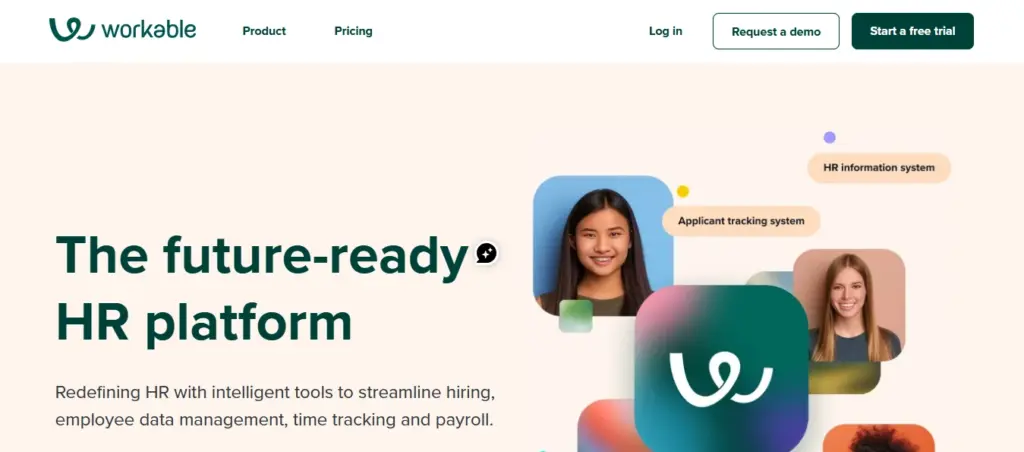
Key Features:
- AI-powered candidate suggestions
- Job posting on 200+ job boards automatically
- Video interview and scheduling tools integrated
- E-signature and document management
Pros:
- Visually friendly and simple to use
- Powerful candidate sourcing capabilities
- Solid mobile and remote hiring features
Cons:
- Premium features become costly
- Less flexibility in lower-tier plans
6. Breezy HR
Breezy HR is built to be simple. Through visual hiring pipelines, it lets its users drag-drop applicants through recruitment stages. For smaller teams that are just getting started on recruiting or have fewer recruiting resources, Breezy HR offers automation, branded career websites, and collaboration features so easy to use.
Primary Features:
- Visual pipeline with drag-and-drop interface
- Branded careers page builder
- Email and workflow automation
- Interview guides with rating scorecards
Pros:
- Intuitive and easy to use for beginners
- Excellent candidate experience attributes
- Fast deployment
Cons:
- Limited analytics and reporting
- Not suitable for agencies or high-volume recruiting
7. JazzHR
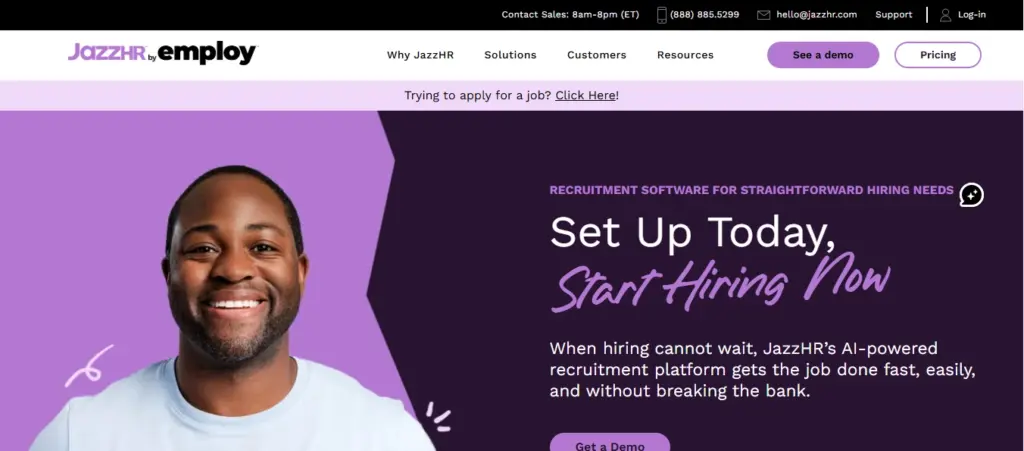
JazzHR is designed from the ground up for small business. It introduces enterprise-level recruiting features to small teams without an enterprise-level price tag. With unlimited job postings, customizable workflows, and streamlined interview management, JazzHR is a sound choice for SMBs just starting to formalize the hiring process.
Key Features:
- Customizable job and interview workflows
- Scorecards and evaluation templates
- Unlimited job listings on free and premium boards
Pros:
- Affordable and clear pricing
- Designed specifically for SMBs
- Very heavy focus on hiring collaboration
Cons:
- No mobile app
- Does not have deeper analytics and integrations
8. Manatal
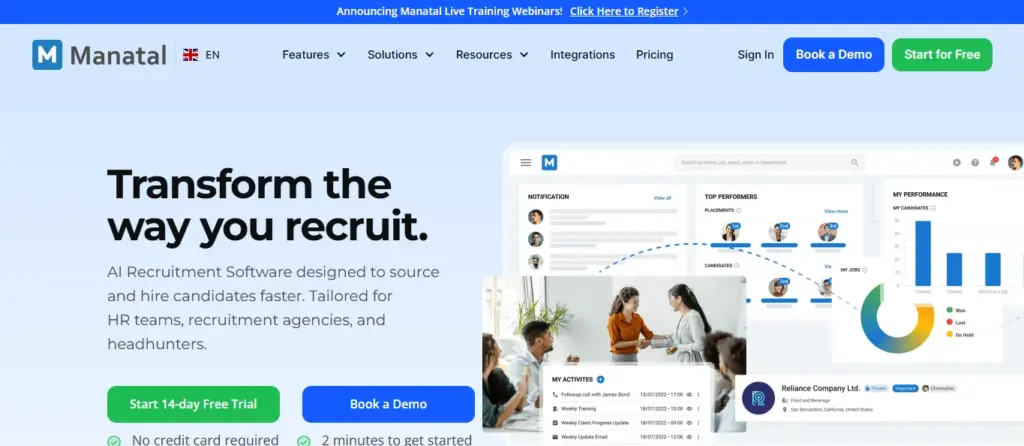
Manatal integrates artificial intelligence into recruitment, providing candidate suggestions, enriched profiles, and social media sourcing. Ideal for SMBs who want to move away from conventional hiring methodologies. Manatal makes more data-driven decisions with less manual intervention.
Key Features:
- Candidate scoring and matching based on AI
- LinkedIn and social enrichment of profiles
- Drag-and-drop interface customizable pipelines
- Integrated CRM for candidate relationship management
Pros
- Visually simple and clean
- High-end sourcing features
- Competitive pricing
Cons:
- Third-party integrations are basic
- Reporting and export functionality are limited
9. Recruit CRM
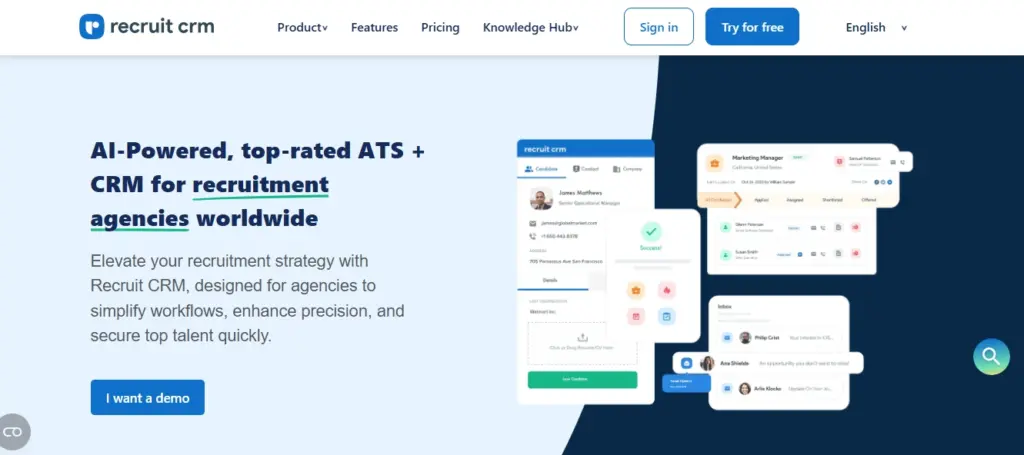
Recruit CRM is specifically designed for agency recruiters requiring an ATS and a CRM in one tool. It features client management, email sequences, and end-to-end recruitment workflows from sourcing to placement to client reporting.
Key Features:
- Kanban boards and pipelines that can be customized
- Resume gathering from job boards and databases
- Client and candidate portals
- Invoicing and placement tracking functionality
Pros:
- Developed specifically for recruitment agencies
- Transparent price with worldwide support
- Client + candidate management in one
Cons:
- Not suitable for in-house HR teams
- Needs some training to get maximum value
10. Recruitee
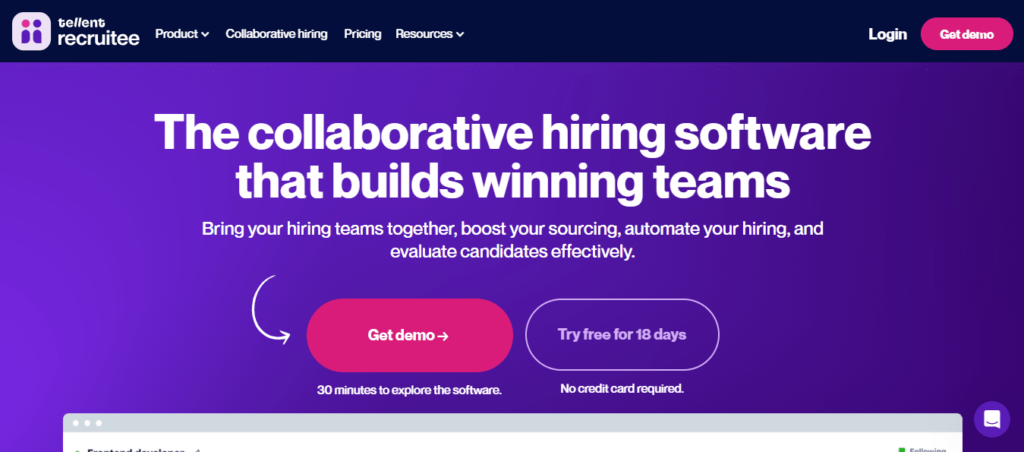
Recruitee focuses on collaborative hiring, making it easy for HR teams and hiring managers to work together at scale. With customizable workflows, team scorecards, and automated emails, Recruitee keeps hiring organized and inclusive.
Key Features:
- Branded career site builder
- Collaborative scorecards and interview evaluations
- Email templates and automation workflows
- Role-based access for hiring teams
Pros:
- Easy for non-HR users to adopt
- Scales well with growing teams
- Good UX and team communication features
Cons:
- CRM capabilities are limited
- Fewer sourcing functionalities than others
11. Bullhorn
Bullhorn is a full-service ATS + CRM solution used by some of the world’s largest staffing agencies. It provides support for large-scale recruitment operations through automation, mass communication, performance tracking, and compliance management.
Key Features:
- Email automation and mass outreach campaigns
- Talent pipeline monitoring and reporting
- Custom dashboards and KPIs
- VMS integration and billing platforms
Pros:
- Vast functionality for enterprises and agencies
- Excellent third-party integration system
- Does it all from sourcing to placement
Cons:
- Expensive cost and challenging set up
- Overkill for the majority of small businesses
12. Lever
Lever marries ATS and CRM to enable not only hiring, but to foster long-term talent relationships. With functionalities such as DEI reporting, candidate pipeline nurture, and automated engagement campaigns, Lever is ideal for firms with strategic hiring objectives.
Key Features:
- Custom pipelines and stage tracking
- Passive talent automation campaigns
- DEI insights and diversity analytics
- Integrated sourcing and referral programs
Pros:
- Rich analytics and visual dashboards
- Top-notch for proactive, data-driven recruiting
- Top-shelf candidate experience
Cons:
- Long, complex UI for small teams
- Premium pricing might not be ideal for startups
Must-Have Features in an ATS for Small Businesses
Selecting an ATS requires more than just checking boxes. It’s about making sure the platform serves your business’s unique hiring needs today and grows with you tomorrow. Here are the must-have features to keep an eye out for:
Resume Parsing
Automatically extracts candidate details from resumes. This removes manual data entry and speeds up shortlisting.
Custom Workflows
Allows you to tailor hiring stages based on how your team actually hires.
Job Board Integrations
Post jobs on platforms like LinkedIn, Indeed, Naukri, and Glassdoor directly from your ATS.
Interview Scheduling
Calendar integrations and automated reminders eliminate scheduling delays.
Team Collaboration
Hiring managers and recruiters can leave feedback, rate candidates, and stay aligned.
Automated Communication
Send interview invites, follow-ups, and rejections automatically to improve candidate experience.
Career Page Builder
Create a branded careers page that attracts candidates and reduces dependency on job portals.
Reports & Analytics
Track hiring performance and identify bottlenecks using real-time data.
Best ATS systems provide these capabilities in an easy-to-use interface that helps teams to learn easily because excellent hiring shouldn’t have a learning curve.
Pricing & Costs for Applicant Tracking Systems
Applicant Tracking Systems (ATS) has a range of different pricing plans to suit various business sizes and recruitment needs. There is a simple free plan best for startups and small groups right up to sophisticated, fully-featured solutions designed for large businesses.Knowing these pricing models is important to selecting a solution that suits both your recruitment requirements and cost.
Typically, ATS costs between $10 and $100 per user, per month, though some software will charge a monthly, fixed fee instead. Some providers also tack on one-off implementation or setup charges.
The good news? Most sellers provide a free trial or demo, allowing you to test out the capabilities of the platform before committing financially.
How to Choose the Right ATS (Step-by-Step Guide)
Selecting the ideal applicant tracking system for your small business could be a fruitful step in picking the right candidate. Below is a step-by-step guide to enable you to make a wise, expandable decision:
1. Understand Your Hiring Volume
If you hire frequently or manage multiple roles, automation is essential. You’ll require a candidate tracking software with automation, bulk resume management, and candidate pipeline management.
2. Set a Realistic Budget
Choose tools that offer flexible pricing and essential features without hidden costs. Be upfront about your budget so you won’t have to pay for extra add-ons down the road.
3. List Your Must-Have Features
These could be resume parsing, collaboration tools for teams, interview scheduling, or reporting dashboards. Order of priority should be proportionate to address your current pain points.
4. Check Integrations
Ensure the ATS works smoothly with your email, calendar, and HR systems. Integration saves work and keeps data in sync.
5. Use a Free Trial or Demo
Test the software with real hiring workflows before committing.
6. Evaluate Customer Support
Good support saves time during onboarding and future issues.
7. Think Long-Term
Your hiring requirements will change. Pick an ATS that can grow with your business over the next 2–5 years.
8. Check Data Security & Compliance
Make sure candidate data is protected and compliant with regulations like GDPR. A secure platform maintains candidate trust and organizational integrity.
Using this checklist as guiding source, you can reliably shortlist the Best Applicant Tracking System for Scaling Small Businesses that supports your business goals, technical requirements, and hiring procedures.
Benefits of Using Best Applicant Tracking System for Scaling Small Businesses
Investing in the top applicant tracking system is a strategic investment that can significantly boost hiring results especially for emerging companies. Here’s why small businesses succeed with an applicant tracking software:
1. Accelerated Hiring
Automated workflows, resume parsing, and scheduling tools streamline every recruitment stage. This dramatically reduces time-to-hire, allowing you to land top talent before other companies do.
2. Improved Collaboration
An ATS enables HR managers, recruiters, and department heads to collaborate in unison. Collaborate on candidate profiles, add comments, rate candidates, and follow communication, all from one location.
3. Centralized Candidate Data
Eliminate the jumbled spreadsheets and email threads. With a centralized database, you can keep resumes, communication history, interview notes, and hiring status all within one secure system.
4. Improved Candidate Experience
On-time responses, auto-updates, and regular communication create a good experience for applicants whether they are hired or not. This improves your employer brand.
5. Fewer Errors & Manual Processes
An ATS reduces the chances of human error through auto-updating application status, sending reminders, and automating repetitive tasks such as sending emails or scheduling interviews.
6. Employer Branding
Current ATS solutions include feature-rich career page creators and branded email templates. These features enable you to display a professional and uniform brand image to all candidates.
7. Enhanced Reporting & Analytics
Monitor critical metrics such as time-to-hire, source of hire, candidate drop-off rates, etc. Live reports allow you to identify inefficiencies and make data-driven hiring decisions.
8. Cost-Effective Scaling
As your hiring requirements expand, an applicant tracking software a allows you to grow operations without significantly boosting workload or headcount. Most systems provide modular upgrades to keep pace with your growth rate.
In brief, applicant tracking software is not only for large companies, instead it’s a necessary hiring partner for small business owners looking to grow quickly, professionally, and cost-effectively.
Conclusion
Investing in the right ATS isn’t just about hiring faster, it’s about hiring better. From feature-rich platforms like Greenhouse and Lever, to startup-friendly options like Zimyo and Zoho Recruit, there’s a solution tailored for every growing business, and with our research that’s also made easy.
If you’re looking for an affordable, all-in-one HR + ATS solution with exceptional customer support and features like payroll and performance management – Zimyo is a great place to start. Finally selecting the ideal ATS is your initial step toward constructing a future-proof recruiting engine. Don’t rush, test demos, and match the tool to your long-term growth objectives.
FAQs
Is it the best applicant tracking system for scaling small businesses?
The best applicant tracking system for scaling small businesses is one that automates hiring, improves collaboration, and scales with team growth while remaining affordable and easy to use.
Which ATS is best for small business expansion?
The best ATS for small business expansion is a platform that offers resume parsing, workflow automation, and flexible pricing, such as Zimyo, BambooHR, or Zoho Recruit.
What applicant tracking system is the best?
There is no single best applicant tracking system. The right ATS depends on your business size, hiring volume, budget, and need for automation or advanced recruiting features.
Do smaller companies use ATS?
Yes, smaller companies use ATS to manage job postings, track candidates, schedule interviews, and reduce manual hiring work as they grow.