

The hospitality industry is changing faster than ever. Today, hotels, restaurants, resorts, and cloud kitchens are expected to offer quick, smooth, and personalized experiences. Guests want fast check-ins, digital payments, quick service, and clean communication. And in all this businesses must keep up.
Because of this, many hospitality brands are turning to SaaS (Software-as-a-Service) tools. These tools help simplify daily tasks, reduce manual work, and improve the overall guest experience. They also make it easier for businesses to manage staff, track performance, control inventory, handle billing, and stay organized across multiple locations.
As a result, SaaS platforms have become an important part of running a modern hospitality business.
In this blog, we’ll look at the top 10 SaaS companies that are helping the hospitality industry work smarter, operate faster, and deliver a better experience to every guest.
List of Top Saas Companies for Hospitality Industry
Here are the top known players that are streamlining hospitality industry processes.
- Zimyo
- Unifocus
- RateGain
- BookMyChef
- Ideas
- Mews
- TouchBistro
- SevenRooms
- BlueCart
- QuickBooks
Comparison Table on SaaS Tools for Hospitality
|
Tool |
Best For |
Category |
Key Benefit |
|
Zimyo |
All |
HRMS + Payroll |
Manage staff & compliance |
|
Unifocus |
Hotels |
Housekeeping Automation |
Faster room turnaround |
|
RateGain |
Hotels |
Rate Intelligence |
Increase revenue |
|
BookMyChef |
Hotel events |
Staffing |
On-demand chefs |
|
IDeaS |
Large hotels |
RMS |
Dynamic pricing |
|
Mews |
Hotels |
PMS |
Front-desk automation |
|
TouchBistro |
Restaurants |
POS |
Fast billing & orders |
|
SevenRooms |
Restaurants |
CRM + Reservations |
Boost loyalty |
|
BlueCart |
F&B units |
Inventory |
Reduce wastage |
|
QuickBooks |
All |
Accounting |
Finance automation |
Check Out Our Blog on Top SaaS Companies in BFSI
Top 10 SaaS Companies Helping the Hospitality Industry
Below is the in-depth listicle with detailed overview, features, and ideal use cases.
1. Zimyo
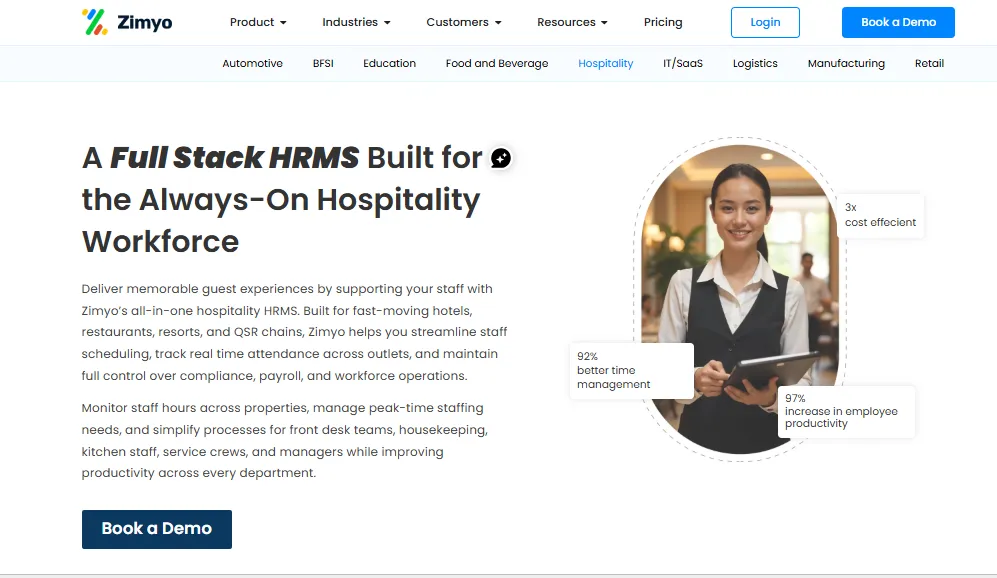
Zimyo is a leading HR and payroll SaaS platform widely adopted in the hospitality industry. With high attrition, shift-based work, and compliance-heavy processes, hospitality businesses rely on Zimyo to streamline hiring, onboarding, attendance, payroll, exit formalities, and employee engagement – all on a single platform.
Key Features
- Automated payroll for multi-branch operations
- Biometric & GPS attendance tracking
- Staff scheduling & roster management
- Onboarding & digital documentation
- Multi-location HR management
- Compliance management (PF, ESI, TDS)
- Mobile app for managers & staff
Best For: Hotels, resorts, cloud kitchens, QSRs, hospitality chains, casinos
Category: HRMS + Payroll + Attendance + Employee Experience
Notable Clients
Why Hospitality Brands Love It
- Ideal for large, distributed, shift-based teams
- Saves 80% time spent on admin work
- Reduces payroll errors and compliance risks
- Great onboarding experience for high-volume hiring
2. Unifocus (Previously Known as Knowcross)
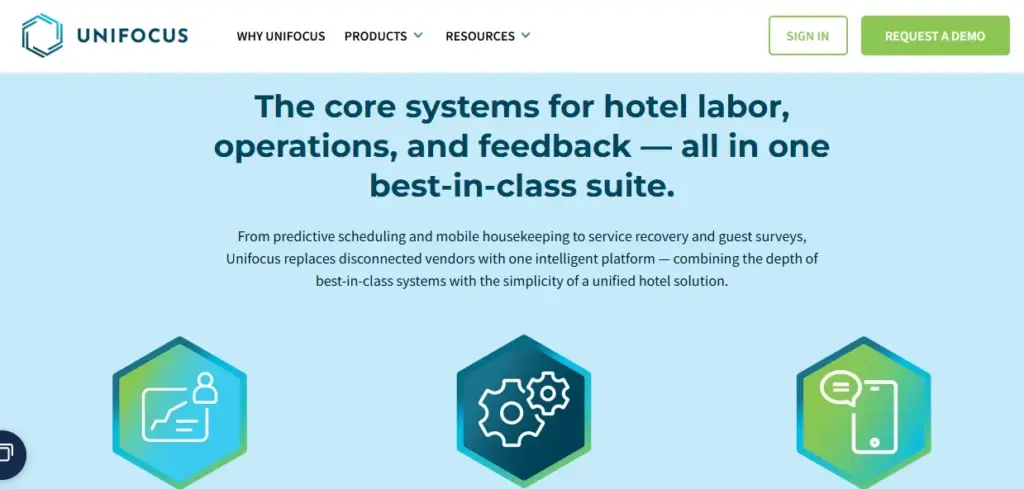
Unifocus offers operational automation for housekeeping management, service requests, staff productivity, and maintenance. Hotels use it to deliver faster turnaround time and consistent service quality.
Key Features
- Housekeeping automation
- Guest request management
- Lost & found tracking
- Preventive maintenance
- Real-time staff productivity dashboards
Best For: Hotels, resorts, housekeeping departments
Category: Housekeeping & Service Optimization
Why Hospitality Brands Love It
- Reduces room turnaround time
- Increases housekeeping accuracy
- Enhances guest satisfaction scores
3. RateGain
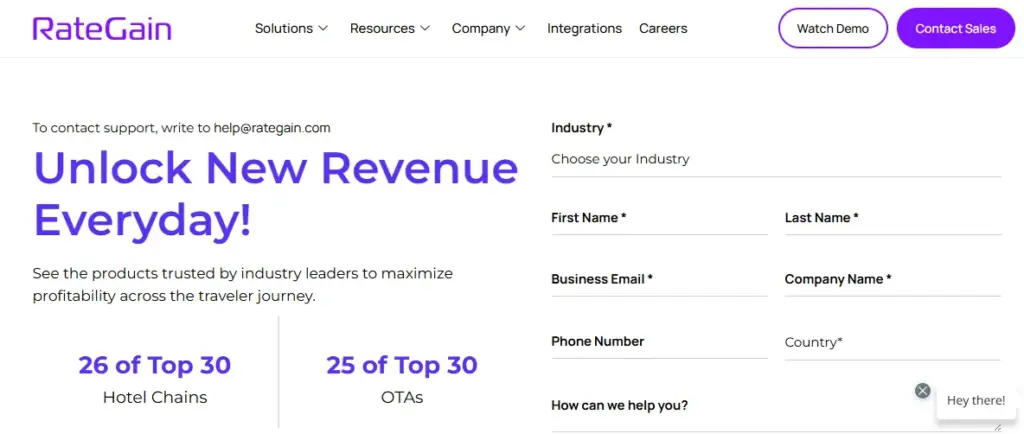
RateGain enables hotels to optimize pricing using competitive insights, market trends, and dynamic rate intelligence. It’s widely used for maximizing occupancy and revenue.
Key Features
- Rate intelligence
- Distribution management
- Competitive pricing insights
- Real-time revenue analytics
Best For: Hotels & travel brands
Category: Revenue Management + Rate Intelligence
Why Hospitality Brands Love It
- Helps increase RevPAR
- Syncs pricing across OTAs
- Reduces revenue leakages
4. BookMyChef
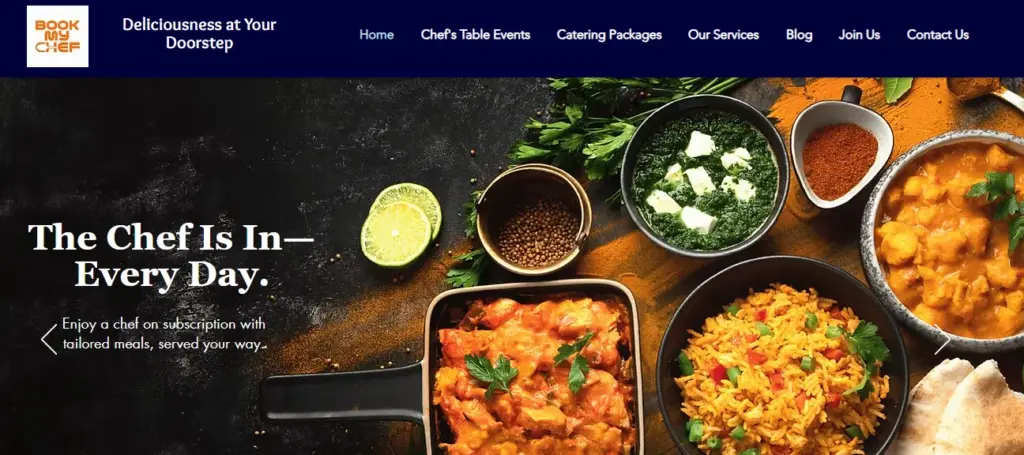
BookMyChef is a platform that connects hospitality businesses with chefs, culinary experts, and food professionals on demand. It streamlines gig-based staffing for events, banquets, and peak seasons.
Key Features
- Chef booking marketplace
- Verified profiles & ratings
- Skill-based search filters
- On-demand and contract hiring
Best For: Hotels, catering services, event organizers
Category: On-Demand Culinary Staffing & Food Services
Why Hospitality Brands Love It
- Perfect for last-minute staffing
- Reduces dependency on in-house chefs
- Helps during festivals and high-volume events
5. IDeaS
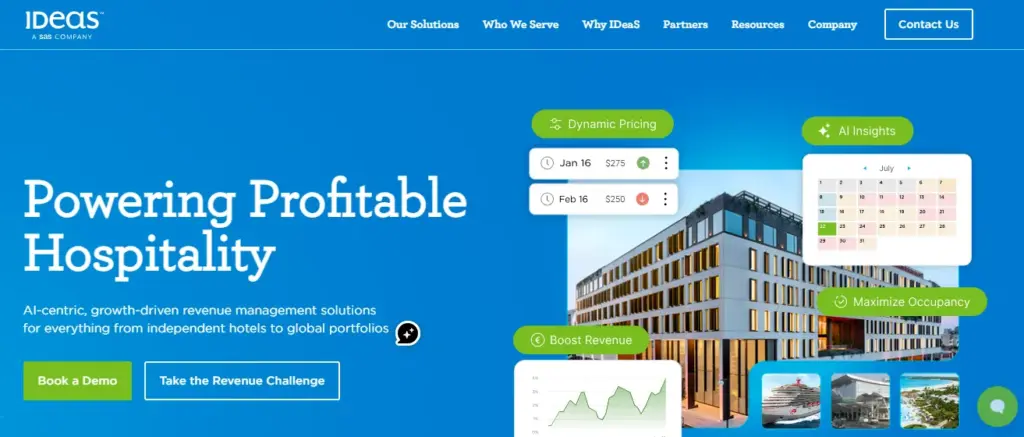
IDeaS is one of the world’s top hotel revenue management systems (RMS). It helps properties forecast demand, automate pricing, and maximize revenue opportunities.
Key Features
- Demand forecasting
- Dynamic pricing engine
- Inventory optimization
- Revenue performance analytics
Best For: Hotels, resorts, hospitality groups
Category: Revenue & Yield Management
Why Hospitality Brands Love It
- AI-driven revenue insights
- Helps boost occupancy and ADR
- Ideal for multi-property chains
6. Mews
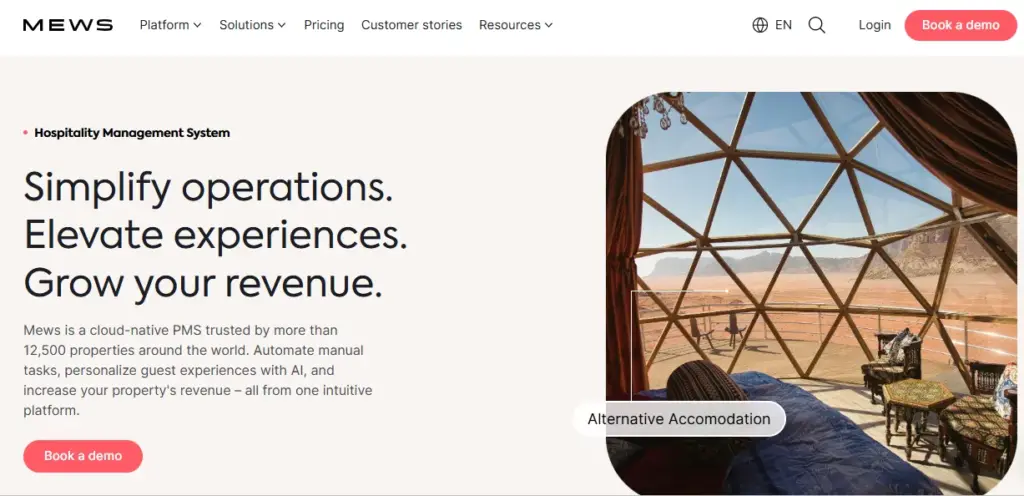
Mews is a cloud-based PMS designed for modern hotels. It automates front-desk operations, reservations, guest check-in/check-out, and property management workflows.
Key Features
- Contactless check-in
- Reservation management
- Payment automation
- Integration marketplace
- Housekeeping dashboards
Best For: Hotels, hostels, vacation rentals
Category: Property Management System (PMS)
Why Hospitality Brands Love It
- Highly intuitive and modern
- Ideal for tech-forward boutique hotels
- Reduces front-desk queue times
7. TouchBistro
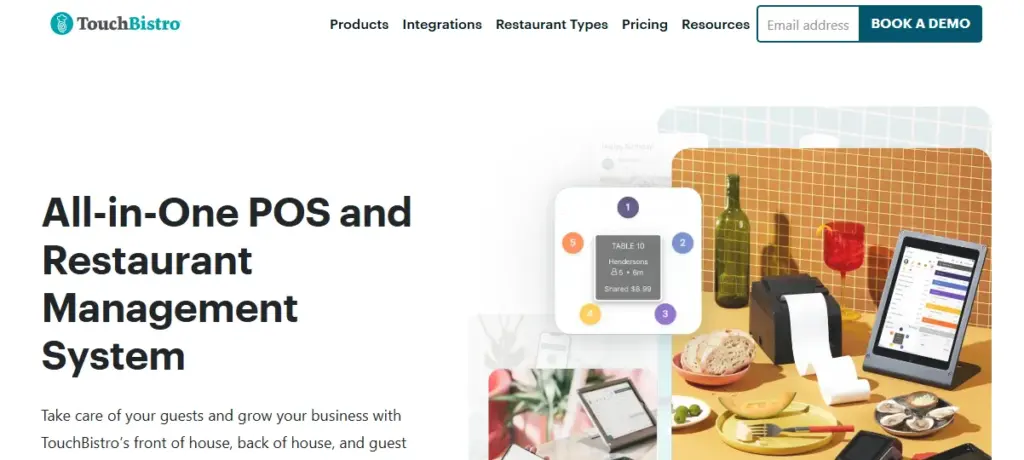
TouchBistro is a restaurant-focused POS system that simplifies order management, menu engineering, billing, and kitchen coordination.
Key Features
- Table-side ordering
- Menu & inventory management
- Kitchen display systems
- Staff scheduling
Best For: Restaurants, cafes, bars
Category: Restaurant POS
Why Hospitality Brands Love It
- Easy-to-use POS
- Increases table turnover
- Helps manage peak-hour rush efficiently
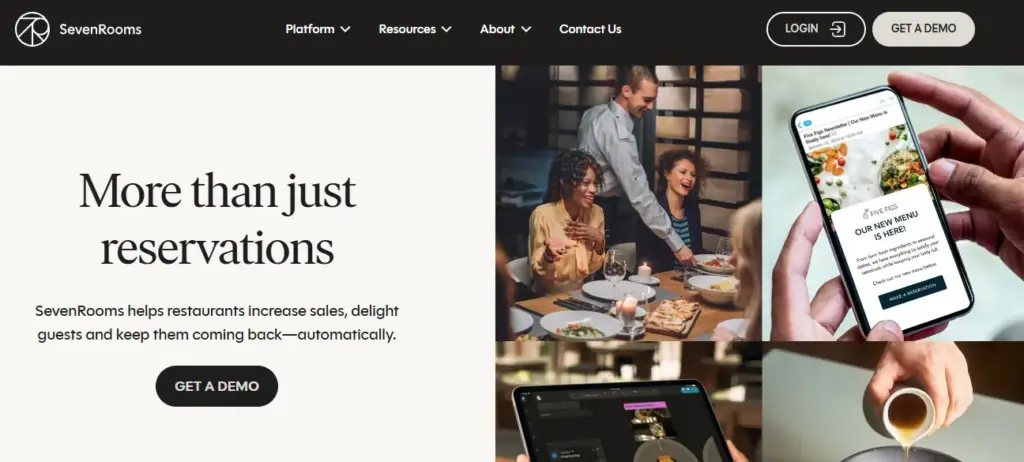
8. SevenRooms
SevenRooms is a CRM + reservation + guest experience platform that helps hospitality brands personalize service and build loyalty.
Key Features
- Online reservations
- CRM & guest profiles
- Waitlist & table management
- Guest feedback automation
Best For: Restaurants, nightclubs, hospitality venues
Category: Guest Experience & Reservation Management
Why Hospitality Brands Love It
- Drives repeat business
- Unlocks strong guest insights
- Streamlines online reservations
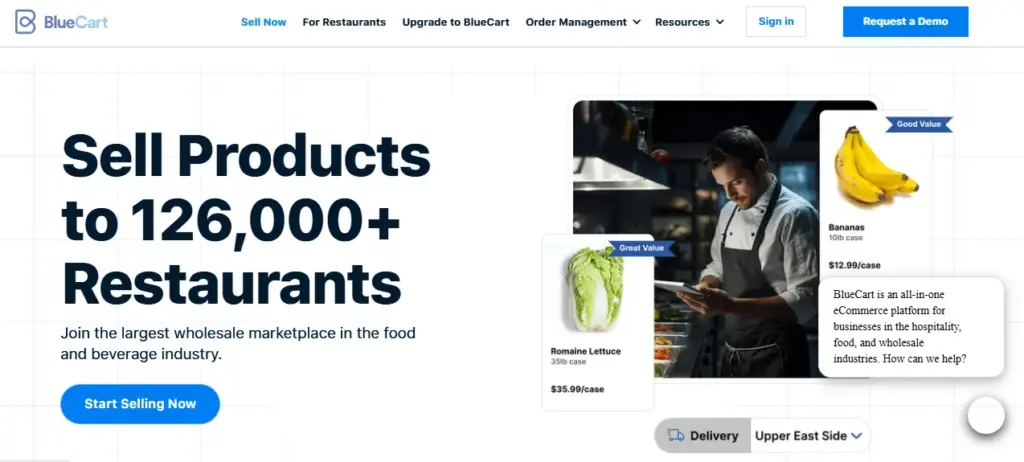
9. BlueCart
BlueCart helps hospitality businesses manage procurement, supplier communication, and inventory tracking in real time.
Key Features
- Inventory tracking
- Supplier ordering
- Invoice management
- Food cost analytics
Best For: Restaurants, caterers, hotels
Category: Inventory & Procurement Management
Why Hospitality Brands Love It
- Reduces wastage
- Simplifies vendor coordination
- Helps manage F&B costs effectively
10. QuickBooks
QuickBooks Online is a globally trusted accounting software used across the hospitality sector for managing finances, invoicing, GST, and expense tracking.
Key Features
- Automated bookkeeping
- GST-compliant invoicing
- Payroll & expense management
- Financial reporting
Best For: Hospitality businesses of all sizes
Category: Accounting & Financial Management
Why Hospitality Brands Love It
- Easy to use
- Great for multi-branch financial consolidation
- Integrates with POS, PMS, and HRMS tools
Check Out Our Blog on Top SaaS Companies in Logistics Industry
Why the Hospitality Industry Needs SaaS Solution
The hospitality industry deals with heavy workloads, tight schedules, and fast demand changes. Because of this, many businesses struggle with delays, errors, and miscommunication. This is exactly where SaaS solutions make a big difference.
Here’s why the industry needs them:
1. Guest Expectations Are Increasing
Guests today expect quick service, easy check-ins, smooth payments, and personalized experiences. SaaS tools help hotels and restaurants deliver all of this with less effort.
2. Staffing Challenges Are Very Common
Since the industry has high employee turnover, managing shifts, attendance, payroll, and onboarding becomes difficult. HR-focused SaaS platforms make these processes simple and fast.
3. Demand Changes Often
Hotel occupancy and restaurant footfall can change every day. SaaS tools with revenue forecasting help businesses set the right prices and reduce losses.
4. Multi-Location Businesses Need Central Control
Hotels and restaurant chains manage many branches. With cloud-based platforms, managers can see all data in one place and make decisions quickly.
5. Manual Work Slows Down Operations
Simple tasks like updating inventory, handling service requests, or tracking orders can take too long when done manually. SaaS tools automate these tasks and save time.
6. Managing Inventory Is a Big Pain Point
Food wastage and inaccurate stock tracking cost restaurants a lot of money. Inventory tools help control costs and avoid shortages.
7. Compliance Becomes Easier
Whether it’s tax compliance, HR laws, food safety, or documentation, SaaS tools help businesses stay updated and compliant without extra stress.
8. Better Decisions with Real-Time Data
Hospitality businesses collect huge amounts of data every day. SaaS platforms turn this data into simple dashboards so managers can make quick and smart decisions.
How Hospitality Businesses Can Choose the Right SaaS Tool
Choosing the right SaaS tool can be confusing because there are so many options available. However, by following a few easy steps, businesses can make the right decision.
1. Start by Identifying Your Main Problem
Think about the challenges you face daily.
For example:
- Is it staff attendance?
- Is it pricing and occupancy?
- Is it inventory management?
- Is it reservations or guest feedback?
Once you know the problem, it becomes easier to pick the correct type of tool.
2. Look for the Features You Really Need
Different hospitality businesses need different features.
For example:
- Hotels need PMS, housekeeping automation, and reservation tools.
- Restaurants need POS systems, kitchen display screens, and table management.
- Chains need HR, payroll, and central dashboards.
Choose features that match your day-to-day operations.
3. Check If the Tool Integrates with Others
Make sure the tool works well with your existing systems like POS, PMS, CRM, HRMS, or accounting software. This avoids errors and keeps data updated everywhere.
4. Think About the Future
Choose a tool that can grow with your business. Whether you open more branches or add new services, the software should be able to support the growth.
5. Choose a User-Friendly Tool
Your team should be able to understand and use the tool easily. Prefer tools that offer a simple interface, a mobile app, and helpful onboarding support.
6. Compare Pricing and Value
It’s not just about choosing the cheapest option. Instead, pick a tool that offers the best value in terms of features, support, and time saved.
7. Check Customer Support
Good support makes adoption smooth. Look for a vendor that offers quick replies, proper training, and regular updates.
Conclusion
SaaS solutions are no longer optional because they’re a must for any hospitality business aiming to deliver fast service, compete with modern brands, and meet rising customer expectations. The tools listed above cover everything from HR to revenue management, POS, inventory, and guest experience – ensuring a smoother, smarter, and more profitable operation.
Frequently Asked Questions (FAQs)
What is SaaS in the hospitality industry?
SaaS in the hospitality industry refers to cloud-based software that helps hotels, restaurants, and resorts manage operations like reservations, HR, billing, housekeeping, and guest experience.
Which software is mostly used in the hospitality industry?
Property Management Systems, POS systems, HRMS platforms, and revenue management tools are the most commonly used software in the hospitality industry.
What is the largest company in the hospitality industry?
Marriott International is considered the largest hospitality company based on its global hotel portfolio and market presence.
Which is the biggest SaaS company?
Salesforce is widely known as the biggest SaaS company because of its global customer base and large revenue.