
A lot of people still believe that HR work is only about recruitment or salary management. But modern HR management is much bigger than that. HR teams today are involved in training employees, improving performance, planning workforce needs, and keeping employees engaged at work.
So, what is Human Resource Management exactly? In simple words, it is the process of managing employees in an organized way so that both the business and employees can perform better. The HRM meaning also includes building strong workplace relationships and helping employees grow within the organization.
Over time, companies have started focusing more on areas like Talent management, Workforce management, and Human capital management because employees are considered one of the most valuable assets of any business. Many organizations now follow Strategic Human Resource Management practices to connect employee performance with company goals.
In this blog, we will understand the Human Resource Management definition, discuss the important Functions of Human Resource Management, and learn about key HR roles and responsibilities. We will also see why proper Human Resource planning is important for long-term business success.
What is Human Resource Management?
Every successful company has one thing in common the right people working together toward a common goal. But handling employees, hiring skilled candidates, managing performance, solving workplace issues, and keeping teams motivated is not an easy task. This is where Human Resource Management (HRM) becomes important.
In simple words, the HRM meaning is the process of managing employees in the most effective way possible. Human Resource Management focuses on recruiting the right talent, training employees, improving workplace culture, and helping organizations achieve their business goals. It acts as a bridge between employees and management to maintain a productive and positive work environment.
Today, modern HR management is much more than recruitment and payroll. Companies now focus heavily on Talent management, Workforce management, employee engagement, and performance improvement to stay competitive in the market. Businesses are also adopting Strategic Human Resource Management practices to align employee growth with company success.
Official Human Resource Management Definition
The official human resource management definition provided by many global institutions states that human resource management is a continuous and formal process of planning, organizing and controlling all employee related activities in order to use human talent in the most effective and productive way.
Objectives of Human Resource Management
No company can grow properly if employees are not managed well. This is why businesses give importance to Human Resource Management. The job of HR is not limited to hiring new employees. It also involves managing day-to-day employee activities, solving workplace problems, and making sure employees feel comfortable in the organization.
A good HR management system helps companies find skilled people, improve employee performance, and create a better working environment. HR teams also work on training employees, making workplace policies, and reducing employee turnover. In many companies, HR acts as the connection between management and employees.
Today, businesses are also focusing more on Talent management and Workforce management because employee satisfaction and retention directly affect business growth. Proper Human resources management helps organizations build stronger teams and improve productivity over time
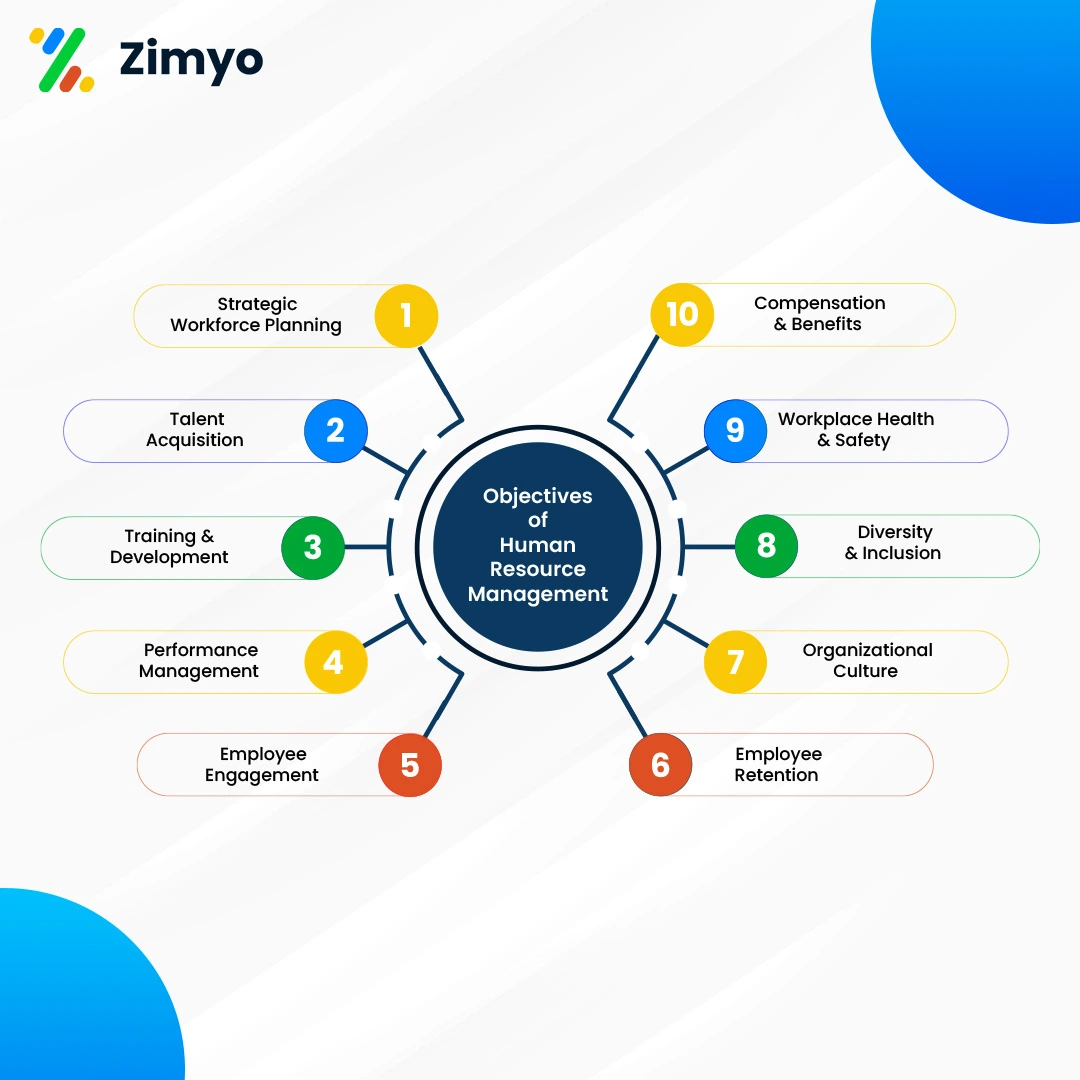
So, the major objectives of Human Resource Management include the following:
1. Workforce Planning: Ensuring the right number of employees with the right skills
One of the main goals of Human Resource Management is to make sure a company has enough employees to handle the work properly. If there are fewer employees, work pressure increases. If there are too many employees, companies may end up spending more than required. This is why workforce planning is important in HR management.
HR teams regularly check which departments need more employees, what kind of skills are missing, and whether current employees need training to improve their performance. In many companies, future hiring decisions are also based on business growth plans and upcoming workload.
Good Workforce management helps companies avoid confusion, delays, and skill shortages at work. It also supports better Talent management by helping businesses hire people who actually fit the job role and company requirements.

2. Learning and Development: Improving employee training programs
Employees cannot improve if they keep doing the same work without learning anything new. This is why companies spend time on training and development. In Human Resource Management, learning programs are used to help employees understand their work better and improve their skills over time.
Sometimes employees join a company with limited experience, while in other cases work requirements keep changing. HR teams handle this by arranging training sessions, workshops, or simple guidance programs according to employee needs. These programs help employees work more confidently and reduce chances of mistakes during daily tasks.
Good learning opportunities also create a positive impact on employees. When companies invest in employee growth, people feel supported and become more interested in their work. This is also an important part of Talent management because employees are more likely to stay in organizations where they get chances to learn and grow professionally.
Explore engaging Web Stories to get tips, how-to’s, and insights into HR Tech.
3. Employee Relations Management: Maintaining healthy employee relations
No employee likes working in an environment where there are constant arguments, poor communication, or unfair behavior. When workplace relations are not good, employees slowly lose interest in their work and overall productivity also gets affected. This is why employee relations are important in Human Resource Management.
HR teams try to maintain a healthy connection between employees and the company. They handle employee complaints, solve workplace issues, and make sure everyone is treated fairly inside the organization. In many workplaces, HR also helps improve communication between teams so work can happen more smoothly.
When employees feel comfortable sharing their concerns and opinions, the work environment automatically becomes better. Strong employee relations also help companies reduce unnecessary conflicts, improve teamwork, and keep employees satisfied with their jobs.
4. Compensation Management: Creating transparent reward systems
One of the basic expectations employees have from a company is fair pay. People want their salary and benefits to match the work they do and the effort they put in. Because of this, compensation management plays an important role in Human Resource Management.
HR teams handle things like salaries, incentives, bonuses, promotions, and employee benefits. In most companies, employee pay is decided based on experience, job responsibilities, skills, and performance at work.
When companies maintain a fair reward system, employees usually feel more motivated and connected to their jobs. Good compensation policies also help businesses with Talent management because skilled employees are more likely to stay in organizations where their work is valued properly.
5. Compliance Management: Ensuring compliance with labor laws
Companies cannot run properly if workplace rules are ignored. Employees also expect fair treatment, proper working conditions, and clear company policies. Because of this, compliance management is an important responsibility in Human Resource Management.
HR teams make sure the company follows labor laws related to employee salaries, working hours, leaves, safety, and workplace rights. They also help employees understand company policies so there is less confusion at work.
When businesses follow proper rules and treat employees fairly, the workplace environment becomes more stable. It also helps companies avoid unnecessary legal problems and builds trust between employees and management.
6. Strategic HR Planning: Supporting long term organizational growth
Businesses do not only hire employees for current work needs. They also plan for future growth, new projects, and changing market demands. This is where strategic planning becomes important in Human Resource Management.
HR teams study business goals and try to understand what kind of workforce the company may need in the coming years. Based on this, companies focus on employee training, leadership development, skill improvement, and future hiring plans. This helps organizations stay prepared instead of facing sudden workforce problems later.
Modern HR management is no longer limited to handling employee records or recruitment. Today, businesses also use Strategic Human Resource Management to support long-term growth and improve overall business performance.
Good planning also helps companies build stronger teams, improve Workforce management, and prepare employees for bigger responsibilities in the future.
Summarized Objectives of Human Resource Management:
- Hiring the right employees for the right job
- Improving employee skills through training programs
- Maintaining healthy workplace relationships
- Providing fair salaries and employee benefits
- Following labor laws and company policies
- Supporting long-term business growth
- Improving employee productivity and work culture
What is Strategic Human Resource Management?
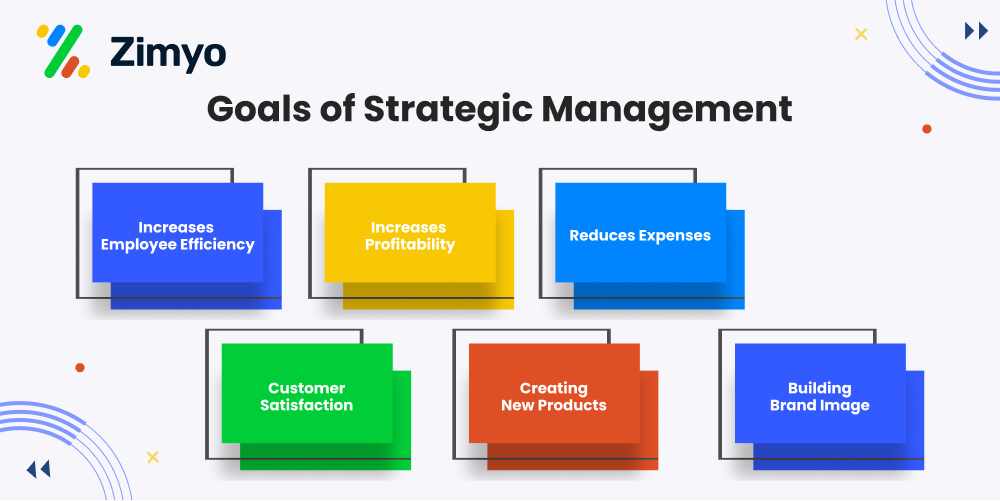
Many companies today focus not only on daily Human Resource Management activities but also on long-term business planning. This is where Strategic Human Resource Management becomes important. It is the process of connecting HR practices with the future goals of the company.
Instead of only handling recruitment or employee records, strategic HR planning focuses on future workforce needs, leadership development, employee growth, and better Workforce management. Companies use this approach to prepare for business expansion, changing market trends, and future skill requirements.
In simple words, Strategic Human Resource Management helps businesses build stronger teams and plan ahead instead of only solving current employee-related issues.
Functions of Human Resource Management
The functions of Human Resource Management include different activities that help companies manage employees in a proper and organized way. These functions are important because they support daily business operations and help employees work more efficiently.
From hiring new employees and conducting training sessions to managing salaries, employee performance, and workplace policies, HR management handles many responsibilities inside an organization. These functions also help companies maintain better communication, improve employee satisfaction, and create a positive work environment.
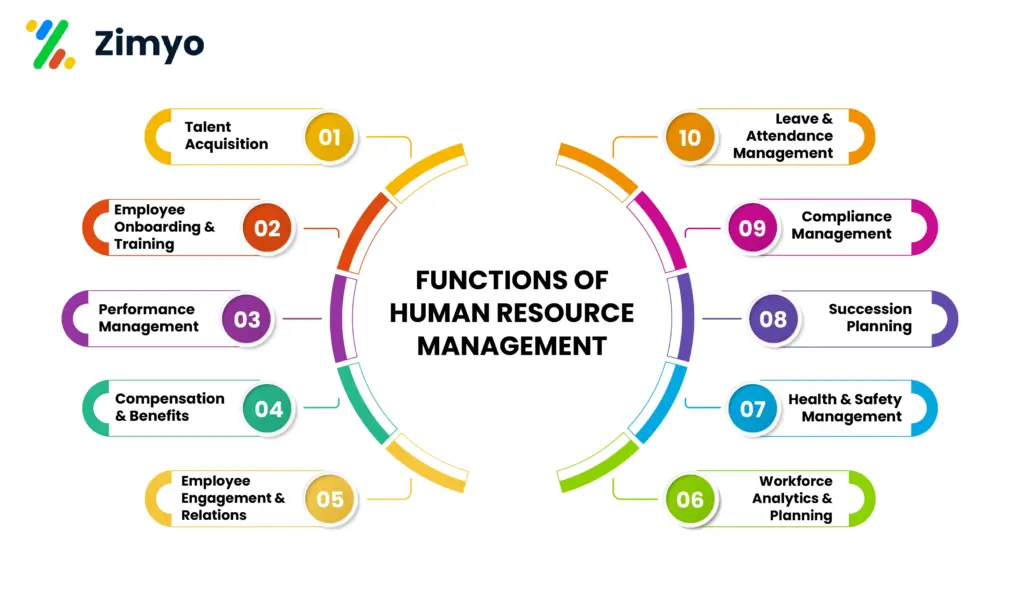
So, the major functions of Human Resource Management include the following:
1. Human Resource Planning: Planning future employee needs
Companies cannot suddenly hire employees whenever work increases. Proper planning is needed so the business can run without problems. Because of this, Human Resource Planning is considered an important part of Human Resource Management.

HR teams usually check how many employees the company may need in the coming months or years. They also look at upcoming projects, workload, and the skills required for different job roles. In some cases, companies may also train current employees instead of hiring new people.
Good planning helps businesses avoid problems like employee shortages, extra workload on teams, or unnecessary hiring expenses.
2. Talent Acquisition: Recruiting and selecting the right candidates
Hiring the right employees is one of the most important functions of Human Resource Management. A company’s growth often depends on the people it hires, which is why HR teams spend a lot of time finding suitable candidates for different job roles.
The recruitment process usually includes creating job descriptions, posting job openings, checking resumes, and conducting interviews. HR teams also try to understand whether a candidate’s skills and work style match the company’s requirements.
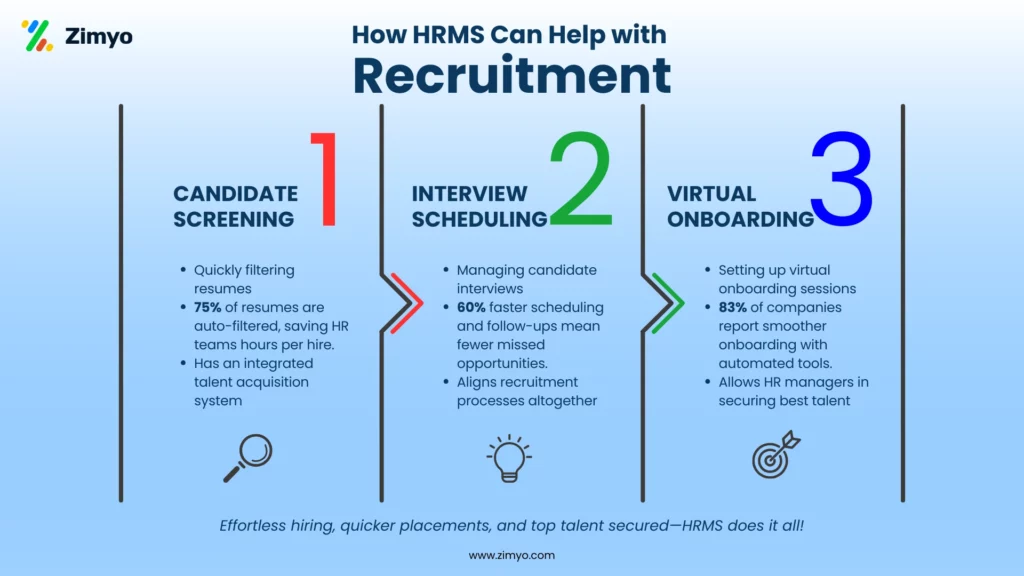
Good hiring decisions help businesses build stronger teams and improve workplace productivity. On the other hand, hiring the wrong people can create performance issues and increase employee turnover. This is why proper recruitment and Talent management are important parts of modern HR management.
3. Employee Onboarding: Onboarding and supporting new employees
Starting a new job can feel overwhelming for many employees. Because of this, onboarding is an important part of Human Resource Management. HR teams help new employees understand company policies, job responsibilities, and workplace processes.
Onboarding may also include orientation sessions, basic training, and introductions to team members. These activities help employees feel more comfortable and settle into their new role faster.
A good onboarding process in HR management helps reduce confusion, improves employee experience, and supports better employee retention.
Research from global business forums shows that companies using strategic HRM practices grow 20 to 25% faster because their workforce is aligned with strategic plans.
4. Skill Building and Learning: Training and developing employees' skills
Training and development is the function where HRM helps employees improve their skills and learn new ones. HRM identifies what skills employees lack and creates learning programs such as workshops, online courses and on the job training. This function helps employees grow in their careers, improve their performance and feel more confident in their roles.
Companies that invest in training and development often see better work quality, higher employee satisfaction and stronger teamwork. This function also prepares employees for future responsibilities and leadership roles.
5. Performance Management: Evaluating and improving employee performance
Performance management is the process where HRM measures how well employees are doing their jobs and helps them improve. HRM sets performance goals, conducts reviews, collects feedback and tracks employee progress. This function ensures that employees understand what is expected from them and how they can perform better.
HRM also identifies employees who need additional support or training. Performance management encourages fairness, transparency and growth. It directly supports business success because employees work better when they receive regular feedback and guidance. Now-a-days, various organizations are going for a Performance Management Software to track and improve employee performance digitally.
6. Compensation and Benefits: Rewarding, recognizing and providing benefits to employee
Compensation and benefits, also known as reward and recognition management, is the function where HRM decides salaries, bonuses, incentives and other employee benefits. HRM studies market data, job roles and skills to ensure employees are paid fairly and competitively. Benefits may include health insurance, paid leaves, allowances and rewards for performance.
A strong compensation and benefits system keeps employees motivated and reduces turnover. HRM also ensures transparency in how rewards are given so employees feel valued and appreciated. This function helps attract skilled talent and build long term employee loyalty.
7. Employee Engagement: Motivating employees for communication and collaboration
Employee engagement, also called workplace motivation management, focuses on keeping employees motivated, connected and satisfied with their work. HRM organizes engagement programs, conducts surveys, creates feedback channels and builds a positive workplace culture. Engaged employees show better performance, stronger teamwork and higher loyalty.

HRM also looks for ways to make employees feel heard, respected and appreciated. High engagement leads to lower absenteeism, fewer conflicts and better overall productivity. This function shows how HRM plays a major role in creating a healthy work environment.
8. Conflict Resolution and Support: Handling employee relations and grievances
Employee relations and grievance handling refers to managing the relationship between employees and the company. HRM ensures that communication is open, problems are solved quickly and employees feel safe sharing their concerns. When conflicts or grievances arise, HRM listens carefully, investigates the issue and provides fair solutions.
Research shows that strong HRM functions can improve employee performance by 40% and reduce general employee issues by 20%.
Conflict Resolution HR function protects employees from unfair treatment and ensures the company follows proper policies. Healthy employee relations reduce workplace stress and create trust. Effective grievance handling ensures employees feel respected and supported at all times.
9. Payroll Management: Administering payroll accurately and processing employee salaries
Payroll administration, also known as salary processing management, includes calculating salaries, deductions, bonuses and ensuring employees are paid accurately and on time. HRM uses HRMS tools, attendance data and company policies to process payroll correctly.
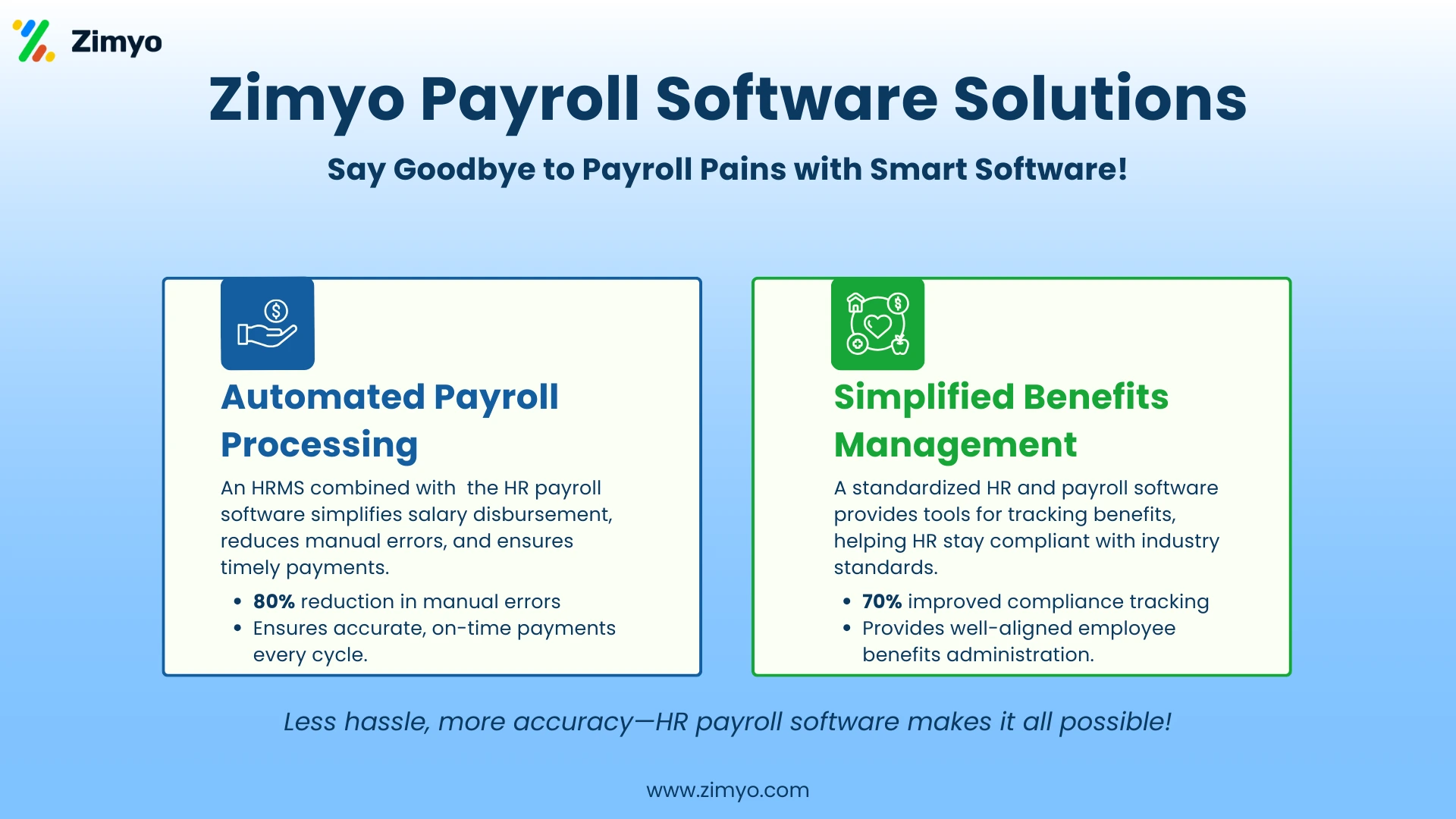
This function is extremely important because payroll mistakes can cause employee dissatisfaction and legal issues. HRM also manages tax filings, payslips, reimbursement claims and records. A strong payroll administration system ensures financial accuracy, trust and compliance. For that matter, numerous organizations are opting for a Payroll Software, which can automate all compensation and salary-related tasks of HR professionals. Thus reducing their manual work burden.
10. Compliance and Safety Management: Overseeing legal and workplace safety
Compliance and safety management ensures the company follows all labor laws and maintains a safe working environment. HRM updates policies according to legal rules, trains employees on workplace safety and conducts audits to check if everything is followed properly.
This includes rules related to working hours, minimum wages, equal opportunities, workplace safety and employee rights. Compliance failures can cause penalties, fines or brand damage, so HRM plays a key role in reducing risks. Safety management also ensures that employees feel secure and protected at work.
11. Employee Offboarding: Managing employee exit processes and providing transition suppport
Exit management, also called offboarding and transition support, handles the process when an employee leaves the company. HRM conducts exit interviews, collects feedback, processes final settlements and ensures the resignation or termination process is smooth. This function also includes returning company assets, removing system access and completing all formalities.
A proper exit management system maintains professionalism and protects the company legally. It also helps HRM understand why employees leave so the company can improve retention strategies. A respectful offboarding process leaves employees with a positive experience even after they leave.
Even more curious about the Functions of Human Resource Management actually works? Read the full blog now for quick insights and real world tips.
Scope of Human Resource Management
The scope of Human Resource Management has expanded a lot in recent years. Modern HR management is no longer limited to hiring and salary management only. Today, HR teams handle multiple responsibilities related to employees, workplace culture, business growth, and workforce planning. From recruitment to employee exit, HR plays an important role in almost every stage of the employee lifecycle.
The scope of Human Resource Management includes the following:
- Recruitment and selection of employees
- Employee onboarding and training programs
- Performance and productivity management
- Payroll, compensation, and employee benefits
- Employee engagement and workplace culture
- Talent management and workforce planning
- Following labor laws and company policies
- Managing employee relations and conflict resolution
- Supporting business growth through Strategic Human Resource Management
- Handling employee exit and offboarding processes
Importance of Human Resource Management
Every business depends on its employees to grow, handle daily work, and achieve company goals. This is why Human Resource Management has become important for organizations of every size. Without proper employee management, companies often face problems like low productivity, poor communication, and high employee turnover.
Good HR management helps businesses hire the right people, improve employee performance, and maintain a better work environment. HR teams also support employees through training, workplace policies, and proper communication between management and staff.
Today, companies also focus more on Talent management and Workforce management because skilled employees play a major role in long-term business success. Along with improving productivity, effective Human resources management also helps companies build stronger teams and maintain smoother business operations.
What is a Human Resource Management System?
As businesses grow, managing employee records, salaries, attendance, and recruitment manually becomes difficult. This is why many companies now use a Human Resource Management System (HRMS) to handle daily HR activities more efficiently.
A Human Resource Management System is software that helps companies manage different HR tasks from one place. Instead of using multiple spreadsheets or paperwork, HR teams can handle employee data, payroll, leave management, recruitment, and performance tracking through a centralized system.
Some common features of an HRMS include:
- Payroll management
- Leave and attendance tracking
- Employee database management
- Recruitment and onboarding tools
- Performance management
- Training and learning management
- Expense and travel tracking
Modern HR management systems help reduce manual work, save time, and improve accuracy in daily operations. They also make processes easier for employees as well as HR teams, which improves the overall employee experience.
Difference Between Personnel Management and Human Resource Management
The difference between personnel management and Human Resource Management shows how employee management has changed over the years. Earlier, companies mainly focused on administrative work and maintaining employee records. In 2026, modern HR management focuses more on employee growth, workforce planning, employee experience, and business strategy.
| Factor | Personnel Management | Human Resource Management |
|---|---|---|
| Primary Focus | Administrative tasks and employee records | Strategic employee and business growth |
| Approach | Reactive and rule-based | Proactive and employee-focused |
| Employee View | Employees seen mainly as workers | Employees treated as valuable assets |
| Training & Development | Limited training programs | Continuous learning and skill development |
| Technology Usage | Mostly manual processes | Digital HRMS and automation tools |
| Role in Business | Support function only | Important part of business strategy |
| Decision Making | Based on fixed policies | Based on data, analytics, and workforce insights |
| Employee Engagement | Very limited focus | Strong focus on employee experience and engagement |
| Workforce Planning | Short-term staffing needs | Long-term Workforce management and planning |
| Performance Management | Basic annual reviews | Continuous feedback and performance tracking |
Human Resource Management Process
The Human Resource Management process is a structured process used by companies to manage employees from hiring to exit. It helps businesses handle employee-related activities in a more organized way and ensures smooth workplace operations.
In modern HR management, this process covers everything from workforce planning and recruitment to employee development, performance management, and employee retention. A proper HR process also helps companies improve productivity, maintain better workplace relationships, and support long-term business growth.
The Human Resource Management process usually includes:
- Manpower planning
- Job analysis and job design
- Recruitment and selection
- Employee onboarding
- Training and skill development
- Performance management
- Compensation and benefits management
- Employee engagement and motivation
- Workplace safety and compliance
- Employee relations management
- Employee exit and final settlement
Studies indicate that companies following a structured HRM process achieve up to 35% higher operational efficiency.
Conclusion
Every company needs good employees to grow, but managing people properly is not always easy. This is why Human Resource Management has become an important part of modern businesses. From hiring employees and handling training to improving workplace culture and employee performance, HR management supports almost every area related to people inside an organization.
Today, businesses are giving more attention to Talent management, employee experience, and better Workforce management because skilled employees directly affect business success. Companies are also using modern HR tools and better planning methods to make employee management simpler and more organized.
Understanding the real Human Resource Management meaning helps businesses create a workplace where employees can work comfortably, improve their skills, and contribute to company growth. In the long run, strong Human resources management not only improves productivity but also helps companies build stable and motivated teams.
Frequently Asked Questions (FAQs)
What is human resource management?
Human resource management is the process of hiring, training, managing and supporting employees in an organization. It focuses on improving employee performance, creating a positive work environment and aligning people with the goals of the business. In simple words, human resource management deals with all activities related to people in a company, such as recruitment, payroll, training, performance management and compliance. It helps organizations build a skilled, motivated and productive workforce.
how to become a human resource manager
To become a Human Resource Manager, you usually need a bachelor’s degree in HR, business, psychology, or a related field. Many people start their career in entry-level roles like HR assistant or recruiter to gain practical experience.
Over time, you build skills in recruitment, payroll, training, employee relations, and HRMS tools. Adding certifications like SHRM or HRCI can also improve your career growth. With experience and strong people skills, you can move into HR manager positions in any organization.
what do you mean by human resource management
Human resource management means managing all the people related activities in a company. It includes hiring employees, training them, checking their performance, solving their problems, handling payroll, ensuring compliance and creating a healthy work environment. In simple words, human resource management is the process of helping employees work better and supporting the company in achieving its goals through its people.