
What is Grapevine Communication?
Grapevine communication refers to a form of informal communication that occurs in workplaces, where employees interact socially and share information outside official communication channels. Examples include casual conversations about the weather or sending birthday wishes to a colleague. Such informal communication creates positive bonds, builds trust, and enhances team alignment toward shared goals.
Types of Grapevine Communication
- Single Strand : In this type, communication happens between two people and then passes from one to another in a sequence.
- Gossip Chain : This involves a group of people engaged in casual, informal discussions, often about shared interests or workplace matters.
- Chain of Possibility : Here, the same message spreads randomly from employee to employee, with no specific pattern.
- Cluster Chain : An individual shares information with a group, and members of that group further disseminate it to others.
Examples of Grapevine Communication
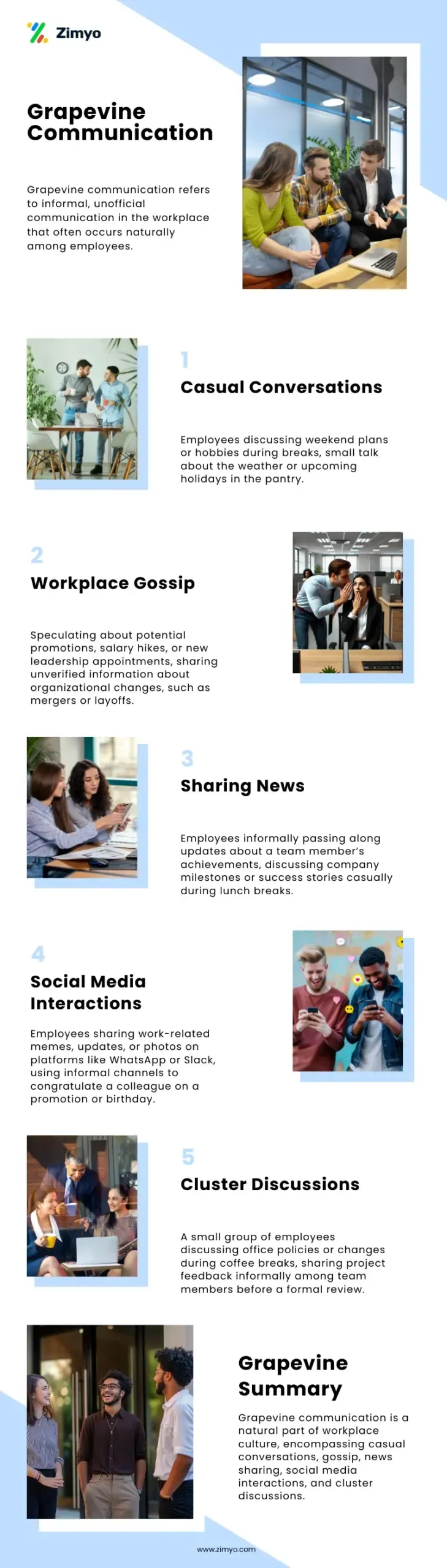
Grapevine communication refers to informal, unofficial communication in the workplace that often occurs naturally among employees. Here are some common examples:
1. Casual Conversations
- Employees discussing weekend plans or hobbies during breaks.
- Small talk about the weather or upcoming holidays in the pantry.
2. Workplace Gossip
- Speculating about potential promotions, salary hikes, or new leadership appointments.
- Sharing unverified information about organizational changes, such as mergers or layoffs.
3. Sharing News
- Employees informally passing along updates about a team member’s achievements.
- Discussing company milestones or success stories casually during lunch breaks.
4. Social Media Interactions
- Employees sharing work-related memes, updates, or photos on platforms like WhatsApp or Slack.
- Using informal channels to congratulate a colleague on a promotion or birthday.
5. Cluster Discussions
- A small group of employees discussing office policies or changes during coffee breaks.
- Sharing project feedback informally among team members before a formal review.
How to Handle Grapevine Communication in Organizations
- Communicate Often
Frequent and effective communication with colleagues builds trust and reduces understanding gaps. Focus on sharing relevant information during these interactions. - Ask for Employee Opinions
Encourage employees to express their thoughts through feedback sessions or anonymous methods. This reduces the scope for unnecessary chatter and shows employees that their contributions matter. - Recognize Leaders
Identify employees who influence and motivate others positively. These individuals can be instrumental in driving business communication and implementing changes effectively. - Ensure an Accessible Communication Medium
Provide a transparent and accessible communication platform for all employees. Shared mediums foster clarity and reduce conflicts. - Analyze Workplace Communication
Regularly assess workplace communication channels to determine their effectiveness. Surveys can help identify the most efficient tools for communication skills training and employee engagement.
Advantages of Grapevine Communication
- Resolving Employee Grievances
In grapevine communication, employees often feel more comfortable discussing issues informally, leading to quicker resolutions. - Building Teamwork
Informal communication helps create a positive work culture, encouraging openness among team members. - Improving Efficiency
Stronger relationships between employees lead to better alignment and improved individual and team performance.
Disadvantages of Grapevine Communication
- Risk of Rumors
Informal exchanges may lead to inaccurate information being shared, resulting in wasted time and resources. - Risk of Information Spread
Since grapevine communication lacks formal rules, sensitive information can spread viral. For example, sharing financial or strategic details through informal channels could harm the company’s integrity.
Types of Rumors in Grapevine Communication
In grapevine communication, rumors often arise due to the informal nature of information sharing. These rumors have following categories:
- Wishful Thinking Rumor
These rumors stem from employees' hopes, desires, or expectations. For example, a rumor about salary increments or promotions might spread because employees wish for it to happen. - Fear Rumor
Fear-based rumors are driven by anxiety or concerns. These often emerge during uncertain situations, such as potential layoffs, company restructuring, or market downturns. - Aggressive Rumor
Aggressive rumors are spread with the intent to harm someone's reputation or create disruption within the organization. These rumors can lead to conflicts and damage workplace relationships. - Pipe-Dream Rumor
These are optimistic rumors based on overly positive or unrealistic expectations. For instance, employees might speculate about a major client acquisition without evidence. - Bogey Rumor
This type involves hyped stories or false information about potential threats. For example, a rumor about a competitor poaching employees may spread without factual backing.
How to Stop Rumors and Gossip in Grapevine Communication
1. Encourage Open Communication
- Promote a culture where employees feel comfortable sharing concerns and asking questions directly with management.
- Conduct regular town hall meetings, Q&A sessions, or one-on-one discussions to ensure transparency.
2. Provide Timely and Accurate Information
- Share updates about organizational changes, policies, or decisions promptly to prevent rumors.
- Use multiple channels, such as emails, newsletters, or intranet portals, to communicate official information.
3. Promote a Positive Workplace Culture
- Build trust by recognizing and appreciating employees' contributions.
- Encourage respect and discourage behaviors like gossiping or spreading unverified information.
4. Identify the Source of Rumors
- Investigate the origins of rumors to understand why they started and address the underlying concerns.
- Approach the source constructively, focusing on resolving issues rather than penalizing individuals.
5. Educate Employees on the Impact of Gossip
- Conduct communication skills training sessions to help employees understand the consequences of gossip and rumors.
- Share examples of how gossip can harm workplace relationships and productivity.
By proactively addressing rumors and gossip in grapevine communication, organizations can create a healthier, more productive workplace environment. This approach strengthens trust and fosters better communication across all levels.