
Managing payroll in large companies is more than just ensuring employees are paid on time these days. As companies grow, handling payroll gets harder because they have different locations, tax rules that change often, and a larger team, making it tough to do everything by hand. Companies are now seeking the best payroll software in India because it helps them work more smoothly and effectively.
For businesses, the need is more than just simple tools. Using the best enterprise payroll software allows companies to handle complicated payroll tasks more accurately and consistently. A trustworthy payroll software for businesses in India serves as a full payroll management tool, handling salary calculations, following legal requirements, and connecting with HR and finance systems.
This blog guides you through the top payroll software in India and a detailed comparison of their key features to help you understand what is important when choosing the right one. We’ll also examine the usual problems companies face with payroll and the important factors to think about before choosing a solution.
Enterprise Payroll Software: Meaning
Enterprise payroll software is a tool that helps businesses handle salaries, deductions, taxes, and compliance in one place. Instead of relying on spreadsheets and manual work, companies use the best enterprise payroll software to make payroll faster and more accurate.
For many companies, payroll is no longer only about calculating salaries. Businesses today also need to manage compliance, employee records, taxes, and payroll data together. That is why many organizations are shifting to the best enterprise payroll software to make everyday HR and payroll tasks easier.
For bigger companies, especially those working in multiple cities or having large teams, enterprise payroll software helps cut down on errors and makes a big difference in reducing the need for manual work. Dependable payroll software makes it easier for HR teams to manage salary processes while keeping employee data safe and well-kept.
What Does Payroll Software Do?
Let’s break it down in simple terms—here’s what payroll software actually helps with:
- Salary Calculation:
The system takes care of calculating salaries by considering basic pay, allowances, bonuses, and deductions instead of doing it all by hand. It saves a lot of time and helps avoid small mistakes that can be expensive. - Statutory Compliance:
A good payroll management software keeps track of Indian regulations like PF, ESI, Professional Tax, and TDS. Since rules keep changing, having software that updates automatically makes things much easier for businesses. - Pay slip Generation:
Employees can now get the help they need without waiting for HR to respond. Pay slips can be viewed online via portals or apps, making the process easier to understand and more convenient for everyone. - Tax Management:
Employees can declare their investments, and the system adjusts tax deductions accordingly. It also helps during year-end tasks like Form 16, which otherwise can get quite confusing. - Integrations:
Most of the best payroll software in India connects with attendance systems, leave tracking, and even accounting tools. This avoids doing the same work twice and keeps everything in sync. If you’re comparing tools, you can explore this top payroll software India features comparison to see how different platforms handle integrations. - Employee Self-Service:
With self-service options, employees can download pay slips, check reimbursements, or update their details on their own. This is especially helpful for companies using enterprise payroll software India, where managing large teams manually isn’t practical.
In simple terms, payroll software makes sure employees are paid correctly and on time, while businesses stay compliant without extra effort. If you’re just getting started, it’s worth exploring the best payroll software in India to find a solution that fits your needs.
Best Enterprise Payroll Software in India: 2026 Analysis
The best payroll software cannot be decided on a single factor. Different enterprises have different requirements; what suits your company the best can be decided. Mentioned below are the best enterprise payroll software in 2026 for Indian businesses.
1. Zimyo HRMS
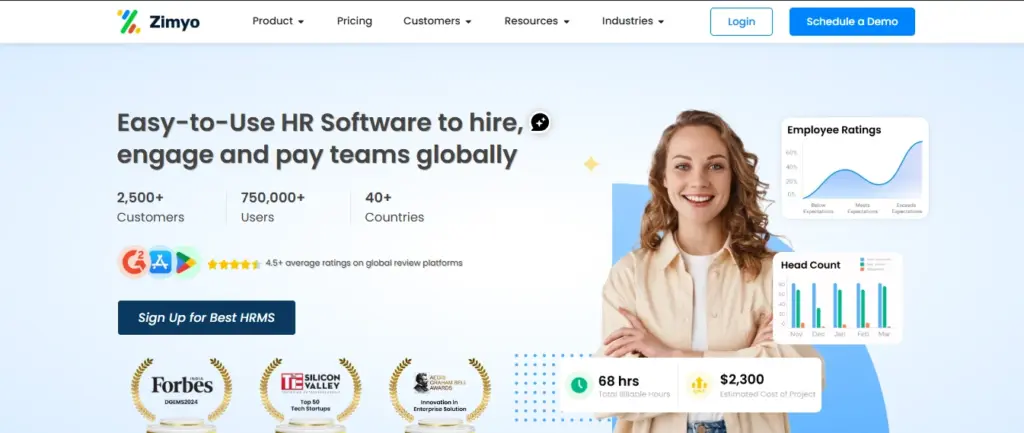
Zimyo is one of those tools companies in India use when payroll starts getting difficult to manage manually. It takes care of salary calculations, deductions, and compliance things like PF, ESI, and TDS, so teams don’t have to track everything separately. It also comes with HR features like attendance and leave tracking, which is helpful because most businesses don’t want different systems for everything. For companies handling a larger workforce, it can work as a practical option when looking for enterprise payroll software in India.



Key Features
- End-to-end payroll with PF, ESI, PT, and TDS compliance built in. Connects easily with attendance, leave, and expense data, which helps avoid repeating the same work across systems.
- Offers an employee self-service portal where employees can download pay slips, submit tax details, and check reimbursements on their own.
- Supports direct bank transfers, making salary payouts quicker and more straightforward.
- Reports and analytics for a clear view of payroll costs and trends.
Pros
- Easy to customize based on business needs, especially for larger teams
- Simple and clean interface, plus mobile access makes it convenient to use
- Handles compliance well, which is important for Indian regulations
Cons
- Certain advanced features may require a learning curve for first-time users
2. GreytHR
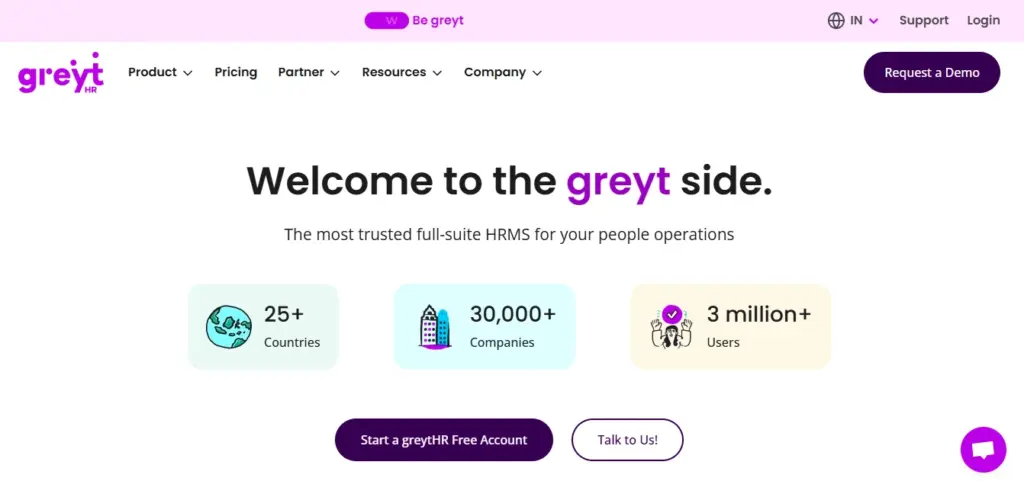
GreytHR is a payroll and HR software that has been used by many companies in India for a long time. It takes care of salary calculations and other things like PF, ESI, and TDS, so HR doesn’t have to handle all of that by hand. It also includes basic things like attendance, leave, and a self-service feature that lets employees view their own information. Companies that work in different areas usually like having a system that is reliable and runs smoothly without many problems.
Key Features
Key Features
- Takes care of payroll automatically, including updates for compliance when rules change
- Cloud-based, so it can be accessed easily from anywhere without setup issues
- Comes with a self-service option where employees can check pay slips, leave, and tax details
- Connects with attendance and leave systems, so data stays in sync without extra work
Pros
- Works well for both smaller teams and growing businesses without being too expensive
- Strong focus on compliance, with regular updates to keep up with changing regulations
Cons
- Customization and reporting features may not be as detailed as some larger HR platforms
3. Zoho Payroll
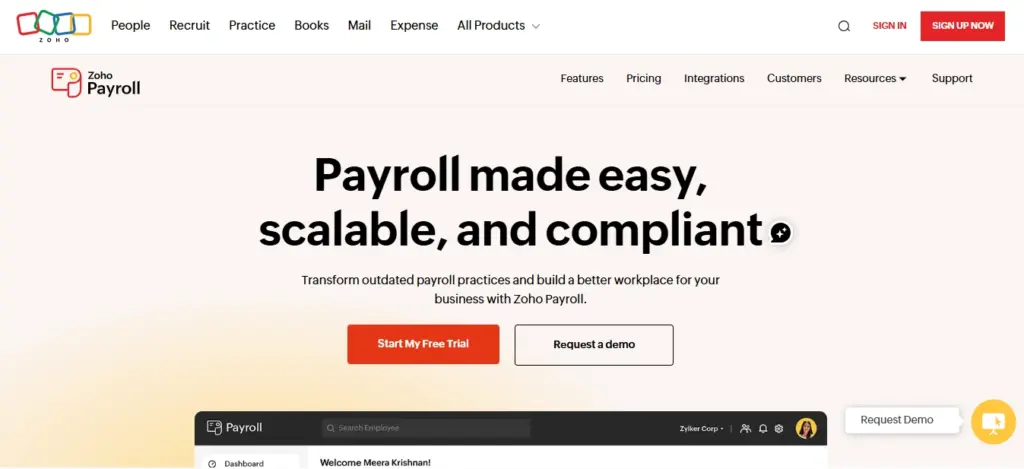
This is often chosen by smaller teams that prefer to avoid complicated payroll systems. It includes the main things like salary, pay stubs, and taxes, so most of the regular tasks are taken care of with little effort. If a company is already using tools from the same setup, everything connects smoothly, which saves a lot of time. It’s not made for big or really complicated tasks, but for basic everyday payroll work, it handles things well enough.
Key Features
- Clean and easy-to-use interface, so teams don’t need much time to get started
- Handles tax and statutory calculations like TDS, PF, ESI, and PT automatically
- Includes a self-service option where employees can check pay slips and tax details on their own
- Connects well with accounting and HR tools within the same ecosystem, making everyday tasks smoother
Pros
- Works well if you’re already using tools from the same ecosystem, since everything connects easily
- Pricing is straightforward, so there aren’t too many surprises.
Cons
- May feel a bit limited for larger companies that need more advanced payroll features
4. RazorpayX Payroll
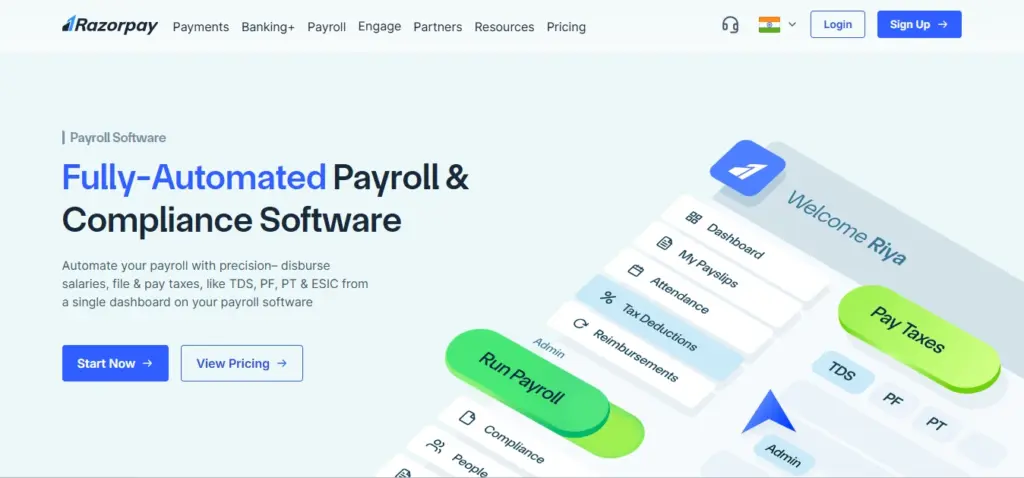
RazorpayX Payroll focuses a lot on making payroll and banking work together smoothly. It handles salary transfers, TDS, and compliance without needing too many steps. This can be especially useful for companies that deal with a high number of transactions, since everything stays connected in one place instead of being managed separately.
Key Features
- Keeps payroll and payments together in one place, so there’s less back and forth between systems.
- Makes salary transfers easier with direct payouts through its banking setup
- Handles compliance tasks like PF, ESI, PT, and TDS without needing manual work
- Supports payments for contractors and freelancers, which is useful for mixed teams.
Pros
- Works especially well for startups and companies that operate mostly online
- Payment integration is strong, so handling payouts feels more seamless.
Cons
- Limited HR features compared to full HRMS solutions
5. HRStop Payroll
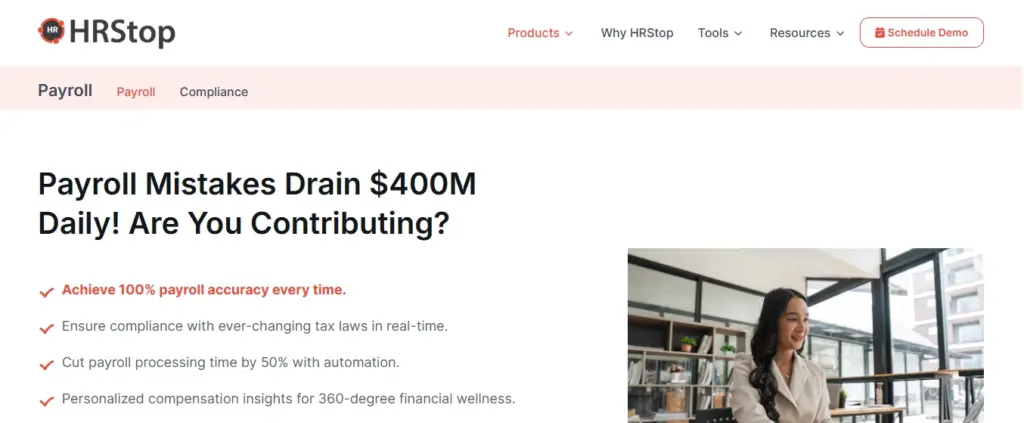
HRStop is a cloud-based payroll solution that helps businesses manage salary processing, deductions, allowances, and statutory compliance in one place. It’s designed to work for businesses of different sizes, so teams don’t have to rely on multiple tools as they grow. The platform also includes a self-service portal, where employees can access pay slips and tax documents without needing to go through HR every time.
Key Features
- Runs on the cloud, so teams can manage payroll and HR without being tied to one location
- Takes care of compliance requirements like PF, ESI, PT, and TDS
- Offers a self-service option where employees can access pay slips and manage leave on their own
- Also includes performance management features, so it’s not limited to payroll alone.
Pros
- Simple to set up and use
- Good option for growing enterprises
Cons
- Interface feels basic compared to modern payroll platforms
6. HROne
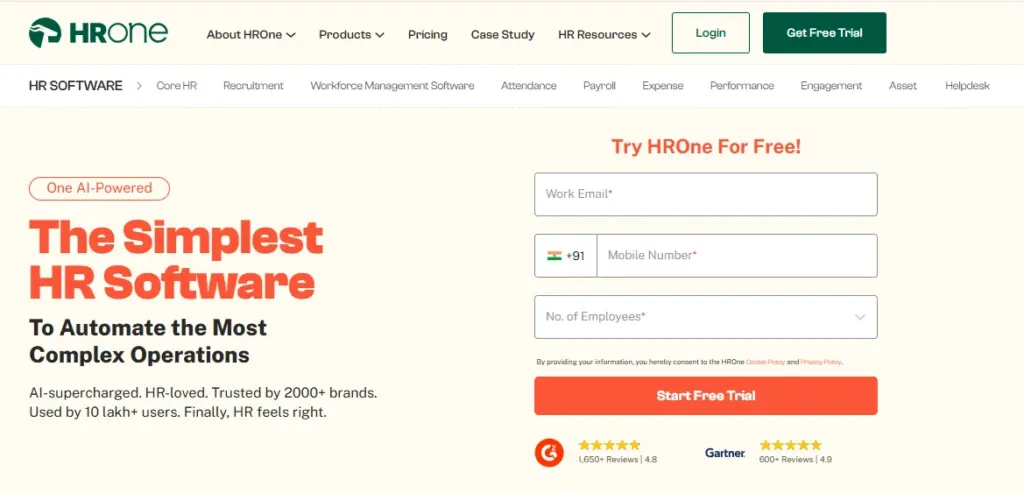
HROne’s payroll module is built to reduce manual work and avoid common payroll errors. It supports different salary structures, which is useful for companies with varied employee setups. Payroll processing is relatively quick, and the platform also provides detailed reports for better visibility. Since it’s part of a modular HRMS, businesses can start with payroll and gradually add other HR features as needed.
Key Features
- Comes with a complete HRMS setup along with payroll automation, so everything stays in one system.
- Makes salary payouts simple, with options to process them in just a few steps
- Handles compliance and tax-related tasks without needing constant manual checks
- Has a mobile-friendly interface, making it easier for teams to access on the go
Pros
- Unified HR and payroll solution
- Scales well for large enterprises
Cons
- Pricing can be higher compared to standalone payroll systems
7. Salarybox
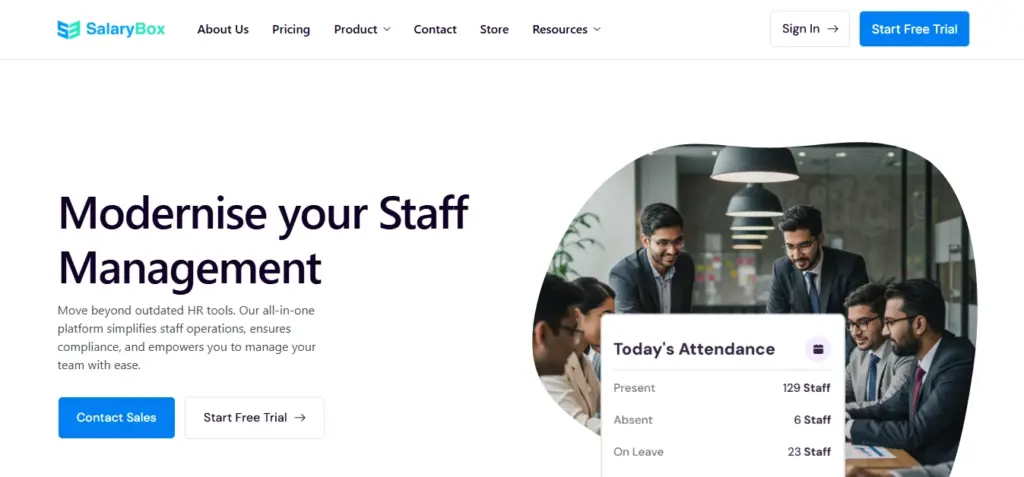
SalaryBox is often used by businesses that want a quick and simple way to manage payroll. It combines attendance tracking with payroll, which makes it useful for companies with field staff or teams working in different locations. Instead of handling everything separately, it keeps basic payroll tasks and attendance data in one place, making day-to-day management a bit easier.
Key Features
- Built with a mobile-first approach, so it’s easy to use on phones for day-to-day tasks.
- Handles salary processing along with attendance tracking, keeping things in one place
- Provides digital pay slips and takes care of basic compliance needs
- Simple onboarding process so that teams can get started without much setup time
Pros
- Simple, affordable, and beginner-friendly
- Great for distributed teams
Cons
- May lack advanced features for large-scale enterprises
8. Beehive
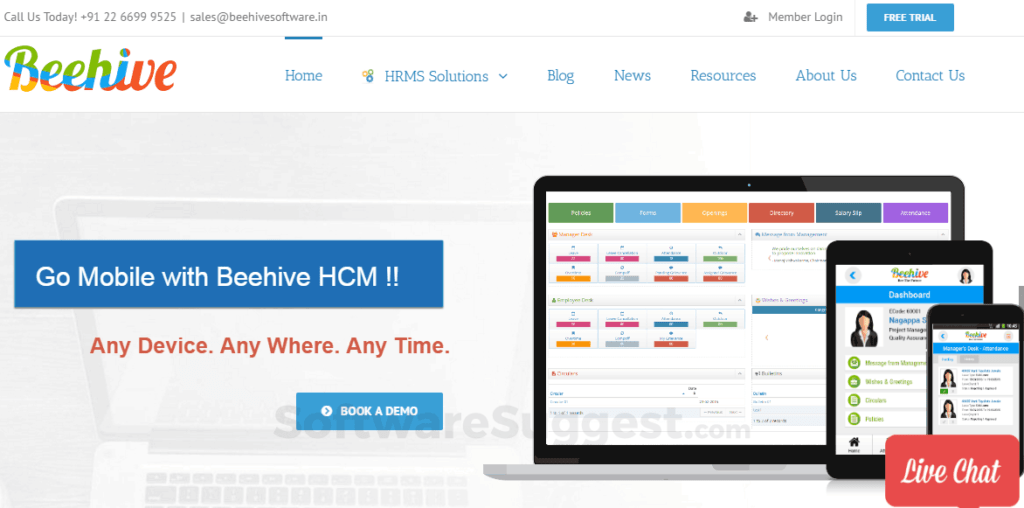
Beehive is a complete HRMS system that includes payroll, attendance tracking, and compliance all in one place. It is commonly used by bigger companies that want better insight into their employee information, because it provides thorough reports and analysis. Besides managing payroll tasks, it also helps teams understand workforce trends better, which can support smarter decision-making.
Key Features
- Designed for larger teams, with HR and payroll features built into one system
- Syncs attendance and leave data in real time, so payroll stays accurate.
- Offers flexible reporting along with tools to handle compliance requirements
- Includes a self-service option where employees can access their own details without depending on HR
Pros
- Feature-rich and customizable
- Suitable for enterprises with complex payroll needs
Cons
- Implementation takes time due to its comprehensive nature
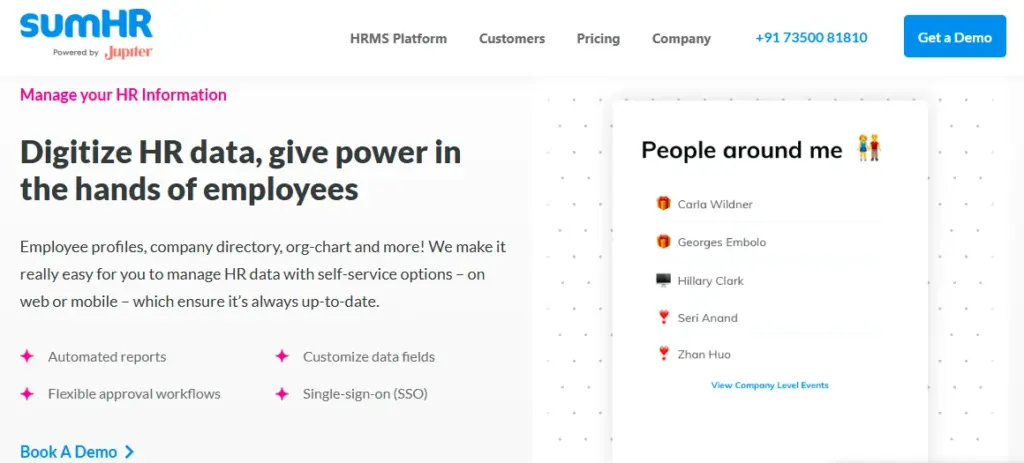
9. SumHR
SumHR is a web-based tool for managing payroll and human resources that works well for growing teams. It handles payroll, tax forms, and time-off management with minimal manual work. The platform is adaptable, allowing businesses to scale as they grow, and the interface is easy enough for teams to use without extensive training.
Key Features
- Covers both payroll and HR tasks in one place, so teams don’t need multiple tools
- Supports direct salary transfers, making payouts easier to manage
- Takes care of compliance and handles TDS calculations automatically
- Keeps employee records and leave data connected with payroll for better accuracy
Pros
- Designed for modern enterprises
- Cloud-based and scalable
Cons
- Can be overwhelming for small businesses
10. Pocket HRMS
Pocket HRMS is a cloud-based HR and payroll software, mainly used by businesses in India. It is used by teams that prefer handling payroll and HR tasks on mobile instead of sitting at a desktop all the time. It covers payroll and compliance, but what people usually like is how employees can just check their payslips or submit details directly from their phones. It cuts down a lot of small HR queries since employees don’t have to ask for everything.
Key Features
- Uses AI to handle payroll and routine HR tasks, which helps cut down manual work
- Runs on the cloud and has a mobile app, so it’s easy to access from anywhere.
- Handles compliance tasks so teams don’t have to keep track of rules on their own.
- Includes some employee engagement features, not just payroll, which adds a bit more value
Pros
- Strong focus on AI and automation
- Advanced reporting
Cons
- May be costlier for small enterprises
Comparison Table of Best Enterprise Payroll Software in India
Software | Best For | Deployment Type | Integration Strength | Unique Highlight |
Zimyo HRMS | Mid to large businesses | Cloud-based | Strong integrations with HR, finance & banking | All-in-one HRMS with payroll in a single platform |
greytHR | SMEs and growing companies | Cloud-based | Focus on HR operations and compliance tools | Known for reliable compliance and ease of use |
Zoho Payroll | Small to mid-sized businesses | Cloud-based | Works well within its own app ecosystem | Smooth integration with accounting and HR tools |
RazorpayX Payroll | Startups and digital teams | Cloud (Fintech-driven) | Strong banking and payout integrations | Combines payroll and payments in one place |
HRStop | Scaling businesses | Cloud-based | Integrates HR, attendance, and performance | Payroll combined with performance tracking |
HROne | Large organizations | Cloud + mobile | Deep HRMS integrations | Modular HR system that scales with business needs |
SalaryBox | Small businesses and field teams | Mobile-first | Basic integrations | Simple payroll + attendance for distributed teams |
Beehive HRMS | Enterprises with complex needs | Cloud-based | ERP and custom API integrations | High level of customization and reporting |
sumHR | Growing and modern teams | Cloud-based | HR and banking integrations | Easy-to-use interface with direct salary transfers |
Pocket HRMS | Mid to large companies | Cloud + mobile | Connects with finance and attendance systems | Focus on mobile access and AI-based automation |
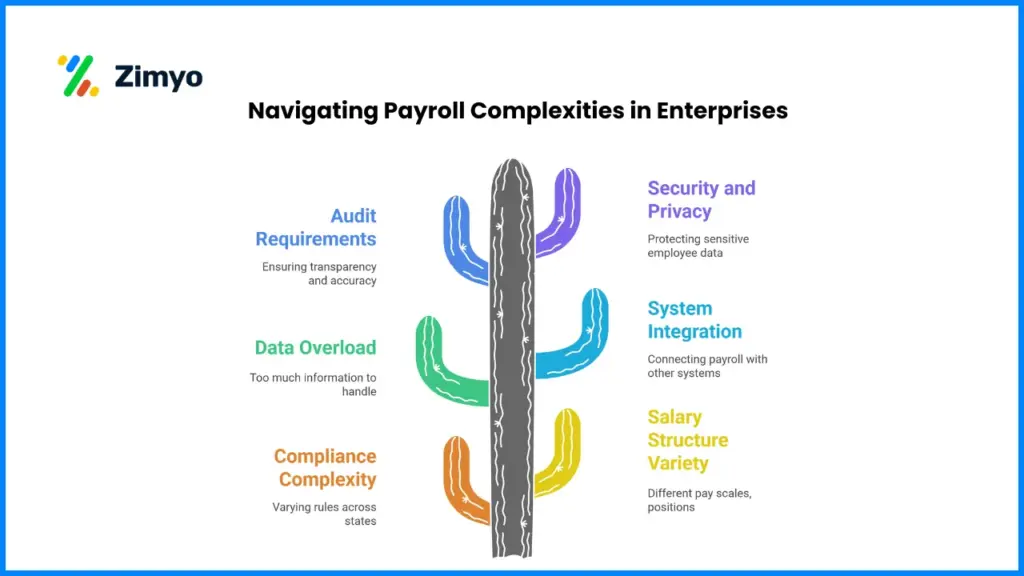
What are the Payroll Challenges Faced by Large Enterprises?
As businesses grow, payroll becomes harder to manage. It’s no longer just about salaries—it involves compliance, large employee data, and accuracy at scale. Many companies turn to enterprise payroll software in India to handle this complexity.
Even small mistakes can create bigger issues, which is why choosing the best payroll software in India matters. You can explore this payroll management software to see how modern tools help manage these challenges.
Here are some common challenges large enterprises face:
Complex Compliance Across States and Laws
Large enterprises often operate across multiple locations, and each state in India comes with its own labor laws, tax rules, and statutory requirements. Managing PF, ESI, and TDS across regions can become difficult, especially with frequent updates. This is where enterprise payroll software in India helps businesses stay compliant without missing critical changes.
Multiple Salary Structures
In large organizations, payroll isn’t uniform. Companies deal with full-time employees, contractors, and consultants, all with different pay structures, allowances, and incentives. Handling this manually increases the chances of errors, making payroll management software essential for accuracy.
Data Overload
Processing payroll for thousands of employees every month generates a huge amount of data. Managing this volume manually is not only time-consuming but also prone to mistakes. Using the best payroll software in India helps automate calculations and handle large datasets efficiently.
Integration with Other Systems
Payroll depends on data from attendance, leave, and accounting systems. When these systems don’t connect properly, it leads to duplicate work and inconsistencies. Modern enterprise payroll software in India ensures smooth integration across different business tools.
Audit and Transparency Requirements
Large businesses are regularly audited, and even small payroll errors can lead to compliance issues or penalties. Having proper records and transparent processes is critical, which is why companies rely on payroll management software for accurate reporting.
Security and Data Privacy
Payroll data includes sensitive information like salaries, bank details, and PAN numbers. Protecting this data is a major challenge, especially at scale. The best payroll software in India comes with security features to safeguard employee information.
Employee Experience
Payroll directly impacts employee satisfaction. Delays or errors in salary can affect trust and morale. Companies using enterprise payroll software in India can ensure timely and accurate payments, improving overall employee experience.
How Does Enterprise Payroll Software Help?
Businesses deal with several problems that are difficult to handle if handled manually. Enterprise payroll software helps large businesses automate salary processing, maintain statutory compliance with PF, ESI, PT, and TDS, and manage payroll across multiple locations without manual errors.
Multi-state compliance
It applies the right professional tax, labour welfare fund, and state labour rules to each employee based on location.
Automatic compliance updates
It recalculates PF, gratuity, and TDS across the entire workforce when laws change, such as the Labour Codes’ 50% wage rule or the new Section 392 for salary TDS.
Complex salary structures
It handles permanent staff, fixed-term employees, contractors, arrears, and variable pay in a single payroll run.
Audit-ready reporting
It integrates with ERP and accounting systems, logs every change, and gives finance teams real-time visibility into payroll costs.
Faster payroll, fewer HR queries
It cuts processing time from days to hours, while employee self-service lets staff download pay slips and submit tax declarations on their own.
The best payroll software in India turns payroll into a fast, accurate, and fully compliant process that scales as your business grows.
Advanced Security
Payroll data includes sensitive information; therefore, security is critical. The best payroll software in India comes with features like encryption and role-based access to protect employee data.
Features to Look for When Choosing Enterprise Payroll Software
Not every payroll system works the same, especially when dealing with big operations. If you’re looking for the best enterprise payroll software in India, it’s important to focus on features that can handle complexity, ensure compliance, and scale with your business. See how modern payroll management software helps businesses handle these challenges.
Here are some key features to consider:
1. Regulatory Compliance Automation
Make sure the software updates automatically in line with Indian tax and labour regulations. For example, since 1 April 2026, salary TDS falls under Section 392 of the Income-tax Act, 2025, and Form 16 and Form 24Q have been replaced by Form 130 and Form 138. Payroll software that hasn’t adopted these changes can produce defective TDS returns.
2. Multi-Location and Multi-Entity Support
For companies with offices spread across various states or subsidiaries of a common parent company, the system must support multi-location and multi-entity payroll processing.
3. Integration Capabilities
The system must be able to integrate seamlessly with HRMS, ERP, attendance devices, and banking systems.
4. Scalability
Your software must be capable of supporting thousands of employees without any compromise on performance.
5. Employee Self-Service
An HR self-service portal that is mobile-friendly allows employees to view pay slips, report investments, and update information without inconveniencing HR.
6. Security Features
Look for role-based access, encryption, and data protection certifications such as ISO or SOC certifications.
7. Analytics and Reporting
Payroll is not only numbers; it’s workforce intelligence too. Dashboards and reports can yield insights into salary trends, overtime expenditure, and workforce planning.
8. User-Friendly Interface
The platform must be user-friendly and simple to use for HR teams and employees with little training.
9. Customer Support and Implementation Assistance
Large businesses require high-quality vendor support during implementation as well as for constant inquiries. A vendor with onboarding and training of its own makes all the difference.
What Else Zimyo Offers
Though Zimyo is widely recognized as a powerful payroll management solution, it is not just a payroll. It’s a comprehensive HRMS solution for businesses. Here’s what more it provides:
1. Full HRMS Suite
From joining to leaving, Zimyo encompasses recruitment, attendance, leave, performance management, and much more. Having all this on a single platform eliminates duplication and enables smooth processes.
2. Employee Engagement Tools
Zimyo offers surveys, recognition capabilities, and reward features to enhance morale and employee engagement, which is essential for large, distributed teams.
3. AI-Driven Analytics
Going beyond payroll reports, Zimyo also offers sophisticated dashboards and analytics on workforce productivity, absenteeism patterns, and budgeting.
4. Custom Workflows
Companies usually require custom approval flows. Zimyo enables you to create personalized workflows for leave, reimbursements, or expense claims, so it is flexible for intricate policies.
5. Enterprise-level Security
Zimyo adheres to rigorous data security policies so that confidential payroll and HR information remains secure.
6. Scalability for Enterprises
Whether you’re paying 1000 or 10,000 employees, Zimyo’s system is designed to scale without compromising performance.
By providing payroll as a component of an extended HRMS, Zimyo helps businesses not only process salaries but also enhance the overall employee experience.
Conclusion
Payroll is something every business has to get right. Even a small error in salaries or compliance can create bigger problems, whether it’s penalties or unhappy employees. That’s why picking the best payroll software in India becomes important as companies grow.
For larger teams, things get more complicated—different salary structures, compliance rules, and data from multiple systems. This is where enterprise payroll software in India actually helps, because it takes a lot of that manual work out of the process and keeps things more consistent.
Zimyo is already being used by companies that don’t want to deal with spreadsheets or scattered systems anymore. Instead of treating payroll as a monthly task, it becomes something that just runs in the background without much hassle.
At the end of the day, the goal is simple—pay people correctly and on time, without errors. Good payroll software just makes that easier while giving HR teams more time to focus on other things.
FAQs
Which is the best payroll software in India?
Zimyo is often considered one of the best payroll software in India for enterprises. It helps businesses manage payroll from start to finish, including salary processing, compliance, and employee self-service. With features like automated workflows and integrations with HR and finance systems, it makes payroll easier to handle, especially for larger teams.
What is enterprise payroll?
Enterprise payroll refers to how large organizations manage employee salaries, deductions, taxes, and compliance in a structured way. It usually involves using enterprise payroll software that can handle a high number of employees, ensure accuracy, and keep up with legal and regulatory requirements.
What is the best payroll software?
Zimyo is often considered one of the best payroll software options for enterprises in India. It offers strong compliance support, can handle large teams as businesses grow, and integrates well with HR systems, making payroll management easier and more organized.
What are the three types of payroll?
The three main types of payroll are:
- In-house payroll – Managed internally by HR teams.
- Outsourced payroll – Handled by third-party providers.
- Payroll software systems – Cloud or enterprise solutions that automate the process.
What is the difference between HR and payroll?
HR focuses on employee management, recruitment, training, and engagement, while payroll deals specifically with calculating salaries, deductions, taxes, and ensuring timely employee payments.